
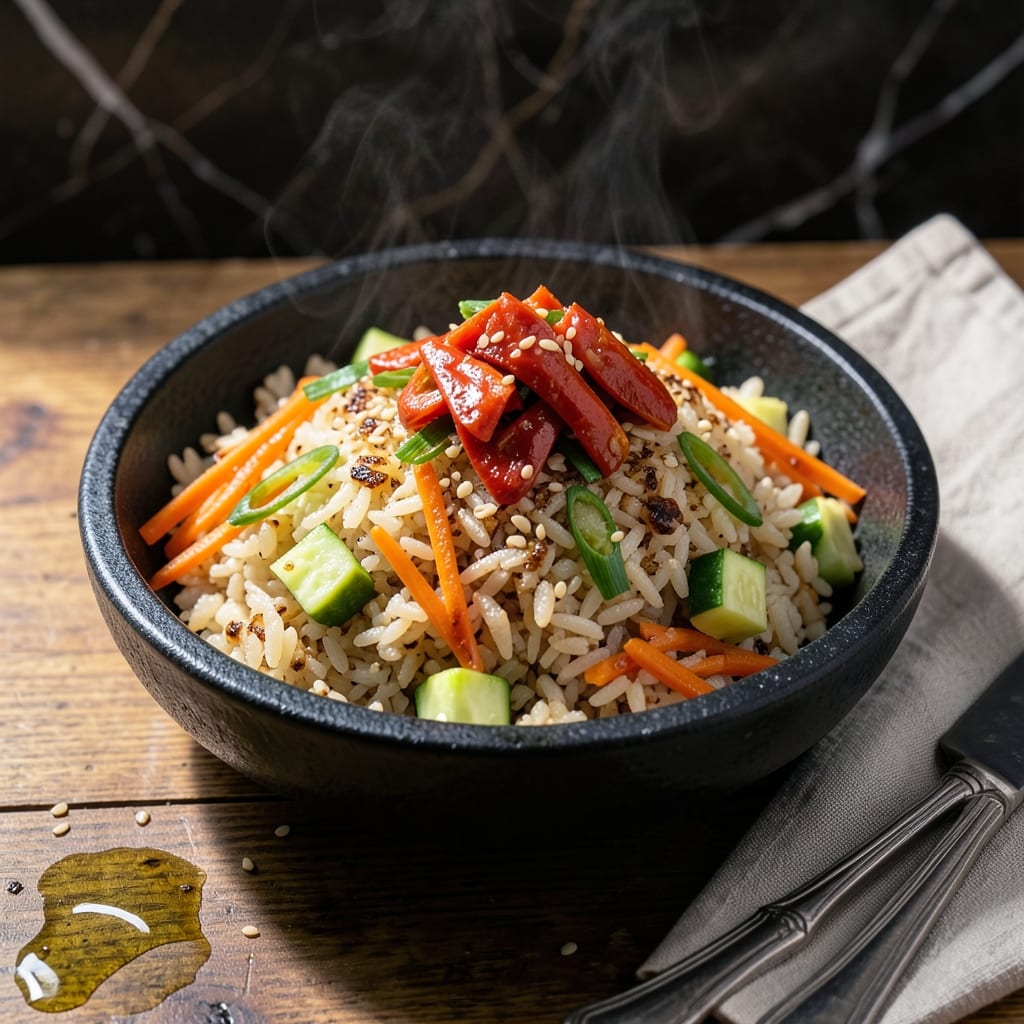
I’ve perfected a method for wok-charred Korean fried rice that delivers bold, savory flavor in every bite. This dish transforms simple vegetables and kimchi into a satisfying meal with minimal effort.
The key is high heat and proper timing. Cooking the vegetables quickly preserves their texture while creating that signature char. Kimchi adds tangy depth, and a touch of sesame oil finishes it with authentic aroma.
You’ll end up with rice that’s crispy in spots, tender in others, and packed with umami. Each bite balances the heat from gochujang with the natural sweetness of carrots and zucchini.
Ready in under 20 minutes, this vegan version proves plant-based eating can be both flavorful and filling. Let’s begin.
Ingredients for Korean Veg Fried Rice
Bold, plant-based flavors come together for this wok-charred dish. Nothing complicated here.
| Ingredient | Amount | Notes |
|---|---|---|
| Cooked White Rice 🍚 | 4 cups | Day-old, chilled preferred |
| Kimchi 🥬 | 1 ½ cups | Well-fermented for tanginess |
| Carrots 🥕 | 2 whole | Medium, julienne cut |
| Zucchini 🥒 | 2 whole | Medium, small dice |
| Green Onions 🧅 | 4 whole | Thinly sliced, green parts only |
| Garlic Cloves 🧄 | 4 cloves | Minced finely |
| Gochujang 🌶️ | 2 tbsp | Korean chili paste |
| Soy Sauce 🥄 | 2 tbsp | Low-sodium preferred |
| Sesame Oil 🫒 | 1 tbsp | Toasted for aroma |
| Vegetable Oil 🛢️ | 2 tbsp | High smoke point for wok |
| Tofu 🧈 | 8 oz | Extra-firm, pressed and cubed |
| Frozen Peas 🌱 | ½ cup | Thawed before cooking |
| Sesame Seeds 🌰 | 1 tsp | Toasted for garnish |
Kimchi is non-negotiable here. Look for vegan kimchi at H Mart or Korean markets—some brands use fish sauce, so check the label. The rice should be day-old (or at least chilled) to prevent mushiness in the wok. For the tofu, extra-firm from Nasoya or Wildwood holds up best. Pressing it for 20 minutes removes excess water—worth the effort. Carrots and zucchini should be cut small so they char quickly without turning to mush.
No gochujang? Sriracha plus a bit of miso paste gets you close (start with 1 tbsp each). Out of kimchi? Sauerkraut at half the amount works in a pinch, but the flavor won’t be the same. Soy sauce can be swapped for tamari (gluten-free) or coconut aminos. The green onions can be subbed with chives. Don’t have a wok? A large, heavy skillet works too—just make sure it’s screaming hot before adding oil.
Leftovers keep for 3-4 days in the fridge. Reheat in a dry skillet to revive the char (microwave makes it soggy). Freezes for 2 months if you’ll actually use it—fried rice is best fresh. Store kimchi in its brine in the fridge for up to 1 month.
Why You’ll Love This Recipe
- One Pan Meal: It comes together in a single skillet with just five ingredients, and I’m done before the takeout would even arrive.
- Kimchi Kick: That tangy, spicy kimchi gives every bite a punchy depth that makes me crave seconds every time.
- Feeds the Week: I pack leftovers for lunch, and it tastes just as good cold the next day.
- Budget Stretcher: A cup of rice and whatever veggies I have on hand turn into a hearty meal without breaking the bank.
Step-by-Step Instructions for Korean Veg Fried Rice
This is the method. Straightforward, tested, works every time.
Step 1: Prep Vegetables and Tofu
Julienne the 2 whole Carrots and small-dice the 2 whole Zucchini. Thinly slice the 4 whole Green Onions, using only the green parts. Mince the 4 cloves Garlic Cloves finely—this ensures even distribution of flavor throughout the dish.
Press the 8 oz Tofu between paper towels for 10 minutes to remove excess moisture, then cut into ½-inch cubes. Thaw the 0.5 cup Frozen Peas under running water and drain well. Having all ingredients prepped and within reach is crucial for the fast cooking process ahead.
Step 2: Char Vegetables and Tofu in the Wok
Heat 2 tbsp Vegetable Oil in a wok or large skillet over high heat until it shimmers. Add the carrots and zucchini and stir-fry for 3-4 minutes until they begin to soften and develop light char marks.
Push the vegetables to one side, add the cubed tofu, and cook undisturbed for 2 minutes to develop a golden crust. Stir everything together, add the garlic and peas, and cook for another 1 minute. The wok should be hot enough to create a slight sizzle with each stir.
Step 3: Combine Rice and Sauce
Break up the 4 cups Cooked White Rice with your hands to prevent clumping and add it to the wok. Stir-fry for 2 minutes, allowing the rice to absorb the flavors and pick up some color from the wok.
Make a well in the center, add the 2 tbsp Gochujang and 2 tbsp Soy Sauce, and stir to distribute evenly. The gochujang will darken the rice and infuse it with its signature sweet-spicy flavor. Cook for another 2-3 minutes until everything is heated through.
Step 4: Finish with Kimchi and Sesame Oil
Reduce heat to medium and add the 1.5 cups Kimchi, chopping it slightly with your spatula to distribute it evenly. The kimchi will soften slightly while retaining its tangy crunch.
Drizzle with 1 tbsp Sesame Oil and toss everything together for 1-2 minutes. The sesame oil adds a nutty aroma that ties all the flavors together. Taste and adjust seasoning if needed—though the soy sauce and kimchi usually provide enough saltiness.
Step 5: Garnish and Serve Immediately
Transfer the fried rice to serving bowls and sprinkle with 1 tsp Sesame Seeds. The seeds add a subtle crunch and visual appeal. Garnish with any remaining green onions for freshness and color.
Serve immediately while hot—the texture is best straight from the wok. Each bite should deliver a mix of chewy rice, crisp-tender vegetables, savory tofu, and the bold, tangy heat from the kimchi and gochujang. This dish doesn’t wait well, so gather everyone around and dig in.
Pro Tips For Making Korean Veg Fried Rice
- Use Cold Rice: Always start with day-old, refrigerated rice—it’s drier and fries up fluffier instead of turning mushy. I learned this the hard way after too many sad, soggy batches.
- Squeeze the Kimchi: Drain and squeeze out excess liquid from the kimchi before adding it to the pan, or your fried rice will be watery instead of crisp. Sounds tedious, but it actually changes the outcome.
- High Heat Only: Crank the heat to medium-high and keep the pan hot. After burning three batches, I finally figured out that low heat just steams the veggies and rice instead of giving them that golden sear.
- Dice Small, Cook Fast: Cut the carrots and zucchini into tiny, even cubes so they soften quickly in the pan. Resist the urge to overcrowd—cook in batches if needed to keep everything sizzling.
Essential Equipment for korean veg fried rice
Wok Essentials
For authentic results, use a carbon steel wok like the Made In 14-inch. It heats quickly and distributes heat evenly for that perfect char. A flat-bottom wok works best on standard home stoves.
High-Heat Tools
Your stove must reach high heat—gas burners with 15,000+ BTU output are ideal. I recommend Wok Society’s wok ring for stability. Always use a metal spatula to scrape the wok surface.
Oil Matters
Choose a high smoke point oil like avocado or peanut oil. These handle 450°F+ without breaking down. Avoid olive oil—it’ll burn at these temperatures and create off-flavors. 🔥
Prep Gear
A sharp chef’s knife (I use Victorinox 8-inch) makes quick work of julienning carrots. A mandoline can speed up prep but requires caution. Keep all ingredients within arm’s reach before firing up the wok.
Safety First
High-heat cooking means smoke—turn on your vent hood or open windows. Have a splash guard handy to prevent oil spatter burns. Never leave a hot wok unattended, even for a second.
Serving Tools
Use a large metal spoon for tossing and a rice paddle for serving. A cast iron wok retains heat well but requires seasoning. I keep a wok brush nearby for quick cleanup between batches.
Nutrition Facts
Frequently Asked Questions
Can I use fresh rice instead of day-old?
Fresh rice is too moist and will turn mushy. The recipe needs chilled rice to achieve that perfect charred texture.
What if I don’t have gochujang?
Substitute with 1 tbsp sriracha + 1 tbsp miso paste. It won’t be identical but delivers similar spicy-savory depth.
How do I prevent the tofu from getting soggy?
Press the 8 oz tofu for 10-20 minutes between paper towels to remove excess water. High heat and minimal stirring also help.
Can I make this gluten-free?
Swap 2 tbsp soy sauce for tamari or coconut aminos. Check kimchi labels for wheat-based additives.

- Mujadara Rice and Lentils Recipe: Earthy Spiced Lentils With Caramelized Onions - November 1, 2026
- Naija Fried Rice Recipe: Street-Style Spice With Veggie Crunch - November 1, 2026
- Mushy Rice Recipe: Fluffy Grains Transformed in Minutes - November 1, 2026