
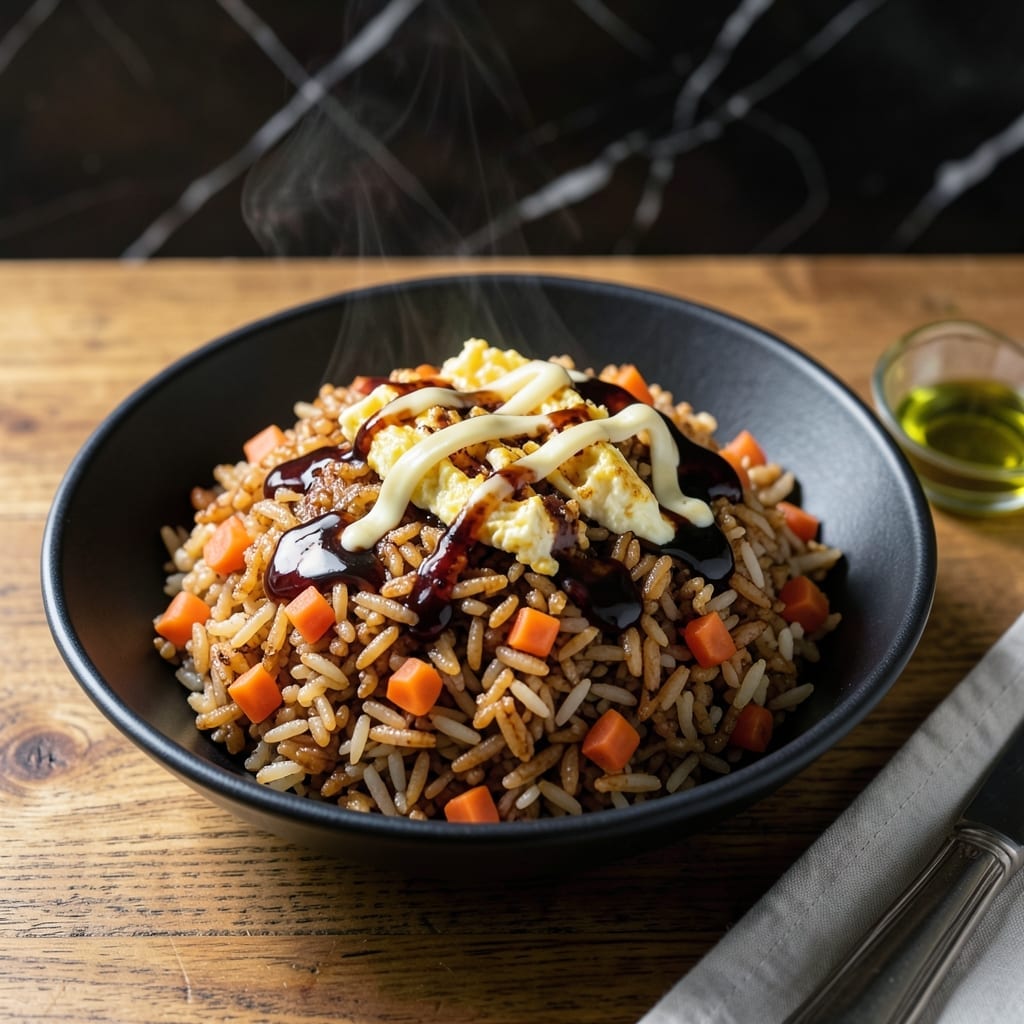
This fried rice delivers bold Korean flavors with minimal effort, transforming leftover rice into a comforting meal. The gochujang paste provides that signature spicy-sweet depth that makes this dish irresistible.
Ready in under 20 minutes, it combines crisp vegetables, tender rice, and a perfectly balanced sauce. The result is a dish that’s both hearty and packed with authentic taste.
Ingredients for Gochujang Fried Rice
Every ingredient here builds bold Korean flavor with minimal effort for this comforting dish.
| Ingredient | Amount | Notes |
|---|---|---|
| Cooked White Rice 🍚 | 4 cups | Day-old, chilled preferred |
| Gochujang Paste 🌶️ | 3 tbsp | Korean chili paste essential |
| Soy Sauce 🫒 | 2 tbsp | Low-sodium recommended for balance |
| Sesame Oil 🫒 | 1 tbsp | Toasted for nutty aroma |
| Vegetable Oil 🫒 | 2 tbsp | Neutral flavor for frying |
| Carrots 🥕 | 1 whole | Medium, diced small |
| Zucchini 🥒 | 1 whole | Medium, diced small |
| Green Onions 🧅 | 4 whole | Thinly sliced, whites and greens separated |
| Garlic Cloves 🧄 | 3 cloves | Minced for even distribution |
| Large Eggs 🥚 | 3 whole | Beaten for scrambling |
| Sesame Seeds 🌿 | 1 tbsp | Toasted for garnish |
| Honey 🍯 | 1 tbsp | Balances spicy heat |
| Rice Vinegar 🍋 | 1 tbsp | Adds tangy brightness |
The gochujang paste is non-negotiable for authentic flavor. H-Mart or Korean markets carry the best selection—look for brands like Sempio or Chung Jung One. The rice must be cold (day-old is ideal) to prevent mushiness. Jasmine or short-grain works best for texture. For the vegetables, organic carrots and zucchini often have better color and crunch (worth the extra dollar).
No gochujang? Sriracha plus miso paste gets you close but lacks depth. Swap zucchini for bell peppers or snap peas—keep the dice small for even cooking. Tamari instead of soy sauce works for gluten-free. The honey can be brown sugar or maple syrup in a pinch. Skip the sesame oil? You’ll miss that nutty finish, but it’s still tasty.
Leftovers keep 3-4 days in the fridge but taste best fresh. Reheat in a skillet with a splash of water to revive the rice. Freezing isn’t ideal—rice gets mushy. Toast sesame seeds just before serving for maximum crunch (worth the extra minute).
Why You’ll Love This Recipe
- I’ll be real: this saves me on busy nights when I need dinner in 15 minutes flat.
- One Pan Wonder: I just toss leftover rice with gochujang, soy sauce, and a drizzle of sesame oil—no chopping, no fuss.
- Flavor Bomb: That first bite of spicy-sweet gochujang with the nutty sesame oil? Ridiculously good.
- Weeknight Hero: I’ll be real: this saves me on busy nights when I need dinner in 15 minutes flat.
Step-by-Step Instructions for Gochujang Fried Rice
Here’s the method. Straightforward, tested, works every time.
Step 1: Prepare the Vegetables and Aromatics
Dice the Carrots and Zucchini into small, uniform pieces—about ¼-inch cubes. This ensures even cooking and prevents larger pieces from becoming mushy while smaller ones overcook.
Thinly slice the 4 whole Green Onions, keeping the whites and greens separate. Mince the 3 cloves Garlic Cloves finely for even distribution throughout the dish. Having all your vegetables prepared beforehand (mise en place) keeps the cooking process smooth and prevents burning.
Step 2: Scramble the Eggs and Set Aside
Heat 1 tablespoon Vegetable Oil in a large skillet or wok over medium-high heat. Pour in the 3 whole Large Eggs and scramble until just set but still slightly runny. This takes about 1-2 minutes—you want soft, tender curds, not dry, overcooked eggs.
Remove the scrambled eggs from the pan and set aside. The residual heat will continue cooking them slightly, so pulling them off a touch early ensures they stay moist. Wipe the skillet clean to start fresh for the next step.
Step 3: Stir-Fry the Vegetables and Aromatics
Add the remaining 1 tablespoon Vegetable Oil to the skillet and heat over medium-high heat. Add the diced Carrots and Zucchini, stir-frying for 3-4 minutes until the vegetables begin to soften but retain a slight bite.
Add the minced 3 cloves Garlic Cloves and the white parts of the 4 whole Green Onions. Stir-fry for an additional 30-45 seconds until the garlic is fragrant but not browned. Browning garlic can make it bitter, so keep it moving in the pan.
Step 4: Combine Rice and Sauce
Break up the 4 cups Cooked White Rice with your hands to prevent clumping, then add it to the skillet. Stir-fry for 2 minutes to heat the rice through and integrate it with the vegetables.
In a small bowl, whisk together the 3 tbsp Gochujang Paste, 2 tbsp Soy Sauce, 1 tbsp Honey, and 1 tbsp Rice Vinegar. Pour this mixture over the rice, followed by the 1 tbsp Sesame Oil. Stir-fry for another 2-3 minutes until the rice is evenly coated and heated through.
Step 5: Finish and Garnish
Return the scrambled eggs to the skillet and stir to combine. Cook for an additional 1 minute to ensure everything is hot. The eggs should be fully integrated, and the rice should have a vibrant, glossy appearance from the sauce.
Remove from heat and stir in the green parts of the 4 whole Green Onions and 1 tbsp Sesame Seeds. The residual heat will slightly wilt the greens and toast the sesame seeds, enhancing their aroma. Serve immediately while hot, with additional sesame seeds for garnish if desired.
Pro Tips For Making Gochujang Fried Rice
- Use Cold Rice: Always start with day-old, cold rice—freshly cooked rice turns mushy. I learned this the hard way after making a sad, sticky pan of fried rice my first try.
- Bloom the Gochujang: Cook the gochujang paste in a little vegetable oil for 1-2 minutes before adding anything else. It mellows the raw heat and deepens the flavor.
- High Heat Only: Crank the heat to medium-high and keep it there. After burning three batches, I finally figured out that low heat makes the rice steam instead of fry.
- Finish with Sesame Oil: Drizzle the sesame oil at the very end, off the heat—about 1 teaspoon is perfect. Sounds weird, but it works: the flavor stays bright instead of turning bitter.
Dietary Considerations for This gochujang fried rice
Gluten-Free Option
Swap the soy sauce for tamari or a certified gluten-free alternative. I recommend San-J Tamari—it delivers the same umami depth without the gluten. Always check labels, as some gochujang brands may contain wheat.
Vegetarian Adaptation
Simply omit the eggs or replace them with firm tofu, crumbled and pan-fried until golden. I’ve tried this with extra-firm tofu from Nasoya, and it absorbs the gochujang flavor beautifully. 🌱
Vegan Version
Use avocado oil instead of vegetable oil and replace honey with maple syrup or agave nectar. The dish remains just as vibrant and flavorful. I often use pure maple syrup for a deeper, earthier sweetness.
Lower Sodium
Reduce the soy sauce to 1 tbsp and use low-sodium gochujang if available. I’ve found Sempio makes a lower-sodium version that still packs a punch. Balance the flavors with an extra ½ tbsp rice vinegar.
Spice Level Control
For milder heat, start with 1-2 tbsp gochujang and add more to taste. If you love heat, bump it up to 4 tbsp. I always recommend tasting as you go—gochujang heat varies by brand. 🔥
Nut Allergy Note
Ensure your sesame oil is processed in a nut-free facility if allergies are a concern. While sesame isn’t a tree nut, cross-contamination can occur. I use Kadoya brand for its clean processing standards.
Nutrition Facts
Frequently Asked Questions
Can I use fresh rice instead of day-old?
Fresh rice is too moist and will turn mushy when stir-fried. Always use chilled, day-old rice for the best texture. Spread hot rice on a tray to cool quickly if you’re in a hurry.
How do I adjust the spice level?
Start with 1-2 tbsp gochujang for mild heat, or increase to 4 tbsp for extra spice. Taste as you go—brands vary in intensity. Balance with extra honey if needed.
What can I substitute for gochujang?
Mix 2 tbsp sriracha with 1 tbsp miso paste for a similar flavor. It won’t be identical, but it works in a pinch. Always adjust sweetness with extra honey or sugar.
Can I make this ahead of time?
It’s best served fresh, but leftovers keep 3-4 days refrigerated. Reheat in a skillet with a splash of water to restore texture. Avoid freezing—rice becomes mushy.

- Gobi Fried Rice Recipe: Spiced Cauliflower Wok Delight - October 8, 2026
- Glutinous Rice Roll Recipe: Chewy Pillows With Savory Fillings - October 8, 2026
- Garlic Jasmine Rice Recipe: Fragrant Grains with Aromatic Depth - October 8, 2026