
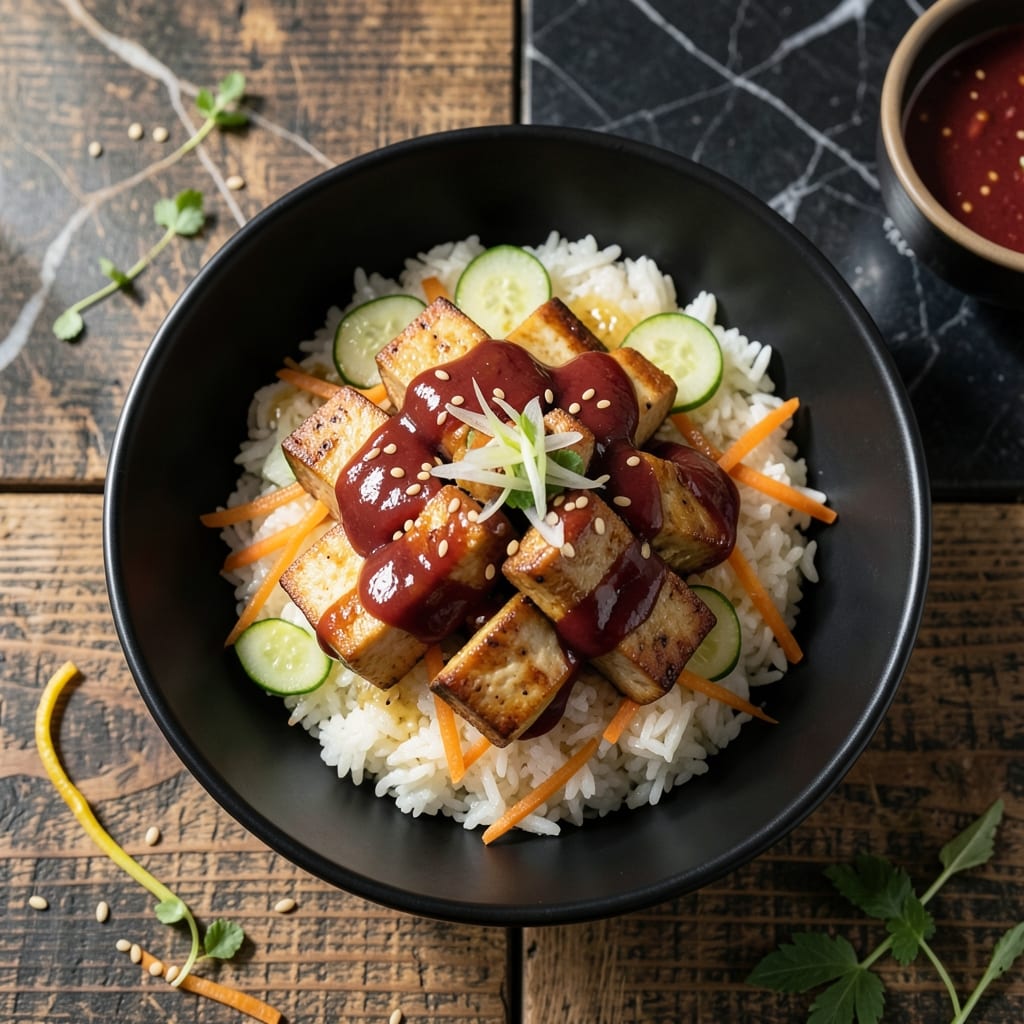
This vegetarian Korean rice bowl brings bold, traditional flavors to your table without compromise. The dish combines wok-charred vegetables with a rich, spicy-sweet gochujang glaze that delivers depth in every bite.
I developed this version to capture authentic Korean taste using only plant-based ingredients. The secret is high-heat cooking to achieve those signature charred edges while keeping the vegetables tender-crisp.
The gochujang glaze ties everything together, balancing heat with a touch of sweetness that enhances the natural flavors of the vegetables. It’s a satisfying meal that doesn’t rely on meat for substance.
Serve over steamed rice for a complete, flavorful dish that’s ready in 30 minutes. Here’s how to make it perfectly every time.
Ingredients for Korean Rice Bowl Recipe Vegetarian
Bold Korean flavors start with fresh vegetables and a punchy gochujang glaze.
| Ingredient | Amount | Notes |
|---|---|---|
| Jasmine Rice 🍚 | 2 cups | Uncooked, rinsed thoroughly |
| Gochujang 🌶️ | 3 tbsp | Korean red pepper paste |
| Soy Sauce 🫒 | 2 tbsp | Low-sodium preferred |
| Maple Syrup 🍁 | 1 ½ tbsp | Balances the heat |
| Rice Vinegar 💧 | 1 tbsp | Adds brightness to glaze |
| Sesame Oil 🫒 | 1 tsp | Toasted for depth |
| Garlic Cloves 🧄 | 4 cloves | Minced for glaze |
| Fresh Ginger 🌿 | 1 tbsp | Grated for aroma |
| Bell Peppers 🌶️ | 2 whole | Thinly sliced for charring |
| Broccoli Florets 🥦 | 3 cups | Cut into bite-sized pieces |
| Carrots 🥕 | 2 whole | Julienned for texture |
| Zucchini 🥒 | 1 whole | Sliced into half-moons |
| Green Onions 🧅 | ½ cup | Sliced thin for garnish |
| Sesame Seeds 🌾 | 1 tbsp | Toasted for garnish |
| Vegetable Oil 🫒 | 2 tbsp | High smoke point for wok |
The gochujang is non-negotiable here—look for Sempio or Mother-in-Law’s brand at H Mart or the Asian aisle. Fresh ginger and garlic add depth, so don’t skip them (the jarred stuff just won’t cut it). For the rice, jasmine or short-grain absorbs the glaze best. I grab mine from Trader Joe’s (cheap and reliable).
No gochujang? Sriracha plus miso paste gets you close but won’t be the same. Swap broccoli for cauliflower or snap peas if that’s what’s in season. The maple syrup can be honey or agave (though this version keeps it vegan). For extra protein, toss in crispy tofu cubes at the end.
The glaze keeps 1 week in the fridge if you make extra. Veggies cook best fresh, but leftovers reheat well for 3-4 days. Store rice separately to keep it from getting mushy.
Why You’ll Love This Recipe
- One Pot Meal: I just toss everything in a pot—jasmine rice soaks up the gochujang and soy sauce while it cooks, no extra pans.
- Sweet & Spicy: The maple syrup balances the heat from gochujang so well, it’s that sticky, tangy bite I crave every time.
- Meal Prep Hero: I make a big batch on Sunday, and it reheats like a dream for lunches all week.
- Budget Stretch: Honestly, a little gochujang and soy sauce go a long way—this fills us up without breaking the bank.
Instructions
Here’s the method that brings out the best in every vegetable with that signature Korean kick.
Step 1: Cook the jasmine rice
Rinse the 2 cups jasmine rice thoroughly under cold water until the water runs clear. This removes excess starch and prevents the grains from becoming gummy. I like to use a fine-mesh strainer for this process.
Transfer the rinsed rice to a pot with 2 cups of water and bring to a boil. Once boiling, reduce heat to low, cover, and simmer for 15 minutes until all water is absorbed and the grains are tender. Remove from heat and let it sit covered for another 5 minutes—this final steam ensures perfectly fluffy rice.
Step 2: Prepare the gochujang glaze
In a small bowl, whisk together the 3 tbsp gochujang, 2 tbsp soy sauce, 1.5 tbsp maple syrup, 1 tbsp rice vinegar, and 1 tsp sesame oil until smooth. The mixture should be glossy and slightly thick, with no visible clumps of gochujang.
Add the 4 cloves minced garlic cloves and 1 tbsp grated fresh ginger to the bowl and stir to combine. Let this glaze sit for 5 minutes while you prep the vegetables—this resting time allows the flavors to meld and the aromatics to infuse the sauce.
Step 3: Wok-char the vegetables
Heat the 2 tbsp vegetable oil in a large wok or skillet over high heat until it shimmers. Add the 2 whole thinly sliced bell peppers, 3 cups broccoli florets, 2 whole julienned carrots, and 1 whole zucchini sliced into half-moons.
Stir-fry for 6-8 minutes until the vegetables are tender-crisp and starting to char in spots. You want to see those beautiful dark brown edges on the bell peppers and zucchini—this caramelization adds depth to the dish. Keep the vegetables moving constantly to prevent burning.
Step 4: Finish with glaze and garnish
Pour the gochujang glaze over the charred vegetables and stir to coat evenly. Cook for an additional 2-3 minutes until the sauce thickens slightly and clings to the vegetables. You’ll notice the sauce darkening and becoming glossy—this means it’s reducing properly.
Remove from heat and let the vegetables rest for 2 minutes. Divide the cooked jasmine rice among bowls, top with the wok-charred vegetables, and drizzle any remaining sauce from the pan over the top. Garnish with 0.5 cup sliced green onions and 1 tbsp toasted sesame seeds for that final touch of freshness and crunch.
Pro Tips For Making Korean Rice Bowl Recipe Vegetarian
- Rinse the Rice: Wash jasmine rice until the water runs clear—this removes excess starch so your bowl ends up fluffy, not gummy.
- Bloom the Gochujang: Heat gochujang with a splash of rice vinegar and maple syrup for 1-2 minutes on low heat to deepen its flavor before mixing with rice.
- Skip the Overcook: I learned this the hard way—gochujang burns easily, so keep the heat low and stir constantly when combining with other sauces.
- Use Warm Rice: Toss the cooked jasmine rice with the sauce while it’s still warm—it soaks up the gochujang and soy sauce way better than cold rice.
Perfect Pairings for This Recipe
Side Dish Pairings
For a light contrast, serve with quick-pickled cucumbers—toss 1 cup sliced cucumbers with 2 tbsp rice vinegar, 1 tsp sugar, and ½ tsp salt. The cool crunch balances the heat perfectly. 🥒
Kimchi Complement
Add ½ cup store-bought kimchi on the side for extra tang and spice. I grab Mother-in-Law’s brand from H Mart—it’s fermented just right. The probiotics also add a gut-health boost to your meal.
Drink Pairings
A cold Korean barley tea (boricha) cuts through the richness with its nutty, toasted flavor. For alcohol, a crisp Soju or light Asian lager like Hite works beautifully to refresh your palate. 🍺
Extra Texture
Top your bowl with crispy fried shallots for an irresistible crunch. You’ll find them in the Asian aisle at most grocery stores. Alternatively, add crushed roasted seaweed snacks for a salty, umami punch.
Dessert Follow-Up
End the meal with sweet red bean buns (hoppang) for a traditional Korean finish. These soft, steamed buns filled with sweet red bean paste are a comforting way to complete your vegetarian Korean feast. ✨
Nutrition Facts
Frequently Asked Questions
Can I use brown rice instead of jasmine?
Yes, but adjust cooking time to 40-45 minutes and use 2.5 cups water per 1 cup rice. The texture will be chewier, but it holds up well to the bold flavors.
How do I make the glaze less spicy?
Cut the gochujang to 2 tbsp and add 1 extra tbsp maple syrup. For mild heat, substitute 1 tbsp gochujang with 1 tbsp miso paste.
What if my vegetables get soggy?
Cook in batches to avoid overcrowding the pan. Use high heat and keep them moving constantly. The charred edges should appear in 6-8 minutes.
Can I add tofu for extra protein?
Press and cube 14 oz firm tofu, then pan-fry until golden before adding to the vegetables. It soaks up the glaze beautifully.

- Mujadara Rice and Lentils Recipe: Earthy Spiced Lentils With Caramelized Onions - November 1, 2026
- Naija Fried Rice Recipe: Street-Style Spice With Veggie Crunch - November 1, 2026
- Mushy Rice Recipe: Fluffy Grains Transformed in Minutes - November 1, 2026