
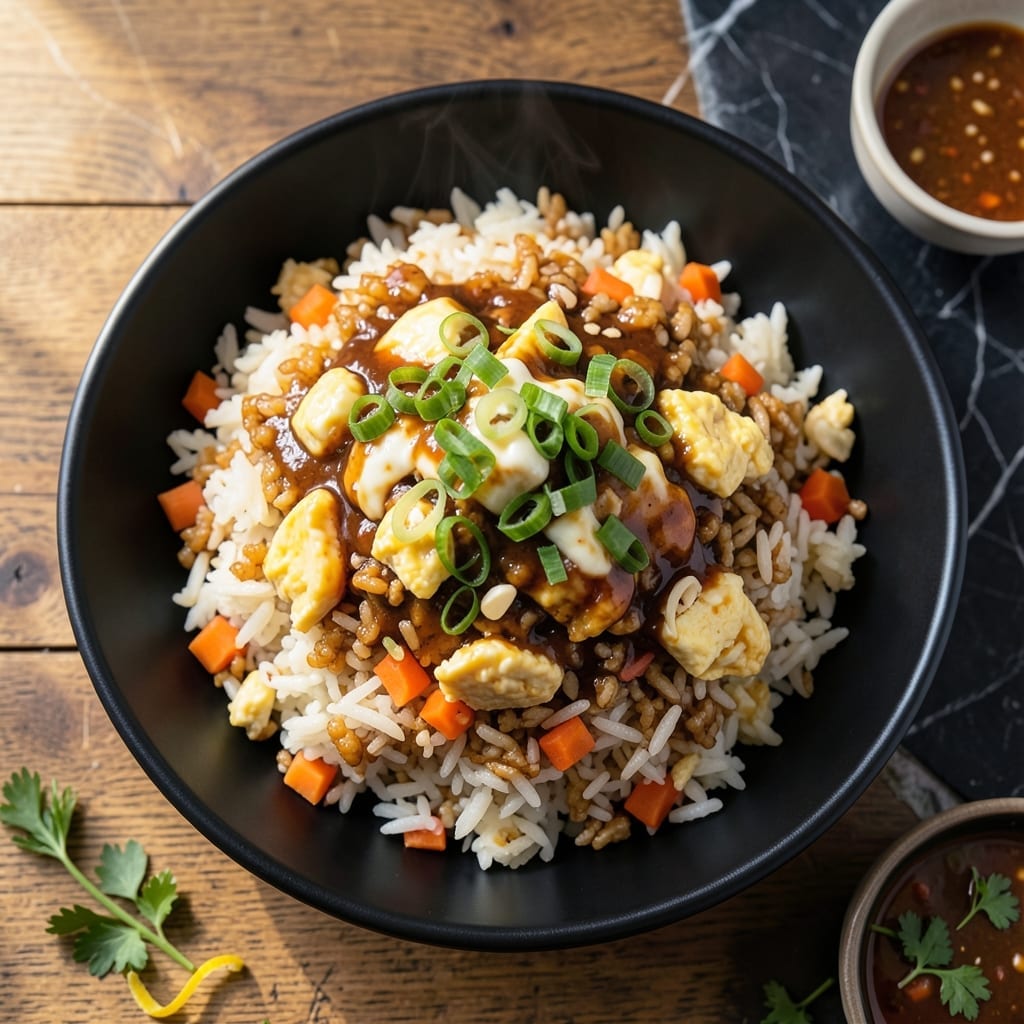
This fried rice delivers restaurant-quality results with minimal effort. The secret lies in using day-old rice and cooking on high heat to achieve that signature wok-charred texture.
With just 5 ingredients and 15 minutes, you’ll have savory bites loaded with fluffy egg, soy sauce depth, and perfect texture every time. No special equipment needed.
Ingredients for Easy Fried Rice Recipe with Egg and Soy Sauce
Five essential ingredients plus a few extras for authentic wok-charred texture and savory depth.
| Ingredient | Amount | Notes |
|---|---|---|
| Day-Old Cooked White Rice 🍚 | 4 cups | Cold, preferably overnight |
| Large Eggs 🥚 | 3 whole | Beaten until frothy |
| Soy Sauce 🫒 | 3 tbsp | Low-sodium preferred for control |
| Neutral Cooking Oil 🛢️ | 2 tbsp | High smoke point, like vegetable |
| Green Onions 🧅 | 3 whole | Thinly sliced, white and green parts |
| Garlic Cloves 🧄 | 2 cloves | Minced finely for even distribution |
| Frozen Peas 🌱 | ¾ cup | No need to thaw first |
| Carrot 🥕 | 1 whole | Medium, finely diced |
| Sesame Oil 🫒 | 1 tsp | Toasted, for finishing aroma |
| Ground White Pepper 🧂 | ¼ tsp | Authentic wok hei flavor |
The rice is non-negotiable here. Day-old, cold rice from the fridge is what gives you those separate, slightly chewy grains that don’t turn to mush. Freshly cooked rice releases too much starch. Most grocery stores carry pre-cooked rice in the refrigerated section if you’re in a pinch. I typically use jasmine rice for its fragrant quality, but long-grain white works equally well.
No soy sauce? Tamari or coconut aminos work in a 1:1 ratio. Out of green onions? Substitute with thinly sliced regular onion (cook it first to mellow the bite). The peas and carrots are classic, but frozen corn or bell peppers add color without changing the texture. For extra umami, a dash of fish sauce (if not vegetarian) deepens the flavor profile.
This keeps 3-4 days in the fridge, though it’s best fresh. Reheat in a skillet with a splash of water to revive the texture. Freezing isn’t ideal—the rice loses its bounce. Prep all ingredients before starting; fried rice cooks fast on high heat once the wok is hot.
Why You’ll Love This Recipe
- One-Pan Wonder: I love that I can go from chopping green onions to eating in 15 minutes—just a skillet and a spatula.
- Umami Bomb: The soy sauce caramelizes with the egg into little pockets of savory goodness that hit every time.
- Weeknight Rescue: Honestly, it’s my go-to when the fridge is nearly empty and the clock’s ticking.
- Leftovers Upgraded: Day-old rice turns into something crave-worthy, and I’ll be real: it’s better than the first meal.
Step-by-Step Instructions for Wok-Charred Savory Bites
Master the wok technique for perfectly textured rice with minimal effort and maximum flavor.
Step 1: Prepare and Pre-Cook Aromatics and Vegetables
Finely dice the carrot into uniform ¼-inch pieces and thinly slice the 3 whole Green Onions, keeping white and green parts separate. Mince the 2 cloves Garlic Cloves until nearly paste-like for even flavor distribution.
Heat 1 tablespoon Neutral Cooking Oil in a wok over medium-high heat until shimmering. Add the diced carrot and stir-fry for 2-3 minutes until slightly softened but still crisp. Remove from wok and set aside.
This pre-cooking ensures the vegetables retain texture and don’t turn mushy when combined with the rice later.
Step 2: Scramble the Eggs for Silky Texture
Beat the 3 whole Large Eggs until frothy in a small bowl. Add the remaining 1 tablespoon Neutral Cooking Oil to the wok and swirl to coat. When the oil is hot but not smoking, pour in the beaten eggs.
Let the eggs set for 10-15 seconds before gently scrambling with a spatula. Cook until just set but still slightly runny—this ensures they’ll finish perfectly when mixed with the hot rice. Remove the eggs from the wok and set aside with the carrots.
Step 3: Char the Rice and Build Flavor Layers
Increase heat to high and add the 4 cups Day-Old Cooked White Rice to the wok. Use the spatula to break up any clumps and press the rice into the hot surface. Let it sit undisturbed for 30-45 seconds to develop a slight char—this creates the authentic wok hei flavor.
Add the minced garlic and white parts of the Green Onions. Stir-fry for 30 seconds until fragrant. Return the cooked carrot and eggs to the wok, then add the 0.75 cup Frozen Peas (no need to thaw).
The rice should be hot and slightly crispy at the edges, with each grain distinct and separate.
Step 4: Season and Finish with Signature Touches
Drizzle the 3 tbsp Soy Sauce evenly over the rice mixture. Toss everything together for 1-2 minutes until the sauce coats each grain evenly and the ingredients are fully incorporated. The soy sauce should create a light, glossy sheen on the rice without making it soggy.
Remove from heat and stir in the 1 tsp Sesame Oil and 0.25 tsp Ground White Pepper. The sesame oil adds a nutty aroma, while the white pepper provides a subtle, authentic heat that complements the dish’s savory profile.
Step 5: Garnish and Serve Immediately
Transfer the fried rice to a serving dish and garnish with the reserved green parts of the Green Onions. The contrast between the hot rice and fresh, crisp green onions adds both color and a bright, oniony bite to each serving.
Serve immediately while hot—the texture is best right out of the wok, with each grain distinct and the eggs still tender. The dish should have a balanced savory flavor with hints of sweetness from the carrots and peas, rounded out by the aromatic sesame finish.
Pro Tips For Making Easy Fried Rice Recipe With Egg And Soy Sauce
- Crank the Heat: Use the highest heat your stove can handle—this is what gives fried rice that classic smoky flavor and prevents soggy grains. I learned this the hard way after too many batches of steamed, sad rice.
- Dry the Rice: Spread your day-old rice on a tray and break up any clumps before frying. Sounds weird, but it works: even slightly damp rice will turn mushy in the pan.
- Scramble First, Mix Later: Push the rice to one side of the pan and scramble the eggs in the empty space before combining. After burning three batches, I finally figured out this keeps the eggs soft and distinct.
- Soy Sauce Last: Add the soy sauce at the very end and toss quickly—this keeps the rice from absorbing too much liquid and turning gray. My grandmother swore by this, and she was right.
Dietary Considerations for This Dish
Gluten-Free Option
Swap regular soy sauce for tamari or certified gluten-free soy sauce. Both provide the same umami depth without wheat. I recommend San-J tamari—it’s widely available and has excellent flavor. Always check labels, as some brands add wheat during processing. 💡
Vegetarian Adaptation
This dish is naturally vegetarian if you skip any meat add-ins. For extra protein, stir in ½ cup crumbled firm tofu with the eggs. The tofu absorbs the soy sauce beautifully and adds satisfying texture without overpowering the dish.
Vegan Version
Replace eggs with ¼ cup chickpea flour mixed with ¼ cup water to create a similar scramble. Cook it just like eggs, then proceed with the recipe. The result is surprisingly similar in texture and flavor.
Reducing Sodium
Use low-sodium soy sauce and add 1 tsp fish sauce (if not vegetarian) for depth. This cuts sodium by 30-40% while maintaining rich flavor. I find the fish sauce adds complexity without extra salt.
Nut Allergy Note
Ensure your sesame oil is processed in a nut-free facility if allergies are a concern. Kadoya brand offers nut-free certification. Omit sesame oil entirely and finish with 1 tsp toasted vegetable oil for similar aroma.
Diabetic-Friendly
Use cauliflower rice instead of white rice to reduce carbs. Cook it the same way, but reduce cooking time to 2-3 minutes to prevent mushiness. The flavor profile remains identical with a lighter texture.
Nutrition Facts
Frequently Asked Questions
Can I use fresh rice instead of day-old?
No, fresh rice releases too much starch and will turn mushy. Always use cold, day-old rice for the best texture. Spread hot rice on a tray and refrigerate for 1-2 hours if you’re in a hurry.
Why is my fried rice soggy?
Sogginess usually comes from overcrowding the pan or not using high heat. Cook in batches if needed and ensure your wok is very hot before adding ingredients.
What can I substitute for soy sauce?
Try tamari for gluten-free or coconut aminos for a milder flavor. Both work in a 1:1 ratio without changing the recipe’s balance.

- Rice Pudding Recipe With Eggs and Milk: Old-Fashioned Custard-Style Comfort - September 30, 2026
- Rice Noodle Sauce Recipe: Bold Umami Depth for Authentic Stir-Fry - September 30, 2026
- Rice Pilaf Recipe: Fragrant Basmati With Toasted Vermicelli - September 30, 2026