
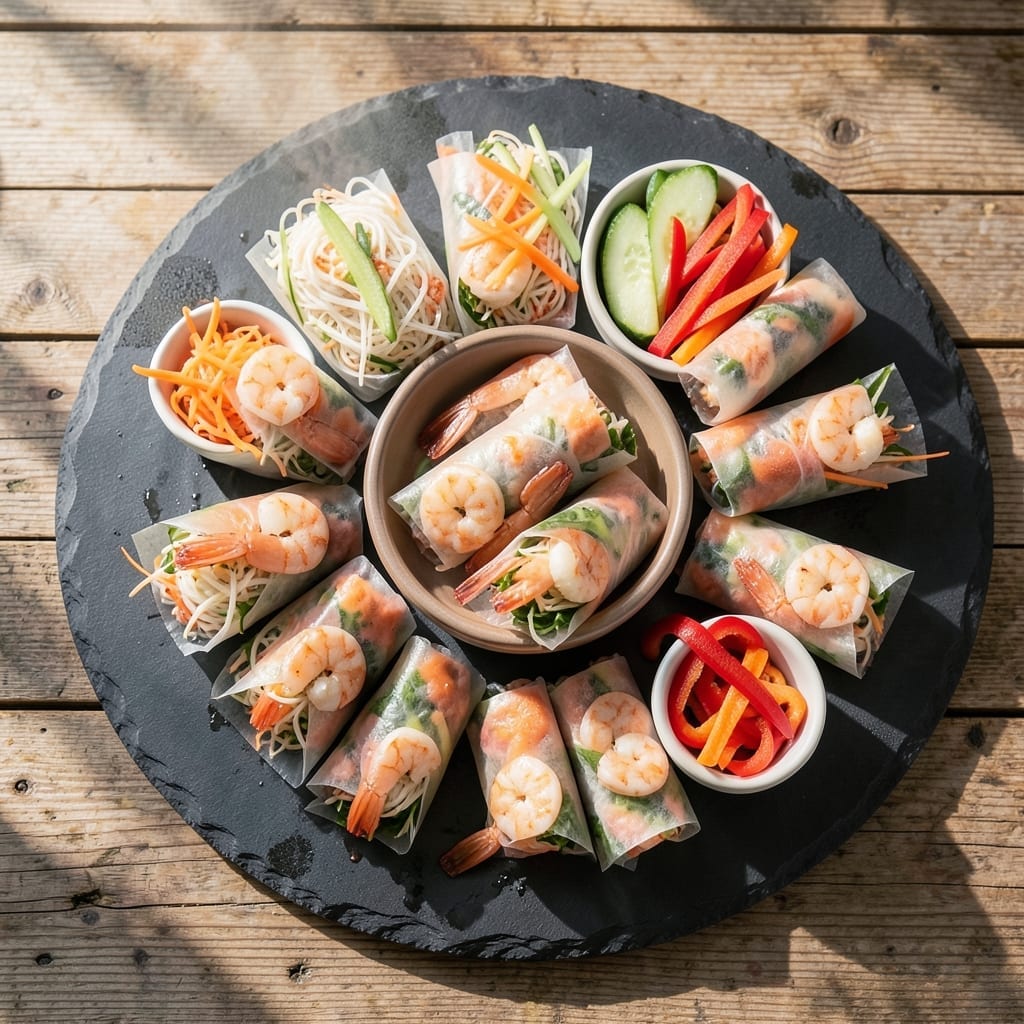
Rice paper spring rolls capture the essence of Vietnamese cuisine with their crispy texture and fresh ingredients. I developed this method after years of testing to achieve that perfect balance between delicate wrappers and vibrant fillings.
The key is proper hydration of the rice paper—too little makes it crack, too much turns it gummy. I use a systematic approach: brief soak, quick fill, then immediate rolling. This ensures each roll holds together without tearing.
You’ll end up with translucent wrappers showcasing colorful vegetables and shrimp, all encased in a crispy exterior. The contrast between the soft fillings and the firm wrapper creates a satisfying texture with every bite.
Serve with peanut or hoisin sauce for dipping. The result is restaurant-quality spring rolls that impress every time.
Ingredients for Recipe for Spring Rolls Using Rice Paper
Fresh, crispy, and packed with vibrant flavors. These are your spring roll essentials.
| Ingredient | Amount | Notes |
|---|---|---|
| Rice Paper Wrappers 🍚 | 8 sheets | Spring roll size, about 8.5 inches diameter |
| Vermicelli Rice Noodles 🍜 | 4 oz | Thin variety, cooked and cooled |
| Medium Shrimp 🍤 | 12 pieces | Peeled, deveined, cooked |
| Carrots 🥕 | 1 whole | Julienned into matchsticks |
| English Cucumber 🥒 | 1 whole | Julienned, seeds removed |
| Red Bell Pepper 🌶️ | 1 whole | Thinly sliced into strips |
| Fresh Lettuce 🥬 | 4 pieces | Butter or romaine, leaves separated |
| Fresh Mint Leaves 🌿 | ½ cup | Loosely packed, stems removed |
| Fresh Cilantro Leaves 🍃 | ½ cup | Loosely packed, stems removed |
| Green Onions 🧅 | 3 whole | Thinly sliced on diagonal |
| Rice Vinegar 💧 | 1 tbsp | For soaking rice paper |
| Warm Water 💦 | 2 cups | For hydrating wrappers |
| Peanut Sauce 🥜 | ½ cup | For serving, store-bought or homemade |
| Hoisin Sauce 🫕 | ¼ cup | For serving, optional |
Rice paper is the foundation, so splurge on a quality brand like Three Ladies—it’s more pliable and less prone to tearing. I grab mine at Asian markets where the selection is freshest and the prices unbeatable. The shrimp should be wild-caught if possible (check the label), and the rice noodles? Thin vermicelli from Trader Joe’s cooks up perfectly every time. Don’t skip cooling the noodles completely—they’ll steam the wrappers otherwise.
No shrimp? Extra-firm tofu (pressed and sliced into strips) or thinly sliced avocado works great. Short on herbs? Basil or Thai basil can stand in for mint or cilantro. The rice paper itself is gluten-free, but double-check other ingredients if that’s a concern. And if you can’t find spring roll-sized wrappers, round ones are fine—just trim off the excess after rolling.
Keep everything prepped and ready before you start wrapping—10 minutes max from soak to roll. Unused rice paper stays good in a cool, dry place for 6-12 months. Once rolled, these are best eaten fresh but will keep covered in the fridge for 4 hours (they’ll soften over time).
Why You’ll Love This Recipe
- No Cook Needed: I just soak the rice paper, stuff with shrimp and veggies, and roll—no stove time required.
- Fresh Crunch: The cucumber and carrots stay crisp against the soft noodles and shrimp. Honestly, that texture contrast is everything.
- Lunchbox Hero: These keep perfectly in the fridge for two days, so I pack them for work without a second thought.
- Budget Stretcher: A pound of shrimp and a bag of rice paper makes enough for four generous servings. I’ll be real: it’s cheaper than takeout.
Step-by-Step Instructions for Spring Rolls Using Rice Paper
Here’s the method I use to create perfectly fresh and crispy rolls every time.
Step 1: Prepare Your Filling Ingredients
Start by arranging all your prepped ingredients in separate bowls for easy access. You’ll need the 4 oz Vermicelli Rice Noodles cooked and cooled, the 12 pieces Medium Shrimp halved lengthwise, and all your vegetables: julienned Carrots, julienned English Cucumber with seeds removed, and thinly sliced Red Bell Pepper.
Also prepare your herbs and greens: tear the 4 pieces Fresh Lettuce into manageable pieces, and have your 0.5 cup Fresh Mint Leaves, 0.5 cup Fresh Cilantro Leaves, and thinly sliced Green Onions ready. This mise en place approach prevents the rice paper from drying out while you search for ingredients.
Step 2: Hydrate the Rice Paper Wrappers
Fill a shallow dish with the 2 cups Warm Water and add the 1 tbsp Rice Vinegar. The vinegar helps soften the 8 sheets Rice Paper Wrappers without making them gummy. Submerge one wrapper at a time for about 5-8 seconds until pliable but still slightly firm.
Real talk: over-soaking makes them tear too easily. Lay the hydrated wrapper on a clean kitchen towel and pat gently to remove excess water. The wrapper should be soft enough to fold but still strong enough to hold its shape. Work quickly but don’t rush—this is the moment that matters.
Step 3: Assemble the Spring Rolls
Place a hydrated wrapper on your work surface. About a third of the way up from the bottom, arrange a small amount of each ingredient: a few noodles, 2-3 shrimp halves, and a selection of vegetables and herbs. Don’t overfill—this is the most common mistake that leads to torn wrappers.
Fold the bottom edge up over the filling, then fold in the sides like a burrito. Roll tightly but gently toward the top edge, keeping the pressure even. The wrapper should seal itself as you roll. Place each finished roll seam-side down on a platter lined with parchment paper to prevent sticking.
Step 4: Serve Immediately with Dipping Sauces
These spring rolls are best served fresh, when the wrapper is still slightly chewy and the vegetables maintain their crispness. Arrange them on a serving platter and provide the 0.5 cup Peanut Sauce and 0.25 cup Hoisin Sauce in small bowls for dipping.
I like to garnish the platter with any leftover herbs for a pop of color. The contrast of textures—crunchy veggies, tender shrimp, and chewy wrapper—with the rich dipping sauces creates that authentic Vietnamese experience. Serve immediately for maximum freshness and that perfect crispy texture.
Pro Tips For Making Recipe For Spring Rolls Using Rice Paper
- Soak Rice Paper Briefly: Dip the rice paper in warm water for 5-7 seconds only—any longer and it becomes too fragile to work with. I learned this the hard way after tearing three wrappers in a row.
- Slice Veggies Thin: Julienne the carrots and cucumber into matchstick pieces, about 2 inches long. Sounds tedious, but it makes rolling easier and ensures every bite has a good texture.
- Skip Overfilling: Use about 2-3 shrimp and a small handful of noodles per roll—any more and the rice paper will split. After my first few burst rolls, I finally accepted that less is more.
- Use Damp Towel: Keep a damp kitchen towel over the rice paper stack while working to prevent them from drying out. My grandmother swore by this, and she was right: it stops them from turning into brittle sheets.
Serving Suggestions for This Dish
Platter Presentation
I arrange these on a bamboo serving tray lined with butter lettuce leaves for an authentic touch. The green base makes the rolls pop visually while keeping them from sticking. David always compliments the presentation—it’s the little details that count. 🥗
Dipping Sauce Setup
Place the peanut sauce and hoisin sauce in small ceramic bowls with spoons for easy serving. I add a drizzle of sriracha to my peanut sauce for a spicy kick. Position the sauces at opposite ends of the platter for balance.
Garnish Ideas
Sprinkle toasted peanuts and sesame seeds around the platter for texture contrast. I also add lime wedges on the side—squeezing fresh lime over the rolls just before eating brightens all the flavors.
Family Style Service
For casual gatherings, I serve these on a large wooden board with all the sauces and garnishes in the center. This lets everyone customize their dipping experience. The kids love building their own flavor combinations.
Individual Portions
When hosting a dinner party, I create individual plates with 2-3 rolls each, arranged with sauce in a small ramekin. This feels more elegant and prevents double-dipping. 💫
Temperature Note
Remember these are best served at room temperature—the flavors shine brightest when not chilled. If you must store them, cover with a damp towel for up to 1 hour before serving to maintain texture.
Nutrition Facts
Frequently Asked Questions
What’s the best way to soften rice paper without tearing?
Use warm water with a splash of rice vinegar and soak for 5-8 seconds. The wrapper should be pliable but still slightly firm. Over-soaking makes it gummy and prone to tearing.
Can I make these ahead of time?
They’re best served fresh, but you can prep fillings a day in advance. Wrap rolls up to 1 hour before serving, covering with a damp towel to prevent drying. Avoid refrigerating—they’ll lose crispness.
How do I prevent my rolls from sticking together?
Place finished rolls seam-side down on parchment paper. Keep them spaced apart until serving. This prevents the sticky rice paper from fusing together.
What can I use instead of shrimp?
Try extra-firm tofu, thinly sliced avocado, or even grilled chicken. Each adds a different texture but pairs well with the fresh herbs and veggies.

- Rice Pudding Recipe With Eggs and Milk: Old-Fashioned Custard-Style Comfort - September 30, 2026
- Rice Noodle Sauce Recipe: Bold Umami Depth for Authentic Stir-Fry - September 30, 2026
- Rice Pilaf Recipe: Fragrant Basmati With Toasted Vermicelli - September 30, 2026