
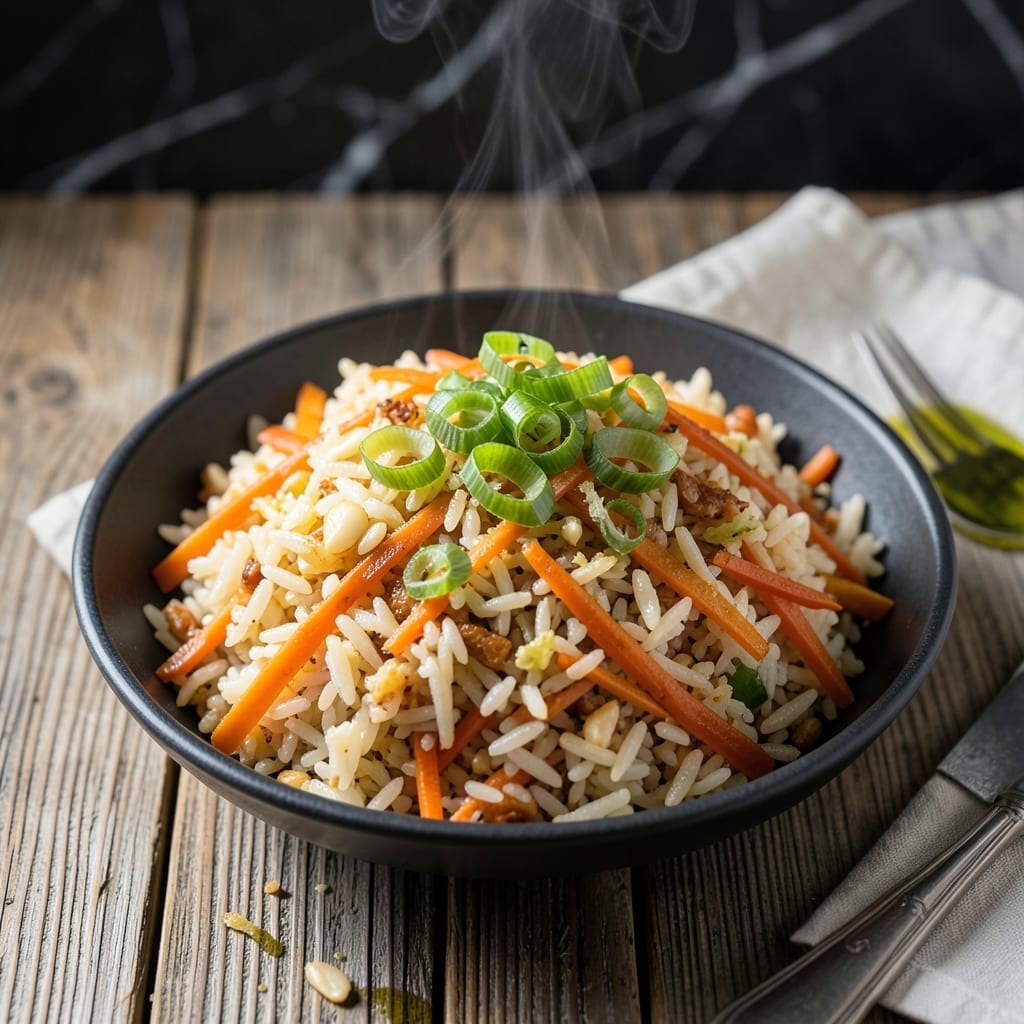
Achieving wok-tossed perfection with kosher fried rice requires precision and respect for tradition. This dish transforms simple ingredients into a savory, textured creation that honors dietary guidelines without sacrificing flavor.
High heat is essential for creating those signature charred edges on the vegetables and rice. Each ingredient is carefully selected to maintain kosher standards while delivering the bold, aromatic profile that defines authentic fried rice.
The result is a dish with distinct layers of flavor—chewy rice, crisp vegetables, and a subtle depth from the seasonings. The technique ensures every bite carries the essence of traditional wok cooking.
Serve this as a satisfying side or a light main dish that stays true to its cultural roots while meeting dietary needs.
Ingredients for Kosher Fried Rice
Day-old rice, fresh aromatics, and bold seasonings create this wok-tossed classic with kosher integrity.
| Ingredient | Amount | Notes |
|---|---|---|
| Long-Grain White Rice 🍚 | 3 cups | Day-old, cooked and chilled |
| Vegetable Oil 🫒 | 3 tbsp | High smoke point, divided |
| Garlic Cloves 🧄 | 4 cloves | Minced finely for even distribution |
| Fresh Ginger 🌿 | 1 tbsp | Peeled and grated |
| Carrots 🥕 | 2 whole | Peeled and diced small |
| Green Onions 🧅 | 4 whole | Thinly sliced, whites and greens separated |
| Frozen Peas 🌱 | 1 cup | Thawed and drained |
| Large Eggs 🥚 | 3 whole | Lightly beaten with a pinch of salt |
| Low-Sodium Soy Sauce 💧 | 3 tbsp | Kosher-certified brand preferred |
| Oyster Sauce 🍶 | 1 tbsp | Kosher substitute: vegetarian oyster sauce |
| Sesame Oil 🫒 | 1 tsp | Toasted, for finishing |
| Kosher Salt 🧂 | ½ tsp | Adjust to taste after cooking |
| Ground White Pepper 🌶️ | ¼ tsp | Traditional for authentic flavor |
| Cooked Chicken Breast 🍗 | 1 cup | Diced small, optional protein addition |
The rice is critical—day-old, fully chilled white rice fries up fluffy and separate. Use Jasmine or long-grain for authenticity. For kosher certification, verify soy and oyster sauces bear reliable symbols like OU or OK. Vegetable oil with a high smoke point (peanut or avocado works) prevents bitter flavors. Fresh ginger and garlic from Asian markets often have superior fragrance to supermarket options.
For strict kosher adherence, use vegetarian oyster sauce (made from mushrooms) instead of traditional. No eggs? Skip entirely or add diced tofu for protein. Frozen peas can be swapped for edamame or corn. The chicken is optional—firm tofu or cashews add texture without compromising dietary standards. Always taste before final seasoning.
Cooked rice stores 3-4 days refrigerated—perfect for planning ahead. Completed fried rice keeps 2-3 days but loses texture. For longer storage, freeze uncooked portions of rice. Reheat in a dry skillet to revive the wok-tossed crispness. Never microwave directly from frozen.
Why You’ll Love This Recipe
- One Pan Meal: I toss everything into a single skillet—rice, garlic, ginger, and carrots—and it’s done in a flash.
- Garlic-Ginger Punch: The combo of fresh garlic and ginger gives this fried rice a warm, aromatic kick that’s impossible to resist.
- Lunchbox Hero: I pack leftovers for work and it tastes just as good cold the next day.
- Pantry Staples: Long-grain rice, carrots, and basic spices mean I can make this anytime without a special grocery run.
Step-by-Step Instructions for Wok-Tossed Savory Tradition
Master the technique for perfect texture and flavor in this classic dish.
Step 1: Prepare and Char the Aromatics and Vegetables
Heat 1 tbsp Vegetable Oil in a large wok or skillet over high heat until shimmering. Add the minced Garlic Cloves and grated Fresh Ginger, stirring constantly for 20-30 seconds until fragrant but not browned.
Immediately add the diced Carrots and stir-fry for 2-3 minutes until the edges begin to char slightly. Push the mixture to one side of the pan and add the thawed Frozen Peas and the white parts of the sliced Green Onions to the empty space. Cook for another 1-2 minutes until the peas are bright green and the onions soften.
Step 2: Scramble the Eggs and Integrate Proteins
Create a well in the center of the wok and add the remaining 2 tbsp Vegetable Oil. Pour in the lightly beaten Large Eggs and scramble quickly with a spatula until just set but still slightly runny, about 1-2 minutes.
Add the diced Cooked Chicken Breast and stir-fry for 1-2 minutes until heated through. Break up any large pieces of egg to distribute evenly. The chicken should be fully incorporated with the vegetables before moving to the next step.
Step 3: Incorporate Rice and Seasonings
Add the 3 cups Long-Grain White Rice to the wok, breaking up any clumps with your hands as you add it. Stir-fry over high heat for 3-4 minutes until the rice is heated through and begins to develop a slight crispness.
Drizzle the Low-Sodium Soy Sauce, Oyster Sauce, Kosher Salt, and Ground White Pepper evenly over the rice. Toss everything together vigorously for 2-3 minutes until all grains are coated and the rice takes on a uniform color.
Step 4: Finish and Garnish
Remove from heat and stir in the Toasted Sesame Oil. The rice should have a glossy sheen and a balanced savory depth. Taste and adjust seasoning if needed, though the soy and oyster sauces typically provide sufficient saltiness.
Garnish with the green parts of the sliced Green Onions just before serving. The final dish should have distinct charred bits of vegetable, tender chicken, and rice that’s moist but not soggy. Serve immediately while hot for the best texture and flavor.
Pro Tips For Making Kosher Fried Rice
- Use Day-Old Rice: Fresh rice turns to mush in the wok—I learned this the hard way after three sad batches. Cook your long-grain white rice the day before and refrigerate it overnight to keep those grains firm and separate.
- Prep Veggies Small: Dice the carrots into tiny cubes, about 1/4-inch, so they soften quickly without overcooking the garlic and ginger. Sounds tedious, but it actually changes the outcome.
- Heat Oil First: Get the vegetable oil smoking hot before adding anything—I was skeptical until I tried it, but this is the only way to get that classic fried rice texture without soggy results.
- Grate the Ginger: Skip the chunks and use a microplane for the fresh ginger. It distributes evenly and disappears into the dish, so every bite has flavor without the chewy bits.
Pro Cooking Tips for This Dish
Wok Heat Control
Your wok must scream hot—heat it until the oil shimmers and a drop of water sizzles violently. I use a 14-inch carbon steel wok over maximum BTU output on my stove. If smoke starts billowing, you’re at the right temperature for that perfect char. 🔥
Rice Preparation
Always use day-old, fully chilled rice—freshly cooked rice turns mushy. Spread it on a baking sheet and refrigerate uncovered for 4-6 hours to dry it out completely. Break up clumps with your hands before adding to the wok.
Egg Timing
Scramble eggs right in the wok but remove them before they fully set. I pull mine at 80% doneness, then return them with the rice to finish cooking. This prevents rubbery eggs and distributes them evenly throughout the dish.
Sauce Distribution
Drizzle sauces around the edges of the wok, not directly on the rice. The high heat will caramelize the soy and oyster sauces as you toss, creating those coveted dark, flavorful bits. Use Kikkoman soy sauce for consistent kosher certification.
Final Toss Technique
Use a wok spatula to toss ingredients with a scooping motion from the bottom. Keep everything moving constantly for 2-3 minutes to develop the signature wok hei (breath of the wok) flavor. The rice should have a slight crispness, not soggy.
Rest Before Serving
Let the fried rice rest off heat for 2 minutes before garnishing. This allows the flavors to meld. I finish with a drizzle of toasted sesame oil and the green onion tops for freshness. 🌟
Nutrition Facts
Frequently Asked Questions
Why use day-old rice?
Day-old rice is drier, preventing mushiness when stir-fried. Fresh rice contains too much moisture, which leads to a soggy texture.
Can I make this dish vegetarian?
Yes! Skip the chicken and use vegetarian oyster sauce plus tofu or cashews for protein. This keeps it fully kosher while adding texture.
What’s the best oil for high-heat cooking?
Use oils with a high smoke point like peanut, avocado, or vegetable oil. These handle high heat without burning, ensuring clean flavors.
How do I prevent eggs from turning rubbery?
Cook eggs to 80% doneness, then remove and add back later. This keeps them tender and evenly distributed.

- Mujadara Rice and Lentils Recipe: Earthy Spiced Lentils With Caramelized Onions - November 1, 2026
- Naija Fried Rice Recipe: Street-Style Spice With Veggie Crunch - November 1, 2026
- Mushy Rice Recipe: Fluffy Grains Transformed in Minutes - November 1, 2026