
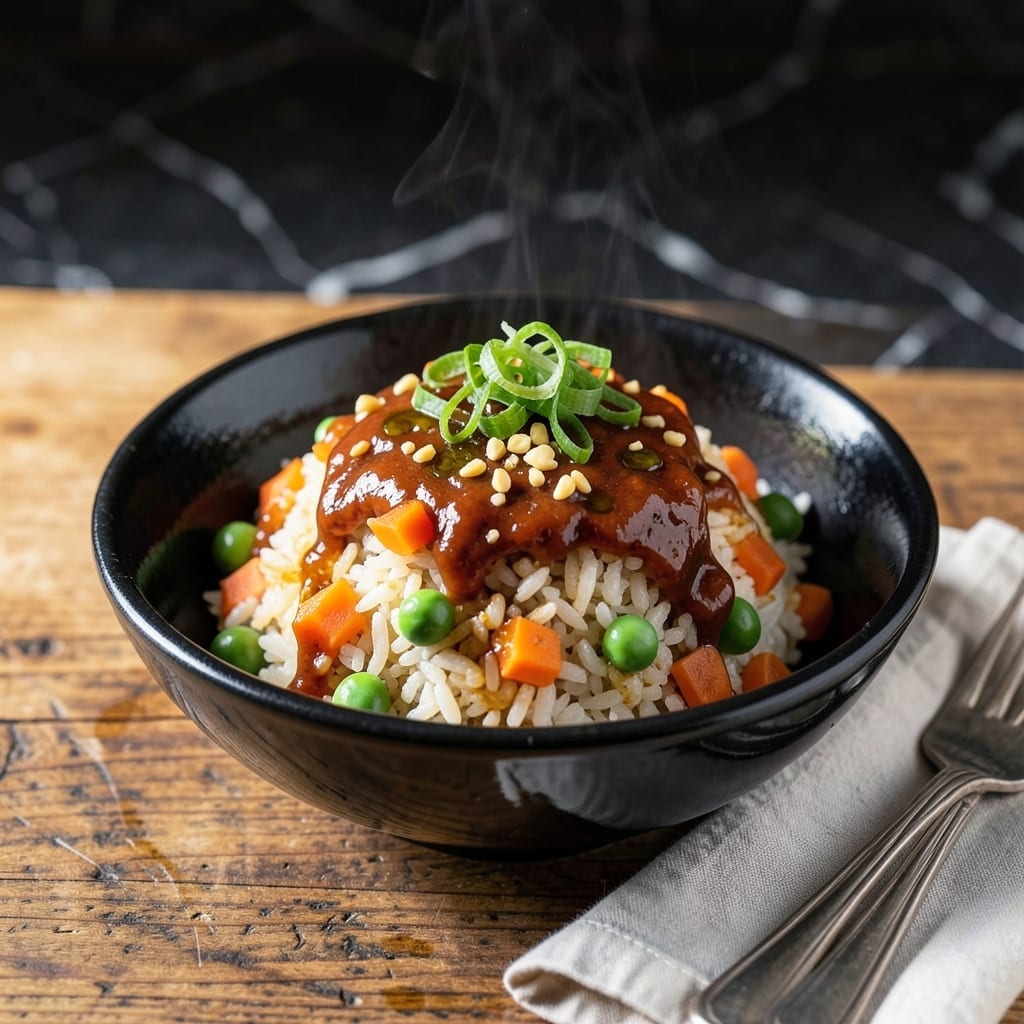
This Korean fried rice transforms leftover grains into a bold, spicy dish with garden-fresh vegetables and the signature heat of gochujang. The fermented chili paste delivers complex, umami-rich flavor that defines traditional Korean cuisine.
The technique is simple but precise: high heat, quick cooking, and layering flavors. Carrots, peas, and scallions add sweetness and crunch, while the gochujang creates a vibrant, spicy base that coats every grain.
What emerges is a dish that’s both comforting and exciting—tender rice with a slight char, vegetables that retain their bite, and a sauce that’s deeply savory with a lingering kick.
Serve as a side or main, topped with a fried egg for extra richness. Here’s how to make it at home.
Ingredients for Korean Fried Rice Gochujang
Transform leftover rice with bold Korean flavors and fresh garden vegetables for vibrant results.
| Ingredient | Amount | Notes |
|---|---|---|
| Cooked White Rice 🍚 | 4 cups | Day-old, chilled preferred |
| Gochujang 🌶️ | 3 tbsp | Korean fermented chili paste |
| Carrots 🥕 | 1 whole | Medium, finely diced |
| Frozen Peas 🌱 | ¾ cup | Thawed, drained |
| Scallions 🧅 | 4 whole | Thinly sliced, whites and greens separated |
| Garlic Cloves 🧄 | 3 cloves | Minced finely |
| Fresh Ginger 🌿 | 1 tbsp | Peeled, grated |
| Vegetable Oil 🛢️ | 2 tbsp | Neutral flavor, high smoke point |
| Soy Sauce 🥢 | 2 tbsp | Low-sodium preferred |
| Sesame Oil 🫒 | 1 tsp | Toasted, for finishing |
| Large Eggs 🥚 | 4 whole | Optional, for topping |
| Kosher Salt 🧂 | ½ tsp | Adjust to taste |
| Black Pepper 🌶️ | ¼ tsp | Freshly ground |
| Sesame Seeds 🌰 | 1 tsp | Toasted, for garnish |
The gochujang is non-negotiable—look for Sempio or Mother-in-Law’s brands at H Mart or Korean grocery stores. It should be thick, deep red, and intensely aromatic. Day-old rice works best (fresh rice turns mushy), and a quick chill in the fridge dries it out perfectly. For the vegetables, organic carrots from Whole Foods or your local farmers market add natural sweetness. Use the full-fat eggs if you’re adding them.
No gochujang? Sriracha mixed with a bit of miso gets you close but lacks the funk. Fresh ginger is ideal but ground ginger at half the amount works in a pinch. Swap peas for diced bell peppers if that’s what you’ve got. The soy sauce can be tamari for gluten-free, and light soy sauce if you’re watching sodium. Skip the sesame oil if you must, but it adds that authentic finish.
This keeps 3-4 days in the fridge—reheat in a skillet to revive the texture. Freeze without the egg for up to 3 months (add the egg fresh when reheating). Store gochujang in the fridge after opening; it’ll last 1 year.
Why You’ll Love This Recipe
- I’ll be real: my leftover rice never tasted this good until I tried this.
- One Pan Meal: I just toss the rice, gochujang, and veggies in and stir—no extra pots, no fuss.
- Spicy-Sweet Kick: That gochujang gives it this deep, smoky heat with a hint of sweetness that’s honestly addictive.
- Weeknight Hero: Here’s what sold me—it’s ready before the kids finish arguing over who gets the last scallion.
Step-by-Step Instructions for Korean Fried Rice with Gochujang
Master the technique for perfectly balanced spice and texture with this method.
Step 1: Prepare and Sauté the Aromatics
Heat 2 tbsp Vegetable Oil in a large wok or skillet over medium-high heat until it shimmers. Add the finely diced Carrots and stir-fry for 2-3 minutes until they begin to soften but retain some bite.
Add the minced Garlic Cloves and grated Fresh Ginger, stirring constantly for 30 seconds until fragrant. Be careful not to burn the garlic—it should turn light golden at the edges. Immediately add the thawed Frozen Peas and the white parts of the Scallions, cooking for another 1-2 minutes until the peas are heated through.
Step 2: Combine Rice and Sauce Foundation
Add the 4 cups Cooked White Rice to the skillet, breaking up any clumps with the back of your spatula. The rice should be day-old and chilled for best texture—fresh rice can turn mushy. Stir-fry for 2-3 minutes until the rice is fully heated and begins to develop a slight crispness.
Create a well in the center and add 3 tbsp Gochujang and 2 tbsp Soy Sauce. Stir these into the rice thoroughly, ensuring every grain is coated. The gochujang will melt slightly and create a vibrant red glaze. Season with 0.5 tsp Kosher Salt and 0.25 tsp Black Pepper, adjusting to taste.
Step 3: Finish with Eggs and Garnishes
Push the rice to one side of the skillet and add a small amount of the Vegetable Oil to the empty space. Crack the 4 whole Large Eggs into this area and scramble gently until just set, about 1-2 minutes. Fold the eggs into the rice, breaking them into small, fluffy pieces.
Remove from heat and drizzle with 1 tsp Sesame Oil, tossing to distribute evenly. The sesame oil adds a nutty depth that balances the spice. Garnish with the green parts of the Scallions and 1 tsp Sesame Seeds for color and crunch.
Step 4: Serve Immediately for Optimal Texture
Transfer to serving plates while hot. The rice should have a slight sheen from the sauce, with visible flecks of Carrots, Frozen Peas, and egg throughout. The gochujang provides a consistent spicy heat, while the sesame oil and seeds add aromatic complexity.
For best results, serve directly from the pan. This dish doesn’t hold well—it’s meant to be enjoyed fresh, with the contrast of warm rice, crisp vegetables, and the rich, spicy-sweet sauce at its peak. The texture should be slightly sticky from the sauce, with each grain of rice distinct yet coated in flavor.
Pro Tips For Making Korean Fried Rice Gochujang
- Use Cold Rice: Always start with day-old, cold rice—fresh rice is too moist and will turn mushy when fried. I learned this the hard way after ending up with a sad, gluey pan of rice more than once.
- Bloom the Gochujang: Cook the gochujang in oil for 30 seconds before adding anything else—it deepens the flavor and removes the raw paste taste that can overpower the dish.
- Skip Thawing Peas: Toss frozen peas directly into the hot pan; they’ll heat through in seconds without turning soggy. Thawing them first just makes them limp and watery.
- Finish with Scallions: Add the scallions at the very end, just before serving, so they stay crisp and bright green. Stirring them in too early turns them dull and loses that fresh bite.
Best Sauces and Condiments for This korean fried rice gochujang
Extra Gochujang Sauce
Mix 1 tbsp gochujang with 1 tbsp soy sauce, 1 tsp rice vinegar, and 1 tsp honey for a quick dipping sauce. I love this for adding extra heat and depth to each bite. 🌶️
Kimchi Topping
Chopped kimchi adds tangy crunch that cuts through the richness. Use ½ cup per serving, and make sure it’s well-drained to avoid a watery texture. The fermentation complements the gochujang beautifully.
Sriracha Mayo Drizzle
Combine ¼ cup mayonnaise with 1-2 tbsp sriracha for a creamy, spicy topping. I use Kewpie mayo for its rich texture. Drizzle over the finished dish for extra visual appeal.
Pickled Vegetables
Quick-pickled radishes or cucumbers add bright acidity. Slice thin and soak in ½ cup rice vinegar with 1 tsp sugar and ½ tsp salt for 30 minutes. The crunch contrasts perfectly with the soft rice.
Sesame-Garlic Oil
Heat 2 tbsp vegetable oil with 3 minced garlic cloves and 1 tsp sesame seeds until golden. Drizzle this aromatic oil over the dish just before serving for a restaurant-quality finish. 💛
Spicy Soy Drizzle
Thin 1 tbsp gochujang with 2 tbsp soy sauce and 1 tsp sesame oil for a pourable sauce. This version is less sweet and more umami-forward, perfect for those who prefer savory heat.
Nutrition Facts
Frequently Asked Questions
What can I substitute for gochujang?
Mix 1 tbsp sriracha with ½ tsp miso paste for a similar spicy, umami kick. It won’t have the same depth but works in a pinch.
Can I use fresh rice instead of day-old?
Fresh rice tends to turn mushy when stir-fried. If you must, spread it on a tray and chill in the fridge for 30 minutes to dry it out first.
How do I adjust the spice level?
Start with 1 tbsp gochujang and add more to taste. Balance the heat with 1 tsp honey or 1 tbsp soy sauce if it’s too intense.
Can I add protein to this dish?
Cook ½ lb shrimp or diced chicken separately, then fold in at the end. Ensure it’s fully cooked before mixing.

- Mujadara Rice and Lentils Recipe: Earthy Spiced Lentils With Caramelized Onions - November 1, 2026
- Naija Fried Rice Recipe: Street-Style Spice With Veggie Crunch - November 1, 2026
- Mushy Rice Recipe: Fluffy Grains Transformed in Minutes - November 1, 2026