
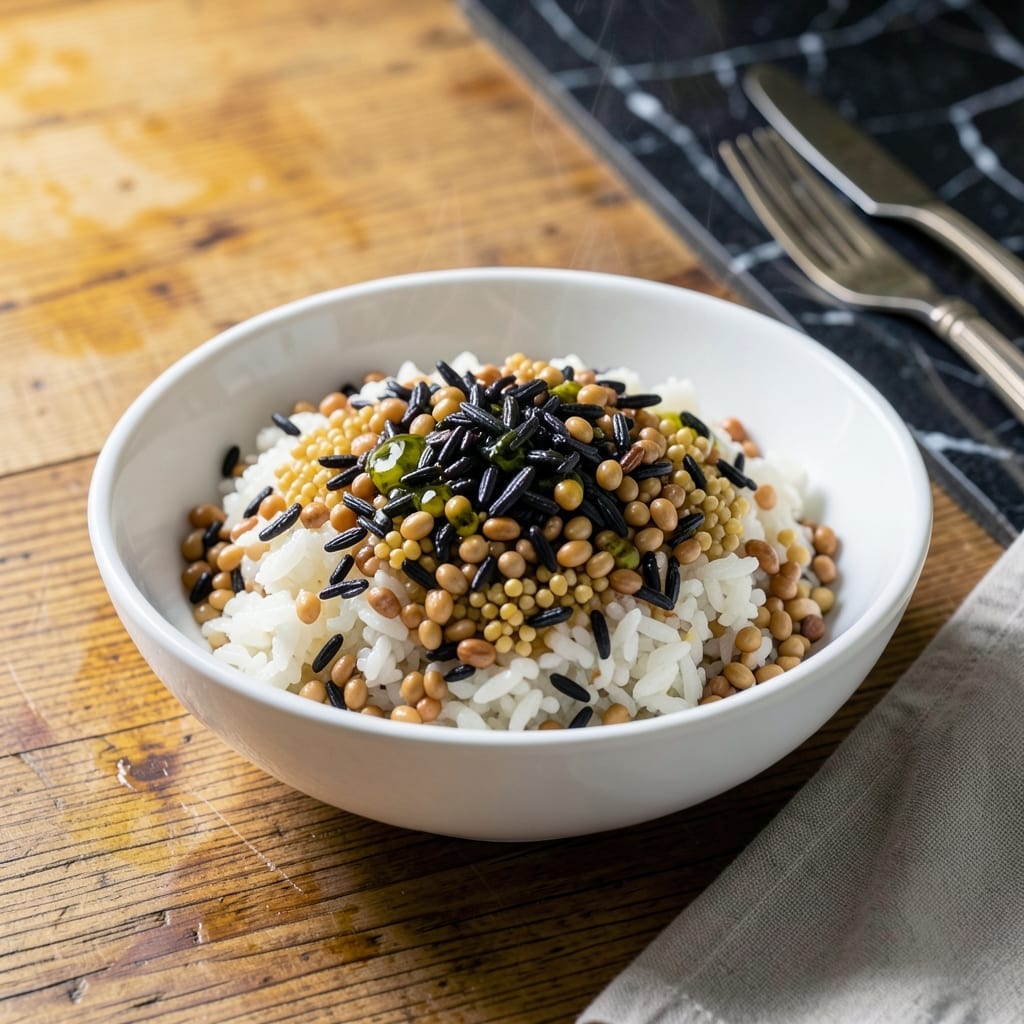
This Korean multigrain rice delivers nutty depth that elevates any meal. The blend of short-grain white rice with barley, millet, and black rice creates a textured, fragrant base that’s both hearty and balanced.
Traditional preparation involves soaking the grains for 30 minutes to ensure even cooking. The rice cooker method guarantees consistent results, making it accessible for home cooks without specialized equipment.
Each bite offers a satisfying chew with subtle sweetness from the mixed grains. This dish pairs perfectly with grilled meats, stews, or simple vegetable sides, bringing authentic Korean flavor to your table.
It’s a wholesome, versatile staple that transforms ordinary meals into something special.
Ingredients for Korean Multigrain Rice
A harmonious blend of grains creates this fragrant, textured multigrain rice with authentic Korean character.
| Ingredient | Amount | Notes |
|---|---|---|
| Short-Grain White Rice 🍚 | 2 cups | Rinsed until water runs clear |
| Barley 🌾 | ½ cup | Pearl or hulled variety |
| Millet 🌾 | ¼ cup | White or yellow preferred |
| Black Rice 🍚 | ¼ cup | Rinsed thoroughly before use |
| Sweet Brown Rice 🍚 | ¼ cup | Adds chewy texture |
| Water 💧 | 4 ½ cups | Filtered for best results |
| Kosher Salt 🧂 | ½ tsp | Diamond Crystal preferred |
| Sesame Oil 🫒 | 1 tsp | Toasted for nutty aroma |
| Soy Sauce 🍶 | 1 tbsp | Low-sodium or tamari |
| Garlic Cloves 🧄 | 2 cloves | Minced finely for even distribution |
| Green Onions 🧅 | 3 whole | Thinly sliced for garnish |
| Toasted Sesame Seeds 🌰 | 1 tbsp | For finishing and texture |
The grains are the foundation here. Short-grain white rice provides the base, while barley and millet (found at Whole Foods or Asian markets) add texture. Black rice contributes color and nutty depth—look for it in the bulk section. Sweet brown rice (also called glutinous rice) is essential; Korean or Japanese brands at H Mart offer the best quality. Rinse all grains thoroughly to remove excess starch.
No black rice? Wild rice or purple rice work as substitutes. Barley can be swapped for brown rice at a 1:1 ratio. For gluten-free, use certified GF grains. The sesame oil must be toasted—regular sesame oil lacks depth. Tamari replaces soy sauce for gluten-free diets. Green onions can be omitted, but they add a fresh finish that balances the dish beautifully.
Store uncooked grains in airtight containers in a cool, dark place for up to 6 months. Cooked rice keeps in the fridge for 4-5 days or freezes for 3 months. Soaking the grains for 30 minutes before cooking ensures even texture and optimal flavor development.
Why You’ll Love This Recipe
- Set and Forget: I toss everything in the rice cooker and walk away—no stirring, no fuss, just perfectly cooked grains every time.
- Nutty Depth: The barley and black rice give it this rich, toasty flavor that plain white rice just can’t compete with.
- Meal Prep Hero: I make a big batch on Sunday and it pairs with everything from bulgogi to fried eggs all week.
- Stretches Far: One pot feeds my family for two meals, and honestly, it tastes even better the next day with a splash of soy sauce.
Step-by-Step Instructions for Korean Multigrain Rice
Master this technique for perfectly textured grains with balanced flavor and nutty depth.
Step 1: Rinse and Prepare the Grains
Place the 2 cups Short-Grain White Rice and 0.25 cup Black Rice in separate fine-mesh strainers and rinse under cold water until the water runs clear. This removes excess starch and prevents gummy texture. The 0.5 cup Barley, 0.25 cup Millet, and 0.25 cup Sweet Brown Rice don’t require rinsing.
Drain all grains thoroughly and combine them in a large bowl. I find that mixing the grains at this stage ensures even distribution of textures in the final dish. The varied sizes will cook together harmoniously with proper liquid ratios.
Step 2: Toast the Aromatics and Grains
In a heavy-bottomed pot with a tight-fitting lid, heat the 1 tsp Sesame Oil over medium heat. Add the minced 2 cloves Garlic Cloves and sauté for 30 seconds until fragrant but not browned. This builds the aromatic foundation without bitterness.
Add the drained grain mixture to the pot and stir to coat with the sesame oil. Toast for 2-3 minutes, stirring constantly, until the grains emit a nutty aroma and the barley begins to look slightly translucent at the edges. This step enhances the natural flavors of each grain.
Step 3: Add Liquids and Seasonings
Pour in the 4.5 cups Water and add the 0.5 tsp Kosher Salt and 1 tbsp Soy Sauce. Stir well to distribute the seasonings evenly. The water should be about 1 inch above the grain mixture when settled.
Bring the mixture to a boil over high heat. You’ll see the water become slightly frothy and the grains begin to dance as they absorb liquid. Watch for the moment when the surface becomes covered with small bubbles—that’s your signal to proceed to the next step.
Step 4: Simmer and Steam to Perfection
Once boiling, reduce the heat to low, cover with the lid, and simmer for 40 minutes. Avoid lifting the lid during this time—steam is crucial for even cooking. The grains will absorb the liquid and swell to their full size.
After 40 minutes, turn off the heat and let the rice rest, covered, for an additional 10 minutes. This resting period allows the grains to finish absorbing any remaining moisture and achieves the ideal tender yet distinct texture for each variety.
Step 5: Fluff and Garnish for Serving
Remove the lid and gently fluff the rice with a fork, lifting from the bottom to separate the grains. You’ll notice the short-grain white rice is soft and sticky, while the barley and millet retain a pleasant chew. The black rice adds beautiful dark speckles throughout.
Transfer to a serving bowl and garnish with the thinly sliced 3 whole Green Onions and 1 tbsp Toasted Sesame Seeds. The green onions add a fresh, sharp contrast to the nutty grains, while the sesame seeds provide a delicate crunch. Serve immediately while hot and fragrant.
Pro Tips For Making Korean Multigrain Rice
- Soak the Grains: Give barley and black rice a 30-minute soak before cooking—it cuts the cooking time and prevents that unpleasant chewy texture I used to get.
- Balance the Water: Use 1.25 cups water per 1 cup mixed grains; multigrain blends absorb more than white rice alone, and I learned this the hard way with a few mushy batches.
- Cook on Low: After the initial boil, drop to the lowest heat and cover tightly—high heat makes barley and millet turn to porridge instead of staying distinct.
- Rest Before Serving: Let it sit covered for 10 minutes off the heat; this lets the sweet brown rice and black rice finish steaming and makes the texture even throughout.
Common Mistakes When Making This Recipe
Skipping the Soak
I know it’s tempting to skip soaking, but these mixed grains need that 30-minute soak to cook evenly. Without it, barley and black rice stay undercooked while white rice turns mushy. Trust me, this step prevents a textural disaster. 💡
Incorrect Water Ratio
Using the standard 1:1 rice-to-water ratio won’t work here. The blend needs more liquid—4.5 cups water for the full grain mix. Too little water leaves grains hard; too much makes it porridge-like. Measure precisely.
Overcrowding the Pot
These grains expand significantly as they cook. Use a pot with at least 3-quart capacity to give them room. Crowding leads to uneven cooking and sticky clumps. I learned this the hard way with a too-small saucepan.
Peeking While Cooking
Every time you lift the lid, you release steam and lower the temperature. Resist the urge for 40 minutes of simmering, then 10 minutes of resting. Patience ensures perfectly cooked, separate grains.
Skipping the Toast
Toasting the grains in 1 tsp Sesame Oil for 2-3 minutes deepens their nutty flavor. Skipping this step results in bland rice. The aroma alone tells you this step is worth the effort.
Overmixing After Cooking
Gently fluff with a fork, don’t stir vigorously. Overmixing breaks the grains and releases excess starch, making your dish gummy. Preserve those distinct textures that make this creation special.
Nutrition Facts
Frequently Asked Questions
Can I use a rice cooker for this?
Yes! Use the same 4.5 cups water ratio and cook on the standard setting. Let it rest for 10 minutes after cooking completes to allow grains to fully absorb moisture.
Why soak the grains first?
Soaking for 30 minutes ensures even cooking across different grain types. Without it, harder grains like barley remain undercooked while softer ones turn mushy.
What if I can’t find black rice?
Substitute with wild rice or purple rice for similar color and nutty flavor. These alternatives maintain the dish’s visual appeal and depth of taste.
How do I store leftovers?
Keep cooked rice in an airtight container in the fridge for 4-5 days or freeze for up to 3 months. Reheat with a splash of water to restore moisture.

- Mujadara Rice and Lentils Recipe: Earthy Spiced Lentils With Caramelized Onions - November 1, 2026
- Naija Fried Rice Recipe: Street-Style Spice With Veggie Crunch - November 1, 2026
- Mushy Rice Recipe: Fluffy Grains Transformed in Minutes - November 1, 2026