
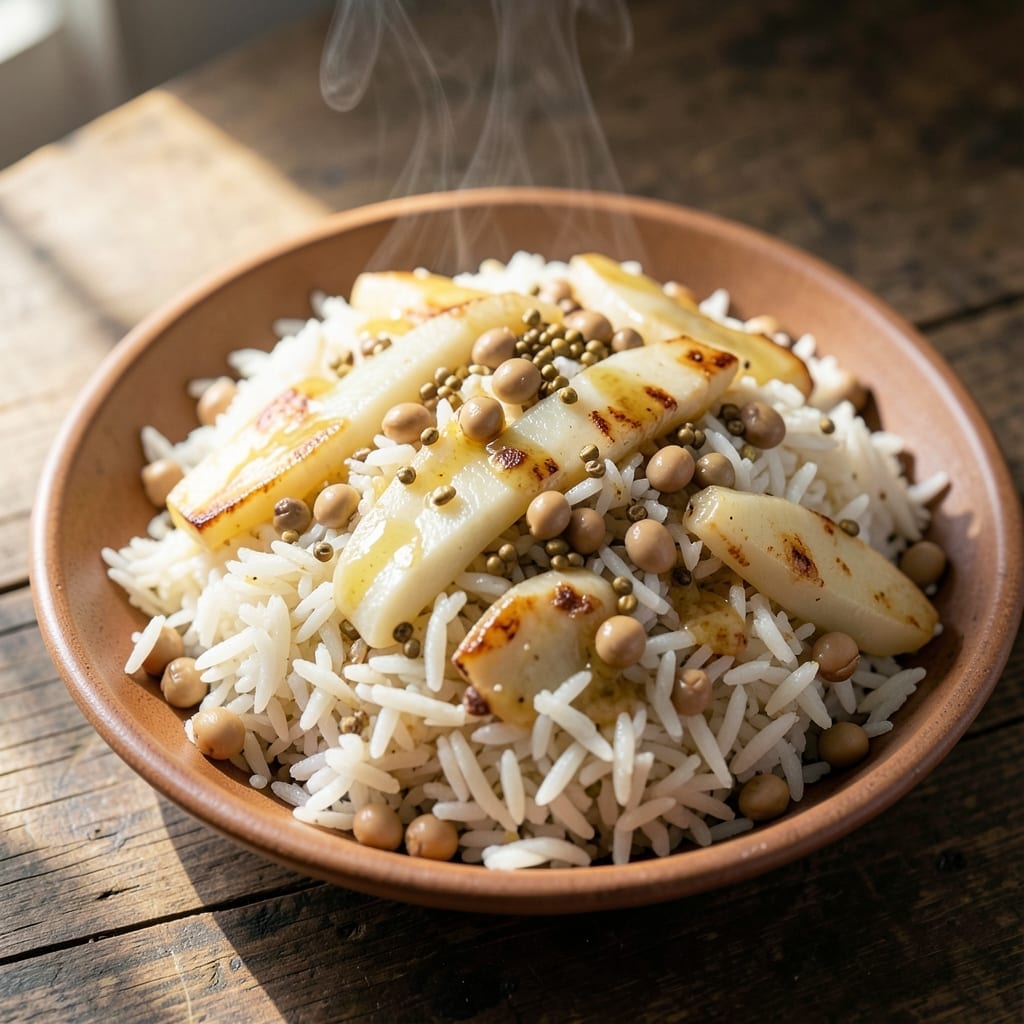
This traditional South Indian dish transforms humble ivory gourd into a fragrant, comforting one-pot meal. I’ve refined this method to balance the vegetable’s natural sweetness with aromatic spices and fluffy rice.
The recipe follows authentic preparation, where kovakkai is lightly sautéed before being simmered with rice and tempered spices. This ensures each grain absorbs the subtle, earthy flavors without turning mushy.
You’ll end up with a light yet satisfying pilaf, where the gourd’s tender texture contrasts beautifully with the perfectly cooked rice. It’s a dish that feels both rustic and refined.
A staple in Tamil homes, this pilaf pairs well with yogurt or a simple raita. Here’s how to make it right.
Ingredients for Kovakkai Rice
Authentic South Indian ingredients create this fragrant, comforting pilaf with tender gourd and fluffy rice.
| Ingredient | Amount | Notes |
|---|---|---|
| Basmati Rice 🍚 | 1 ½ cups | Rinsed and drained thoroughly |
| Ivory Gourd (Kovakkai) 🥬 | 3 cups | Diced into small cubes |
| Ghee 🧈 | 2 tbsp | Clarified butter for tempering |
| Mustard Seeds 🌿 | 1 tsp | Black or yellow variety |
| Urad Dal (Black Gram) 🌾 | 1 tsp | Split and skinless preferred |
| Chana Dal (Split Chickpeas) 🌾 | 1 tsp | Optional for extra texture |
| Dried Red Chilies 🌶️ | 2 whole | Broken into pieces |
| Curry Leaves 🍃 | 10 pieces | Fresh for authentic flavor |
| Asafoetida (Hing) 🌿 | ¼ tsp | Pinch for tempering |
| Turmeric Powder 🌶️ | ½ tsp | For color and earthiness |
| Green Chilies 🌶️ | 2 whole | Slit lengthwise for heat |
| Fresh Ginger 🌿 | 1 tbsp | Minced or grated finely |
| Salt 🧂 | 1 ¼ tsp | Adjust to taste preference |
| Water 💧 | 3 ½ cups | For cooking rice and gourd |
| Fresh Cilantro 🌿 | ¼ cup | Chopped for garnish |
The gourd is key here. Find ivory gourd (kovakkai) at Indian grocery stores like Patel Brothers or H-Mart—look for firm, unblemished pieces with smooth skin. Fresh curry leaves are non-negotiable for authentic flavor; dried simply won’t deliver the same aromatic punch. Asafoetida (hing) adds depth, but use sparingly—too much can overpower.
No kovakkai? Zucchini or bottle gourd work in a pinch, though the texture differs slightly. Missing curry leaves? Skip them entirely rather than substituting with dried. For heat adjustment, reduce or omit green chilies—the dried red chilies already add warmth. Basmati rice is ideal, but jasmine rice works if that’s your pantry staple.
Store fresh curry leaves in the fridge wrapped in paper towels for up to 1 week. Cooked pilaf keeps beautifully in the fridge for 3-4 days and reheats well. The flavors actually deepen overnight, making leftovers a treat.
Why You’ll Love This Recipe
- One Pot Wonder: I toss everything in together—basmatic rice, kovakkai chunks, and the tempering of mustard and urad dal in ghee—and it cooks while I set the table.
- Ghee Magic: The ghee carries the nutty crunch of urad dal and the mild sweetness of kovakkai through every fluffy grain of rice.
- Weeknight Hero: Honestly, it’s my Tuesday lifesaver: ready in the time it takes to fold laundry.
- Stretches Far: Leftovers taste even better the next day, and a small pile of kovakkai goes a long way to feed the whole family.
Step-by-Step Instructions for Kovakkai Rice
Master this traditional South Indian preparation with precise technique and authentic results.
Step 1: Prepare the Rice and Ivory Gourd
Begin by rinsing the 1.5 cups Basmati Rice thoroughly under cold water until the water runs clear. This removes excess starch and prevents the grains from becoming gummy. Drain completely in a fine-mesh strainer and set aside. I always let it sit for 5-10 minutes to ensure all moisture evaporates.
Meanwhile, dice the 3 cups Ivory Gourd (Kovakkai) into small, even cubes—about ½-inch pieces. Uniform size ensures even cooking and a consistent texture in the final dish. The gourd should be firm but yield slightly when pressed, indicating freshness.
Step 2: Temper the Spices for Maximum Flavor
Heat the 2 tbsp Ghee in a heavy-bottomed pot over medium heat. When it melts and begins to shimmer, add the 1 tsp Mustard Seeds. Cover immediately—the seeds will pop energetically within 30 seconds, signaling they’re ready.
Once the mustard seeds finish popping, add the 1 tsp Urad Dal (Black Gram), 1 tsp Chana Dal (Split Chickpeas), 2 whole Dried Red Chilies, and 10 pieces Curry Leaves. Stir constantly for 1-2 minutes until the dals turn light golden brown. The aroma should be nutty and fragrant, a clear sign the tempering is complete.
Quickly add the 0.25 tsp Asafoetida (Hing), 0.5 tsp Turmeric Powder, 2 whole Green Chilies, and 1 tbsp Fresh Ginger. Sauté for another 30 seconds to bloom the spices fully. This step builds the foundation of flavor for the entire dish.
Step 3: Cook the Vegetables and Rice
Add the diced Ivory Gourd (Kovakkai) and 1.25 tsp Salt to the pot. Stir well to coat the gourd in the spiced ghee and cook for 3-4 minutes until the edges begin to soften slightly. The gourd should still retain some bite at this stage.
Incorporate the drained Basmati Rice and toast for 1-2 minutes, stirring gently to avoid breaking the grains. This step enhances the nutty flavor of the rice and prevents it from turning mushy during cooking. The rice should appear slightly translucent at the edges.
Step 4: Simmer to Perfection
Pour in the 3.5 cups Water and stir to combine. Increase the heat to high and bring the mixture to a rolling boil. Once boiling, reduce the heat to low, cover the pot, and let it simmer undisturbed for 15-18 minutes.
Check the rice after 15 minutes—the water should be fully absorbed, and the grains should be tender but not sticky. If the top layer appears dry before the rice is done, add a splash of hot water and continue cooking. The Ivory Gourd (Kovakkai) should be soft yet retain its shape.
Step 5: Rest and Garnish
Remove the pot from heat and let it sit covered for 5 minutes. This resting period allows the steam to finish cooking the rice evenly and helps the flavors meld together beautifully.
Gently fluff the rice with a fork to separate the grains. Garnish with the 0.25 cup Fresh Cilantro, reserving a little for presentation. Serve warm, ensuring each portion includes a generous amount of the tender ivory gourd and aromatic spices.
Pro Tips For Making Kovakkai Rice
- Soak the Rice: Rinse and soak basmati rice for 20 minutes—it guarantees fluffy, separate grains that don’t turn mushy when cooked with kovakkai.
- Fry the Kovakkai: Sauté the diced ivory gourd in ghee until edges brown slightly; this removes excess moisture and prevents the rice from getting soggy.
- Temper Properly: Heat ghee first, then add mustard seeds and urad dal—when they splutter and turn golden, add other spices. Doing it cold or too hot ruins the flavor.
- Use Old Rice: Leftover basmati from yesterday works better than fresh—it’s drier and absorbs the kovakkai masala more evenly without turning sticky.
Health Benefits of This Dish
Nutrient-Dense Vegetable
Ivory gourd is packed with dietary fiber—about 2.5g per cup—which supports digestion and helps maintain healthy blood sugar levels. It’s also a great source of vitamin C, providing roughly 20% of your daily needs in a single serving. 💪
Low-Calorie Comfort
This dish keeps things light with only about 200 calories per serving, making it a guilt-free comfort food. The basmati rice adds slow-digesting carbs, while the gourd contributes minimal fat, keeping the meal balanced and satisfying.
Rich in Antioxidants
The spices in this recipe, like turmeric and curry leaves, are loaded with antioxidants. Turmeric’s curcumin has anti-inflammatory properties, while curry leaves may help lower cholesterol. A flavorful way to boost your health! ✨
Hydration Support
Ivory gourd has a high water content, contributing to your daily hydration needs. Paired with the 3.5 cups of water used in cooking, this dish helps keep you hydrated without extra effort.
Bone Health Boost
The calcium and magnesium in ivory gourd support strong bones. Combined with the vitamin-rich spices, this meal is a natural way to nourish your skeletal system.
Gut-Friendly Spices
Spices like asafoetida and ginger aid digestion and reduce bloating. I’ve found that adding these to meals makes them easier to digest, especially after a hearty portion.
Nutrition Facts
Frequently Asked Questions
Can I use a different type of rice?
Yes, you can use jasmine rice if that’s what you have. Just adjust the water ratio to 1:1.5 and reduce simmering time to 12-15 minutes. Basmati is ideal for its long grains and aroma.
How do I know when the ivory gourd is cooked?
The gourd should be tender but still hold its shape. Test a piece after 15 minutes—it should pierce easily with a fork but not turn mushy. Overcooking makes it lose texture.
Can I make this dish ahead of time?
The flavors actually deepen overnight. Store in an airtight container in the fridge for up to 3-4 days. Reheat with a splash of water to refresh the rice.
What if I don’t have curry leaves?
Skip them entirely rather than substituting. Their unique citrusy aroma is hard to replicate. If you must, a pinch of lime zest adds a hint of freshness, but it won’t be the same.

- Authentic Greek Lemon Rice Soup Recipe: Bright Citrus and Silky Texture - September 26, 2026
- Beef Tomato Rice Chinese Recipe: Wok-Seared Savory Delight with Fragrant Aromatics - September 26, 2026
- Mango Sticky Rice Sauce Recipe: Sweet Coconut Infusion for Dessert - September 26, 2026