
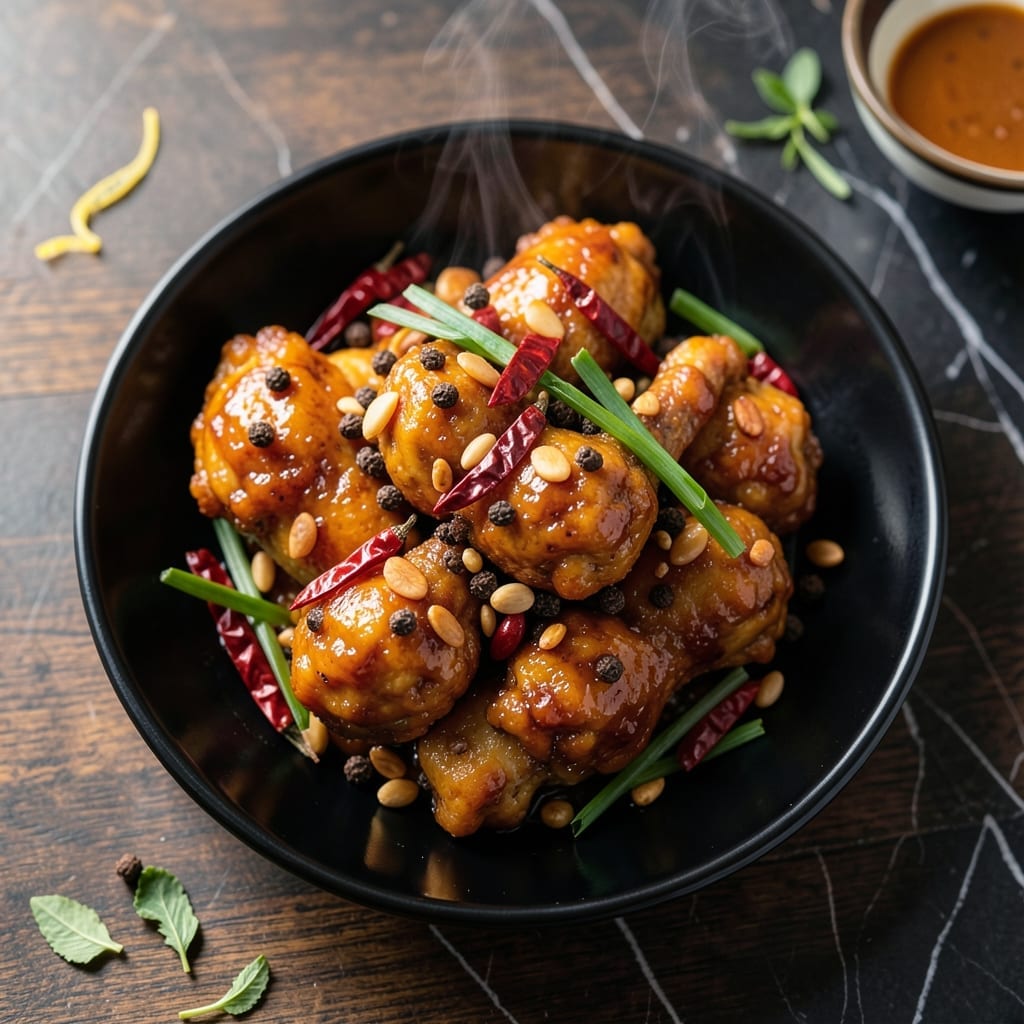
This dish brings bold Sichuan flavors to your kitchen with a perfect balance of heat, sweetness, and nutty crunch. The authentic technique delivers restaurant-quality results without complicated steps.
Dried chilies, Sichuan peppercorns, and roasted peanuts create the signature profile. I’ve streamlined the process to maintain authenticity while keeping it approachable for home cooks.
The sauce comes together quickly with soy, vinegar, and a touch of sugar. It clings to the chicken and vegetables, creating layers of complex flavor in every bite.
Serve over steamed rice for a complete meal. The dish reheats well, making it ideal for leftovers.
Ingredients for Kung Poa Chicken
Bold flavors start with dried chilies, peppercorns, and peanuts for that signature Sichuan kick.
| Ingredient | Amount | Notes |
|---|---|---|
| Boneless Chicken Thighs 🍗 | 1 ½ lb | Cut into 1-inch cubes |
| Dried Red Chilies 🌶️ | 10 pieces | Whole, seeds removed for less heat |
| Sichuan Peppercorns 🌿 | 1 tsp | Lightly crushed for aroma |
| Roasted Peanuts 🥜 | ¾ cup | Unsalted, roughly chopped |
| Soy Sauce 🫒 | 3 tbsp | Use light or all-purpose |
| Chinkiang Black Vinegar 💧 | 2 tbsp | Or substitute balsamic |
| Granulated Sugar 🍬 | 1 tbsp | Balances the heat |
| Cornstarch 🌾 | 2 tbsp | For velveting chicken |
| Garlic Cloves 🧄 | 4 cloves | Minced finely |
| Ginger Root 🌿 | 1 tbsp | Freshly grated |
| Green Onions 🧅 | 4 whole | Cut into 1-inch pieces |
| Vegetable Oil 🫒 | ½ cup | High smoke point for frying |
| Shaoxing Wine 🍷 | 2 tbsp | Or dry sherry substitute |
| Sesame Oil 🫒 | 1 tsp | Toasted, for finishing |
The chicken is the foundation—thighs stay juicier than breasts through the high-heat cooking. Look for skinless, boneless at Whole Foods or any Asian market (they often have pre-cut for stir-fry). The Sichuan peppercorns are non-negotiable for that numbing tingle—Penzeys or Amazon if your local store doesn’t stock them. Dried chilies should be bright red and plump, not dusty (the good stuff, not the pre-crushed kind).
No Sichuan peppercorns? Black peppercorns at half the amount plus a pinch of ground coriander gets you 80% there. Swap peanuts for cashews or almonds—toast them first for crunch. Shaoxing wine missing? Dry sherry works, or skip it and add an extra splash of soy. The vinegar is key—Chinkiang black vinegar (at H Mart) has the deep, molasses-like funk, but balsamic in a pinch works.
The peanuts keep in a cool, dark place for 3 months. Chicken marinates best 30 minutes at room temp before cooking. Dried chilies last 6-12 months in a sealed container. Leftovers? They actually get better overnight as flavors meld.
Why You’ll Love This Recipe
- One Pan Wonder: I love that everything—chicken, peanuts, and those fiery dried chilies—cooks together in a single wok, saving me a sink full of dishes.
- Flavor Bomb: The Sichuan peppercorns and soy sauce create this numbing, savory heat that’s honestly addictive.
- Weeknight Hero: Between us, this is my go-to for busy evenings when I need dinner fast but still want restaurant-quality taste.
- Budget Stretcher: Boneless thighs stay juicy and cheap, and a little goes a long way with the bold spices and peanuts.
Step-by-Step Instructions for Kung Pao Chicken
This method delivers that perfect balance of heat, sweetness, and crunch with minimal effort.
Step 1: Velvet the Chicken for Maximum Tenderness
Cut the 1.5 lb boneless chicken thighs into 1-inch cubes and place in a bowl. Add the 2 tbsp cornstarch and 2 tbsp Shaoxing wine, then toss to coat evenly. I like to use my hands for this—it ensures every piece is well covered.
Let this mixture sit for 15 minutes while you prep the other ingredients. This velveting technique creates a protective layer that keeps the chicken incredibly tender during the high-heat stir-fry. You’ll notice the cornstarch absorbs the liquid, creating a slightly paste-like coating on the chicken.
Step 2: Toast the Aromatics and Peanuts
Heat the 0.5 cup vegetable oil in a wok over high heat until shimmering. Add the 10 pieces dried red chilies and 1 tsp Sichuan peppercorns, stirring constantly for 30-45 seconds until fragrant. The peppercorns will start to sizzle and release their citrusy aroma.
Quickly add the 0.75 cup roasted peanuts and stir-fry for another 30 seconds until they turn golden brown. Remove this mixture with a slotted spoon and set aside—this prevents the peanuts from burning during the next steps.
Step 3: Stir-Fry the Chicken and Aromatics
In the same hot oil, add the marinated chicken in a single layer. Let it sear undisturbed for 1 minute before stirring. Cook for 3-4 minutes until the chicken is just cooked through and starting to brown at the edges.
Push the chicken to one side of the wok and add the 4 cloves minced garlic cloves and 1 tbsp freshly grated ginger root. Stir-fry for 30 seconds until fragrant. Then combine everything and add the 4 whole green onions cut into 1-inch pieces.
Step 4: Create the Signature Sauce and Finish
Pour in the 3 tbsp soy sauce, 2 tbsp Chinkiang black vinegar, and 1 tbsp granulated sugar. Stir everything together and cook for 1-2 minutes until the sauce thickens slightly and coats the chicken.
Return the toasted peanut mixture to the wok and toss everything together. The sauce should be glossy and clinging to each piece of chicken. Remove from heat, drizzle with the 1 tsp sesame oil, and give it one final toss. Serve immediately over steamed rice.
Pro Tips For Making Kung Poa Chicken
- Velvet the Chicken: Marinate the boneless thighs in 1 tsp soy sauce + 1 tsp cornstarch + 1 tsp water for 15 minutes before cooking—I learned this the hard way after my chicken turned rubbery in the wok.
- Toast the Peanuts: Dry-toast the peanuts in the wok for 2-3 minutes until golden, then set aside. Sounds minor, but it actually changes the outcome by adding depth to the final dish.
- Skip the Seeds: Remove most seeds from the dried chilies to control heat without losing flavor—my first batch was inedible until I figured this out.
- High Heat Only: Crank the heat to maximum and cook in small batches. After burning three batches, I finally realized crowded chicken steams instead of sears.
Make-Ahead Tips for This kung poa chicken
Prep Ahead Strategy
Chop the 1.5 lb chicken thighs and mix with 2 tbsp cornstarch and 2 tbsp Shaoxing wine up to 24 hours ahead. Store covered in the fridge—I find the flavors develop even more overnight. 💡
Sauce Pre-Mixing
Combine the 3 tbsp soy sauce, 2 tbsp Chinkiang vinegar, and 1 tbsp sugar in a small bowl. This keeps for 3 days refrigerated and saves precious minutes during cooking.
Aromatics Ready
Mince the 4 garlic cloves and grate the 1 tbsp ginger together, then store in an airtight container with a damp paper towel. They stay fresh for 48 hours in the fridge.
Peanut Toasting
Toast the 0.75 cup peanuts in a dry pan over medium heat for 3-4 minutes until golden. They keep in a sealed jar for 1 week at room temperature.
Day-of Assembly
Cut the 4 green onions and measure all dry spices the morning of cooking. This streamlines the stir-fry process to under 15 minutes when you’re ready to cook.
Reheating Tip
Leftovers reheat beautifully in a skillet over medium-low heat with 1 tbsp water. The peanuts stay crunchy, and flavors deepen after 24 hours in the fridge. ⚡
Nutrition Facts
Frequently Asked Questions
Can I use chicken breast instead of thighs?
Yes, but thighs stay juicier through high heat. If using breast, cut into 1-inch cubes and reduce cooking time by 1-2 minutes to prevent dryness. Velveting with cornstarch helps maintain moisture.
How do I make it less spicy?
Remove seeds from dried chilies and reduce quantity to 4-5 pieces. Skip Sichuan peppercorns if sensitive to heat. Balance with extra 1 tsp sugar or a splash of water to dilute the sauce.
Can I prepare this without a wok?
A large skillet works fine! Use high heat and cook in batches to avoid steaming. A wok’s shape helps toss ingredients, but a deep pan with quick stirring works too.
What’s the best substitute for Chinkiang vinegar?
Balsamic vinegar is the closest match. Use the same 2 tbsp amount for similar depth. In a pinch, mix 1 tbsp rice vinegar with 1 tsp sugar for a makeshift version.

- Jollof Rice Sauce Recipe: West African Tomato and Spice Infusion - September 25, 2026
- Japanese Rice Soup Recipe: Umami-Rich Comfort in a Bowl - September 25, 2026
- Homemade Cream Of Rice Recipe: Silk-Smooth Breakfast in Minutes - September 25, 2026