
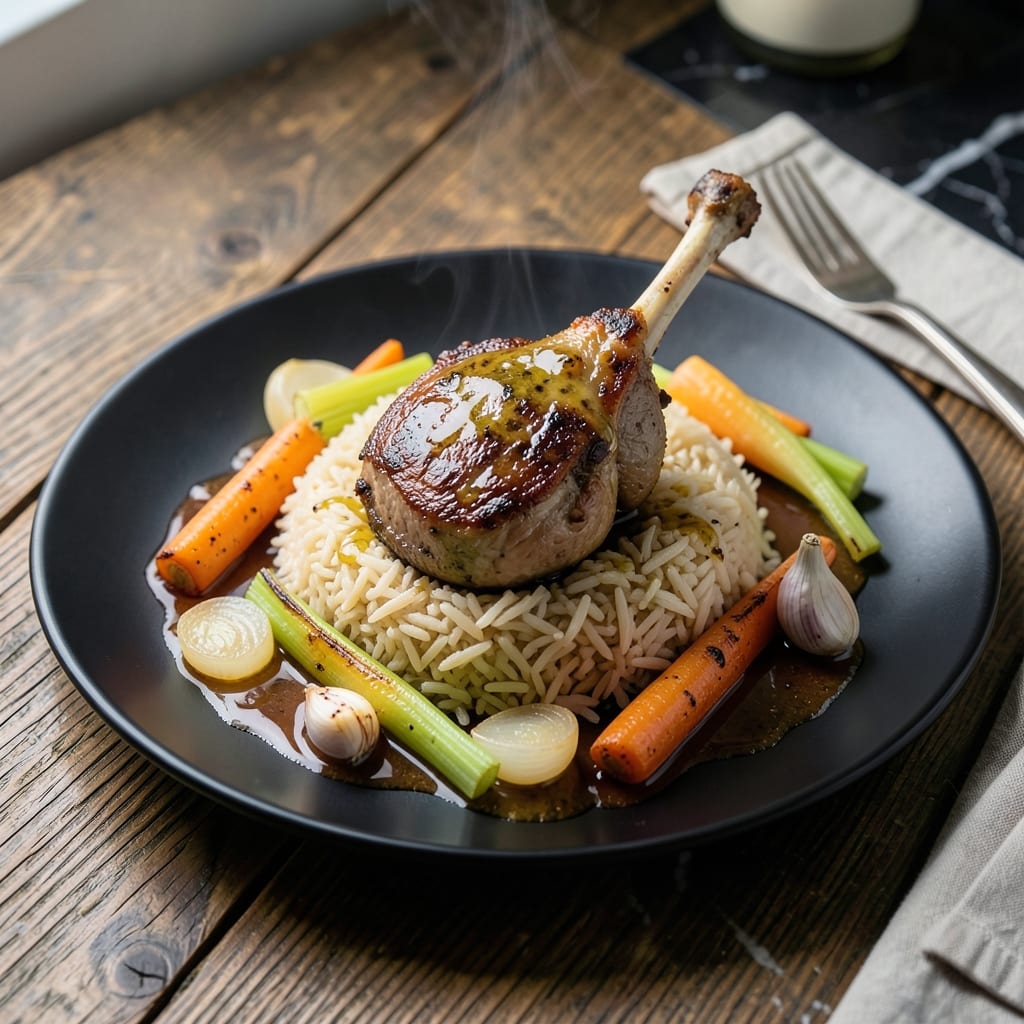
This recipe transforms tough lamb shanks into tender, fall-off-the-bone perfection through slow braising. The technique coaxes out rich, deep flavors while infusing every bite with aromatic spices and herbs.
The rice cooks separately, absorbing the lamb’s savory juices to create fragrant, flavorful grains. This method ensures each component—meat and rice—reaches its ideal texture without compromise.
What emerges is a dish where the lamb melts under the slightest pressure and the rice carries the essence of the braising liquid. The combination delivers comfort and sophistication in every forkful.
Traditional yet approachable, this meal turns a humble cut into a centerpiece worthy of any dinner table.
Ingredients for Lamb Shank Rice
Slow-braised lamb shanks and fragrant rice require these quality ingredients for tender, flavorful results.
| Ingredient | Amount | Notes |
|---|---|---|
| Lamb Shanks 🐑 | 4 whole | Bone-in, about 1.5 lb each |
| Olive Oil 🫒 | 2 tbsp | Extra-virgin for searing |
| Yellow Onion 🧅 | 1 whole | Large, finely diced |
| Garlic Cloves 🧄 | 6 cloves | Minced for depth of flavor |
| Carrots 🥕 | 3 whole | Medium, chopped into chunks |
| Celery Stalks 🥬 | 3 whole | Chopped for aromatic base |
| Tomato Paste 🍅 | 2 tbsp | Double-concentrated preferred |
| Dry Red Wine 🍷 | 1 cup | Bold variety like Cabernet |
| Beef Stock 🥣 | 3 cups | Low-sodium for control |
| Fresh Rosemary 🌿 | 2 sprigs | Woody stems removed |
| Fresh Thyme 🍃 | 4 sprigs | Leaves stripped from stems |
| Bay Leaves 🍂 | 2 whole | Dried, for braising liquid |
| Long-Grain White Rice 🍚 | 2 cups | Rinsed until water runs clear |
| Kosher Salt 🧂 | 2 tsp | Diamond Crystal preferred |
| Black Pepper 🌶️ | 1 tsp | Freshly ground for best aroma |
The lamb shanks are the foundation—source bone-in, meaty pieces (about 1.5 lb each) from a trusted butcher or Whole Foods. Look for vibrant red color with good marbling. The beef stock matters too; low-sodium versions let you control seasoning. Fresh rosemary and thyme are non-negotiable for the aromatic depth the dish demands (dried won’t deliver the same potency).
No red wine? Substitute with 1 cup beef broth plus 1 tbsp balsamic vinegar. Carrots and celery can be swapped for parsnips or fennel if preferred. For the rice, jasmine or basmati work well too—just adjust liquid ratios slightly. The tomato paste can be replaced with 1/4 cup crushed tomatoes cooked down, though the flavor will be milder.
Braised lamb shanks keep beautifully—store in their cooking liquid for up to 5 days in the fridge or 3 months frozen. The rice is best served fresh but can be reheated gently with a splash of stock to restore moisture. Always bring lamb to room temperature before reheating.
Why You’ll Love This Recipe
- Set and Forget: Most of the magic happens in the oven while the lamb shanks and carrots slowly turn tender—honestly, it’s the ultimate hands-off meal.
- Fall-Off-The-Bone Good: The garlic and onions melt into the lamb, making the meat so rich and flavorful it practically dissolves with each bite.
- Feeds a Hungry Table: I’ve served this at dinner parties and casual family nights—it’s hearty enough for a crowd and still feels special.
- Leftovers? Even Better: The flavors deepen overnight, so I always make extra. Reheating the lamb and rice the next day tastes like a brand-new meal.
Step-by-Step Instructions for Lamb Shank Rice
Master the technique for fall-off-the-bone lamb paired with perfectly cooked fragrant rice.
Step 1: Sear the Lamb Shanks to Develop Flavor
Pat the lamb shanks completely dry with paper towels to ensure proper browning. Heat the olive oil in a large Dutch oven over medium-high heat until shimmering. Working in batches if necessary, add the lamb shanks and sear undisturbed for 4-5 minutes per side until deeply browned.
This creates the fond that will build your braising liquid’s depth. You’ll know it’s ready to flip when the lamb releases easily from the pot. Transfer the seared lamb shanks to a plate and set aside.
Step 2: Build the Aromatic Base for Braising
In the same pot, add the diced yellow onion, chopped carrots, and chopped celery stalks. Cook over medium heat for 5-7 minutes, stirring occasionally, until the vegetables soften and begin to caramelize around the edges.
Add the minced garlic cloves and tomato paste, stirring constantly for 1-2 minutes until the tomato paste darkens slightly. This step develops the rich base flavors that will infuse into the lamb during braising.
Step 3: Deglaze and Braise the Lamb Shanks
Pour in the dry red wine, scraping the bottom of the pot to release all the browned bits. Simmer for 3-4 minutes until the liquid reduces by half. Add the beef stock, fresh rosemary, fresh thyme, and bay leaves.
Return the lamb shanks to the pot, ensuring they’re mostly submerged. Bring to a simmer, then reduce heat to low. Cover and braise for 2 to 2.5 hours, turning the lamb shanks halfway through, until the meat is fork-tender and nearly falling off the bone.
Step 4: Cook the Rice and Finish the Dish
About 30 minutes before the lamb is done, cook the long-grain white rice according to package instructions with the kosher salt. Drain and keep warm. When the lamb shanks are tender, remove them from the braising liquid and set aside.
Strain the braising liquid through a fine-mesh sieve into a saucepan, pressing on the solids to extract all the flavor. Simmer the strained liquid over medium-high heat for 8-10 minutes until reduced to a sauce-like consistency. Season with the black pepper.
Serve the lamb shanks over the cooked rice, spooning the reduced braising liquid over the top. The rice should be light and fluffy, perfectly complementing the rich, tender lamb.
Pro Tips For Making Lamb Shank Rice
- Brown the Shanks: Sear the lamb shanks in olive oil over medium-high heat until deeply browned on all sides—about 4-5 minutes per side. I learned this the hard way: skipping this step leaves the meat bland and the sauce lacking depth.
- Sweat the Aromatics: Cook the onion, garlic, and carrots in the same pot after browning the shanks, stirring often for about 5 minutes until softened. This builds a flavor base that makes the rice taste like it simmered all day.
- Skip the Rush: Resist the urge to boil the braising liquid vigorously—keep it at a gentle simmer, or the meat will toughen. My first few attempts turned out chewy until I finally backed off the heat.
- Use Stale Bread: Sounds weird, but it works: if your rice is too wet at the end, toss in a slice of stale bread to absorb the excess liquid. It disappears into the dish and fixes the texture without changing the flavor.
Storing and Reheating This Dish
Refrigerator Storage
Let the lamb shanks cool in their braising liquid for no more than 2 hours before refrigerating. Store them submerged in the liquid in airtight containers for up to 5 days. The rice can be kept separately in the fridge for 3-4 days. ❄️
Freezer Storage
For longer storage, freeze the lamb shanks in their braising liquid for up to 3 months. Use freezer-safe bags or containers, leaving 1 inch of headspace for expansion. The rice doesn’t freeze as well, so I recommend preparing it fresh when reheating the lamb.
Stovetop Reheating
Gently reheat the lamb shanks in their braising liquid on the stovetop over medium-low heat for 15-20 minutes. This method preserves moisture and tenderness. If the sauce thickens too much, add a splash of beef stock or water.
Oven Reheating
Preheat your oven to 300°F and place the lamb shanks with their liquid in an oven-safe dish. Cover tightly with foil and reheat for 25-30 minutes. This slow method ensures even warming without drying out the meat.
Rice Reheating
To revive refrigerated rice, sprinkle 1-2 tbsp water over it and cover with a damp paper towel. Microwave on 50% power for 1-2 minutes, stirring halfway. For stovetop, heat in a pan with a splash of beef stock for added flavor. 🔥
Nutrition Facts
Frequently Asked Questions
Should I remove the bones before cooking?
No, leave the bones in. They add rich flavor to the braising liquid and help keep the meat moist during the long cooking process.
What if my sauce is too thin after braising?
Simmer the strained liquid uncovered over medium-high heat for an extra 5-10 minutes until it reaches your desired consistency. Stir occasionally to prevent scorching.
Can I substitute the red wine?
Use 1 cup beef broth plus 1 tbsp balsamic vinegar for similar depth. Avoid white wine—it lacks the boldness needed to balance the rich lamb.
How do I know when the lamb is done?
The meat should pull away from the bone easily with a fork. For perfect tenderness, braise for 2 to 2.5 hours at low heat.

- Peri Peri Rice Recipe: Spicy Portuguese One-Pot Harmony - November 6, 2026
- Mexican Flavoured Rice Recipe: Authentic Spice-Infused One-Pot Meal - November 6, 2026
- Lao Gan Ma Fried Rice Recipe: Spicy Wok-Tossed Perfection - November 6, 2026