
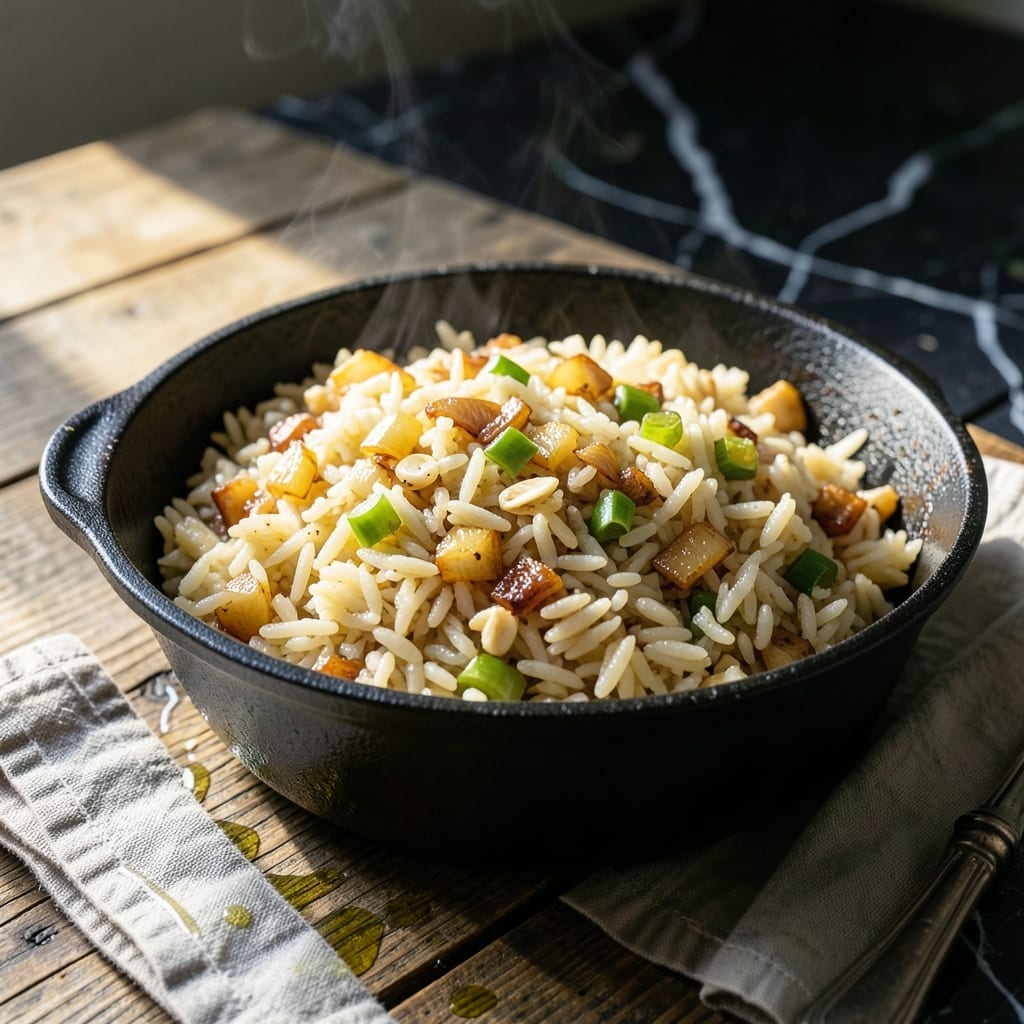
This one-pot lard rice delivers rich, savory depth that transforms simple ingredients into something extraordinary. The lard creates a golden, fragrant base that infuses every grain with unmatched flavor.
I perfected this method over years of testing, learning that the key is rendering the lard slowly before adding the rice. This ensures maximum flavor absorption and a tender, slightly crispy texture that’s impossible to achieve with other fats.
The result is a dish that’s both comforting and deeply flavorful, with each bite carrying the warmth of tradition. It’s the kind of recipe that turns an ordinary meal into a memorable experience.
Serve it as a side or a hearty main—either way, it’s a foolproof way to elevate your cooking.
Ingredients for Lard Rice
Simple ingredients transform into extraordinary one-pot richness with proper technique and quality lard.
| Ingredient | Amount | Notes |
|---|---|---|
| Lard 🐖 | ½ cup | Leaf lard preferred for purity |
| Long-Grain White Rice 🍚 | 2 cups | Rinsed until water runs clear |
| Chicken Stock 🥣 | 4 cups | Low-sodium for controlled seasoning |
| Yellow Onion 🧅 | 1 whole | Finely diced for even distribution |
| Garlic Cloves 🧄 | 4 cloves | Minced to release full flavor |
| Green Bell Pepper 🌶️ | 1 whole | Small dice for texture contrast |
| Tomato Paste 🍅 | 2 tbsp | Concentrated for depth of flavor |
| Bay Leaves 🌿 | 2 pieces | Whole, removed before serving |
| Kosher Salt 🧂 | 1 ½ tsp | Diamond Crystal brand preferred |
| Freshly Ground Black Pepper 🌶️ | ½ tsp | Coarse grind for texture |
| Dried Thyme 🍃 | ½ tsp | Rubbed between fingers to release oils |
| Dried Oregano 🌿 | ½ tsp | Mediterranean variety preferred |
| Fresh Cilantro 🌿 | ¼ cup | Chopped, for garnish |
The lard is non-negotiable here. Leaf lard (from around the kidneys) renders purest with cleanest pork flavor—avoid the grocery store tubs labeled simply ‘lard’ which often contain hydrogenated additives. Fatworks or Epic brands offer excellent leaf lard online. For rice, long-grain varieties like Carolina Gold or standard jasmine absorb the rendered fat beautifully without turning mushy.
No leaf lard? Pork fatback trimmed of skin works (render yourself). Vegetarian? Coconut oil plus smoked paprika mimics the savory depth surprisingly well. For stock, homemade chicken stock is ideal but Better Than Bouillon base makes a solid substitute. The tomato paste can be double-concentrated if that’s what you have—just use half the amount.
Rendered lard keeps in the fridge for 6 months or frozen for 12 months. Cooked rice holds 4-5 days refrigerated but truly shines fresh. Always render more lard than needed—it’s a versatile fat for frying, baking, or roasting potatoes (the best use, honestly).
Why You’ll Love This Recipe
- One-Pot Wonder: I love that this comes together in a single pot—just brown the onion and garlic in lard, add rice and stock, then let it simmer.
- Rich Comfort: The lard and chicken stock create this deep, savory base that makes the rice taste like it’s been cooking all day.
- Feeds the Week: Honestly, it reheats beautifully, so I make a big batch for lunches or lazy dinners.
- Pantry Hero: Between us, it’s cheap, filling, and uses staples I always have on hand—no last-minute grocery runs.
Step-by-Step Instructions for Lard Rice
This one-pot method delivers perfectly tender rice with rich, savory depth in every bite.
Step 1: Sauté Aromatics in Rendered Lard
Heat the ½ cup lard in a heavy pot over medium heat until it melts and shimmers. Add the finely diced yellow onion and cook for 5-6 minutes, stirring occasionally, until translucent and just beginning to caramelize.
Stir in the minced garlic cloves and small-diced green bell pepper, cooking for an additional 2-3 minutes until the pepper softens slightly. The lard should coat the vegetables evenly, creating a fragrant base that will infuse the rice with deep flavor. Watch for the edges of the onion to turn light golden brown.
Step 2: Toast Rice and Build Flavor Foundation
Add the 2 cups long-grain white rice to the pot and stir to coat every grain in the lard and aromatics. Toast for 2-3 minutes until the rice turns slightly opaque and emits a nutty aroma. This step is crucial—it enhances the rice’s natural flavor and prevents a gummy texture.
Stir in the 2 tbsp tomato paste, ½ tsp dried thyme, and ½ tsp dried oregano, rubbing the herbs between your fingers to release their oils. Cook for 1 minute until the tomato paste darkens slightly, deepening its sweetness and umami. The mixture should look glossy and well combined.
Step 3: Simmer with Stock and Seasonings
Pour in the 4 cups chicken stock, 1½ tsp kosher salt, and ½ tsp freshly ground black pepper. Add the 2 bay leaves and stir well to distribute the rice evenly. Bring to a boil over medium-high heat, then reduce to low heat and cover tightly with a lid.
Simmer undisturbed for 18-20 minutes until the liquid is fully absorbed and the rice is tender with no resistance. Avoid lifting the lid during cooking—steam is essential for even cooking. You’ll know it’s ready when the surface looks dry and the grains are plump and separate easily.
Step 4: Rest and Finish with Fresh Cilantro
Remove the pot from heat and let it sit covered for 5-10 minutes. This resting period allows the rice to steam gently, ensuring uniform texture and absorbing any remaining moisture. Discard the bay leaves before serving.
Fluff the rice with a fork, then stir in the ¼ cup chopped fresh cilantro. The cilantro adds a bright, fresh contrast to the rich lard and savory stock. Serve immediately while hot, with the cilantro’s vibrant green flecks visible throughout the dish.
Pro Tips For Making Lard Rice
- Render the Lard: Heat the lard on medium-low until it’s fully melted but not smoking—I learned this the hard way after burning a batch that tasted bitter.
- Toast the Rice: Cook the rice in the hot lard for 2-3 minutes until it turns slightly translucent; this builds a nutty depth that plain rice just doesn’t have.
- Use Warm Stock: Pour in chicken stock straight from the fridge and the rice will seize up; warm it first so the cooking stays even and the grains stay fluffy.
- Sauté Aromatics Long: Let the onion and garlic soften in the lard for at least 5 minutes—rushing this step leaves them raw and harsh in the final dish.
Regional Styles of These Flavors
Southern US Style
In the American South, this dish often includes smoked bacon or ham hock rendered down with the lard for extra depth. I add 1 diced smoked sausage when toasting the rice for a hearty, one-pot meal that’s pure comfort food. 🔥
Caribbean Approach
Puerto Rican and Dominican versions use sofrito as the aromatic base. Blend ½ cup recao (culantro), bell peppers, and onions, then sauté in lard before adding rice. The result is vibrant and packed with island flavors.
Mexican Arroz Rojo
This variation transforms the dish into arroz rojo by adding 1 cup tomato sauce and 1 tsp cumin with the stock. The rice takes on a beautiful red hue and pairs perfectly with grilled meats.
Spanish Influence
In Spain, morcilla (blood sausage) is often crumbled into the lard at the start. I’ve also seen versions with chorizo that add a smoky paprika kick. The rice absorbs these bold flavors beautifully.
Filipino Bagoong Twist
For an umami bomb, stir in 1 tbsp bagoong (fermented shrimp paste) with the tomato paste. This adds a funky depth that’s balanced by the richness of the lard. It’s my favorite unexpected variation. ✨
Nutrition Facts
Frequently Asked Questions
Can I use vegetable oil instead of lard?
You can, but the flavor will be noticeably different. Lard adds a rich, savory depth that plant-based oils can’t replicate. If avoiding pork, try coconut oil with a pinch of smoked salt for closer results.
Why toast the rice before adding liquid?
Toasting enhances the rice’s nutty flavor and prevents a mushy texture. It creates a protective starch layer so grains stay separate. Skip this step, and you risk a gummy final dish.
What if my rice is still crunchy after cooking?
Add ¼ cup hot stock, cover, and steam for 5-10 minutes off heat. This usually fixes undercooked grains. Next time, ensure your lid fits tightly to trap all steam.
How long can I store leftovers?
Cooked rice keeps 4-5 days refrigerated in an airtight container. Reheat with a splash of water to restore moisture. Freezing isn’t recommended as it alters the texture.

- Lump Rice Recipe Sri Lanka: Traditional Island-Style Texture - November 4, 2026
- Laos Sticky Rice Recipe: Traditional Steamed Perfection - November 4, 2026
- Magic Rice Recipe: One-Pot Aromatic Wonder - November 4, 2026