
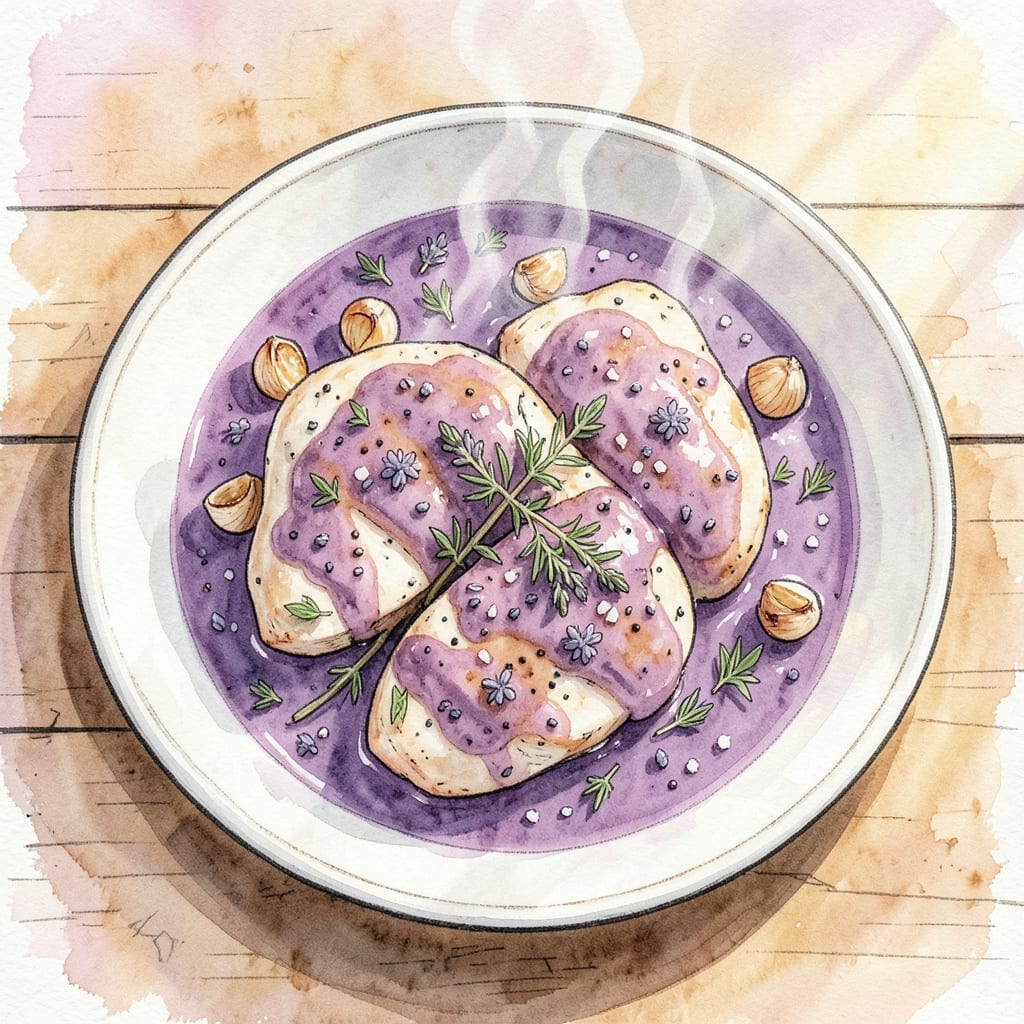
I’ve perfected a lavender chicken recipe that transforms dinner into an elegant experience. By combining the subtle floral notes of lavender with tender chicken, this dish creates a sophisticated flavor profile that’s surprisingly easy to achieve.
The secret lies in balancing the delicate lavender flavor with complementary herbs and spices, resulting in a succulent and aromatic main course. This recipe is perfect for special occasions or when you want to elevate your weeknight dinner routine with minimal effort.
Ingredients for Lavender Chicken
Elevate dinner with these simple, elegant ingredients for lavender chicken.
| Ingredient | Amount | Notes |
|---|---|---|
| Boneless Chicken Breasts 🍗 | 1 ½ lb | Pounded to even thickness |
| Dried Lavender Buds 💜 | 2 tbsp | Culinary grade preferred |
| Garlic Cloves 🧄 | 4 cloves | Minced, fresh |
| Fresh Thyme 🌿 | 2 tbsp | Chopped, fresh leaves |
| Olive Oil 🫒 | ¼ cup | Extra-virgin for richness |
| Lemon Juice 🍋 | 2 tbsp | Freshly squeezed |
| Honey 🍯 | 1 tbsp | Pure, raw |
| Salt 🧂 | 1 tsp | Kosher or sea salt |
| Black Pepper 🌶️ | ½ tsp | Freshly ground preferred |
| White Wine 🍷 | ½ cup | Dry white wine |
| Chicken Broth 🍲 | 1 cup | Low-sodium preferred |
| Fresh Parsley 🌿 | ¼ cup | Chopped, for garnish |
For the lavender, look for culinary grade at specialty stores or Penzeys. Fresh thyme is a must—don’t substitute with dried. The chicken breasts should be pounded to even thickness for uniform cooking. I like to use organic chicken when available.
No white wine? Use additional chicken broth with a splash of lemon. For a stronger lavender flavor, increase to 2.5 tbsp. If you can’t find culinary lavender, check health food stores or online. Fresh parsley adds a nice pop of color at the end—don’t skip it.
This dish reheats beautifully and gets better after 24 hours. Store in airtight containers in the fridge for up to 3 days. Freeze individual portions for up to 3 months. Let it come to room temperature before reheating for best results.
Step-by-Step Instructions for Lavender Chicken
Here’s the method that brings together these beautiful flavors—simple, effective, and utterly delicious.
Step 1: Prepare the Lavender Herb Crust
Start by mixing together the 2 tbsp Dried Lavender Buds, 2 tbsp Fresh Thyme, 1 tsp Salt, and 0.5 tsp Black Pepper in a small bowl. I like to use my fingers to blend the herbs and ensure they’re evenly distributed—the aroma is amazing as you mix. The lavender adds a floral note that pairs beautifully with the chicken.
Next, take the 1.5 lb Boneless Chicken Breasts and pat them dry with paper towels. This helps the herb crust adhere better and promotes even browning. I always make sure they’re pounded to an even thickness so they cook consistently.
Step 2: Sear the Chicken to Perfection
Heat the 0.25 cup Olive Oil in a large skillet over medium-high heat. When it shimmers, add the chicken breasts. I like to let them cook undisturbed for 4-5 minutes on the first side until they develop a nice golden crust. Flip them and cook for another 4-5 minutes until they reach an internal temperature of 165°F. Transfer the chicken to a plate and tent with foil to keep warm.
You’ll notice the chicken has a beautiful crust by this point—that’s where the magic happens. The olive oil helps create that perfect sear while keeping the meat juicy.
Step 3: Create the Lavender Wine Sauce
In the same skillet (no need to clean it—those browned bits are flavor gold), add the 4 cloves Garlic Cloves and sauté for 1 minute until fragrant. Be careful not to burn the garlic; it can go from perfect to bitter quickly. Pour in the 0.5 cup White Wine and 1 cup Chicken Broth, scraping up any browned bits from the bottom of the pan.
Bring the mixture to a simmer and let it reduce by half, about 5-7 minutes. You’ll see the sauce thicken slightly and the flavors concentrate—that’s when you know it’s ready. Stir in the 2 tbsp Lemon Juice and 1 tbsp Honey to balance the flavors.
Step 4: Finish and Serve
Return the chicken to the skillet and spoon some of that beautiful sauce over the top. Let it simmer for 2-3 minutes to heat through and absorb the flavors. I like to garnish with the 0.25 cup Fresh Parsley just before serving—it adds a fresh contrast to the rich sauce.
Slice the chicken against the grain and serve with the extra sauce spooned over the top. The lavender and thyme crust should have formed a fragrant, slightly crispy exterior that gives way to juicy chicken inside. Each bite should be a perfect balance of floral, tangy, and savory flavors.
Flavor Customization for This Recipe
Herb Variations
While lavender is the star, you can modify the herb crust to suit your taste. Try substituting 1 tablespoon of thyme with rosemary for a more robust flavor. For a Mediterranean twist, add 1 teaspoon of oregano to the herb mix. The key is maintaining that 2-tablespoon lavender base.
Spice Level Adjustments
For those who prefer a bit of heat, add ¼ teaspoon of red pepper flakes to the herb crust. The subtle kick complements the floral notes beautifully. If you prefer to keep it mild, simply omit the black pepper or reduce it to ¼ teaspoon. The garlic provides enough depth without adding extra heat.
Lavender Intensity Options
The beauty of this recipe is its flexibility with lavender. For a stronger floral flavor, increase the dried lavender buds to 2.5 tablespoons. If you’re new to lavender, start with 1 tablespoon and adjust to taste in future batches. Remember that culinary grade lavender is milder than other varieties.
Wine Substitutions
Not a fan of white wine? Replace it with chicken broth and add a splash of lemon juice for acidity. For a richer sauce, use heavy cream instead of broth, but reduce the amount to ½ cup. The wine adds depth, but the dish remains delicious without it.
Garnish Variations
While fresh parsley is my go-to garnish, you can also use chopped chives or fresh tarragon for different flavor profiles. For a pop of color, add some lemon zest on top. The garnish adds freshness that cuts through the rich sauce beautifully.
Additional Flavor Dimensions
To add complexity, toss some roasted vegetables (like asparagus or carrots) with the chicken during the final simmer. For a creamier sauce, stir in 1 tablespoon of unsalted butter just before serving. These small additions can elevate the dish to new heights.
Nutrition Facts
Frequently Asked Questions
What type of lavender is best for cooking?
Culinary grade dried lavender buds are recommended for this recipe. They provide a milder flavor compared to other varieties and are specifically labeled as safe for consumption. You can find them at specialty stores or online retailers like Penzeys.
Can I substitute fresh lavender for dried lavender buds?
No, it’s not recommended to substitute fresh lavender for dried in this recipe. Dried lavender buds have a more concentrated flavor and are specifically processed for cooking. Using fresh lavender could result in an inconsistent flavor profile and potentially affect the dish’s overall balance.
How do I store leftover lavender chicken?
Store leftover chicken in an airtight container in the refrigerator for up to 3 days. The flavors actually improve after 24 hours, making it a great make-ahead dish. Reheat gently to preserve the tender texture and aromatic flavors.
Can I freeze the lavender chicken?
Yes, you can freeze individual portions for up to 3 months. Wrap each piece tightly in plastic wrap, then place in a freezer-safe bag. Thaw overnight in the refrigerator before reheating. The sauce may separate slightly upon thawing, but a quick stir will restore its consistency.

- Jollof Rice Sauce Recipe: West African Tomato and Spice Infusion - September 25, 2026
- Japanese Rice Soup Recipe: Umami-Rich Comfort in a Bowl - September 25, 2026
- Homemade Cream Of Rice Recipe: Silk-Smooth Breakfast in Minutes - September 25, 2026