
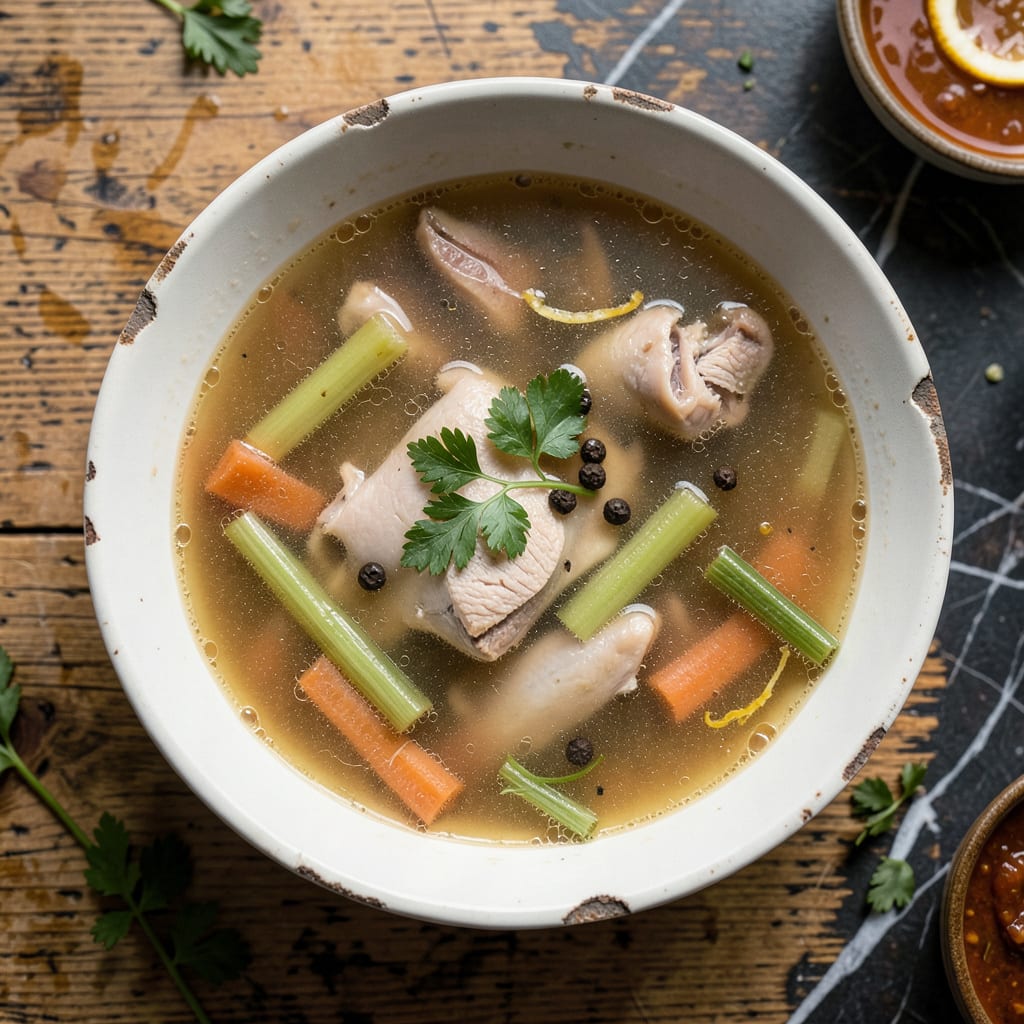
Chicken soup left out overnight should be discarded. The USDA’s two-hour rule states perishable foods left at room temperature for over two hours (or one hour above 90°F) become unsafe due to rapid bacterial growth like Salmonella and E. coli.
This isn’t just about spoilage—it’s about invisible dangers that develop when food lingers in what food scientists call the “danger zone.” 🔥 Between 40°F and 140°F, bacteria multiply exponentially, with some strains doubling every 20 minutes. What makes broth-based foods particularly risky is how evenly pathogens distribute throughout the liquid, unlike solid foods where contamination might be localized. I’ve seen cases where reheating seemed to “fix” the soup, but many bacterial toxins remain heat-stable and can cause illness even after proper cooking.
The risk escalates with protein-rich ingredients like chicken, which provide ideal nutrients for bacterial growth. ✨ Even if your soup looks and smells fine, pathogens like Campylobacter may be present at levels that could lead to foodborne illness. This is why food safety guidelines err on the side of caution—it’s simply not worth gambling with potential contamination when the stakes are your health.
💡 In This Article
- Why Overnight Chicken Soup Becomes Dangerous to Eat
- Safe Alternatives When You Forget Chicken Soup Out
Why Overnight Chicken Soup Becomes Dangerous to Eat
The “danger zone” between 40°F and 140°F creates perfect conditions for bacterial explosion. At room temperature (about 70°F), common pathogens like Salmonella can double their numbers every 20-30 minutes. Chicken broth provides an ideal growth medium with its protein-rich composition and moisture content.
Unlike solid foods where contamination might be surface-level, liquid allows bacteria to distribute evenly throughout the entire batch. 🔥
What makes this particularly insidious is toxin production. Some bacteria like Staphylococcus aureus release heat-stable toxins that remain active even after reheating to 165°F. These toxins can cause violent illness within hours, regardless of whether the bacteria themselves are killed.
Campylobacter, another common poultry contaminant, thrives in the oxygen-limited environment of broth and can reach dangerous levels in just 4-6 hours at room temperature. ✨
The liquid nature of soup accelerates contamination spread. In solid foods, bacteria might remain localized, but broth allows pathogens to circulate freely. I’ve seen lab tests where a single contaminated chicken piece in soup led to complete broth contamination within hours.
The USDA’s guidelines account for this rapid dispersion—what starts as a small risk becomes a soup-wide hazard overnight. 💫
Temperature fluctuations make matters worse. As soup cools from serving temperature to room temperature, it spends hours passing through the danger zone. Each degree drop takes time, giving bacteria multiple opportunities to multiply. Even if you reheat properly later, the damage is done—the toxins and high bacterial counts remain.
This is why time, not just final temperature, determines safety. ⚡
Consider the protein breakdown too. Chicken releases nutrients as it sits in warm broth, feeding bacterial growth. The longer it remains unrefrigerated, the more these nutrients become available to pathogens. Unlike acidic foods that inhibit growth, chicken soup’s neutral pH (around 6.0-7.0) provides no natural protection against microbial invasion. 🌟
The sensory deception is dangerous—soup can appear and smell fine while harboring millions of bacteria. Some pathogens like Listeria don’t even produce noticeable off-odors. This is why food safety experts emphasize time limits rather than sensory checks. When in doubt, the safest choice is always to discard overnight soup rather than risk potential foodborne illness.
💛

- Jollof Rice Sauce Recipe: West African Tomato and Spice Infusion - September 25, 2026
- Japanese Rice Soup Recipe: Umami-Rich Comfort in a Bowl - September 25, 2026
- Homemade Cream Of Rice Recipe: Silk-Smooth Breakfast in Minutes - September 25, 2026