
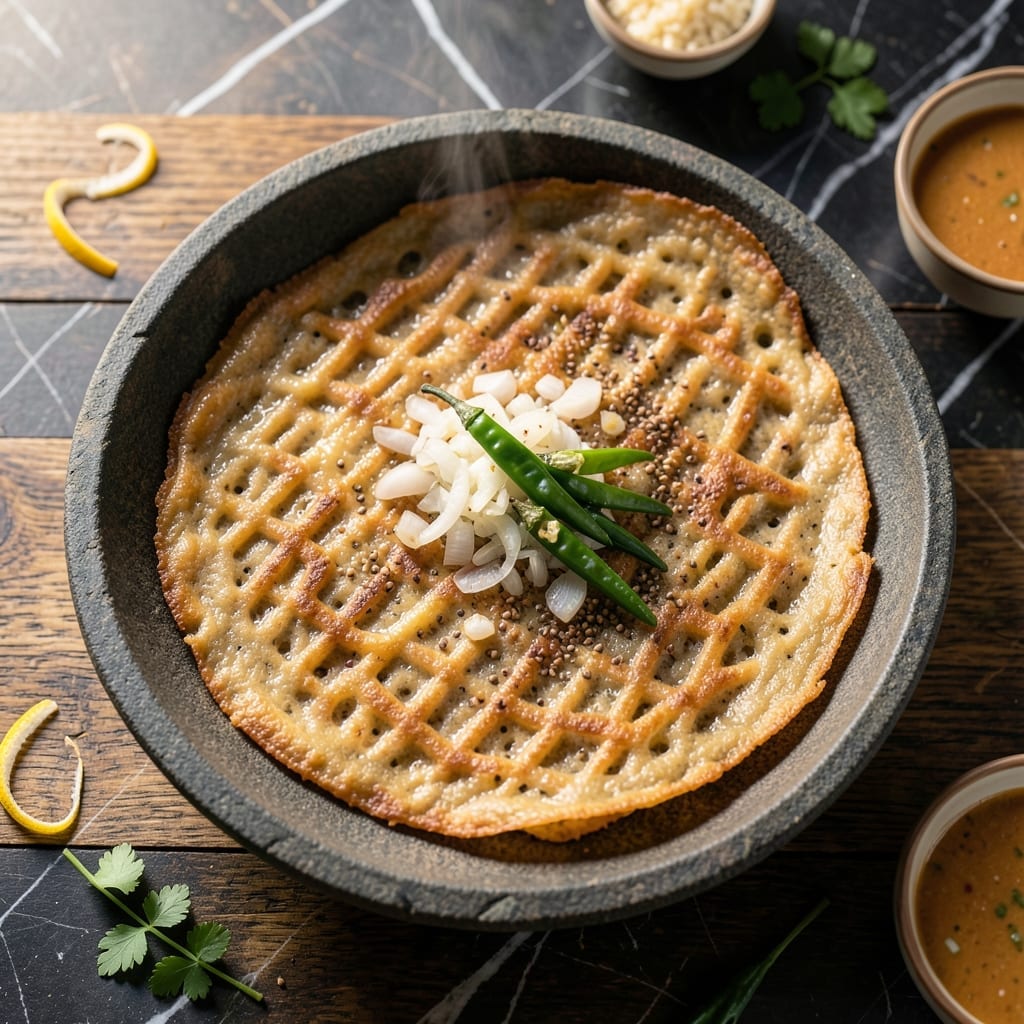
Transforming leftover rice into crispy South Indian dosa is a game-changing breakfast solution. This method repurposes what might be discarded into a golden, lacy crepe that’s ready in minutes.
The batter comes together quickly by blending rice with minimal ingredients, requiring no fermentation. The key is achieving the right consistency—thinner than pancake batter but thicker than water—for that signature crispy texture.
Cooked on a hot griddle until the edges curl and the surface turns golden, each dosa develops a satisfying crunch. The simplicity of this technique makes it perfect for busy mornings when you need a fast, delicious meal.
Serve hot with coconut chutney or sambar for an authentic experience. This recipe proves that leftovers can be just as exciting as the original dish.
Ingredients for Left Over Rice Dosa
Leftover rice and a handful of pantry staples create this crispy South Indian breakfast classic.
| Ingredient | Amount | Notes |
|---|---|---|
| Cooked White Rice 🍚 | 3 cups | Leftover, cooled completely |
| Raw Rice 🍚 | ½ cup | Uncooked, for texture |
| Semolina 🌾 | ¼ cup | Fine or medium grain |
| All-Purpose Flour 🌾 | 2 tbsp | For binding consistency |
| Cumin Seeds 🌿 | 1 tsp | Lightly crushed for aroma |
| Green Chilies 🌶️ | 2 whole | Finely chopped, adjust to taste |
| Fresh Ginger 🧄 | 1 piece | 1-inch, grated finely |
| Fresh Cilantro 🌿 | ¼ cup | Chopped, for freshness |
| Water 💧 | 1 ½ cups | Adjust for desired batter consistency |
| Salt 🧂 | 1 tsp | Adjust to taste preference |
| Vegetable Oil 🫒 | ½ cup | For cooking dosas, neutral flavor |
| Onion 🧅 | 1 whole | Medium, finely chopped |
| Curry Leaves 🍃 | 10 pieces | Fresh, optional for authenticity |
The rice is everything here. Leftover basmati or jasmine works best—freshly cooked rice makes the batter gummy. Indian grocery stores carry semolina and curry leaves, but most Asian markets have them too. For the raw rice, any white rice is fine, but avoid instant rice. The batter should coat the back of a spoon but still be pourable (think heavy cream consistency).
No semolina? Fine cornmeal or rice flour at equal amounts works well. Skip the raw rice if you’re short on time—just increase leftover rice to 4 cups and add 1 tbsp cornstarch for structure. Green chilies can be serrano or jalapeño. For a milder version, remove the seeds. The cilantro is non-negotiable for freshness, but mint leaves at half the amount add a nice variation.
Batter keeps in the fridge for 1 day—it thickens, so thin with water before using. Cooked dosas are best eaten hot and crispy, but leftovers reheat decently in a toaster oven for 2-3 minutes. Store cooked dosas wrapped in foil for up to 2 days.
Why You’ll Love This Recipe
- No Waste: I love turning yesterday’s cooked white rice into something new—no extra shopping, just mix with raw rice and semolina.
- Crispy & Fragrant: The cumin seeds toast in the batter, giving every bite that warm, earthy kick with a perfectly crisp edge.
- Breakfast or Dinner: Honestly, it works for lazy Sunday brunches or a quick weeknight meal when I’m short on time.
- Pantry Staples: All-purpose flour and leftover rice are always in my kitchen, so this comes together without a special trip to the store.
Step-by-Step Instructions for Left Over Rice Dosa
This method delivers consistently crispy results with minimal effort and maximum flavor.
Step 1: Prepare the Batter for Optimal Texture
In a large bowl, combine the 3 cups Cooked White Rice, 0.5 cup Raw Rice, 0.25 cup Semolina, and 2 tbsp All-Purpose Flour. The raw rice adds texture while the semolina and flour bind everything together for a crispy finish.
Add the 1.5 cups Water gradually, mixing as you go to prevent lumps. The batter should be slightly thicker than pancake batter but still pourable. Let it sit for 10 minutes to allow the semolina and flour to hydrate fully.
Step 2: Infuse Aromatics for Flavor Depth
While the batter rests, finely chop the 1 whole Onion, 2 whole Green Chilies, and 1 piece Fresh Ginger. Heat 1 tsp Cumin Seeds in a dry skillet over medium heat for 30 seconds until fragrant, then add the chopped aromatics and sauté for 2-3 minutes until softened.
Stir in the 10 pieces Curry Leaves and 0.25 cup Fresh Cilantro, cooking for another 30 seconds to release their oils. This tempering process—called “tadka” in Indian cooking—layers complex flavors into the dish. Remove from heat and fold the mixture into the batter.
Step 3: Season and Adjust Consistency
Add 1 tsp Salt to the batter and stir well. Taste and adjust seasoning if needed—the batter should be well-seasoned since the dosas won’t be salted after cooking. If the mixture seems too thick, add a splash more water, 1-2 tablespoons at a time, until it reaches the right consistency.
The ideal batter coats the back of a spoon but drizzles off easily. This ensures the dosas spread thinly on the griddle for that signature crispness. The raw rice and semolina will continue absorbing liquid, so don’t make it too thin.
Step 4: Cook to Golden, Lacy Perfection
Heat a non-stick skillet or griddle over medium-high heat and lightly grease with vegetable oil. Pour ½ cup of batter onto the center, then quickly spiral outward into a thin, even circle using the back of the ladle. Drizzle 1 teaspoon of vegetable oil around the edges.
Cook undisturbed for 2-3 minutes until the edges lift and the surface appears dry with golden-brown spots. Flip and cook for another 1-2 minutes until crisp and golden. The dosa should release easily when ready—if it sticks, it needs more time.
Step 5: Serve Immediately for Maximum Crispness
Transfer the dosa to a plate and repeat with the remaining batter, adding 1 teaspoon of vegetable oil to the skillet between each. Serve hot, straight from the griddle, for the best texture. The contrast between the crispy exterior and soft interior is what makes this dish special.
These dosas are best enjoyed fresh, so cook them in batches as needed. Leftovers can be reheated on a dry skillet for 1-2 minutes per side to restore some crispness, though they’re never quite as good as fresh.
Pro Tips For Making Left Over Rice Dosa
- Soak Raw Rice: I learned this the hard way—soak the raw rice for at least 3-4 hours before grinding. It blends smoother and avoids that gritty texture in your dosa batter.
- Use Cold Leftover Rice: After burning a batch, I realized cold cooked rice works better than warm. It prevents the batter from turning sticky and gives a crispier dosa.
- Adjust Water Gradually: Sounds weird, but it works: add water slowly while blending. The batter should be thick but pourable—like pancake batter, not a smoothie.
- Heat the Tawa First: My grandmother swore by this, and she was right: get your tawa (griddle) smoking hot before spreading the batter. It guarantees that golden, crispy crust every time.
Common Mistakes When Making Perfect Results
Overmixing the Batter
When combining your ingredients, stir just until everything is incorporated. Overmixing develops gluten in the all-purpose flour, making the dosas tough instead of crispy. I use a whisk for the first 30 seconds, then switch to a spatula for gentle folding. 💡
Wrong Batter Consistency
Too thick, and your dosas will be dense; too thin, and they’ll tear. Aim for a consistency like heavy cream. If it’s too runny, add 1 tbsp semolina at a time. If too thick, thin with 1-2 tbsp water. Test by pouring a small amount on the skillet—it should spread easily but not disappear.
Skipping the Rest Time
Letting the batter sit for 10 minutes is crucial. This allows the semolina and flour to hydrate fully, ensuring even cooking and a crisp texture. I’ve rushed this step before, and the dosas turned out gummy in the center.
Inadequate Heat
Your skillet must be ripping hot before adding the batter. A properly heated pan ensures the edges crisp up quickly. Test by sprinkling a few drops of water—they should sizzle and evaporate immediately. Cook on medium-high heat for best results. 🔥
Overcrowding the Pan
Cook one dosa at a time, even if your pan seems large enough. Overcrowding lowers the temperature, leading to soggy results. I use a 12-inch non-stick skillet for perfect single-dosa cooking. Patience pays off with that signature lacy texture.
Ignoring the Flip Timing
Flip only when the edges lift and the surface looks dry with golden spots, usually after 2-3 minutes. Flipping too early causes tearing. The dosa should release easily—if it sticks, wait another 30 seconds before trying again.
Nutrition Facts
Frequently Asked Questions
Can I use brown rice instead of white?
Yes, but the texture will differ. Brown rice creates a nuttier, chewier dosa. Soak cooked brown rice in warm water for 15 minutes before blending to soften.
Why does my dosa stick to the pan?
Your pan likely isn’t hot enough or needs more oil. Heat on medium-high until water sizzles, then add 1 tsp oil per dosa. Use a non-stick surface for best results.
Can I make the batter ahead?
Yes! Store in the fridge for up to 1 day. Stir before using as it thickens. For longer storage, freeze batter in portions for up to 1 month.
How do I make it extra crispy?
Use less water for thicker batter. Cook on high heat and press edges with a spatula. Add 1 tbsp rice flour to the batter for extra crunch.

- Lump Rice Recipe Sri Lanka: Traditional Island-Style Texture - November 4, 2026
- Laos Sticky Rice Recipe: Traditional Steamed Perfection - November 4, 2026
- Magic Rice Recipe: One-Pot Aromatic Wonder - November 4, 2026