
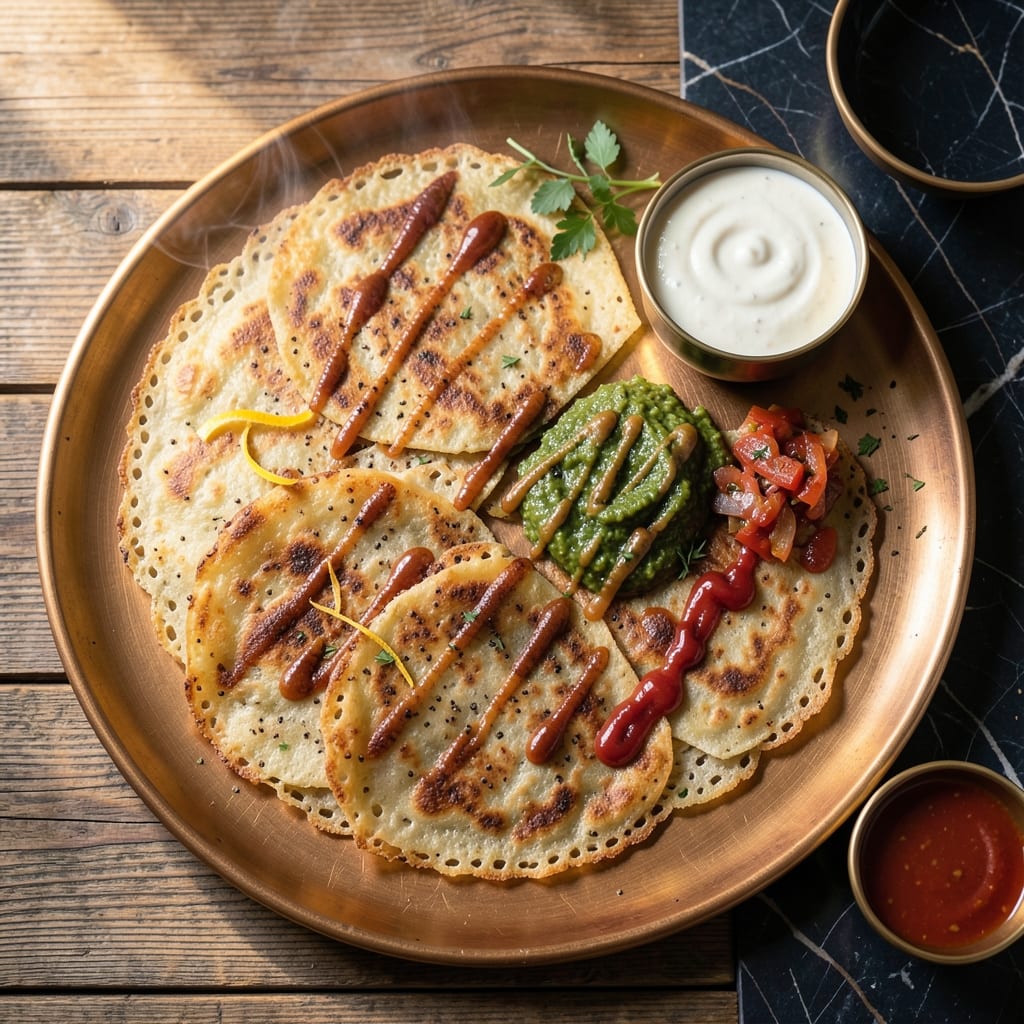
Transform yesterday’s leftover rice into crispy, golden dosa without the traditional fermentation wait. This method repurposes cooked grains into a light, savory crepe with minimal effort.
The key lies in blending the rice with just enough water and spices to create a smooth batter. A hot skillet ensures each dosa develops a delicate, lacy texture with a satisfying crunch.
You’ll achieve restaurant-quality results in minutes, not hours. The process is straightforward, yet the outcome feels indulgent—perfectly thin, slightly tangy, and endlessly adaptable.
Serve hot with coconut chutney or sambar for a complete meal. Here’s how to make it happen.
Ingredients for Leftover Cooked Rice Dosa
Repurpose cooked grains into light, savory crepes with these pantry staples and fresh aromatics.
| Ingredient | Amount | Notes |
|---|---|---|
| Cooked White Rice 🍚 | 3 cups | Day-old, chilled for best texture |
| Semolina 🌾 | ½ cup | Fine or medium grind works |
| Rice Flour 🌾 | ½ cup | Ensures crispiness and binding |
| Water 💧 | 1 ½ cups | Adjust for desired batter consistency |
| Salt 🧂 | 1 tsp | Adjust to taste preference |
| Cumin Seeds 🌿 | 1 tsp | Lightly toasted for aroma |
| Green Chili 🌶️ | 1 whole | Finely chopped, adjust for heat |
| Fresh Ginger 🌿 | 1 tbsp | Grated or minced finely |
| Fresh Cilantro 🍃 | ¼ cup | Chopped, for garnish and flavor |
| Vegetable Oil 🫒 | ¼ cup | For cooking dosa, neutral flavor |
| Onion 🧅 | ½ whole | Finely chopped, optional for filling |
| Lemon Juice 🍋 | 1 tbsp | Freshly squeezed for tang |
The rice is critical—day-old, chilled rice (jasmine or basmati preferred) yields the best crisp texture. Indian grocery stores carry rice flour and semolina in bulk, but Bob’s Red Mill or Sukhi’s brands work well at standard supermarkets. Ensure your cumin seeds are fresh; stale spices will mute the flavor profile. The batter should resemble a thin pancake mix—adjust water gradually to achieve the right consistency.
No semolina? Fine cornmeal at equal volume works in a pinch. Fresh cilantro can be swapped with mint for a different aromatic note. For heat control, reduce or omit the green chili—or add a pinch of cayenne for a different spice profile. The onion is optional but recommended for texture contrast. If avoiding oil, use a well-seasoned cast-iron skillet for non-stick cooking.
Leftover batter keeps in the fridge for 24 hours—stir well before use as it thickens. Cooked dosa stay crisp for 1-2 days in an airtight container, but are best served immediately. Freezing is not recommended as it compromises the signature texture. Always reheat on a dry skillet to revive any stored dosa.
Why You’ll Love This Recipe
- No Fuss Batter: I just blend leftover rice with semolina, rice flour, and water—no soaking, no waiting, no stress.
- Crispy Edges: That golden, crackly crust with a soft center? The rice flour makes it happen every time.
- Breakfast or Dinner: Honestly, I’ve served this for a quick morning bite or a lazy weeknight meal—it works for both.
- Zero Waste: I love turning yesterday’s rice into today’s dosa. Saves money and nothing goes to waste.
Step-by-Step Instructions for Leftover Cooked Rice Dosa
Here is the method for achieving perfectly crisp dosa without traditional fermentation.
Step 1: Prepare the Dosa Batter
Combine the 3 cups Cooked White Rice, 0.5 cup Semolina, and 0.5 cup Rice Flour in a large mixing bowl. Gradually add 1.5 cups Water while whisking to create a smooth, lump-free batter. The consistency should resemble heavy cream—thick enough to coat the back of a spoon but still pourable.
Add 1 tsp Salt, 1 tsp Cumin Seeds, the finely chopped Green Chili, and 1 tbsp Fresh Ginger. Stir well to distribute all ingredients evenly. Real talk: this step ensures every bite carries balanced flavor and texture.
Step 2: Rest the Batter for Optimal Consistency
Cover the bowl with a clean kitchen towel and let the batter rest at room temperature for 20-30 minutes. This resting period allows the flours to fully hydrate and the flavors to meld together, resulting in a more cohesive texture.
After resting, give the batter a good stir. If it appears too thick, add a splash of water—1 tablespoon at a time—until it reaches the desired pourable consistency. The batter should flow easily from a ladle but still hold its shape briefly when poured.
Step 3: Cook the Dosa to Crisp Perfection
Heat a non-stick skillet or griddle over medium-high heat. Once hot, reduce to medium heat and lightly grease with Vegetable Oil using a paper towel. Pour a ladleful of batter onto the center of the skillet and immediately spread it outward in a circular motion to form a thin, even layer.
Drizzle ½ teaspoon Vegetable Oil around the edges of the dosa and cook undisturbed for 2-3 minutes until the edges begin to lift and the surface appears dry and slightly golden. Flip carefully and cook for another 1-2 minutes until crisp and golden brown.
Step 4: Add Optional Filling and Garnish
If using, sprinkle ½ whole Onion (finely chopped) evenly over the dosa while it cooks. Once flipped, press down gently with a spatula to ensure the filling adheres. The onions should soften slightly but retain a bit of crunch for texture contrast.
Transfer the dosa to a serving plate and immediately drizzle with 1 tbsp Lemon Juice for brightness. Garnish with 0.25 cup Fresh Cilantro for a fresh, herbaceous finish. Serve hot for maximum crispness—the dosa should have a delicate, lace-like texture with a satisfying crunch.
Pro Tips For Making Leftover Cooked Rice Dosa
- Use Cold Rice: I learned this the hard way—hot or warm rice makes the batter sticky and hard to spread. Always chill your leftover rice for at least 2 hours before blending.
- Thin the Batter: Sounds weird, but it works: the batter should be thinner than pancake batter, almost like heavy cream, so it spreads easily on the pan.
- Heat the Pan Right: After burning three batches, I finally figured out medium-high heat is the sweet spot—too low and the dosa turns gummy, too high and it burns before cooking through.
- Add Semolina Last: Mix the rice flour and water first, then stir in semolina just before cooking—this prevents lumps and gives a smoother, crispier texture.
Regional Styles of leftover cooked rice dosa
South Indian Style
In Tamil Nadu, this dish often uses ponni rice for its soft texture. I add ½ tsp urad dal flour for authenticity. The batter ferments overnight traditionally, but your quick version still delivers that tangy flavor we love. 💛
Karnataka Adaptation
Here, they prefer thicker dosa called set dosa. I make mine with ¼ cup yogurt added to the batter. Cook on low heat for 4-5 minutes covered, creating a soft, spongy texture.
Andhra Special
Andhra style incorporates 1 tbsp sesame seeds and 2 dried red chilies for heat. I blend these with the rice for extra crunch. The result is a dosa with a nutty, spicy kick that pairs perfectly with ginger chutney.
Maharashtrian Twist
In Maharashtra, they make rice dosa with ½ cup grated coconut in the batter. I spread 1 tbsp green chutney on the dosa before folding. This adds a sweet, herbal note that’s distinctly Maharashtrian.
Kerala Version
Kerala’s appam-style uses ½ cup coconut milk instead of water. I cook it in a small appachatti pan for bowl shape. The edges become lacey while the center stays soft and thick. 🌟
Nutrition Facts
Frequently Asked Questions
Can I use fresh rice instead of leftover?
Freshly cooked rice contains too much moisture, making the batter sticky and hard to spread. Always use day-old, chilled rice for the best crisp texture.
Why did my dosa turn out thick and dense?
This usually happens if the batter is too thick. Aim for a heavy cream consistency and spread it thinly on the skillet. Cook on medium heat for even results.
How do I make it extra crispy?
Press down gently with a spatula while cooking and drizzle ½ tsp oil around the edges. A well-heated skillet and thin batter are key for maximum crispness.
Can I prepare the batter ahead of time?
Yes! The batter keeps in the fridge for 24 hours. Stir well before use as it thickens over time. Avoid freezing, as it affects texture.

- Mujadara Rice and Lentils Recipe: Earthy Spiced Lentils With Caramelized Onions - November 1, 2026
- Naija Fried Rice Recipe: Street-Style Spice With Veggie Crunch - November 1, 2026
- Mushy Rice Recipe: Fluffy Grains Transformed in Minutes - November 1, 2026