
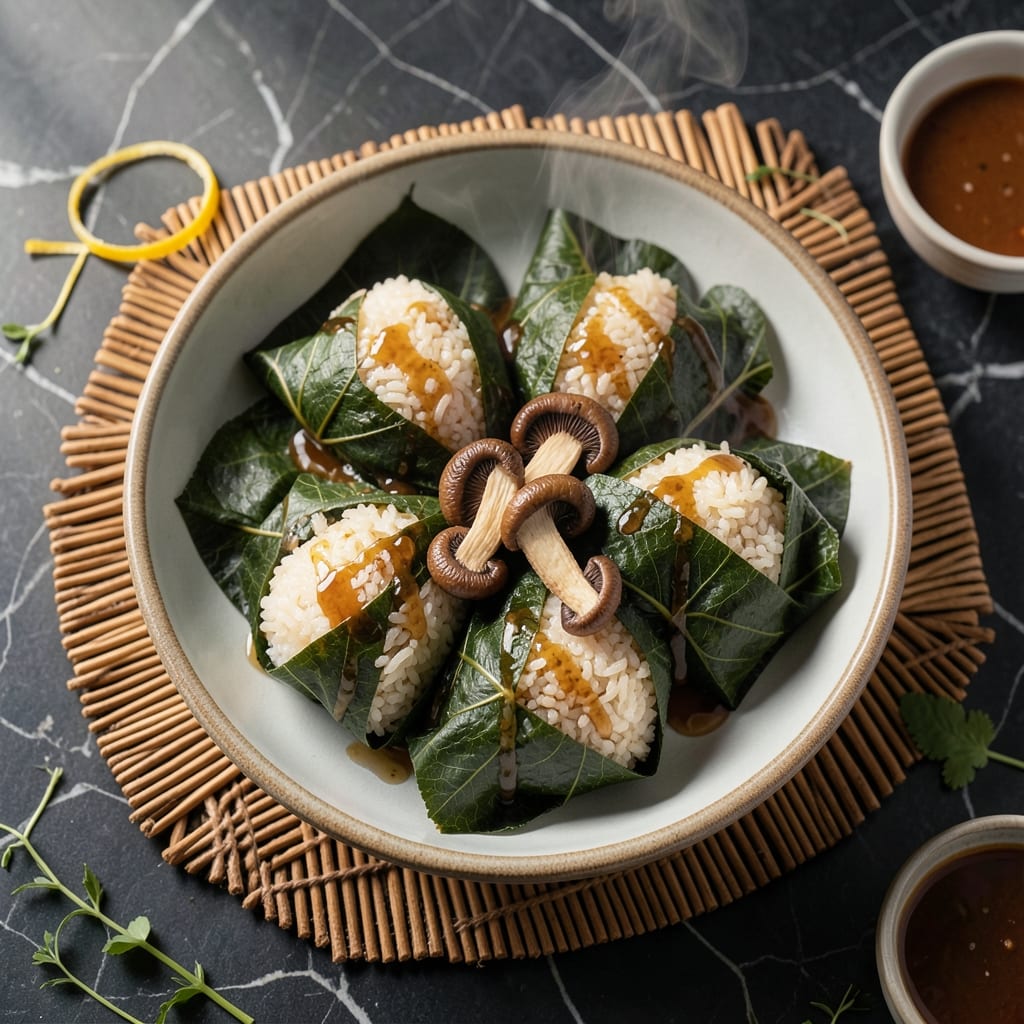
There’s an elegance to this traditional dish that transforms simple ingredients into something extraordinary. These fragrant parcels combine sweet sticky rice with the natural aroma of lotus leaves, creating a sensory experience that’s both comforting and refined.
I developed this method to honor the classic technique while making it accessible for home cooks. The rice is seasoned lightly, allowing the lotus leaf’s subtle earthiness to shine through. Wrapping and steaming the parcels ensures every bite is infused with fragrance.
What emerges is tender, sweet rice with a delicate floral note—proof that tradition doesn’t have to be complicated. The process is meditative, turning preparation into part of the enjoyment.
Serve these as a side or a light dessert. The result is always worth the effort.
Ingredients for Lotus Wrapped Sticky Rice
A handful of traditional ingredients creates these fragrant, sweet parcels of comfort and elegance.
| Ingredient | Amount | Notes |
|---|---|---|
| Glutinous Rice 🌾 | 2 cups | Soaked overnight for tenderness |
| Dried Lotus Leaves 🌿 | 8 pieces | Large, food-grade, rinsed thoroughly |
| Coconut Milk 🥥 | 1 cup | Full-fat for creaminess |
| Brown Sugar 🍚 | ¼ cup | Lightly packed for sweetness |
| Salt 🧂 | ½ tsp | Fine sea salt preferred |
| Dried Shiitake Mushrooms 🍄 | 4 pieces | Rehydrated and finely chopped |
| Scallions 🧅 | 3 whole | Thinly sliced for garnish |
| Sesame Oil 🫒 | 1 tbsp | Toasted for aroma |
| Soy Sauce 💧 | 2 tbsp | Low-sodium preferred |
| Peanuts 🥜 | ½ cup | Raw, crushed for texture |
| Cilantro 🌿 | ¼ cup | Fresh, chopped for garnish |
| Five-Spice Powder 🌶️ | ½ tsp | For warm aromatic depth |
| Water 💧 | 1 ½ cups | For soaking rice and steaming |
The lotus leaves are non-negotiable here. Asian grocery stores carry them dried—look for large, unbroken leaves without holes. Rinse them thoroughly under warm water to soften and remove any dust. Glutinous rice (also called sweet rice) is essential; regular rice won’t give you that sticky, tender texture. For the best results, soak it overnight—this ensures even cooking and maximum fragrance absorption.
No lotus leaves? Banana leaves (available at Latin markets) can work in a pinch, but the aroma won’t be the same. Dried shiitake mushrooms add umami depth—rehydrate in hot water for 20 minutes before chopping. If you’re nut-free, swap peanuts for toasted sesame seeds. The coconut milk can be light, but full-fat delivers richer flavor. Skip the five-spice if you prefer a milder profile.
Store dried lotus leaves in a cool, dark place—they’ll keep for up to a year. Soaked rice can sit in the fridge for 24 hours before cooking. Leftovers taste even better the next day as the flavors meld. Reheat by steaming for 5-10 minutes to restore moisture.
Why You’ll Love This Recipe
- Set and Forget: I just soak the rice, wrap it in the lotus leaves, and let the steamer do the work while I prep the rest of dinner.
- Coconut Sweetness: The coconut milk and brown sugar soak into the sticky rice, creating this rich, caramelized flavor that’s honestly hard to resist.
- Portable Feast: Between us, these little parcels are my go-to for picnics or potlucks—no plates, no mess, just grab and enjoy.
- Budget Stretch: A small bag of glutinous rice and a few dried leaves make enough for a crowd, and leftovers taste even better the next day.
Step-by-Step Instructions for Lotus Wrapped Sticky Rice
Here is the method to achieve perfectly fragrant parcels every time.
Step 1: Prepare the Glutinous Rice and Filling
Begin by draining the soaked 2 cups Glutinous Rice thoroughly. In a large bowl, combine the drained rice with 1 cup Coconut Milk, 0.25 cup Brown Sugar, 0.5 tsp Salt, 1 tbsp Sesame Oil, 2 tbsp Soy Sauce, and 0.5 tsp Five-Spice Powder. Mix well until the rice is evenly coated and the liquid is absorbed.
The rice grains should look plump and slightly translucent at the edges. Meanwhile, finely chop the rehydrated 4 pieces Dried Shiitake Mushrooms and thinly slice 3 whole Scallions. Crush the 0.5 cup Peanuts coarsely for texture and chop the 0.25 cup Cilantro for garnish.
Step 2: Rehydrate and Prepare the Lotus Leaves
Rinse the 8 pieces Dried Lotus Leaves thoroughly under warm water to remove any dust. Place them in a large bowl and cover completely with hot water. Let them soak for 10-15 minutes until pliable and fragrant.
Once softened, carefully pat each leaf dry with a clean towel. Trim off the tough stem end, then briefly pass each leaf over an open flame for 2-3 seconds per side to enhance its aroma. Be careful not to scorch the leaves—you want them supple, not brittle.
Step 3: Assemble the Parcels
Lay a lotus leaf flat on your work surface, vein side up. Spoon about ¼ of the rice mixture onto the center of the leaf, shaping it into a rough rectangle. Top with a portion of the chopped shiitake mushrooms and scallions, then sprinkle with crushed peanuts.
Fold the sides of the leaf inward, then roll tightly from the bottom up, similar to wrapping a burrito. Secure the parcel with kitchen twine or a strip of lotus leaf to keep it closed during steaming. The parcel should be snug but not overstuffed.
Step 4: Steam to Perfection
Arrange the parcels seam-side down in a steamer basket lined with parchment paper to prevent sticking. Pour the 1.5 cups Water into the steamer pot and bring to a rolling boil. Place the basket over the water, cover with a lid, and steam for 45-50 minutes.
Check that the rice is tender and fully cooked by inserting a skewer into the center of a parcel—it should slide in easily with no resistance. The lotus leaves will darken slightly and release their heady fragrance, signaling the parcels are ready.
Step 5: Rest and Serve
Remove the parcels from the steamer and let them rest for 5 minutes before unwrapping. This allows the rice to set and the flavors to meld. Carefully unwrap each parcel, discarding the leaves or using them as a base for presentation.
Garnish with the remaining scallions and cilantro. Serve warm, allowing each person to experience the intoxicating aroma as they open their parcel. The rice should be sticky yet distinct, with a balance of sweet, savory, and aromatic notes.
Pro Tips For Making Lotus Wrapped Sticky Rice
- Soak the Leaves: I learned this the hard way—dried lotus leaves need a 10-minute hot water soak to soften before wrapping, or they’ll crack when you fold them.
- Rinse the Rice: Glutinous rice releases a ton of starch, so rinse it under cold water until the water runs clear, otherwise your sticky rice turns to glue.
- Warm the Coconut Milk: After burning a batch, I figured out that mixing cold coconut milk with hot rice makes it curdle—heat it gently first for a smooth, creamy finish.
- Seal it Tight: Sounds weird, but it works: use a bit of the soaked lotus leaf’s own fibers to tie the package shut—prevents steam from escaping while it steams.
Pro Cooking Tips for This Recipe
Leaf Preparation
Always rinse dried lotus leaves under warm water first to remove dust. Soak them in hot water for 10-15 minutes until pliable. I gently pat them dry before briefly passing over a flame for 2-3 seconds per side to release their aroma. 🌿
Rice Soaking
Glutinous rice must soak overnight—this ensures even cooking and maximum fragrance absorption. Drain thoroughly before mixing with the other ingredients. The grains should look plump and slightly translucent at the edges.
Flame Treatment
This step is non-negotiable for authentic flavor. Use kitchen tongs to hold each leaf over a gas flame or electric burner. The heat unlocks the lotus leaf’s natural oils, infusing the rice with its signature fragrance.
Steaming Technique
Arrange parcels seam-side down in your steamer basket. Use parchment paper to prevent sticking. Steam for 45-50 minutes over boiling water, adding more hot water to the pot as needed to maintain consistent heat. 🔥
Resting Time
Let parcels rest for 5 minutes after steaming. This allows the rice to set and the flavors to meld. The lotus leaves will darken slightly and release their heady fragrance, signaling they’re ready.
Serving Suggestion
Unwrap parcels just before serving to preserve the aroma. I like to present them on a platter lined with fresh lotus leaves for an elegant touch. The rice should be sticky yet distinct, with a balance of sweet and savory notes.
Nutrition Facts
Frequently Asked Questions
What can I use if I can’t find lotus leaves?
Banana leaves are the best substitute, though the flavor will differ slightly. Soak them for 10-15 minutes to soften before using. Avoid aluminum foil as it won’t provide the same aromatic effect.
Why does the rice need to soak overnight?
Soaking ensures the glutinous rice cooks evenly and absorbs maximum fragrance from the leaves. Skipping this step may result in uneven texture or undercooked grains.
How do I know when the parcels are done steaming?
Insert a skewer into the center—it should slide in easily with no resistance. The leaves will darken and release a strong, sweet aroma when ready after 45-50 minutes.
Can I make these ahead of time?
Yes! Assemble uncooked parcels and refrigerate for up to 24 hours. Steam just before serving. Leftovers reheat well by steaming for 5-10 minutes.

- Mujadara Rice and Lentils Recipe: Earthy Spiced Lentils With Caramelized Onions - November 1, 2026
- Naija Fried Rice Recipe: Street-Style Spice With Veggie Crunch - November 1, 2026
- Mushy Rice Recipe: Fluffy Grains Transformed in Minutes - November 1, 2026