
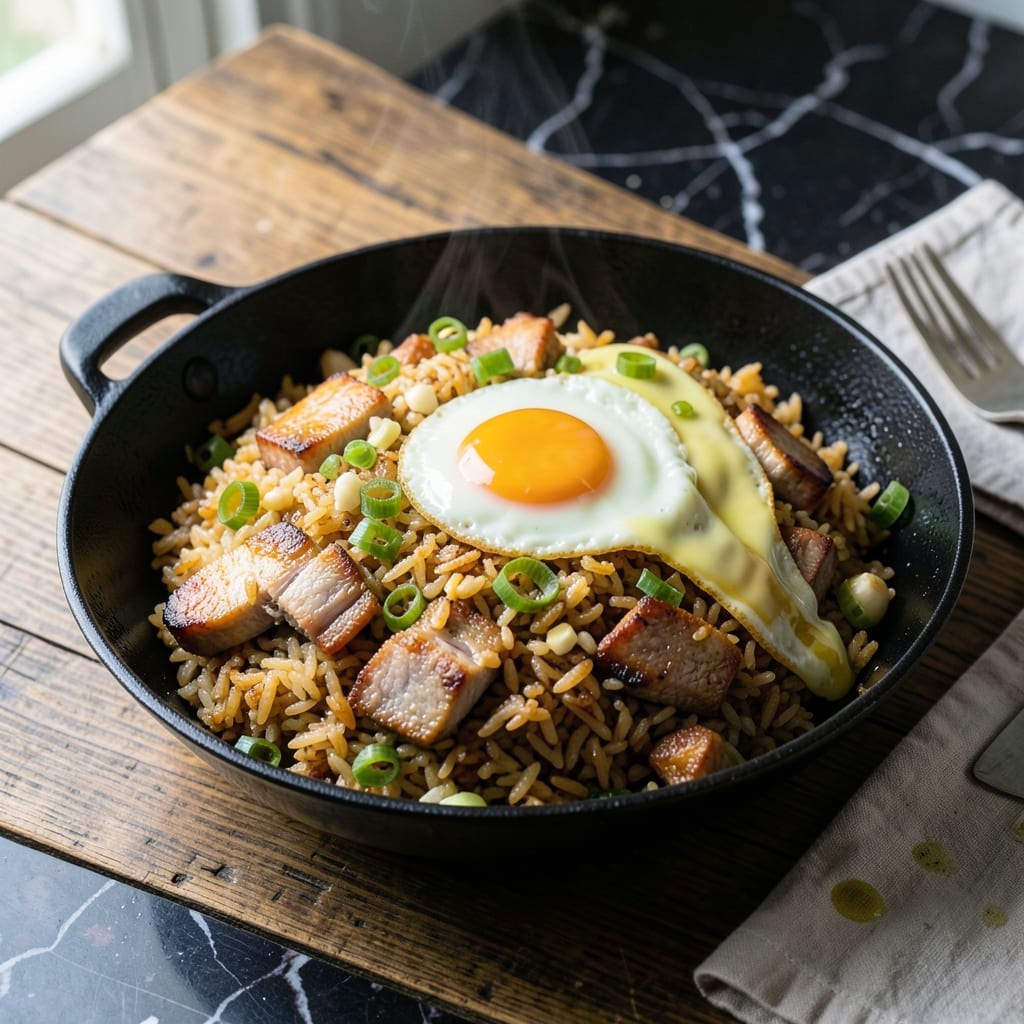
Transform last night’s roast into a flavor-packed meal with this technique for wok-charred fried rice. The high heat revives dried pork while creating smoky, savory depth.
Simple ingredients and proper wok technique ensure each grain stays separate yet coated in rich, pork-infused flavor. This method turns leftovers into a dish that tastes intentionally made.
Ingredients for Leftover Pork Fried Rice
Wok-charred pork and cold rice form the base of this savory revival.
| Ingredient | Amount | Notes |
|---|---|---|
| Cooked Pork 🐖 | 2 cups | Diced, from leftover roast |
| Day-Old Cooked Rice 🍚 | 4 cups | Cold, preferably overnight |
| Large Eggs 🥚 | 3 whole | Beaten for scrambling |
| Green Onions 🧅 | ½ cup | Thinly sliced, white and green parts separated |
| Garlic Cloves 🧄 | 3 cloves | Minced finely |
| Fresh Ginger 🌿 | 1 tbsp | Grated or minced |
| Soy Sauce 🫒 | 3 tbsp | Low-sodium preferred |
| Oyster Sauce 🫒 | 1 tbsp | Optional but recommended |
| Sesame Oil 🫒 | 1 tsp | Toasted, for finishing |
| Peas 🌱 | ½ cup | Frozen, thawed |
| Carrot 🥕 | ½ cup | Finely diced |
| Vegetable Oil 🫒 | 3 tbsp | High smoke point, for wok frying |
| Salt 🧂 | ½ tsp | Kosher or sea salt |
| White Pepper 🌶️ | ¼ tsp | Ground, for subtle heat |
The pork must be from a roast with good fat marbling—Costco or Whole Foods carry quality options. Use day-old rice (jasmine or long-grain) as fresh rice turns mushy. Pre-cut pork from the grocery store works in a pinch but lacks the depth of leftover roast. The green onions should be crisp and bright; avoid any with wilted tops.
No leftover pork? Rotisserie chicken or shrimp make excellent substitutes. Out of oyster sauce? Hoisin or fish sauce add similar umami depth. Frozen peas can be swapped for diced bell peppers or corn. If using pre-cooked rice, spread it on a tray to cool quickly in the fridge.
Store leftover fried rice in an airtight container for up to 4 days. Reheat in a skillet with a splash of oil to revive the wok-hei. Freezing is possible but texture suffers—best enjoyed fresh.
Why You’ll Love This Recipe
- One Pan Wonder: I toss the pork, rice, and eggs in a single wok—no extra dishes, just flavor.
- Garlicky Bite: The minced garlic and green onions give it that restaurant-quality aroma and taste.
- Weeknight Hero: Honestly, it’s my go-to for busy evenings when I need dinner fast.
- No Waste Win: Using leftover pork and rice means nothing goes to waste, and my wallet stays happy.
Step-by-Step Instructions for Leftover Pork Fried Rice
Master the wok technique for perfectly charred grains with balanced savory depth and texture.
Step 1: Prepare and Pre-Cook Aromatics and Protein
Heat 1 tbsp Vegetable Oil in a wok or large skillet over high heat until shimmering. Add the 3 cloves Garlic Cloves and 1 tbsp Fresh Ginger, stir-frying for 15-20 seconds until fragrant but not browned. Immediately add the 2 cups Cooked Pork and stir-fry for 2-3 minutes until the edges begin to crisp and caramelize.
This initial sear builds the foundation of flavor. The pork should develop a light golden crust while absorbing the aromatic essence of the garlic and ginger. Remove the pork from the wok and set aside—this prevents overcooking during later steps.
Step 2: Scramble Eggs and Vegetables
In the same wok, add another 1 tbsp Vegetable Oil and swirl to coat. Pour in the 3 whole Large Eggs and scramble vigorously with a spatula until just set but still slightly runny—about 30-45 seconds. The eggs should form soft, curdy pieces that will distribute evenly throughout the dish.
Add the 0.5 cup Carrot and 0.5 cup Peas, stir-frying for 1-2 minutes until the carrots soften slightly and the peas are heated through. The vegetables should retain a slight bite for textural contrast against the rice.
Step 3: Incorporate Rice and Seasonings
Increase heat to maximum and add the remaining 1 tbsp Vegetable Oil. Add the 4 cups Day-Old Cooked Rice, breaking up any clumps with your spatula. Press the rice firmly against the wok surface for 30 seconds to achieve that coveted wok hei (breath of the wok) effect—you’ll see and smell a slight char.
Return the pork to the wok along with the 3 tbsp Soy Sauce, 1 tbsp Oyster Sauce, 0.5 tsp Salt, and 0.25 tsp White Pepper. Stir-fry for 2-3 minutes until everything is uniformly coated and heated through. The rice grains should be separate, glossy, and infused with sauce.
Step 4: Finish and Garnish
Remove from heat and stir in the 1 tsp Sesame Oil, which adds a nutty aroma to the finished dish. Fold in the 0.5 cup Green Onions, reserving a small handful for garnish if desired. The green onions should remain vibrant and fresh, providing a bright contrast to the rich, savory base.
Taste and adjust seasoning if needed, though the combination of soy and oyster sauce should provide a well-balanced flavor. Serve immediately while hot, with the reserved green onions sprinkled on top for a pop of color and crunch.
Pro Tips For Making Leftover Pork Fried Rice
- Crank the Heat: Use the highest heat your stove allows—this is the only way to get that classic wok-hei smokiness and prevent soggy rice. I learned this the hard way after too many sad, steamed batches.
- Dry the Rice: Spread day-old rice on a tray and let it air-dry for 10 minutes before frying. Sounds weird, but it works: the grains stay separate and soak up flavor instead of turning to mush.
- Skip Fresh Rice: Resist the urge to use just-cooked rice—it’s too moist and will turn your fried rice into a sticky mess. Day-old, cold rice is non-negotiable for texture.
- Prep Everything First: Have your pork, eggs, and veggies chopped and ready before the pan heats up. After burning three batches, I finally figured out fried rice waits for no one.
Flavor Customization for These Flavors
Spice It Up
Add ½ tsp chili flakes or 1 tbsp sriracha when stir-frying the pork for a subtle heat that complements the savory base without overwhelming it. I love how this adds a gentle kick that builds with each bite.
Extra Umami Boost
For deeper flavor, mix in 1 tbsp fish sauce with the soy sauce. This Thai-inspired tweak enhances the pork’s richness. A dash of mushroom powder also works wonders for earthy depth.
Sweeter Side
Balance the savory notes with 1 tbsp pineapple tidbits or 2 tsp brown sugar added during the final stir-fry. The sweetness contrasts beautifully with the wok-charred flavors, creating a more complex profile. 💫
Herb Freshness
Stir in ¼ cup chopped cilantro or Thai basil at the end for a bright, herbaceous finish. These herbs add freshness that cuts through the richness of the pork and rice.
Crunchy Texture
Top with ¼ cup crushed peanuts or fried shallots just before serving. This adds a satisfying crunch that contrasts with the soft rice and tender pork. 🔥
Citrus Zing
A squeeze of lime juice right before serving brightens the dish. I also love adding zest from 1 lime for an extra pop of citrus aroma.
Nutrition Facts
Frequently Asked Questions
Can I use fresh rice instead of day-old?
Fresh rice contains too much moisture and will turn mushy. Always use cold, day-old rice for the best texture. Spread freshly cooked rice on a tray and refrigerate for 1-2 hours to speed up the process.
What if my pork is dry?
Dice it small and stir-fry over high heat with a splash of oil. The wok’s intense heat will revive moisture while adding smoky char. Avoid overcrowding the pan to prevent steaming.
Can I add other vegetables?
Try bell peppers, broccoli, or zucchini. Dice them small and stir-fry before adding rice to ensure even cooking. Keep total veggies under 1.5 cups for balance.
Why does my rice turn out soggy?
This usually happens from too much sauce or low heat. Use high heat and add sauces gradually. Press rice against the wok for 30 seconds to develop a slight char and drive off excess moisture.

- Jollof Rice Sauce Recipe: West African Tomato and Spice Infusion - September 25, 2026
- Japanese Rice Soup Recipe: Umami-Rich Comfort in a Bowl - September 25, 2026
- Homemade Cream Of Rice Recipe: Silk-Smooth Breakfast in Minutes - September 25, 2026