
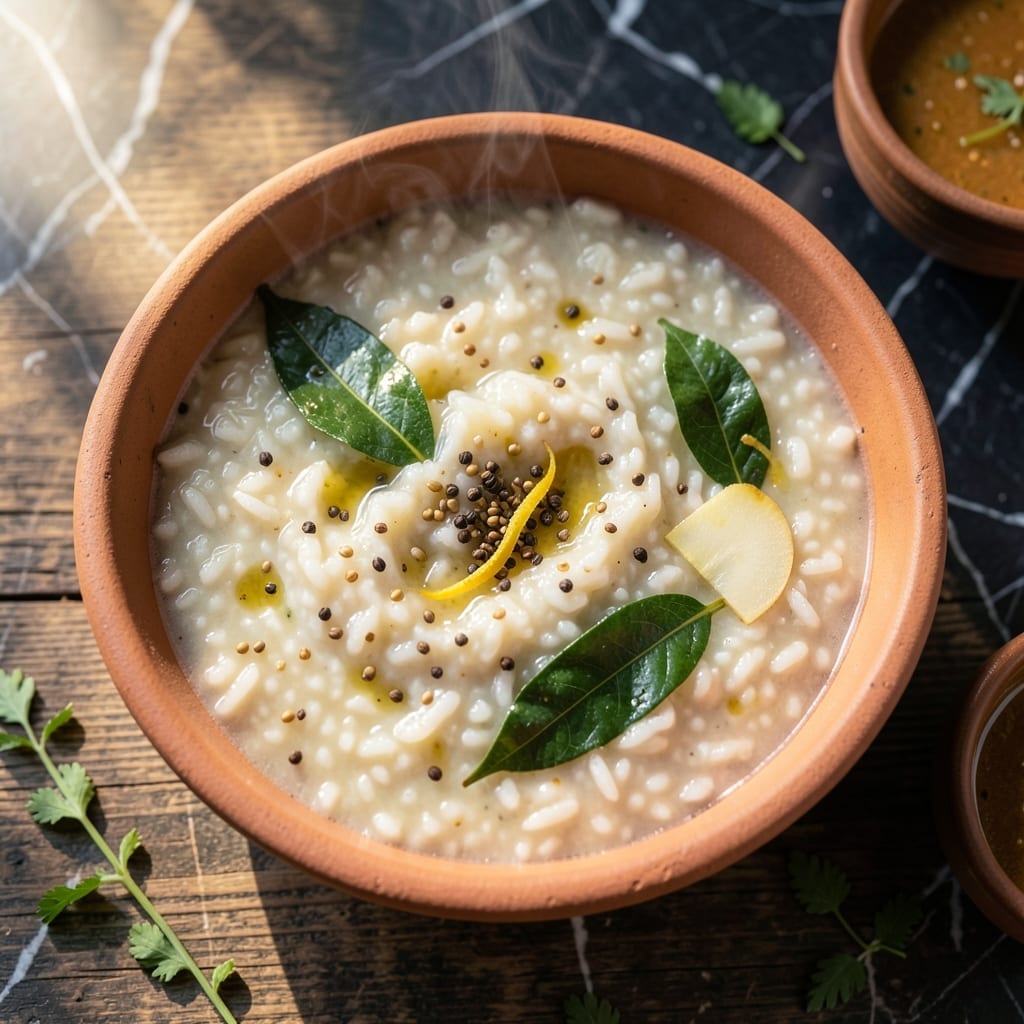
This traditional South Indian kanji transforms leftover rice into a gut-friendly comfort food that’s as nourishing as it is simple. The fermented rice water base delivers probiotic benefits while maintaining a light, easily digestible quality.
The beauty lies in its simplicity: boiled rice water forms the foundation, enhanced with mild spices and tempered with mustard seeds and curry leaves. It’s a dish that celebrates resourcefulness, turning yesterday’s rice into today’s healing meal.
What emerges is a thin, tangy porridge that’s gentle on the stomach yet packed with flavor. The subtle sourness from fermentation balances the warmth of cumin and ginger, creating layers of taste in every spoonful.
Serve warm as a restorative breakfast or light dinner. This recipe proves that the most comforting dishes often come from the humblest beginnings.
Ingredients for Leftover Rice Kanji
Transform yesterday’s rice into today’s healing bowl with these simple, traditional ingredients.
| Ingredient | Amount | Notes |
|---|---|---|
| Leftover Cooked Rice 🍚 | 2 cups | Day-old preferred for fermentation |
| Water 💧 | 6 cups | For soaking and cooking rice |
| Cumin Seeds 🌿 | 1 tsp | Lightly crushed for aroma |
| Mustard Seeds 🌶️ | 1 tsp | Black or yellow variety |
| Curry Leaves 🍃 | 10 pieces | Fresh preferred for authenticity |
| Fresh Ginger Root 🌿 | 1 whole | Peeled and thinly sliced |
| Green Chilies 🌶️ | 2 whole | Slit lengthwise for heat |
| Asafoetida 🧂 | ¼ tsp | Optional, for depth of flavor |
| Turmeric Powder 🌿 | ½ tsp | For color and anti-inflammatory benefits |
| Salt 🧂 | 1 tsp | Adjust to taste preference |
| Lemon Juice 🍋 | 1 tbsp | Freshly squeezed for tang |
| Fresh Cilantro 🌿 | ¼ cup | Chopped for garnish |
| Coconut Oil 🥥 | 1 tbsp | For tempering spices |
The rice is the foundation—use day-old, cooled rice for proper fermentation, which develops the gut-friendly probiotics. Indian grocery stores carry the must-have curry leaves and asafoetida, but Patel Brothers or H-Mart are reliable if you’re in the US. Fresh ginger and green chilies should be firm and vibrant (avoid the shriveled produce section). Turmeric loses potency fast, so buy in small quantities from bulk bins.
No curry leaves? Dried curry leaves at half the amount work, though fresh is ideal. Asafoetida can be skipped, but it adds authentic depth. Substitute cumin powder at half the amount if you don’t have seeds. For heat control, adjust green chilies to taste or swap in red chili flakes. Coconut oil can be replaced with neutral oil, but it won’t have the same richness.
Kanji tastes best fresh but keeps in the fridge for 2 days—the flavors intensify as it sits. Store leftover rice for kanji in the fridge for up to 1 week before using. Freezing isn’t recommended, as it alters the texture of the fermented rice water base.
Why You’ll Love This Recipe
- No-Fuss Meal: I just dump leftover rice in water with cumin, mustard seeds, and curry leaves—hardly any prep.
- Taste of Home: The tempering of cumin and mustard seeds with curry leaves gives it that warm, comforting South Indian flavor. Honestly, it reminds me of my grandma’s kitchen.
- Feeds Everyone: It’s my go-to for lazy weekends, quick dinners, or when I need something light yet filling for the whole family.
- Zero Waste: I love that it uses up every last grain of leftover rice—no more throwing out yesterday’s dinner.
Step-by-Step Instructions for Leftover Rice Kanji
This traditional South Indian method transforms leftover rice into a soothing, fermented porridge.
Step 1: Prepare and Soak the Rice Base
Place the 2 cups leftover cooked rice in a large bowl and cover with 6 cups water. Use your hands to gently break apart any clumps, creating a loose, watery mixture. The rice should be fully submerged with at least 2 inches of water above it to ensure proper fermentation.
Cover the bowl with a clean kitchen towel and let it sit at room temperature for 6-8 hours. You’ll notice the mixture developing a slightly tangy aroma and a milky white color—this indicates the rice is fermenting properly, which is essential for the authentic kanji flavor and gut-friendly properties.
Step 2: Temper the Spices for Maximum Flavor
Heat the 1 tbsp coconut oil in a large pot over medium heat until it shimmers. Add the 1 tsp mustard seeds and wait for them to pop, which takes about 30-45 seconds. This is your signal to add the 1 tsp cumin seeds, 10 pieces curry leaves, and 0.25 tsp asafoetida.
Stir constantly for 1 minute until the seeds turn fragrant and the curry leaves become crisp. Be careful not to let them burn—burnt spices will make the kanji bitter. The aroma should be strong and appetizing at this stage.
Step 3: Simmer with Aromatics and Fermented Rice
Add the 1 whole fresh ginger root (peeled and thinly sliced) and 2 whole green chilies (slit lengthwise) to the pot. Sauté for 1 minute until the ginger turns slightly golden. Then carefully pour in the fermented rice and water mixture.
Stir in the 0.5 tsp turmeric powder and 1 tsp salt. Bring the mixture to a gentle boil, then reduce the heat to low. Simmer uncovered for 20-25 minutes, stirring occasionally, until the kanji reaches your desired consistency—traditionally it should be thin and porridge-like.
Step 4: Finish and Serve with Fresh Garnishes
Remove the pot from heat and stir in the 1 tbsp lemon juice. Taste and adjust the salt if needed—the lemon should add a bright tang without overpowering the mild fermentation flavor. The kanji should have a balanced, comforting taste with layers of spice from the tempering and warmth from the ginger.
Ladle the kanji into bowls and garnish each serving with a generous sprinkle of 0.25 cup fresh cilantro (chopped). Serve immediately while hot, as this dish is traditionally enjoyed fresh. The cilantro adds a fresh, herbal note that complements the earthy, fermented base perfectly.
Pro Tips For Making Leftover Rice Kanji
- Toast the rice first: Heat the leftover rice in a dry pan for 2-3 minutes before adding water—it removes excess moisture and prevents the kanji from turning gluey.
- Bloom the seeds: Add cumin and mustard seeds to hot oil, not cold, and let them sizzle until they pop and release their aroma, about 30 seconds. I learned this the hard way after my first few batches tasted flat.
- Skip stale curry leaves: If your curry leaves have been sitting in the fridge for weeks, toss them. Fresh or recently dried leaves add the bright, citrusy flavor this dish needs.
- Simmer low and slow: Once the water is in, keep the heat on low and let it bubble gently for at least 15 minutes. High heat makes the rice break down too fast, and you’ll end up with porridge instead of kanji.
Storing and Reheating This Recipe
Fridge Storage
Let your kanji cool completely before transferring to an airtight container. It will keep in the refrigerator at 40°F or below for up to 2 days. The flavors deepen as it rests, making it even more delicious the next day. ❄️
Freezer Not Recommended
I don’t recommend freezing kanji, as the texture of the fermented rice water base changes significantly upon thawing. The delicate probiotic qualities are also best preserved fresh. Stick to refrigeration for optimal quality.
Reheating on Stovetop
Pour the kanji into a saucepan and warm over medium-low heat for 5-7 minutes, stirring occasionally. Add ¼ cup water if it’s too thick. This method preserves the porridge-like consistency best. 🔥
Microwave Option
For quick reheating, microwave individual portions in 30-second bursts, stirring between each. Cover with a damp paper towel to prevent drying. Stop when it reaches 165°F for safety.
Serving After Storage
Always give it a good stir before serving, as the rice settles at the bottom. Taste and adjust seasoning—you might need an extra pinch of salt or squeeze of lemon to brighten the flavors.
Nutrition Facts
Frequently Asked Questions
How long should I ferment the rice for best results?
Ferment the rice for 6-8 hours at room temperature for optimal probiotic development and tangy flavor. A milky white color and slightly sour aroma indicate it’s ready.
Can I use fresh rice instead of leftover?
Always use day-old, cooled rice for authentic kanji. Fresh rice lacks the starch breakdown needed for proper fermentation and texture. The dish won’t develop the same depth of flavor.
What if my kanji isn’t tangy enough?
Extend fermentation time by 2-3 hours or add 1 tsp extra lemon juice before serving. The tanginess comes from the rice’s natural fermentation, so patience is key.
Why do we temper the spices first?
Tempering releases essential oils from mustard and cumin seeds, creating layers of flavor. It also ensures even distribution throughout the kanji, preventing bitter pockets.

- Mujadara Rice and Lentils Recipe: Earthy Spiced Lentils With Caramelized Onions - November 1, 2026
- Naija Fried Rice Recipe: Street-Style Spice With Veggie Crunch - November 1, 2026
- Mushy Rice Recipe: Fluffy Grains Transformed in Minutes - November 1, 2026