
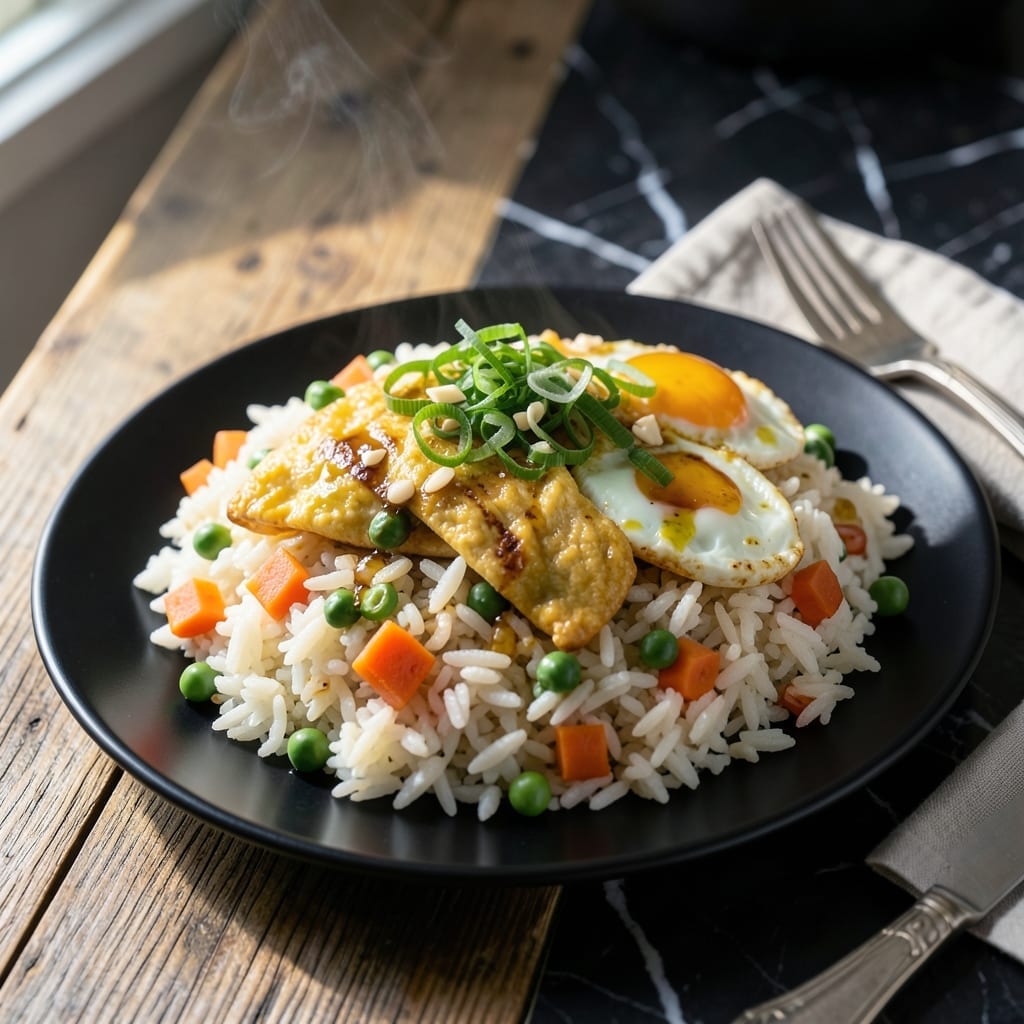
Transform yesterday’s plain white rice into tonight’s flavor-packed meal with this simple wok-tossed revival. The key is high heat and a few strategic additions to restore texture and taste.
By stir-frying the rice with aromatic garlic, fresh vegetables, and a splash of soy sauce, you create a dish that’s far from boring leftovers. The wok’s intense heat ensures each grain stays separate and savory.
This method works best with day-old rice that’s slightly dry, allowing it to crisp up in the pan. The result is a quick, satisfying side that pairs perfectly with proteins or stands alone.
No wasted rice, just a restaurant-quality dish in 15 minutes. Here’s how to make it happen.
Ingredients for Leftover White Rice
Day-old rice meets vibrant vegetables and bold seasonings for a wok-tossed revival.
| Ingredient | Amount | Notes |
|---|---|---|
| Cooked White Rice 🍚 | 4 cups | Day-old, chilled, preferred |
| Garlic Cloves 🧄 | 4 cloves | Minced for aromatic base |
| Carrots 🥕 | ¾ cup | Diced into small cubes |
| Green Onions 🧅 | ½ cup | Thinly sliced, green parts only |
| Frozen Peas 🌱 | ½ cup | Thawed before cooking |
| Large Eggs 🥚 | 2 whole | Beaten for scrambling |
| Soy Sauce 🫒 | 2 tbsp | Low-sodium preferred for control |
| Sesame Oil 🫒 | 1 tbsp | Toasted for depth of flavor |
| Vegetable Oil 🫒 | 2 tbsp | High smoke point for wok |
| Ground White Pepper 🧂 | ½ tsp | Subtle heat without color |
| Salt 🧂 | ½ tsp | Kosher or sea salt variety |
| Fresh Ginger 🌿 | 1 tbsp | Peeled, finely grated |
The rice must be day-old and cold—freshly cooked rice turns to mush in the wok. Jasmine or long-grain white rice works best for that classic texture. For vegetables, Trader Joe’s has pre-diced carrots that save time without sacrificing quality. The ginger should be freshly grated (the jarred kind lacks punch). Most Asian markets carry high-quality soy sauce at better prices than mainstream grocers.
No white rice? Brown rice works but needs an extra minute in the wok. Out of peas? Diced bell peppers or corn add color and crunch. For gluten-free, swap soy sauce for tamari or coconut aminos. The eggs can be omitted (just add 1 extra tbsp oil), but they do provide that authentic texture. Sesame oil is non-negotiable—it’s what gives the dish its signature aroma.
This keeps 3-4 days in the fridge but honestly tastes best fresh. Store leftovers in an airtight container. Reheat in a skillet with a splash of water to restore moisture. Not freezer-friendly—the rice texture degrades.
Why You’ll Love This Recipe
- One-Pan Wonder: I just dump the rice, garlic, and veggies in and let the skillet do the work.
- Garlic Kiss: The sizzling garlic turns those humble leftovers into something I crave for dinner.
- Lunchbox Hero: I pack it for work and it tastes just as good cold the next day.
- Penny Wise: Honestly, it costs me pennies to turn last night’s rice into a whole new meal.
Step-by-Step Instructions for Wok-Tossed Savory Revival
This method transforms day-old rice into a restaurant-quality dish with proper wok hei technique.
Step 1: Prepare and Heat the Wok
Place your wok over high heat and add all 2 tablespoons vegetable oil. As the oil begins to shimmer, add the 4 cloves garlic cloves and 1 tablespoon fresh ginger. Stir-fry for 15-20 seconds until the aromatics become fragrant but do not brown.
This initial step builds the flavor foundation. The high heat ensures the garlic and ginger release their essential oils without burning, which would impart bitterness to your creation.
Immediately add the 0.75 cup carrots and stir-fry for 2-3 minutes until they begin to soften at the edges but retain their vibrant color.
Step 2: Scramble the Eggs and Combine Vegetables
Push the carrots to one side of the wok and pour in the 2 whole large eggs. Scramble them quickly with a spatula until just set, then combine with the carrots. The eggs should be soft and slightly runny, as they will continue cooking in subsequent steps.
Add the 0.5 cup frozen peas and 0.5 cup green onions to the wok. Toss everything together for 1-2 minutes until the peas are heated through and the green onions wilt slightly. Season with 0.5 teaspoon salt and 0.5 teaspoon ground white pepper.
Step 3: Incorporate the Rice and Season
Add all 4 cups cooked white rice to the wok, breaking up any clumps with your spatula. The rice should be cold and slightly dry—this prevents it from turning mushy during stir-frying. Press the rice into the wok surface for 30 seconds to allow it to crisp slightly.
Drizzle the 2 tablespoons soy sauce evenly over the rice. Use the spatula to toss and fold the mixture, ensuring every grain is coated. The soy sauce should darken the rice and create a glossy sheen.
Step 4: Finish with Sesame Oil and Final Toss
Remove the wok from heat and drizzle the 1 tablespoon sesame oil around the edges. The residual heat will bloom the oil’s nutty aroma. Toss everything together one final time to distribute the sesame oil evenly.
The rice should now be uniformly colored with visible bits of egg, vegetables, and aromatics throughout. Each grain should be separate and coated with sauce, with a slight sheen from the oils.
Taste and adjust seasoning if needed, though the soy sauce and initial salt should provide sufficient flavor. Serve immediately while hot, as the texture is best fresh from the wok.
Pro Tips For Making Leftover White Rice
- Break Up the Rice: Spread the leftover rice on a tray and break up any clumps with your hands—this prevents a mushy stir-fry and guarantees even heating.
- Par-Cook the Carrots: Dice the carrots small (¼-inch pieces) and sauté them for 2 minutes before adding other veggies, since they take longer to soften than peas or green onions.
- Skip the Thaw: Toss frozen peas directly into the hot pan—they’ll warm through in under a minute without turning to mush, and you’ll avoid a watery mess.
- High Heat First: Crank the burner to medium-high before adding the rice, then let it sizzle undisturbed for 30 seconds to revive the grains and add a little crispness.
Health Benefits of This leftover white rice
Energy Boost
This dish turns leftover rice into a nutrient-dense meal. The combination of carrots and peas provides vitamin A and fiber, supporting digestion and immune function. Eggs add 6g of protein per egg for sustained energy. 💪
Low-Calorie Option
At about 250-300 calories per serving, this is a light yet satisfying meal. The vegetable oil used in stir-frying adds healthy fats, while ginger and garlic offer anti-inflammatory benefits without extra calories.
Balanced Macros
Each serving delivers a balanced mix of carbohydrates from rice, protein from eggs, and fiber from veggies. The soy sauce contributes minimal sodium if you use low-sodium versions, keeping it heart-healthy.
Digestive Health
Cold rice contains resistant starch, which acts as a prebiotic to feed good gut bacteria. The fiber in carrots and peas further supports gut health, making this dish as good for your digestive system as it is delicious.
Quick Nutrition Fix
When you’re short on time, this recipe packs in vitamins C and K from green onions and carrots. It’s a great way to use up leftovers while giving your body the nutrients it needs. ✨
Nutrition Facts
Frequently Asked Questions
Why does the rice need to be day-old?
Fresh rice contains too much moisture, which makes it gummy when stir-fried. Day-old rice is drier, allowing it to crisp up and stay separate in the wok.
Can I use other vegetables instead?
Swap in bell peppers, corn, or broccoli for variety. Just cut them small and uniform so they cook quickly.
How do I prevent the eggs from getting rubbery?
Scramble them just until set, then immediately mix with other ingredients. The residual heat will finish cooking them without overdoing it.
What if I don’t have a wok?
A large skillet works fine—just use high heat and cook in batches if needed. The key is keeping everything moving.

- Lump Rice Recipe Sri Lanka: Traditional Island-Style Texture - November 4, 2026
- Laos Sticky Rice Recipe: Traditional Steamed Perfection - November 4, 2026
- Magic Rice Recipe: One-Pot Aromatic Wonder - November 4, 2026