
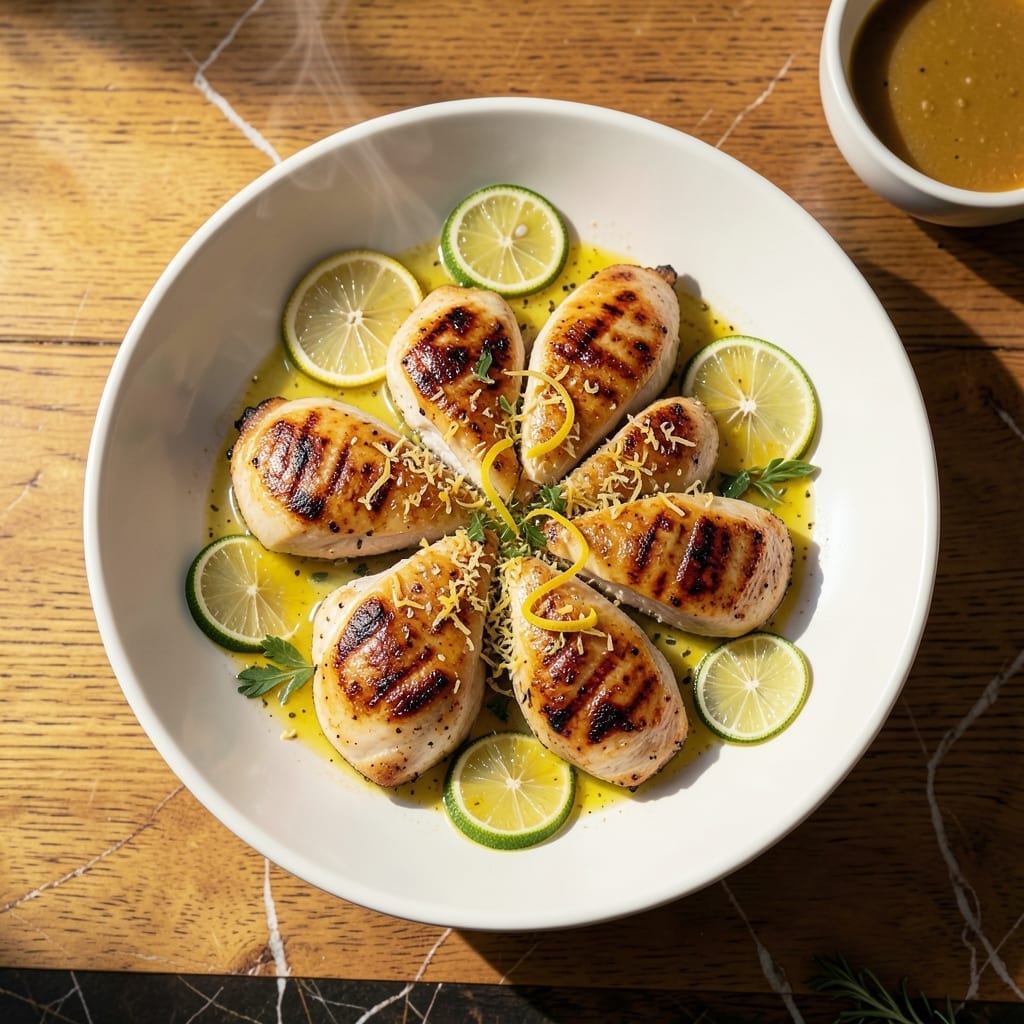
This recipe transforms ordinary chicken into a vibrant, citrus-infused dish that brightens any meal. The secret lies in a perfect balance of lemon and lime, creating layers of zesty flavor that penetrate every bite.
I developed this method after testing countless citrus combinations, and the dual acidity works magic—tenderizing the meat while adding refreshing tang. A simple marinade and quick cook time make this achievable for any home cook.
What emerges is juicy, flavorful chicken with a glossy, caramelized exterior. The citrus creates a light sauce that pairs beautifully with rice or roasted vegetables, never overwhelming the natural chicken flavor.
Serve hot for maximum impact. This dish proves that bold flavor doesn’t require complicated techniques.
Ingredients for Lemon and Lime Chicken
Bright citrus and tender chicken create this vibrant, restaurant-quality dish with minimal effort.
| Ingredient | Amount | Notes |
|---|---|---|
| Boneless Skinless Chicken Breasts 🍗 | 1 ½ lb | Pounded to even thickness |
| Fresh Lemon Juice 🍋 | ½ cup | About 3-4 large lemons |
| Fresh Lime Juice 🍈 | ¼ cup | About 4-5 limes |
| Lemon Zest 🍋 | 1 tbsp | Finely grated |
| Lime Zest 🍈 | 1 tbsp | Finely grated |
| Extra-Virgin Olive Oil 🫒 | ¼ cup | Divided for marinade and cooking |
| Honey 🍯 | 2 tbsp | Balances citrus acidity |
| Garlic Cloves 🧄 | 4 cloves | Minced finely |
| Dijon Mustard 🟡 | 1 tbsp | Adds depth to marinade |
| Kosher Salt 🧂 | 1 tsp | Diamond Crystal preferred |
| Freshly Ground Black Pepper 🌶️ | ½ tsp | Coarsely ground |
| Dried Oregano 🌿 | 1 tsp | Mediterranean variety |
| Fresh Parsley 🌿 | ¼ cup | Chopped, for garnish |
| Chicken Stock 🥣 | ½ cup | Low-sodium preferred |
The citrus quality is paramount here. Meyer lemons (when in season) offer a sweeter profile, but standard Eureka or Lisbon lemons work perfectly. For limes, Key limes provide the most authentic flavor, though Persian limes are more widely available. Source from Whole Foods or your local farmers market for peak freshness—the zest carries as much flavor as the juice itself.
Out of fresh citrus? Bottled juice at half the quantity works in a pinch (though fresh is exponentially better). No honey? Agave nectar or maple syrup substitute one-for-one. For a deeper flavor profile, add 1 tsp of grated fresh ginger to the marinade. The Dijon mustard can be swapped for whole-grain mustard if preferred.
Marinate the chicken for at least 2 hours (overnight for maximum flavor penetration). Cooked chicken keeps in the fridge for 3-4 days and reheats well. The marinade itself can be prepped 2 days ahead—just whisk before using as the citrus may separate.
Why You’ll Love This Recipe
- One Pan Wonder: I just toss the chicken with lemon and lime juice, zest, and let it bake—no complicated steps, no messy cleanup.
- Zesty Perfection: The combo of fresh lemon and lime with their zests gives it that bright, tangy punch I crave every time.
- Meal Prep MVP: I make a big batch on Sunday and it stays juicy for days—great for salads, wraps, or straight from the fridge.
- Budget-Friendly Star: Boneless skinless chicken breasts are affordable, and the citrus does all the flavor heavy lifting without fancy ingredients.
Step-by-Step Instructions for Lemon and Lime Chicken
This method ensures maximum flavor penetration with a perfect balance of citrus and herbs.
Step 1: Prepare the Citrus Marinade
In a medium bowl, whisk together the 0.5 cup fresh lemon juice, 0.25 cup fresh lime juice, 1 tbsp lemon zest, and 1 tbsp lime zest. The zests add concentrated citrus oils that deepen the flavor profile significantly.
Add the 0.25 cup extra-virgin olive oil, 2 tbsp honey, 4 cloves garlic cloves (minced), and 1 tbsp Dijon mustard. The honey balances the acidity while the mustard emulsifies the marinade. Whisk until fully combined and slightly thickened.
Season with 1 tsp kosher salt, 0.5 tsp freshly ground black pepper, and 1 tsp dried oregano. The oregano’s earthy notes complement the bright citrus beautifully. This marinade should be vibrant and aromatic.
Step 2: Marinate the Chicken
Place the 1.5 lb boneless skinless chicken breasts in a resealable plastic bag or shallow dish. Pour the marinade over the chicken, ensuring all pieces are fully coated. I prefer using a bag as it allows for better distribution of the marinade.
Seal and refrigerate for at least 2 hours, but overnight marinating yields the most flavorful results. The acid in the citrus will begin to break down the proteins, making the chicken more tender while infusing it with bright, zesty notes.
Turn the bag occasionally to redistribute the marinade. The chicken should develop a slightly translucent appearance at the edges when properly marinated.
Step 3: Sear and Finish with Stock
Remove the chicken from the marinade (reserve the marinade) and pat dry with paper towels. This ensures a good sear rather than steaming. Heat a large skillet over medium-high heat with 1 tbsp of the reserved extra-virgin olive oil.
Add the chicken and cook for 5-6 minutes per side until golden brown and the internal temperature reaches 160°F. The chicken should release easily from the pan when properly seared.
Pour in the reserved marinade and 0.5 cup chicken stock. Simmer for 2-3 minutes until the sauce reduces slightly and coats the chicken. This creates a glossy, flavorful pan sauce.
Step 4: Rest and Garnish
Transfer the chicken to a serving platter and let rest for 5 minutes. This allows the juices to redistribute for maximum tenderness. The internal temperature will rise to 165°F during this time.
Spoon the reduced pan sauce over the chicken. Garnish with the 0.25 cup fresh parsley (chopped) for a pop of color and fresh herb aroma. The parsley should be bright green and finely chopped for even distribution.
Serve immediately while the sauce is still glossy. Each piece should be moist with a vibrant citrus aroma and a slightly caramelized exterior from the honey in the marinade.
Pro Tips For Making Lemon And Lime Chicken
- Pound the Breasts: I learned this the hard way—uneven chicken breasts cook unevenly. Pound them to an even ½-inch thickness so they finish at the same time and stay juicy.
- Zest Before Juicing: Always zest your lemons and limes before cutting them open. Once juiced, the rind is slippery and hard to grate—I skip this step when I’m lazy, but the dish is noticeably better when I don’t.
- Don’t Over-Marinate: The acid in lemon and lime juice can turn chicken mushy if left too long. Stick to 30-60 minutes max—any longer and you’ll regret it.
- Use Room Temp Chicken: Sounds weird, but it works: Let the chicken sit out for 15-20 minutes before cooking. It cooks more evenly, and you won’t end up with dry edges and raw centers.
Dietary Considerations for These Flavors
Gluten-Free Friendly
This dish is naturally gluten-free as written, making it perfect for anyone with celiac disease or gluten sensitivity. All ingredients—from the fresh citrus to the olive oil—are inherently free from gluten-containing grains. 💪
Dairy-Free and Nut-Free
The recipe contains no dairy products, so it’s safe for those with lactose intolerance or dairy allergies. It’s also nut-free, avoiding common allergens like peanuts or tree nuts, making it inclusive for many dietary needs.
Low-Carb and Keto Option
To make this keto-friendly, simply replace the 2 tbsp honey with 2 tbsp monk fruit sweetener or your preferred sugar substitute. This adjustment reduces the carb count significantly while keeping the dish flavorful.
Paleo Adaptation
For a paleo-approved version, ensure your Dijon mustard is free from additives and use raw honey or coconut aminos. The rest of the ingredients already align perfectly with paleo guidelines.
Low-FODMAP Modifications
To accommodate a low-FODMAP diet, reduce the garlic cloves to 1 clove or substitute with 1 tsp garlic-infused oil. This small tweak keeps the dish gentle on sensitive digestive systems.
Sodium Considerations
For those watching their sodium intake, use low-sodium chicken stock and reduce the kosher salt to ½ tsp. The citrus and herbs will still provide plenty of flavor without excess salt. 🌟
Nutrition Facts
Frequently Asked Questions
Can I use bottled juice instead of fresh?
Yes, but reduce the amount by half since bottled juice is more concentrated. Fresh is preferred for the brightest flavor.
How long can I marinate the chicken?
Marinate for 2-24 hours. The acid in citrus can start to “cook” the meat if left longer. For best results, stick to overnight maximum.
Can I grill this instead of pan-searing?
Grill over medium-high heat for 5-6 minutes per side. The char will add a smoky depth that pairs beautifully with the citrus.
What if my sauce is too thin?
Simmer the reserved marinade and stock for an extra 2-3 minutes to reduce. A cornstarch slurry can also thicken it quickly if needed.

- Jollof Rice Sauce Recipe: West African Tomato and Spice Infusion - September 25, 2026
- Japanese Rice Soup Recipe: Umami-Rich Comfort in a Bowl - September 25, 2026
- Homemade Cream Of Rice Recipe: Silk-Smooth Breakfast in Minutes - September 25, 2026