
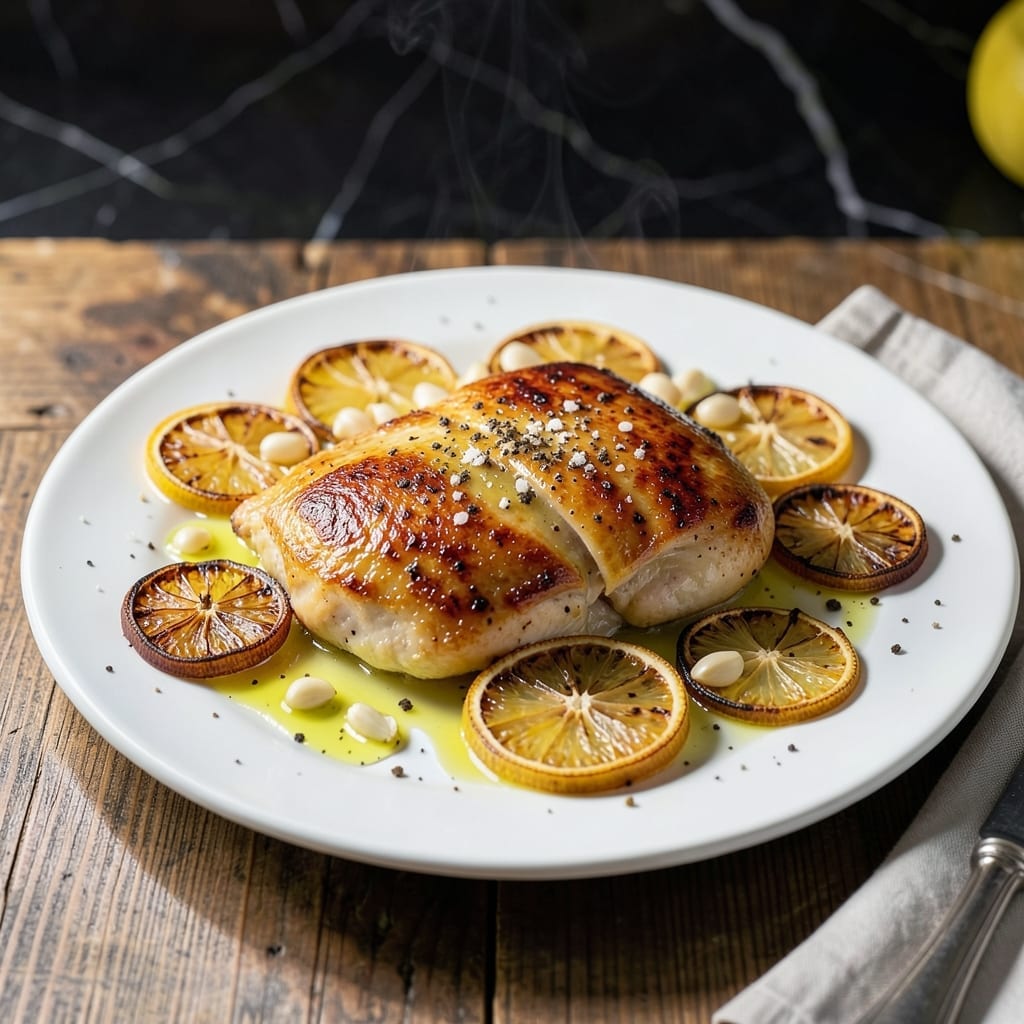
This lemon chicken delivers a perfect balance of bright citrus and savory depth in every bite. The secret lies in a simple glaze that caramelizes beautifully while keeping the meat incredibly juicy.
I developed this method after testing countless variations, and the key is searing the chicken first to lock in moisture. The lemon glaze reduces to a sticky, tangy coating that clings to each piece.
You’ll end up with tender chicken with a glossy, citrus-kissed finish that pairs perfectly with rice or roasted vegetables. The technique is straightforward but yields restaurant-quality results.
This dish comes together in under 40 minutes, making it ideal for busy weeknights when you want something special without the fuss.
Ingredients for Lemon Chicken
Bright citrus, savory depth, and juicy chicken come from these pantry staples and fresh picks.
| Ingredient | Amount | Notes |
|---|---|---|
| Boneless Skinless Chicken Breasts 🍗 | 1 ½ lb | Pounded to even thickness |
| All-Purpose Flour 🌾 | ½ cup | For dredging chicken |
| Kosher Salt 🧂 | 1 tsp | Diamond Crystal preferred |
| Freshly Ground Black Pepper 🌶️ | ½ tsp | Coarse grind ideal |
| Garlic Cloves 🧄 | 3 cloves | Minced finely |
| Extra-Virgin Olive Oil 🫒 | 3 tbsp | Divided for searing and glaze |
| Fresh Lemon Juice 🍋 | ½ cup | From 3-4 large lemons |
| Lemon Zest 🍋 | 1 tbsp | Packed, from 2 lemons |
| Honey 🍯 | ¼ cup | For glaze balance |
| Dijon Mustard 🥄 | 1 tbsp | Smooth variety preferred |
| Low-Sodium Chicken Broth 💧 | ½ cup | For deglazing pan |
| Unsalted Butter 🧈 | 2 tbsp | For finishing glaze |
| Fresh Thyme Sprigs 🌿 | 4 whole | Stems removed, chopped |
| Fresh Parsley 🌿 | ¼ cup | Chopped, for garnish |
The chicken is the star here. Boneless, skinless breasts work best—thighs are fine too but cook faster. Pounding to even thickness (about 1/2-inch) ensures they cook through without drying out. I grab mine from Whole Foods or Costco—look for pieces that are uniformly thick. The lemon juice needs to be fresh (bottled just doesn’t have the same punch), and you’ll need about 3-4 large lemons for the juice and zest.
No fresh thyme? Dried thyme at half the amount works in a pinch. Swap honey for maple syrup if you prefer. Out of Dijon? Whole-grain mustard adds texture, but yellow mustard’s fine too (just less sophisticated). The broth can be vegetable if that’s what you’ve got—Better Than Bouillon is my go-to. For a richer glaze, a splash of white wine when deglazing takes it up a notch.
Leftover chicken keeps 4 days in the fridge—reheat gently so the glaze doesn’t break. The flavors actually deepen overnight. Freezes beautifully for up to 3 months (thaw in the fridge before reheating). Always zest the lemons before juicing (way easier that way).
Why You’ll Love This Recipe
- One Pan Dinner: I toss the chicken with flour, salt, and pepper, then sear it with garlic—minimal mess, maximum flavor.
- Zesty Bite: The lemon cuts through the richness of the chicken, and the garlic adds just the right punch.
- Weeknight Hero: It’s my go-to for busy evenings—quick to cook and even quicker to disappear from plates.
- Budget Friendly: Boneless chicken breasts stretch far, and the pantry staples keep costs low without sacrificing taste.
Step-by-Step Instructions for Lemon Chicken
Here’s the method that guarantees tender, juicy chicken with a bright citrus glaze every time.
Step 1: Prep and Dredge the Chicken
Pound the 1.5 lb boneless skinless chicken breasts to an even ½-inch thickness using a meat mallet. This ensures even cooking so the meat stays juicy throughout. Season both sides generously with the 1 tsp kosher salt and ½ tsp freshly ground black pepper.
Dredge each piece in the ½ cup all-purpose flour, shaking off any excess. The flour creates a light crust that helps the sauce cling to the chicken later. Let the dredged chicken rest for 5 minutes while you prep the glaze ingredients—this helps the coating adhere better during cooking.
Step 2: Sear the Chicken to Golden Perfection
Heat 2 tbsp extra-virgin olive oil in a large skillet over medium-high heat until shimmering. Add the chicken and cook for 4-5 minutes per side until golden brown and just cooked through. You’ll know it’s ready to flip when the edges start to pull away from the pan.
Don’t move the chicken around too much—let it develop a deep golden crust. The fond (browned bits) left in the pan will become the base for your glaze. Transfer the seared chicken to a plate and tent with foil to keep it warm while you make the sauce.
Step 3: Build the Zesty Lemon Glaze
In the same skillet, reduce heat to medium and add the remaining 1 tbsp extra-virgin olive oil. Add the 3 cloves minced garlic cloves and chopped 4 whole fresh thyme sprigs, cooking for 30 seconds until fragrant but not browned.
Pour in the ½ cup fresh lemon juice, 1 tbsp lemon zest, ¼ cup honey, 1 tbsp Dijon mustard, and ½ cup low-sodium chicken broth. Simmer for 3-4 minutes until slightly reduced. The mixture should thicken just enough to coat the back of a spoon.
Step 4: Finish with Butter and Serve
Remove the skillet from heat and whisk in the 2 tbsp unsalted butter until fully melted and incorporated. This gives the glaze a beautiful sheen and rich finish. Return the chicken to the skillet, spooning the glaze over each piece.
Simmer for 1-2 minutes to heat the chicken through and allow the flavors to meld. The glaze should be thick enough to cling to the chicken but still pourable. Garnish with the ¼ cup chopped fresh parsley and serve immediately while the sauce is still glossy and vibrant.
Pro Tips For Making Lemon Chicken
- Pound the Breasts: Even thickness means even cooking—I learned this the hard way after too many dry, rubbery bites. Aim for ½-inch thick, and cover with plastic wrap to avoid tearing.
- Season the Flour: Mix a teaspoon of kosher salt and ½ teaspoon of black pepper right into the flour before dredging. Sounds simple, but it makes the crust taste like it actually belongs to the chicken.
- Skip the Cold Pan: Get that oil shimmering hot before adding the chicken—about 2 tablespoons, enough to coat the bottom. After burning three batches, I finally figured out that a cold start just steams the coating off.
- Rest Before Serving: Give the chicken a solid 5 minutes under foil after cooking. My grandmother swore by this, and she was right: it keeps the juices from running all over the plate when you cut in.
Regional Styles of lemon chicken
Greek Style
This Mediterranean take uses oregano and garlic as the dominant flavors alongside the lemon. I add 1 tsp dried oregano to the flour dredge and a pinch to the glaze. The result is bright, herbaceous, and perfect with tzatziki on the side. 🌿
French Provencal
For a taste of Provence, I incorporate herbes de Provence—about 1 tbsp—into the glaze along with a splash of white wine. The lavender and thyme in the blend add a floral note that pairs beautifully with the citrus. Serve with roasted potatoes.
Asian Fusion
Swap the Dijon for 1 tbsp grated ginger and add 2 tbsp soy sauce to the glaze. A sprinkle of sesame seeds and sliced green onions finish this version. The umami from the soy balances the lemon’s acidity wonderfully.
Southern US
In this variation, I add 1 tsp smoked paprika to the flour and a dash of hot sauce to the glaze. The smoky heat is a staple of Southern cooking. Serve with buttery mashed potatoes for a comforting meal.
Middle Eastern
Add 1 tsp ground cumin and ½ tsp turmeric to the glaze for an aromatic twist. I like to garnish with toasted pine nuts and a sprinkle of sumac. The warm spices complement the lemon’s brightness. 💫
Italian Limone
This version leans into Italian flavors with 1 tbsp capers and ¼ cup white wine in the glaze. I finish with fresh basil instead of parsley. The briny capers cut through the sweetness for a balanced dish.
Nutrition Facts
Frequently Asked Questions
Can I use chicken thighs instead of breasts?
Yes! Chicken thighs work beautifully and often stay juicier. Reduce cooking time to 3-4 minutes per side since they cook faster. The skin-on version adds extra flavor to the glaze.
Why did my glaze turn out watery?
This usually happens if the sauce isn’t simmered long enough. Cook the glaze for 3-4 minutes until it coats the back of a spoon. Adding a cornstarch slurry can help thicken it quickly.
How do I prevent the chicken from drying out?
Pound the breasts to an even ½-inch thickness and don’t overcook them. Remove from heat when they reach 165°F internally. Letting them rest 5 minutes before serving retains moisture.
Can I make this ahead of time?
The dish is best served fresh, but you can prep the glaze 1 day ahead and store it in the fridge. Reheat gently before pouring over freshly cooked chicken.

- Jollof Rice Sauce Recipe: West African Tomato and Spice Infusion - September 25, 2026
- Japanese Rice Soup Recipe: Umami-Rich Comfort in a Bowl - September 25, 2026
- Homemade Cream Of Rice Recipe: Silk-Smooth Breakfast in Minutes - September 25, 2026