
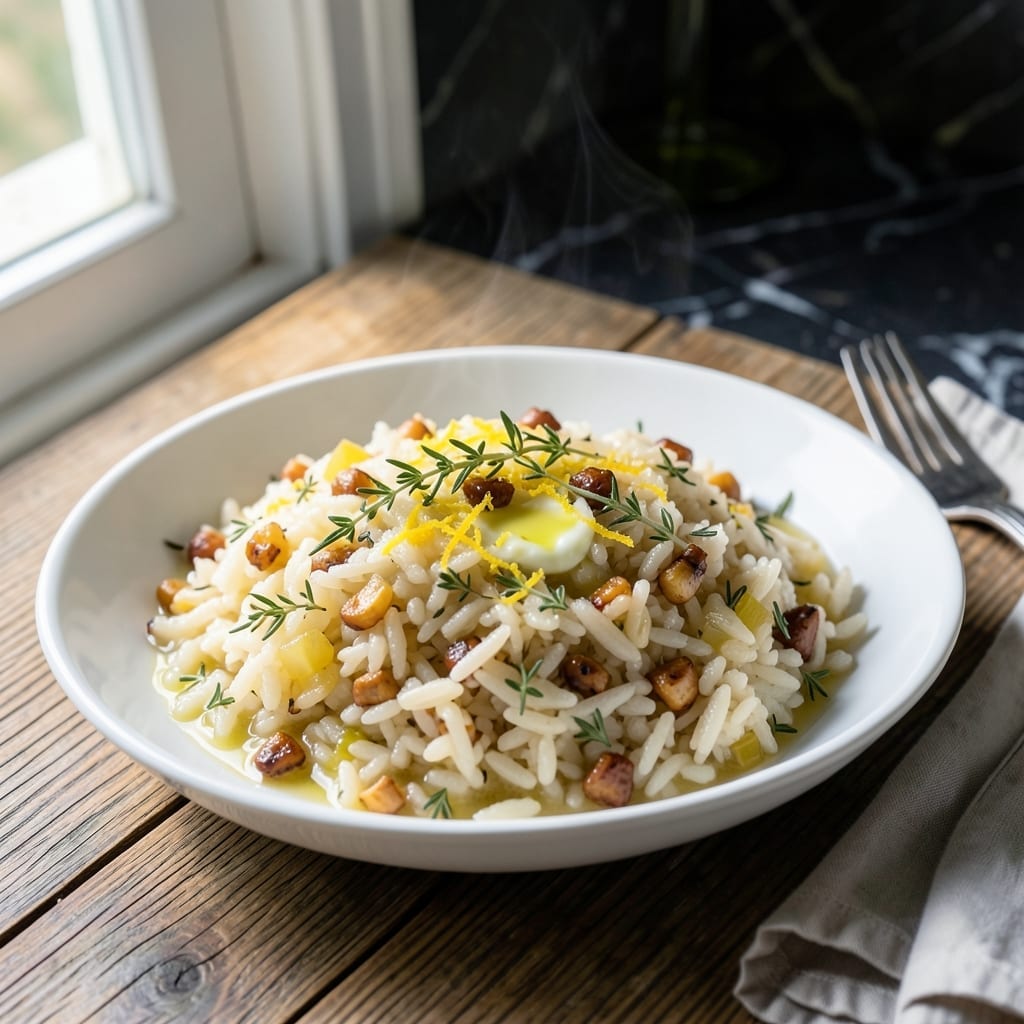
This lemon herb rice pilaf delivers a perfect balance of bright citrus and fragrant herbs in every bite.
I developed this recipe to elevate simple rice into a flavor-packed side dish that pairs with any protein. The technique is straightforward yet yields professional results.
The secret lies in toasting the rice first, then cooking it in a light broth with fresh herbs and lemon zest. This creates layers of aroma and taste that plain rice simply can’t match.
You’ll end up with light, fluffy grains infused with lemony freshness and herbaceous notes. It’s versatile enough for weeknight dinners or special occasions.
Ingredients for Lemon Herb Rice Pilaf
Bright citrus and fragrant herbs elevate this simple rice pilaf to restaurant quality with minimal effort.
| Ingredient | Amount | Notes |
|---|---|---|
| Long-Grain White Rice 🌾 | 1 ½ cups | Rinsed until water runs clear |
| Vegetable Broth 🥣 | 3 cups | Low-sodium preferred for control |
| Unsalted Butter 🧈 | 2 tbsp | Divided for toasting and finishing |
| Yellow Onion 🧅 | 1 whole | Finely diced for even distribution |
| Garlic Cloves 🧄 | 3 cloves | Minced for aromatic base |
| Fresh Thyme Sprigs 🌿 | 4 sprigs | Leaves stripped, stems discarded |
| Fresh Flat-Leaf Parsley 🍃 | ¼ cup | Chopped, for garnish and flavor |
| Lemon Zest 🍋 | 1 tbsp | From 1-2 lemons, finely grated |
| Fresh Lemon Juice 🍋 | 3 tbsp | From 1 lemon, strained |
| Kosher Salt 🧂 | 1 tsp | Diamond Crystal preferred for texture |
| Freshly Ground Black Pepper 🌶️ | ½ tsp | Coarse grind for visible flecks |
| Bay Leaf 🍃 | 1 whole | Dried, removed before serving |
| Dry White Wine 🍷 | ¼ cup | Optional for depth, deglaze pan |
The rice quality matters here. Basmatis or jasmine work beautifully—avoid instant varieties as they lack the structure for proper toasting. Vegetable broth should be robust; Better Than Bouillon or homemade stock provides depth. Fresh herbs are non-negotiable: thyme and parsley from a farmers market or well-stocked grocery store (look for vibrant color, no wilting). The lemon should be organic if possible for zesting (conventional can have wax).
No white wine? Substitute additional broth with 1 tsp apple cider vinegar for acidity. Dried herbs at one-third the amount work in a pinch, but fresh is optimal. For a richer pilaf, swap butter for olive oil (use a fruity extra-virgin). The onion can be shallots for subtler flavor, and garlic powder (1 tsp) replaces fresh if needed—though fresh is preferred for that sharp, bright bite.
Cooked pilaf keeps 4-5 days refrigerated in an airtight container. The flavors actually improve overnight. For longer storage, freeze in portions for up to 3 months—reheat with a splash of water or broth to restore moisture. Always bring to room temperature before reheating for best texture.
Why You’ll Love This Recipe
- One Pot Wonder: I love that this comes together in a single pot—just sauté the onion and garlic, add the rice and broth, and let it simmer.
- Bright & Zesty: The lemon and herbs make the rice taste fresh and vibrant, not bland like some side dishes.
- Pairs with Everything: Honestly, it works with grilled chicken, fish, or even as a light meal on its own.
- Budget Stretcher: A pound of rice and a few pantry staples feed my family for days without breaking the bank.
Step-by-Step Instructions for Lemon Herb Rice Pilaf
Master this technique for perfectly fluffy grains infused with bright citrus and aromatic herbs.
Step 1: Toast the Rice in Butter
Melt 1 tablespoon unsalted butter in a medium saucepan over medium heat. Add the 1.5 cups long-grain white rice and stir continuously for 2-3 minutes until the grains turn translucent at the edges and emit a nutty aroma.
This toasting step is crucial—it enhances the rice’s natural flavor and prevents a starchy finish. Watch carefully to avoid browning; you want just a subtle golden hue. The rice should sizzle gently in the butter without burning.
Step 2: Sauté Aromatics Until Fragrant
Add the finely diced yellow onion to the pan with the toasted rice. Cook for 4-5 minutes until the onion softens and becomes translucent, stirring occasionally.
Push the rice-onion mixture to one side and add the minced 3 cloves garlic cloves, stripped fresh thyme leaves, and 1 whole bay leaf. Cook for 30 seconds until the garlic releases its fragrance. This builds the flavor foundation without risking bitterness from overcooking the garlic.
Step 3: Deglaze and Add Liquids
Pour in the 0.25 cup dry white wine and stir, scraping up any browned bits from the bottom of the pan. Let it simmer for 1-2 minutes until the liquid reduces by half.
Add the 3 cups vegetable broth, 1 tbsp lemon zest, 1 tsp kosher salt, and 0.5 tsp freshly ground black pepper. Stir well to combine. The liquid should just cover the rice by about ½ inch—this ensures even cooking without mushiness.
Step 4: Simmer Until Tender
Bring the mixture to a boil, then reduce the heat to low. Cover the pan tightly and simmer for 15-18 minutes until the rice is tender and the liquid is fully absorbed.
Resist the urge to stir during cooking—this releases starch and can make the rice gummy. Instead, check for doneness by fluffing a small portion with a fork; the grains should be tender but still firm with no hard center.
Step 5: Finish and Rest
Remove the pan from heat and let it sit covered for 5 minutes. This allows the steam to redistribute, ensuring light, separate grains.
Discard the bay leaf, then gently fold in the remaining 1 tablespoon unsalted butter, 3 tbsp fresh lemon juice, and 0.25 cup chopped fresh flat-leaf parsley. The rice should have a glossy sheen and vibrant citrus aroma. Serve immediately while warm.
Pro Tips For Making Lemon Herb Rice Pilaf
- Toast the Rice: Cook the rice in butter for 2-3 minutes before adding liquid—it deepens the nutty flavor and prevents a mushy pilaf.
- Use Room-Temp Broth: I learned this the hard way: cold broth slows down cooking and can make the rice uneven. Pull it out 10 minutes before starting.
- Skip the Over-Stirring: Stir just once after adding broth, then leave it be. Constant stirring releases too much starch and turns the pilaf gummy.
- Zest Before Juicing: Get every bit of lemon flavor by zesting the peel first, then juicing—about 1 tablespoon of zest makes a real difference in brightness.
Troubleshooting Perfect Results
Rice Turns Mushy
If your pilaf ends up gummy, you likely stirred too much during cooking or used the wrong rice-to-liquid ratio. Stick to 1.5 cups rice to 3 cups broth and avoid stirring once simmering begins. The steam needs to circulate undisturbed for perfect texture.
Bland Flavor
When the dish lacks brightness, it usually means the lemon or herbs were underused. Always zest your lemon before juicing, and use fresh thyme and parsley—dried won’t deliver the same punch. Taste before serving and adjust with extra lemon juice if needed. 🍋
Rice Still Crunchy
Undercooked grains often result from insufficient liquid or heat that’s too low. Ensure your pan has a tight-fitting lid to trap steam, and maintain a gentle simmer. If the liquid evaporates before the rice is done, add ¼ cup hot broth and continue cooking.
Burnt Bottom
This happens when the heat is too high or the pan isn’t heavy-bottomed. Use medium heat for toasting and low heat for simmering. A heavy saucepan like All-Clad distributes heat evenly, preventing hot spots that scorch the rice.
Herbs Overpower
If the herb flavor feels too strong, you may have added them too early. Fresh herbs like thyme and parsley should be incorporated at the end for a bright, fresh taste. For a milder profile, use 1 sprig less thyme or halve the parsley.
Lack of Citrus Zing
To ensure vibrant lemon flavor, use both zest and juice. If it’s still not tangy enough, stir in an extra 1 tbsp lemon juice at the end. The zest adds aromatic oils, while the juice provides the tartness. 💡
Nutrition Facts
Frequently Asked Questions
Can I make this with brown rice?
Yes, but adjust the liquid to 3.5 cups and simmer for 40-45 minutes. Brown rice needs more water and time to soften.
How do I store leftovers?
Keep in an airtight container in the fridge for up to 5 days. Reheat with a splash of broth to restore moisture.
Can I skip the white wine?
Substitute with extra broth and add 1 tsp vinegar for acidity. The flavor will still shine.
Why toast the rice first?
Toasting enhances the nutty flavor and prevents a starchy finish. It takes just 2-3 minutes but makes a big difference.

- Mujadara Rice and Lentils Recipe: Earthy Spiced Lentils With Caramelized Onions - November 1, 2026
- Naija Fried Rice Recipe: Street-Style Spice With Veggie Crunch - November 1, 2026
- Mushy Rice Recipe: Fluffy Grains Transformed in Minutes - November 1, 2026