
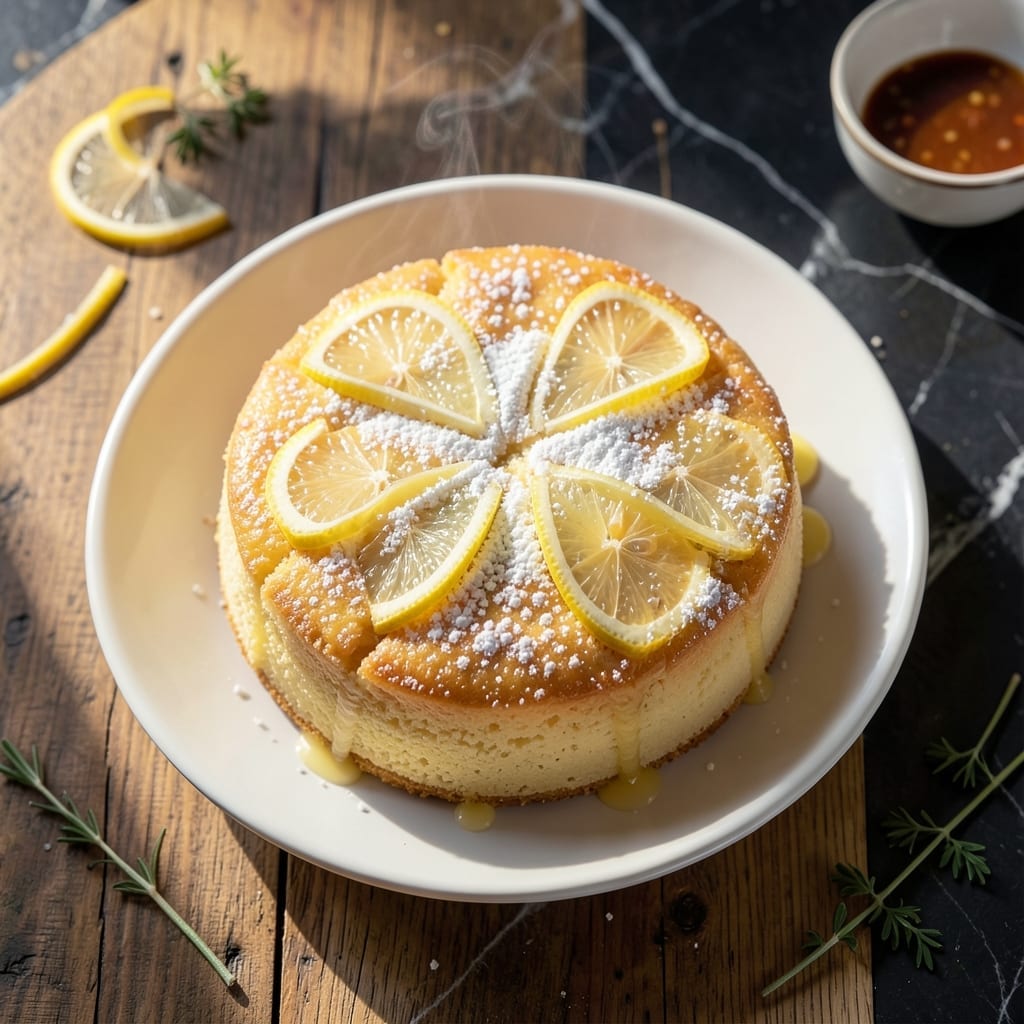
This lemon rice cake delivers bright citrus flavor in every tender bite. The secret lies in using both lemon zest and juice for maximum zing.
Rice flour creates a moist, slightly dense crumb that holds up beautifully to the bold lemon notes. A simple syrup soak after baking locks in moisture.
You’ll end up with a cake that’s perfectly balanced—not too sweet, with that unmistakable citrus punch throughout. The texture stays soft for days.
Serve dusted with powdered sugar or paired with fresh berries for a dessert that feels both special and effortless.
Ingredients for Lemon Rice Cake
Bright, tangy, and tender—this cake uses rice flour and fresh lemons for a perfect citrus punch.
| Ingredient | Amount | Notes |
|---|---|---|
| Rice Flour 🌾 | 2 cups | Gluten-free, fine grind |
| Granulated Sugar 🍚 | 1 ½ cups | Divided for cake and syrup |
| Baking Powder 🧂 | 2 tsp | Ensures proper rise |
| Salt 🧂 | ½ tsp | Fine sea salt preferred |
| Large Eggs 🥚 | 4 whole | Room temperature for best texture |
| Unsalted Butter 🧈 | ¾ cup | Melted and cooled slightly |
| Whole Milk 🥛 | ½ cup | Or any dairy milk |
| Vanilla Extract 🌿 | 1 tsp | Pure extract for best flavor |
| Lemon Zest 🍋 | 2 tbsp | From about 3 large lemons |
| Fresh Lemon Juice 🍋 | ½ cup | From about 3-4 lemons |
| Water 💧 | ½ cup | For simple syrup |
| Powdered Sugar 🍚 | ½ cup | For dusting, optional |
The rice flour is key here—Bob’s Red Mill is my go-to, but any fine grind works. Look for it in the baking aisle or Whole Foods bulk section. The lemons matter too: bright yellow, firm skin means more juice. I always zest first, then juice (way easier than the other way around). Room temperature eggs mix better into the batter—just set them out while you prep everything else.
No rice flour? All-purpose flour plus 2 tbsp cornstarch gets you close, but texture won’t be as tender. Out of fresh lemons? Bottled juice at half the amount works for the liquid, but you’ll lose that fresh zest flavor. For dairy-free, swap the milk for oat or almond milk—butter’s harder to replace in this one. The syrup soak is non-negotiable though (don’t skip it).
Cake stays moist for 3-4 days at room temperature, wrapped tight. Freezes beautifully for up to 3 months—slice first so you can thaw just what you need. Syrup-soaked slices actually taste better the next day (the flavors meld).
Why You’ll Love This Recipe
- I’ll be real: it tastes even better the next day, if it lasts that long.
- One Bowl Wonder: I just dump the rice flour, sugar, and eggs in a single bowl—no fancy equipment, no fuss.
- Zesty Brightness: That tangy lemon cuts through the sweetness in a way that feels fresh, not cloying.
- Brunch to Midnight: Honestly, it’s just as good with coffee at 9 AM as it is with tea at 11 PM.
Step-by-Step Instructions for Lemon Rice Cake
This method delivers a moist, citrusy cake with a tender crumb and bright lemon flavor.
Step 1: Prepare the Wet Ingredients
In a large mixing bowl, whisk together the 4 whole large eggs and 1.5 cups granulated sugar until pale and slightly thickened, about 2-3 minutes. The mixture should look light and fluffy, almost doubled in volume.
Slowly pour in the 0.75 cup unsalted butter (melted and cooled slightly), 0.5 cup whole milk, 1 tsp vanilla extract, 2 tbsp lemon zest, and 0.5 cup fresh lemon juice. Whisk until just combined. The lemon zest and juice will give it that vibrant citrus aroma.
Step 2: Combine the Dry Ingredients
In a separate bowl, sift together the 2 cups rice flour, 2 tsp baking powder, and 0.5 tsp salt. I always sift my dry ingredients to break up any lumps in the rice flour and ensure even distribution of the baking powder.
Gradually fold the dry ingredients into the wet mixture, stirring just until no streaks of flour remain. Overmixing can make the cake dense, so stop as soon as it looks smooth. The batter will be thick but pourable.
Step 3: Bake Until Golden and Springy
Pour the batter into a greased 9-inch round cake pan or 8-inch square pan. Smooth the top with a spatula and bake at 350°F for 35-40 minutes, or until the top is golden brown and a toothpick inserted in the center comes out clean.
I like to rotate the pan halfway through baking to ensure even browning. The cake is done when the edges start to pull away from the sides of the pan and the center feels firm but springy to the touch.
Step 4: Prepare and Apply the Lemon Syrup
While the cake bakes, combine the remaining 0.5 cup water and 0.5 cup granulated sugar in a small saucepan. Heat over medium until the sugar dissolves, then simmer for 2-3 minutes until slightly syrupy.
As soon as the cake comes out of the oven, use a skewer to poke holes all over the top. Slowly pour the warm syrup evenly over the cake, letting it soak in. This step locks in moisture and intensifies the lemon flavor.
Let the cake cool completely in the pan before turning it out onto a wire rack.
Step 5: Dust and Serve
Once cooled, dust the top with 0.5 cup powdered sugar for a finishing touch, if desired. The cake’s texture should be tender with a slight crust from the syrup, and every bite should burst with zesty lemon flavor.
Slice and serve at room temperature. For best results, store any leftovers covered at room temperature for up to 2 days.
Pro Tips For Making Lemon Rice Cake
- Preheat the Pan: I learned this the hard way—always heat your cake pan with a little oil for 2 minutes before adding the batter to prevent sticking and ensure an even crust.
- Whip Eggs Longer: Beat the eggs for at least 5 minutes until they’re pale and thick—this traps air for a lighter texture that rice flour struggles to achieve on its own.
- Sift Rice Flour: Skip the clumps by sifting the rice flour before mixing, or you’ll end up with dense spots in your cake every time.
- Add Zest Last: Fold the lemon zest in at the very end to keep its bright flavor sharp—mixing it in too early dulls the citrus punch.
Troubleshooting This Recipe
Dense or Dry Cake
If your cake turns out dense, you likely overmixed the batter. Fold dry ingredients just until combined—20-25 strokes max. For dryness, ensure you’re using fine rice flour and not overbaking past 35-40 minutes. 💡
Syrup Not Absorbing
Poke holes deeper—at least ½ inch into the cake—and pour syrup slowly. If it pools, let it sit for 5 minutes, then poke more holes. Use warm syrup, not boiling, to prevent a tough crust.
Bland Lemon Flavor
Always zest lemons before juicing—2 tbsp zest is non-negotiable for punch. Use fresh juice (bottled lacks brightness). For extra zing, add 1 extra tbsp zest to the syrup.
Cake Sinks in Center
This happens if the cake isn’t fully baked. Check doneness with a toothpick—it should come out clean. Also, avoid opening the oven door during the first 25 minutes of baking.
Gummy Texture
Underbaking or too much liquid causes gumminess. Measure 0.5 cup lemon juice precisely, and bake until internal temp reaches 200°F. Let the cake cool completely before slicing.
Uneven Browning
Rotate the pan 180 degrees halfway through baking. If your oven has hot spots, try baking on the middle rack and avoid dark pans, which absorb too much heat.
Nutrition Facts
Frequently Asked Questions
Can I use all-purpose flour instead of rice flour?
Yes, but replace 2 tbsp of it with cornstarch for each 1 cup. The texture won’t be as tender, but it’ll still work. Rice flour gives the best crumb, though.
Why does the syrup soak step matter?
It locks in moisture and intensifies the lemon flavor throughout. Without it, the cake may taste dry or lack that bright citrus punch.
How do I know when it’s fully baked?
A toothpick inserted in the center should come out clean. The edges will pull away slightly, and the top will feel springy to the touch.
Can I make this dairy-free?
Swap the butter for coconut oil and use almond or oat milk. The flavor will be slightly different but still delicious.

- Jollof Rice Sauce Recipe: West African Tomato and Spice Infusion - September 25, 2026
- Japanese Rice Soup Recipe: Umami-Rich Comfort in a Bowl - September 25, 2026
- Homemade Cream Of Rice Recipe: Silk-Smooth Breakfast in Minutes - September 25, 2026