
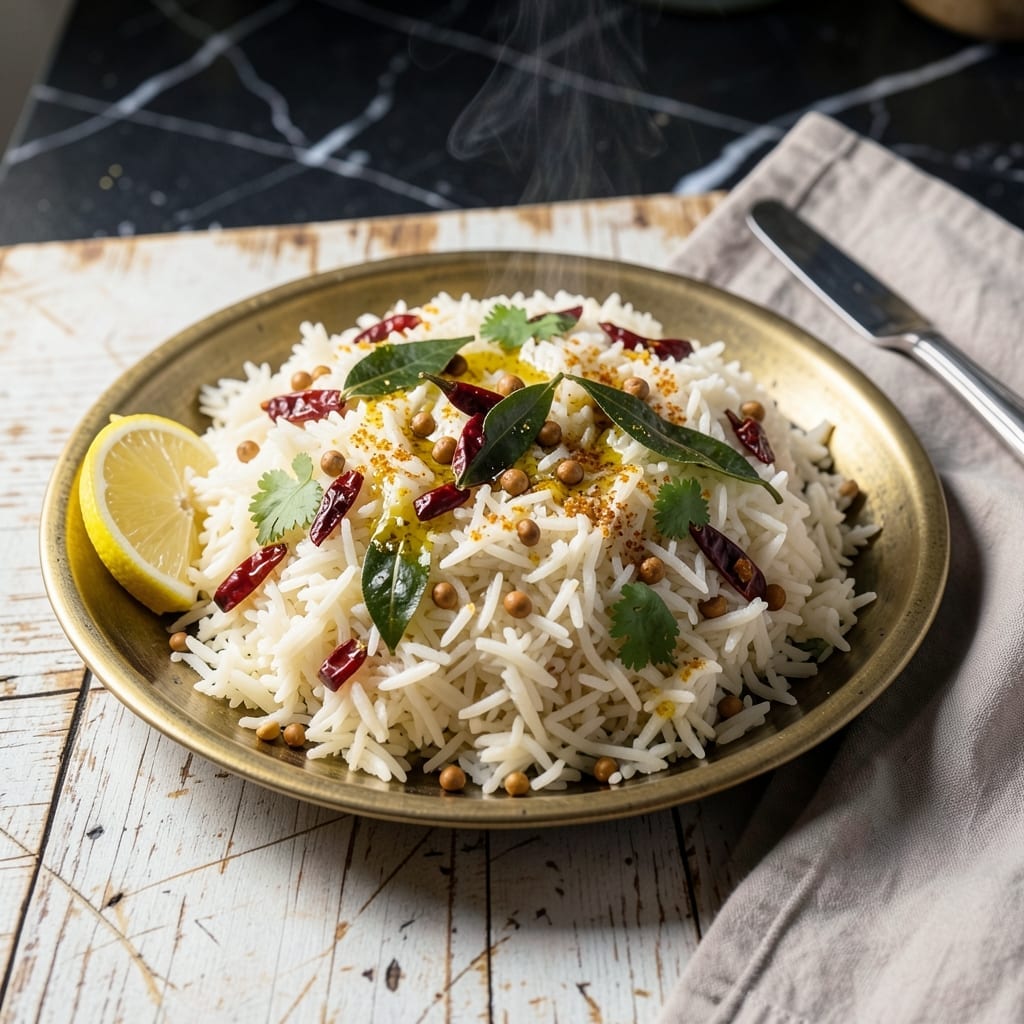
There’s a reason South Indian lemon rice appears on every festive spread—its vibrant citrus tang perfectly balances traditional spices. This dish transforms humble ingredients into a fragrant, turf-yellow delight that pairs beautifully with any main course.
I’ve refined this recipe to capture the authentic taste without complicated steps. The key lies in tempering mustard seeds and curry leaves in hot oil, then tossing them with cooked rice and fresh lemon juice for that signature bright flavor.
What you’ll get is a dish that’s light yet deeply satisfying, with each grain of rice coated in aromatic spices and a refreshing lemon zing. It’s the kind of side that elevates a simple meal into something special.
Serve it warm or at room temperature—this rice only improves as the flavors meld together.
Ingredients for Lemon Rice Recipe Indian
Transform humble rice into a vibrant, citrus-kissed South Indian classic with these pantry staples.
| Ingredient | Amount | Notes |
|---|---|---|
| Basmati Rice 🍚 | 1 ½ cups | Rinsed until water runs clear |
| Lemons 🍋 | 2 whole | Freshly juiced, zested |
| Mustard Seeds 🌿 | 1 tsp | Black or yellow variety |
| Curry Leaves 🍃 | 10 piece | Fresh preferred, dried acceptable |
| Dried Red Chilies 🌶️ | 2 whole | Broken into pieces |
| Chana Dal 🌾 | 1 tbsp | Rinsed and drained |
| Urad Dal 🌾 | 1 tbsp | Split black gram, rinsed |
| Peanuts 🥜 | 2 tbsp | Raw or roasted, unsalted |
| Turmeric Powder 🌶️ | ½ tsp | Ground, for vibrant color |
| Asafoetida 🌿 | ¼ tsp | Hing, for authentic flavor |
| Green Chilies 🌶️ | 2 whole | Slit lengthwise, seeds removed |
| Vegetable Oil 🫒 | 3 tbsp | Neutral flavor, for tempering |
| Salt 🧂 | 1 tsp | Adjust to taste |
| Fresh Cilantro 🌿 | ¼ cup | Chopped, for garnish |
The tempering is non-negotiable here. Mustard seeds and curry leaves must be fresh—dried won’t deliver the same aroma. Source these at Indian grocery stores like Patel Brothers or online at Kalustyan’s. The dals (chana and urad) add texture and authenticity; ensure they’re not stale. Asafoetida (hing) is the secret umami element—use sparingly, as its flavor intensifies.
No curry leaves? Dried bay leaves offer a mild alternative, but the dish won’t be the same. Swap peanuts for cashews or almonds if preferred. Green chilies can be replaced with serrano peppers for heat. For a milder version, reduce red chilies to one. The turmeric must be fresh—old spice loses its potency and color vibrancy.
This rice tastes even better the next day as flavors meld. Store in an airtight container at room temperature for 2 days or refrigerate for up to 4 days. Reheat gently with a splash of water to restore moisture. Not recommended for freezing as texture may suffer.
Why You’ll Love This Recipe
- One Pot Wonder: I toss everything in a single pan—basmathi rice, mustard seeds crackling, and curry leaves sizzling. Cleanup is a breeze.
- Zesty Tang: That hit of fresh lemon with the earthy mustard seeds and spicy red chilies? Honestly, it wakes up my taste buds every time.
- Picnic Ready: I pack this for lunchboxes or potlucks and it’s still delicious cold. Between us, it’s my secret for stress-free gatherings.
- Budget Keeper: A handful of pantry staples and one lemon feed my family for days. I’ll be real: it’s cheaper than takeout and just as satisfying.
Step-by-Step Instructions for Lemon Rice
Master this traditional technique to achieve perfectly balanced flavors and vibrant color in every grain.
Step 1: Prepare and Cook the Basmati Rice
Begin by rinsing the 1.5 cups Basmati Rice under cold water until the water runs completely clear. This removes excess starch and prevents the grains from sticking together during cooking. I find that 3-4 rinses are usually sufficient for basmati.
Combine the rinsed rice with 3 cups water in a pot. Bring to a boil, then reduce to a simmer, cover, and cook for 12-15 minutes until the water is absorbed and the rice is tender. Spread the cooked rice on a plate to cool completely—this prevents it from becoming mushy when mixed with the tempering later.
Step 2: Temper the Whole Spices and Lentils
Heat the 3 tbsp Vegetable Oil in a large skillet over medium heat. Add the 1 tsp Mustard Seeds and wait for them to pop—this should take about 30-45 seconds. Immediately add the 1 tbsp Chana Dal, 1 tbsp Urad Dal, 2 tbsp Peanuts, and 2 whole Dried Red Chilies.
Stir frequently and cook for 3-4 minutes until the dals turn light golden brown and the peanuts are lightly toasted. The mustard seeds should be fully popped by now, and you’ll notice a nutty aroma filling your kitchen. This tempering process is crucial for developing the deep, complex flavors characteristic of South Indian cuisine.
Step 3: Add Aromatics and Turmeric
Reduce heat to medium-low and add the 0.25 tsp Asafoetida, 10 piece Curry Leaves, and 2 whole Green Chilies. Stir for 20-30 seconds until the curry leaves become crisp and release their fragrance. Be careful not to burn the asafoetida—it can turn bitter if overheated.
Add the 0.5 tsp Turmeric Powder and stir for another 10 seconds to bloom the spice in the hot oil. The mixture should now be a vibrant golden color. Remove the skillet from heat to prevent the turmeric from burning, which would create an unpleasant bitterness.
Step 4: Combine with Rice and Lemon
Add the cooled rice to the skillet with the tempering mixture. Stir gently to coat every grain evenly with the spiced oil. The rice should take on a beautiful yellow hue from the turmeric. Sprinkle with the 1 tsp Salt and mix well to distribute evenly.
Juice the 2 whole Lemons directly over the rice mixture. Start with the juice of one lemon, taste, and add more as needed for your preferred level of tanginess. I typically use all the juice for a bright, citrus-forward flavor. Toss gently to combine, ensuring the lemon juice is evenly distributed throughout.
Step 5: Finish and Garnish
Transfer the lemon rice to a serving dish. Let it sit for 5 minutes to allow the flavors to meld together. This resting time is essential for the rice to absorb all the beautiful flavors from the tempering and lemon juice.
Garnish with the 0.25 cup Fresh Cilantro just before serving. The fresh cilantro adds a pop of color and a bright, herbal note that complements the citrus perfectly. Serve warm or at room temperature for the best texture and flavor.
Pro Tips For Making Lemon Rice Recipe Indian
- Toast the Mustard Seeds: Heat the oil until it shimmers, then add mustard seeds—they should pop within 10-15 seconds. If they don’t, your oil isn’t hot enough, and they’ll taste bitter instead of nutty.
- Use Room-Temp Rice: Spread the cooked basmati on a tray for 10 minutes to cool slightly before mixing. I learned this the hard way—hot rice turns the lemon juice harsh and the grains mushy.
- Squeeze Fresh Lemons: Bottled juice lacks the bright, zesty punch this dish needs. Roll the lemons on the counter first—you’ll get 30% more juice with half the effort.
- Fry Curry Leaves Crisp: Don’t just wilt them—fry the curry leaves in the tempering oil until they’re dry and slightly crunchy. Sounds weird, but it works: they release way more aroma this way.
Common Mistakes When Making Perfect Results
Overcooking the Rice
Cook the 1.5 cups Basmati Rice just until tender—12-15 minutes in simmering water is perfect. Overcooked rice turns mushy when mixed with the tempering, losing its distinct grain texture that makes this dish special. 💡
Skipping the Cooling Step
Always spread cooked rice on a plate to cool completely before adding tempering. Hot rice continues cooking and can absorb too much oil, making your dish greasy instead of light and fragrant. This step takes 10-15 minutes but is non-negotiable.
Burning the Tempering
Keep the heat at medium when tempering spices. Mustard seeds should pop in 30-45 seconds, but burning turmeric or asafoetida creates bitterness. I remove the pan from heat after adding turmeric to prevent this common mistake.
Overpowering with Lemon
Start with juice from 1 lemon, taste, then add more gradually. Too much lemon can dominate the delicate spice blend. I use both lemons for my preferred bright flavor, but your taste may vary.
Using Stale Spices
Fresh curry leaves and mustard seeds are essential for authentic flavor. Stale spices lose their aroma and potency. Source from Indian grocery stores like Patel Brothers for best results.
Neglecting the Resting Time
Let the finished rice sit for 5 minutes before serving. This allows the turmeric’s golden color and lemon’s tang to fully meld with each grain, creating that signature vibrant, balanced flavor. 🌟
Nutrition Facts
Frequently Asked Questions
Can I use regular white rice instead of basmati?
Yes, but basmati’s long grains hold up better to tempering. Regular white rice may turn mushy. If substituting, reduce cooking time to 10-12 minutes and cool completely before mixing.
What if I don’t have curry leaves?
Dried bay leaves offer a mild alternative, but the flavor won’t be as authentic. For best results, source fresh curry leaves at Indian grocery stores or online. They’re essential for that signature aroma.
How do I store leftovers?
Keep in an airtight container at room temperature for up to 2 days or refrigerate for 4 days. Reheat with a splash of water to restore moisture. Avoid freezing, as it affects texture.

- Lump Rice Recipe Sri Lanka: Traditional Island-Style Texture - November 4, 2026
- Laos Sticky Rice Recipe: Traditional Steamed Perfection - November 4, 2026
- Magic Rice Recipe: One-Pot Aromatic Wonder - November 4, 2026