
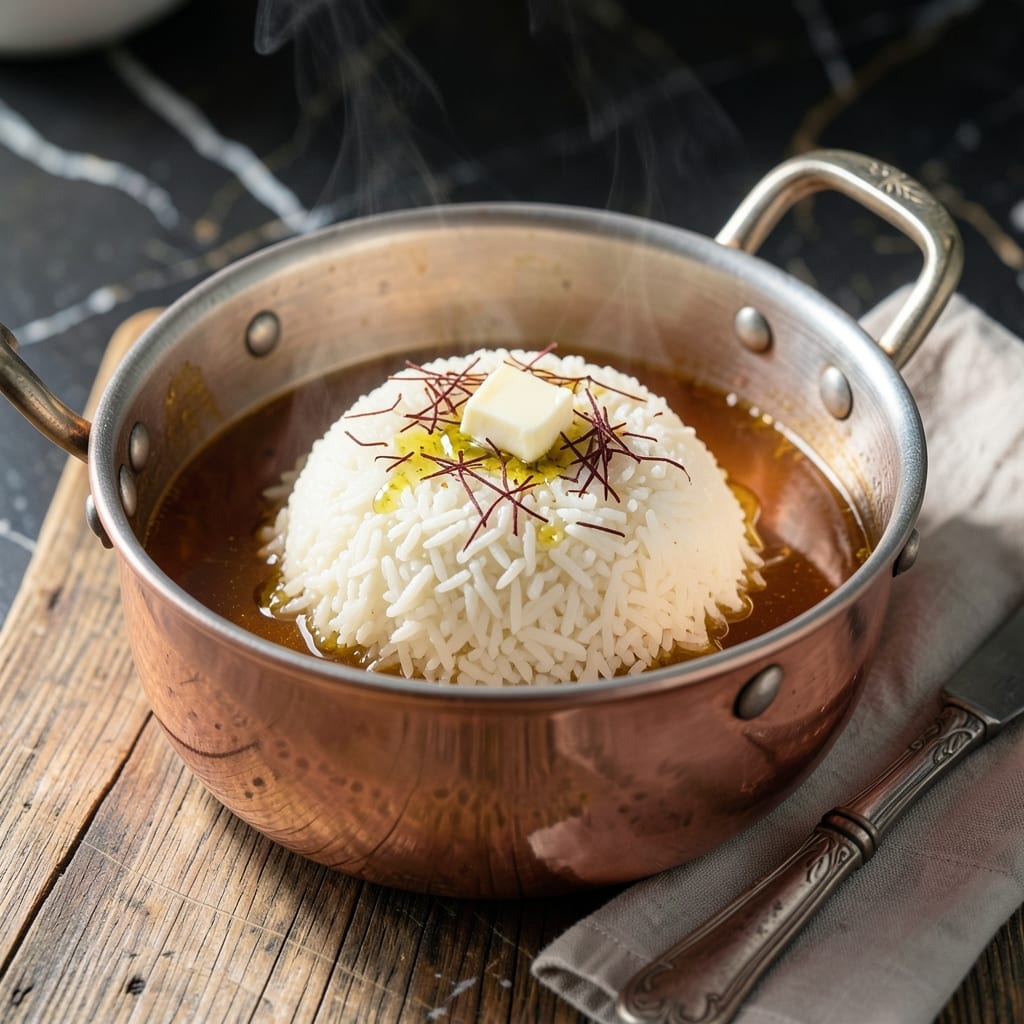
This Persian rice dish transforms simple ingredients into an aromatic masterpiece with its signature saffron infusion. The technique creates a golden, fragrant crust that’s as beautiful as it is delicious.
What makes this special is the careful layering of rice with butter and saffron-infused water. The result is fluffy grains with a crispy bottom layer, known as tahdig, that’s the star of the dish.
Served at celebrations and family gatherings, this rice pairs perfectly with stews or grilled meats. The saffron adds a subtle floral note that elevates every bite.
With patience and attention to detail, you’ll achieve a dish that’s both visually stunning and deeply flavorful.
Ingredients for Leylam Rice
Transform simple pantry staples into this fragrant, golden Persian rice with signature saffron and tahdig crust.
| Ingredient | Amount | Notes |
|---|---|---|
| Basmati Rice 🌾 | 2 cups | Rinsed until water runs clear |
| Saffron Threads 🌼 | ¼ tsp | High-quality Persian variety |
| Hot Water 💧 | ¼ cup | For steeping saffron |
| Unsalted Butter 🧈 | ½ cup | Melted, for layering |
| Vegetable Oil 🫒 | 2 tbsp | For crisping tahdig |
| Kosher Salt 🧂 | 1 ½ tsp | Diamond Crystal preferred |
| Ground Cardamom 🌿 | ¼ tsp | Freshly ground for potency |
| Plain Yogurt 🥛 | ¼ cup | Full-fat for creaminess |
| Lemon Juice 🍋 | 1 tbsp | Freshly squeezed |
| Rose Water 🌹 | 1 tsp | Food-grade, optional garnish |
| Granulated Sugar 🍚 | 1 tsp | Balances saffron bitterness |
| Black Pepper 🌶️ | ¼ tsp | Freshly ground |
| Dried Rose Petals 🌸 | 1 tsp | For garnish, optional |
The saffron is non-negotiable here. Persian saffron from a reputable spice merchant (like Sadaf or Amir) delivers the most potent aroma and color. Basmati rice must be aged—look for brands like Daawat or Tilda with a harvest date at least one year prior. The butter should be high-fat European style for the richest tahdig. Avoid pre-ground cardamom; whole pods toasted and ground fresh offer superior fragrance.
No saffron? A pinch of turmeric for color plus a drop of vanilla extract mimics the floral note (not the same, but passable). Substitute any long-grain white rice, though the texture won’t be as delicate. Greek yogurt at full-fat works if you’re out of plain. For a dairy-free version, coconut oil replaces butter with minimal flavor impact. Skip the rose water if unavailable—it’s traditional but not essential.
Store saffron in an airtight container away from light—it stays potent for 2-3 years. Basmati rice keeps indefinitely in a cool, dry place. The cooked dish holds well for 2 days at room temperature (traditional Persian style), or refrigerate for up to 4 days. Reheat gently with a splash of water to restore moisture.
Why You’ll Love This Recipe
- One Pot Wonder: I love that this comes together in a single pot—just rice, saffron, butter, and a little patience.
- Luxurious Aroma: The saffron and butter create this rich, floral scent that fills the kitchen.
- Feeds a Crowd: Between us, it stretches easily for family dinners or meal prep for the week.
- Budget Luxury: Honestly, a pinch of saffron makes it feel fancy without breaking the bank.
Step-by-Step Instructions for Persian Saffron Rice
Master the technique for this fragrant dish with precise timing and layering for optimal results.
Step 1: Prepare the Basmati Rice and Saffron Infusion
Rinse the 2 cups Basmati Rice under cold water until the water runs completely clear. This removes excess starch and prevents a gummy texture. Soak the rice in fresh water for 30 minutes, then drain thoroughly.
Meanwhile, crush the 0.25 tsp Saffron Threads between your fingers and steep in 0.25 cup Hot Water for 10 minutes. Add the 1 tsp Granulated Sugar to the saffron water—this balances the bitterness and enhances the golden color. The liquid should turn a deep amber, indicating the saffron has fully infused.
Step 2: Parboil the Rice with Aromatics
In a large pot, bring 8 cups of water to a rolling boil. Add the drained rice, 1.5 tsp Kosher Salt, 0.25 tsp Ground Cardamom, and 0.25 tsp Black Pepper. Boil for 6-7 minutes until the rice is slightly undercooked—you should see a faint white core in the grains when tested.
Drain the rice immediately in a fine-mesh strainer and rinse briefly with warm water to stop the cooking process. This parboiling ensures the grains remain separate and firm enough to hold up during the final steaming step.
Step 3: Create the Yogurt and Butter Layers
In a small bowl, whisk together the 0.25 cup Plain Yogurt, 1 tbsp Lemon Juice, and 1 tsp Rose Water until smooth. Melt the 0.5 cup Unsalted Butter and keep it warm. These elements will form the fragrant layers that define this dish.
In a heavy-bottomed pot, heat the 2 tbsp Vegetable Oil over medium heat. Spread a thin layer of the yogurt mixture across the bottom of the pot—this creates the crispy tahdig crust. Drizzle ¼ of the melted butter over the yogurt layer.
Step 4: Assemble and Steam to Perfection
Spoon half of the parboiled rice into the pot, spreading it evenly. Drizzle another ¼ of the melted butter and half of the saffron infusion over the rice. Add the remaining rice, mounding it slightly in the center.
Use the handle of a wooden spoon to poke 5-6 holes through the rice to the bottom of the pot—this allows steam to circulate. Drizzle the remaining butter and saffron infusion over the top. Cover with a clean kitchen towel and secure the lid tightly to absorb excess moisture.
Cook over low heat for 45-50 minutes. The rice is done when the bottom crust is golden brown and the grains are tender throughout. Avoid opening the lid during cooking to prevent steam from escaping.
Step 5: Serve with Elegant Garnish
Remove the pot from heat and let it rest for 5 minutes. Carefully invert the rice onto a serving platter to reveal the crispy tahdig layer. If it sticks, use a thin spatula to gently release it.
Sprinkle the 1 tsp Dried Rose Petals over the top for a final touch of color and fragrance. Serve immediately while the crust is still crisp, ensuring each portion includes some of the golden bottom layer. The contrast between the fluffy rice and crispy crust should be evident in every bite.
Pro Tips For Making Leylam Rice
- Soak the Rice: Give basmati a 30-minute cold water soak before cooking—it swells evenly and prevents that dreaded mushy center I struggled with for years.
- Bloom the Saffron: Crush saffron threads into hot water and let sit for 10 minutes; I learned this the hard way after wasting expensive threads by tossing them in dry.
- Butter Last: Stir in the unsalted butter only after the rice is cooked to avoid greasy, uneven absorption that can ruin the texture.
- Use Both Fats: Start with vegetable oil for high-heat toasting, then finish with butter for flavor—this combo actually changes the outcome, and I skip it now only when I’m out of oil.
Essential Equipment for Perfect Results
Nonstick Pot
A heavy-bottomed 5-6 quart pot with a tight-fitting lid is essential for even heat distribution. I use a Le Creuset Dutch oven for its superior heat retention, which prevents burning while forming the tahdig crust. The enamel coating also makes cleanup easier after the buttery layers.
Fine-Mesh Strainer
Rinsing the rice thoroughly requires a fine-mesh strainer to catch all the tiny grains. I recommend the OXO Good Grips model—its large capacity handles 2 cups of rice easily, and the sturdy handles make it comfortable to use. This step is crucial for achieving fluffy, separate grains.
Wooden Spoon
A wooden spoon is perfect for poking steam vents through the rice without damaging the pot’s surface. The flat end of my 12-inch bamboo spoon also helps spread the rice evenly. Avoid metal utensils that can scratch nonstick coatings.
Kitchen Towel
An old 100% cotton kitchen towel placed under the lid absorbs excess steam, preventing soggy rice. I keep a dedicated towel just for this purpose—it should be clean but well-used. The towel trick is what gives this dish its signature fluffy texture. 💡
Thin Spatula
Turning out the rice with its delicate crust requires a thin, flexible spatula. I use a fish spatula from Mercer Culinary—its thin edge slides under the tahdig without breaking it. This is the moment of truth when you see if your crust formed properly.
Mortar and Pestle
Crushing the saffron threads releases more flavor and color than using them whole. A granite mortar and pestle works best—I find the RSVP Endurance model gives me the perfect texture. This small step makes a noticeable difference in the saffron infusion. ✨
Nutrition Facts
Frequently Asked Questions
What’s the secret to a crispy tahdig layer?
The yogurt-butter mixture at the bottom is key. Use full-fat yogurt and high-fat butter, and cook on low heat for 45-50 minutes without peeking. The steam trapped by the towel helps create that perfect golden crust.
Can I make this without saffron?
Yes, though the flavor won’t be as authentic. A pinch of turmeric adds color, and a drop of vanilla extract mimics the floral note. It won’t be the same, but it’s a decent substitute in a pinch.
Why does my rice turn out mushy?
Over-soaking or skipping the parboil step often causes this. Rinse until water runs clear, soak for only 30 minutes, and boil for 6-7 minutes until grains have a slight bite. Drain well before layering.

- Lump Rice Recipe Sri Lanka: Traditional Island-Style Texture - November 4, 2026
- Laos Sticky Rice Recipe: Traditional Steamed Perfection - November 4, 2026
- Magic Rice Recipe: One-Pot Aromatic Wonder - November 4, 2026