
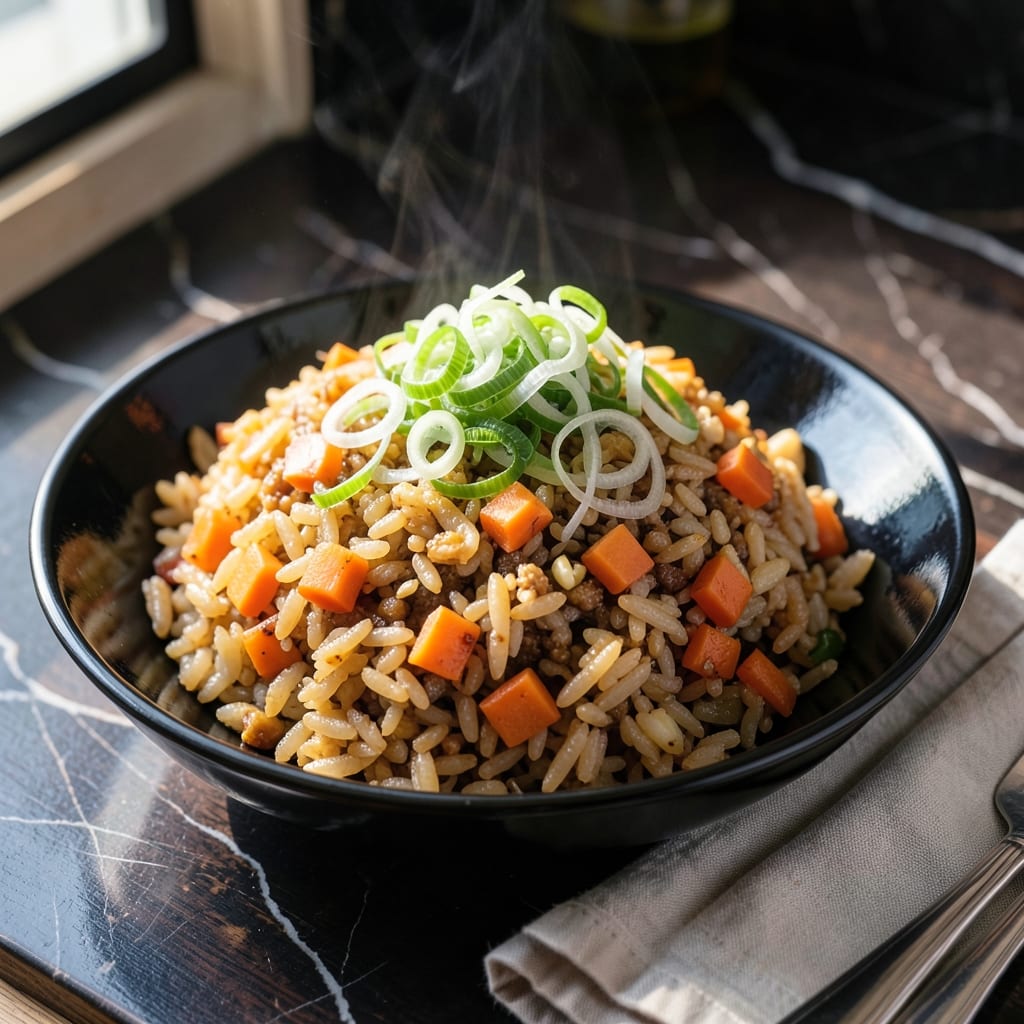
This fried rice delivers the bold, umami-rich flavors you’d find in Little Tokyo’s best street food stalls. A high-heat wok and precise timing create that signature smoky depth.
The dish relies on day-old rice, fresh aromatics, and a handful of authentic ingredients to achieve its restaurant-quality taste. Every bite is packed with savory, slightly charred intensity.
Ingredients for Little Tokyo Restaurant Fried Rice
Authentic ingredients create that signature Little Tokyo street food flavor right in your kitchen.
| Ingredient | Amount | Notes |
|---|---|---|
| Day-Old Cooked Jasmine Rice 🍚 | 4 cups | Cold, preferably overnight |
| Vegetable Oil 🫒 | 3 tbsp | High smoke point, divided |
| Garlic Cloves 🧄 | 4 cloves | Minced finely |
| Fresh Ginger 🌿 | 1 tbsp | Peeled, minced |
| Green Onions 🧅 | 4 whole | Thinly sliced, whites and greens separated |
| Carrots 🥕 | 2 whole | Small dice, about 1/4-inch pieces |
| Frozen Peas 🌱 | ¾ cup | Thawed, patted dry |
| Large Eggs 🥚 | 2 whole | Lightly beaten |
| Soy Sauce 💧 | 2 ½ tbsp | Low-sodium preferred |
| Oyster Sauce 💧 | 1 tbsp | Authentic for umami depth |
| Sesame Oil 🫒 | 1 tsp | Toasted, for finishing |
| White Pepper 🌶️ | ¼ tsp | Freshly ground |
| Salt 🧂 | ½ tsp | Diamond Crystal kosher preferred |
| Char Siu Pork 🥩 | ½ cup | Diced, optional for authenticity |
| Shaoxing Wine 🍶 | 1 tbsp | Dry sherry as substitute |
The rice is non-negotiable—use day-old jasmine (fresh rice turns to mush). For the Shaoxing wine, look in the Asian aisle at Whole Foods or any well-stocked international market. The oyster sauce adds that unmistakable depth; Lee Kum Kee is widely available and reliable. Char siu pork is traditional, but omit it for a vegetarian version without sacrificing much flavor.
No Shaoxing wine? Dry sherry works at a 1:1 ratio. Swap char siu for chinese sausage or shrimp if preferred. The white pepper is key—black pepper won’t deliver the same aromatic subtlety. Frozen peas are fine, but fresh sugar snap peas add a nice crunch if you’re feeling fancy. For a gluten-free version, use tamari instead of soy sauce.
Store leftover rice in the fridge for up to 5 days before using. Once cooked, this fried rice keeps for 3-4 days in an airtight container, though it’s best fresh. The aromatics and sauces will keep for months in a cool, dark pantry.
Why You’ll Love This Recipe
- No-Fuss Cooking: I just dump day-old jasmine rice in the pan with garlic, ginger, and green onions—no prep stress.
- Umami Bomb: Honestly, the garlic and ginger hit different when they sizzle in that hot oil.
- Meal Prep Hero: I make a big batch on Sunday and it reheats like a dream for lunches all week.
- Penny-Wise Dish: Between us, it’s the best way to use up leftover rice and stretch a meal for four.
Step-by-Step Instructions for Little Tokyo Style Fried Rice
Authentic wok technique ensures each grain stays separate while developing deep, smoky flavor.
Step 1: Prepare and Aromatize the Base
Heat 2 tbsp Vegetable Oil in a wok over high heat until it shimmers. Add the minced Garlic Cloves and minced Fresh Ginger, stirring constantly for 15-20 seconds until fragrant but not browned. This quick bloom releases essential oils without burning.
Immediately add the small dice Carrots and stir-fry for 2-3 minutes until the edges soften but maintain a slight crunch. The high heat should produce a gentle sizzle throughout—if it stops, increase the flame. Season with 0.5 tsp Salt and 0.25 tsp White Pepper during this phase.
Step 2: Incorporate Protein and Vegetables
Push the carrot mixture to one side of the wok and add the remaining 1 tbsp Vegetable Oil. Pour in the lightly beaten Large Eggs and scramble quickly until just set but still slightly runny. The residual heat will finish cooking them as you combine everything.
Add the thawed Frozen Peas, diced Char Siu Pork, and the white portions of the thinly sliced Green Onions. Stir-fry for 1-2 minutes until the pork warms through and the peas turn bright green. The wok should maintain a consistent high heat—adjust as needed to prevent steaming.
Step 3: Combine Rice and Seasonings
Break up any clumps in the 4 cups Day-Old Cooked Jasmine Rice with your hands and add it to the wok. Stir-fry for 3-4 minutes, pressing the rice against the hot surface to develop light golden color in spots. This step is critical for that signature wok hei flavor.
Drizzle the 2.5 tbsp Soy Sauce, 1 tbsp Oyster Sauce, and 1 tbsp Shaoxing Wine evenly over the rice. Toss continuously to distribute the sauces and prevent sticking. The rice should appear uniformly coated with a glossy sheen.
Step 4: Finish and Garnish
Remove from heat and stir in the 1 tsp Sesame Oil. The aroma should be intensely savory with a nutty undertone. Taste and adjust seasoning if needed—authentic versions lean toward bold, well-balanced flavors rather than oversalting.
Transfer to a serving dish and garnish with the green portions of the Green Onions. Each grain should be distinct yet infused with smoky depth, while the vegetables retain a slight bite. Serve immediately while the texture remains at its peak.
Pro Tips For Making Little Tokyo Restaurant Fried Rice
- Use Cold Rice: Day-old jasmine rice from the fridge is non-negotiable—fresh rice turns to mush in the wok. I learned this the hard way after making gluey fried rice twice.
- Blast the Heat: Crank your burner to max and let the oil shimmer before adding anything. Sounds aggressive, but it’s the only way to get that restaurant-style sear on the garlic and ginger.
- Prep Everything First: Have your garlic minced, ginger grated, and green onions sliced before the oil hits the pan. Once you start cooking, there’s no time to chop—your rice will burn.
- Skip the Crowding: Cook in batches if needed—overloading the pan steams the rice instead of frying it. My first attempts were soggy because I tried to do it all at once.
Flavor Customization for These Flavors
Spice It Up
Add 1-2 tsp sriracha or 1 tbsp chili garlic sauce when incorporating the soy sauce for a spicy kick. I love how this balances the dish’s natural sweetness from the carrots and peas. A pinch of Sichuan peppercorns adds a numbing tingling heat. 🌶️
Extra Umami Boost
Stir in 1 tbsp miso paste with the sauces, or sprinkle 1 tsp MSG over the rice before tossing. For a seafood twist, add ½ cup diced shrimp or crab meat during the protein step. These additions deepen the savory profile significantly.
Vegetable Variations
Swap peas for ½ cup diced bell peppers or broccoli florets for crunch. I often add 1 cup bean sprouts at the very end for freshness. For extra color, toss in ¼ cup corn kernels with the carrots.
Protein Swaps
Replace char siu with ½ cup diced chicken breast or tofu cubes for variety. For a richer version, use ¼ cup diced Spam—a Hawaiian-inspired twist. Always ensure proteins are cooked through before adding rice.
Herb Infusions
Finish with 1 tbsp chopped cilantro or Thai basil leaves for brightness. A sprinkle of furan (dried tofu skin) adds a unique texture. I sometimes garnish with fried shallots for extra crunch. ✨
Nutrition Facts
Frequently Asked Questions
Why use day-old rice for fried rice?
Day-old rice is drier and firms up, preventing it from turning mushy when stir-fried. Fresh rice contains too much moisture, which can make your dish soggy instead of achieving that perfect separate grain texture.
Can I make this without a wok?
Yes, but use a large skillet with sloped sides for best results. A wok’s high heat and shape distribute heat more evenly, but a heavy-bottomed pan works. Just ensure it’s hot enough to sizzle when adding ingredients.
What can I substitute for Shaoxing wine?
Dry sherry is the closest substitute at a 1:1 ratio. You can also use mirin or skip it entirely, though the depth of flavor will be slightly reduced. Avoid cooking wine—it’s too salty.
How do I prevent my fried rice from being greasy?
Use just enough oil to coat the wok, and keep the heat high. Overloading with oil or cooking at low heat causes greasiness. Stir-fry in small batches if needed.

- Mujadara Rice and Lentils Recipe: Earthy Spiced Lentils With Caramelized Onions - November 1, 2026
- Naija Fried Rice Recipe: Street-Style Spice With Veggie Crunch - November 1, 2026
- Mushy Rice Recipe: Fluffy Grains Transformed in Minutes - November 1, 2026