
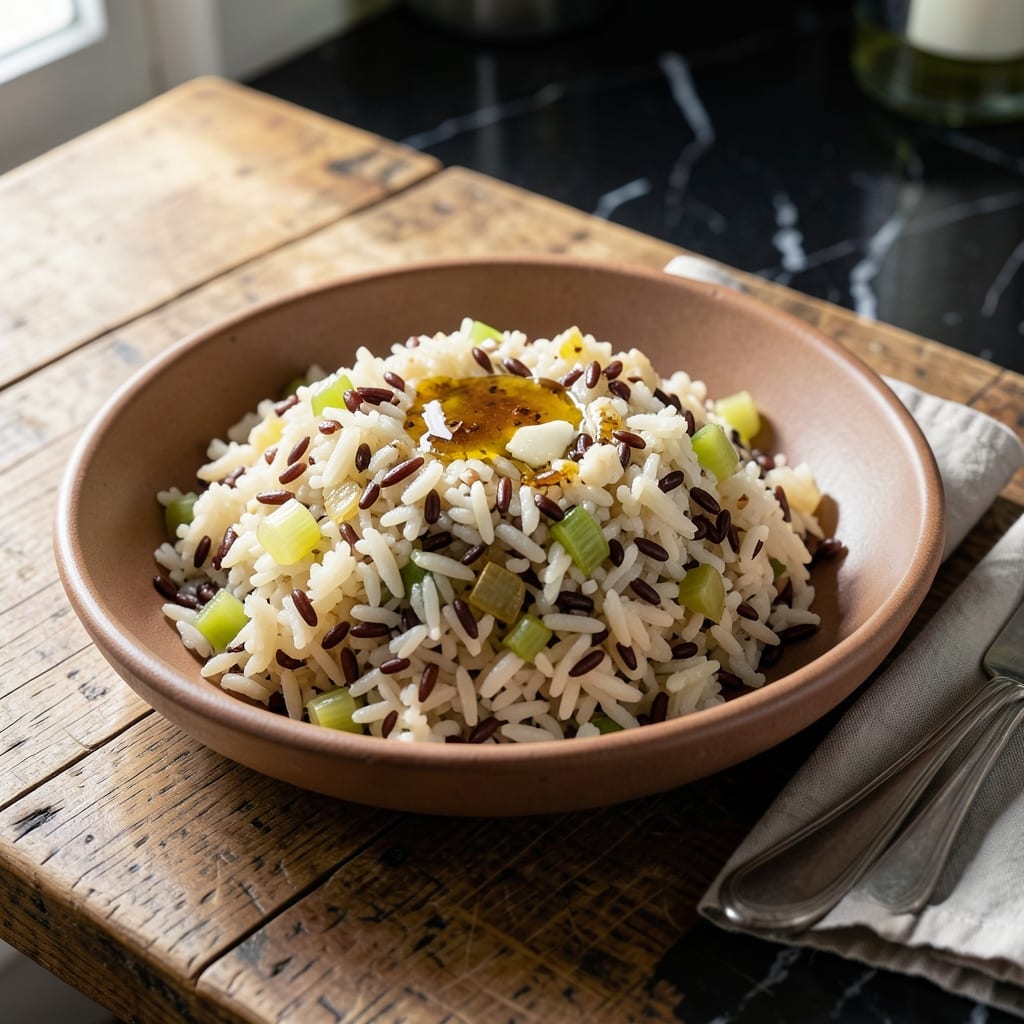
This pilaf elevates simple rice to a restaurant-quality side dish with minimal effort. The blend of long grain and wild rice creates a beautiful texture contrast that’s both hearty and elegant.
I’ve perfected the cooking ratio and timing to ensure both rice varieties finish at the same time. A light herb mixture adds subtle aroma without overpowering the natural nutty flavors of the grains.
The result is a fluffy, fragrant dish with individual grains that hold their shape. Each bite offers a mix of tender long grain rice and chewy wild rice with a delicate herb finish.
It pairs perfectly with roasted meats or stands alone as a satisfying vegetarian option. This method guarantees consistent, impressive results every time.
Ingredients for Long Grain and Wild Rice Pilaf
Simple ingredients create a restaurant-quality rice pilaf with nutty depth and herbed aroma.
| Ingredient | Amount | Notes |
|---|---|---|
| Long Grain White Rice 🌾 | 1 ½ cups | Uncooked, rinsed thoroughly |
| Wild Rice 🌾 | ½ cup | Uncooked, rinsed thoroughly |
| Unsalted Butter 🧈 | 3 tbsp | Or substitute olive oil |
| Yellow Onion 🧅 | 1 whole | Finely diced for even cooking |
| Celery Stalks 🌿 | 2 whole | Finely diced for texture |
| Garlic Cloves 🧄 | 3 cloves | Minced for maximum flavor |
| Low-Sodium Chicken Broth 🥣 | 3 cups | Vegetable broth for vegetarian |
| Dried Thyme 🍃 | 1 tsp | Crushed for better infusion |
| Dried Rosemary 🍃 | 1 tsp | Crushed for better infusion |
| Bay Leaf 🍃 | 1 whole | Removed before serving |
| Kosher Salt 🧂 | 1 tsp | Adjust to taste at end |
| Fresh Parsley 🌿 | ¼ cup | Chopped, for garnish |
| Black Pepper 🌶️ | ½ tsp | Freshly ground preferred |
The rice selection is key here. Lundberg or Mahatma long grain white rice and Minnesota-grown wild rice (from Whole Foods or natural food stores) deliver the best texture. Avoid pre-mixed rice blends—they often contain broken grains that turn mushy. Freshness matters too; check the packaging date and opt for rice sold in the past year for optimal flavor and texture.
Need a vegetarian version? Swap chicken broth for vegetable broth—Imagine Foods or Pacific make excellent options. No celery? Fennel bulb at half the amount adds a similar crunch. Out of fresh parsley? Dried parsley at one-third the amount works in a pinch, though fresh is preferred for the bright finish. The herbs can be adjusted to taste—add a pinch of sage if you like deeper aroma.
Store uncooked rice in airtight containers in a cool, dark place for up to 1 year. Cooked pilaf keeps in the fridge for 4-5 days or can be frozen for 3 months. Reheat gently with a splash of broth to restore moisture.
Why You’ll Love This Recipe
- One Pot Wonder: I love that this comes together in a single pot—just sauté the onion and celery in butter, add the rices, and let it simmer.
- Nutty Depth: The wild rice brings this incredible earthy flavor that pairs perfectly with the buttery softness of the long grain.
- Meal Prep MVP: I make a big batch on Sunday and it reheats beautifully for lunches all week.
- Budget Stretcher: Honestly, this feeds my family of four for under $10 with ingredients I always have on hand.
Step-by-Step Instructions for Long Grain and Wild Rice Pilaf
This method ensures perfectly cooked grains with a fragrant, herbed finish every time.
Step 1: Toast the Rice Blend in Butter
Melt 3 tbsp unsalted butter in a large saucepan over medium heat. Add the 1.5 cups long grain white rice and 0.5 cup wild rice, stirring frequently. Toast for 3-4 minutes until the rice becomes lightly golden and emits a nutty aroma.
This step enhances the natural flavors of both rice varieties and prevents them from becoming mushy during cooking. Watch closely to avoid burning—you want just a subtle color change and a fragrant scent.
Step 2: Sauté the Aromatic Base
Add the finely diced yellow onion and 2 whole finely diced celery stalks to the pan with the toasted rice. Cook for 4-5 minutes until the vegetables soften and become translucent.
Stir in the 3 minced garlic cloves and cook for an additional 30 seconds until fragrant. The garlic should sizzle but not brown. This aromatic foundation builds depth of flavor that infuses the entire dish.
Step 3: Simmer with Broth and Herbs
Pour in the 3 cups low-sodium chicken broth, then add 1 tsp dried thyme, 1 tsp dried rosemary, 1 whole bay leaf, 1 tsp kosher salt, and 0.5 tsp black pepper. Stir well to combine and bring to a boil.
Once boiling, reduce heat to low, cover the pan tightly, and simmer for 40-45 minutes. The rice is done when all liquid is absorbed and the grains are tender but still slightly firm. Resist the urge to lift the lid during cooking—steam is essential for even cooking.
Step 4: Rest and Finish with Fresh Herbs
Remove the pan from heat and let it sit covered for 10 minutes. This resting period allows the rice to steam in its own residual heat, ensuring even texture throughout. Discard the bay leaf before serving.
Fluff the pilaf gently with a fork and fold in the 0.25 cup chopped fresh parsley. The parsley adds a bright, fresh note that complements the earthy, herbed flavors. Serve immediately while warm for the best texture and aroma.
Pro Tips For Making Long Grain And Wild Rice Pilaf
- Toast the Rice: Cook the long grain and wild rice in butter for 2-3 minutes before adding liquid—this deepens the nutty flavor and prevents mushiness.
- Chop Uniformly: Dice the onion and celery into small, even pieces (about ¼-inch) so they soften at the same rate and blend seamlessly into the pilaf.
- Resist Over-Stirring: I learned this the hard way—once the liquid is added, stir only once or twice, then let it simmer undisturbed to avoid breaking the grains.
- Use Double the Liquid: Wild rice needs more hydration than white, so for every 1 cup of mixed rice, use 2 ¼ cups of broth or water to guarantee both types cook through perfectly.
Storing and Reheating This long grain and wild rice pilaf
Refrigerator Storage
Let your pilaf cool for no more than 2 hours before transferring to airtight containers. I use glass containers with snap-tight lids to maintain freshness. Store at 40°F or below for up to 4-5 days. The herbs will continue to infuse the rice with flavor as it rests. ❄️
Freezer Storage
For longer storage, freeze in quart-size freezer bags with excess air removed. The pilaf keeps well for up to 3 months without texture degradation. Portion into 1-cup servings for easy reheating later. Label with the date to track freshness.
Stovetop Reheating
My preferred method uses a skillet over medium-low heat. Add 2 tbsp water or broth per cup of rice, cover, and warm for 5-7 minutes, stirring occasionally. This restores moisture and prevents drying. The grains will separate easily when properly reheated. 🔥
Microwave Reheating
Place a single portion in a microwave-safe dish with 1 tbsp water. Cover with a damp paper towel and heat on 70% power for 2-3 minutes, stirring halfway. This gentle method prevents the wild rice from becoming tough.
Reviving Leftovers
If your pilaf seems dry after storage, sprinkle with 1-2 tbsp warm broth and let it sit covered for 5 minutes. The rice will absorb the liquid and regain its fluffy texture. I often add a pat of butter for extra richness.
Nutrition Facts
Frequently Asked Questions
Why do I need to toast the rice first?
Toasting enhances the nutty flavor and prevents mushiness. It also helps the grains absorb liquid evenly during cooking.
Can I use pre-cooked rice?
No—this recipe requires uncooked grains. Pre-cooked rice will turn mushy during the 40-45 minute simmer.
How do I prevent the wild rice from being undercooked?
Ensure the liquid fully covers the rice blend and maintain a gentle simmer. The 10-minute rest also helps even out the texture.
What if my pilaf is too dry?
Add 1-2 tbsp warm broth, cover, and let it steam for 5 minutes. This revives the texture without making it soggy.

- Peri Peri Rice Recipe: Spicy Portuguese One-Pot Harmony - November 6, 2026
- Mexican Flavoured Rice Recipe: Authentic Spice-Infused One-Pot Meal - November 6, 2026
- Lao Gan Ma Fried Rice Recipe: Spicy Wok-Tossed Perfection - November 6, 2026