
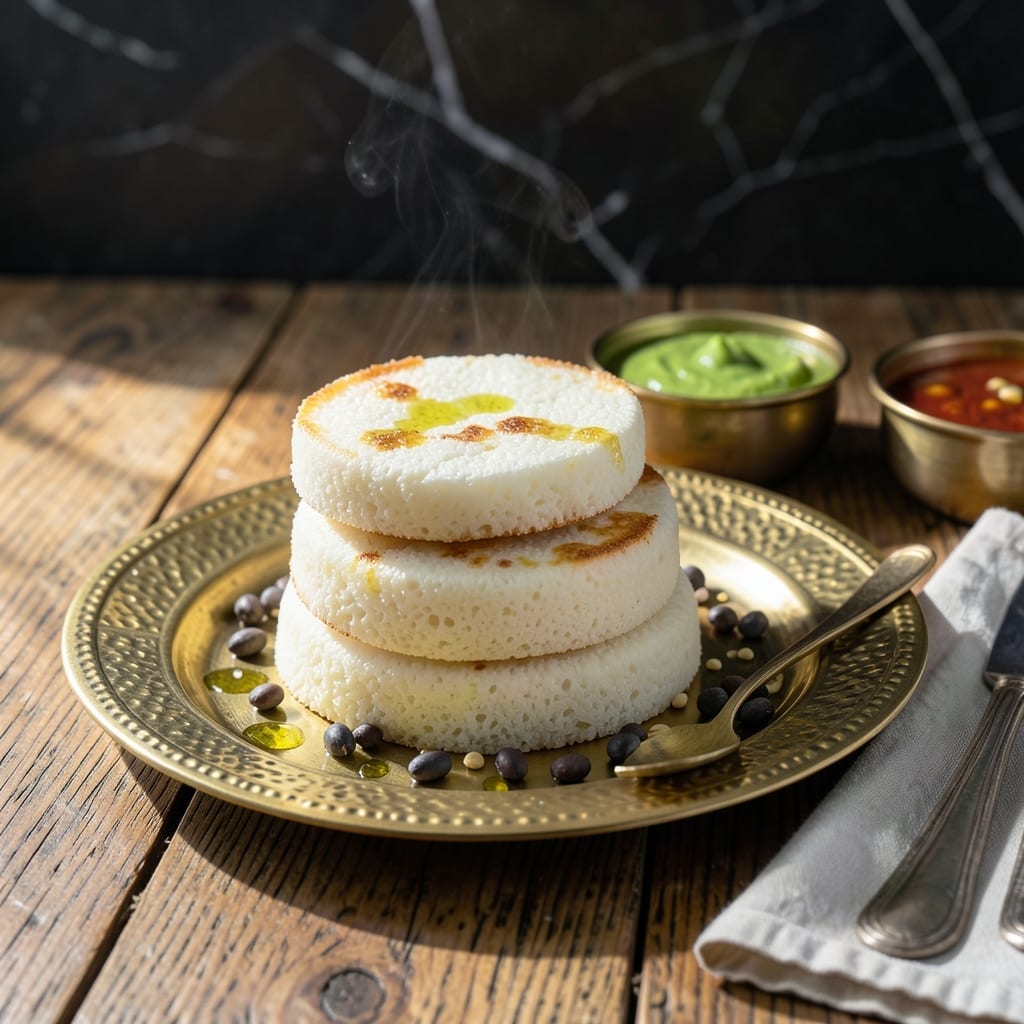
Transforming leftover rice into fluffy idlis is a game-changer for breakfast. This method uses simple pantry staples to create soft, fermented idlis that taste freshly made. No special equipment needed.
The key is soaking the rice briefly before grinding, which helps achieve the right batter consistency. Fermentation develops naturally overnight, creating that signature tangy flavor. The process is fast and requires minimal hands-on time.
These idlis steam up light and airy, with a slightly spongy texture that pairs perfectly with chutney or sambar. The beauty lies in giving new life to cooked rice that might otherwise go to waste.
Serve warm for the best experience. This approach makes breakfast preparation effortless while delivering authentic taste.
Ingredients for Leftover Rice Idli
Simple pantry staples transform leftover rice into tender, fermented idlis with minimal effort.
| Ingredient | Amount | Notes |
|---|---|---|
| Cooked White Rice 🍚 | 3 cups | Day-old, chilled preferred |
| Urad Dal 🌾 | ½ cup | Split black gram, rinsed |
| Fenugreek Seeds 🌿 | ½ tsp | Optional for fermentation |
| Salt 🧂 | 1 tsp | Adjust to taste |
| Water 💧 | ¾ cup | For grinding batter |
| Oil 🫒 | 1 tbsp | For greasing idli molds |
| Cumin Seeds 🌿 | 1 tsp | For tempering optional |
| Curry Leaves 🍃 | 8 pieces | Fresh preferred |
| Green Chilies 🌶️ | 2 pieces | Finely chopped |
| Ginger 🌿 | 1 piece | 1-inch, grated |
The urad dal is non-negotiable for authentic texture. Indian grocery stores like Patel Brothers or H-Mart carry it in bulk—look for split, skinless varieties. Fenugreek seeds, though optional, boost fermentation significantly. Use basmati rice if possible, but any cooked white rice works. The key is using day-old, chilled rice for the best consistency.
No urad dal? Split mung beans (soaked) can substitute at a 1:1 ratio, though texture differs. Skip fenugreek if unavailable—just extend fermentation time by 2-3 hours. For extra fluffiness, add 1/4 cup semolina to the batter. Green chilies can be reduced or omitted for milder idlis.
Batter ferments best in a warm spot (like an oven with light on). Keeps 24-36 hours refrigerated. Steamed idlis stay fresh for 2 days at room temperature or freeze for 1 month.
Why You’ll Love This Recipe
- No Soaking Needed: I skip the overnight soak—just blend leftover rice with urad dal and fenugreek for instant batter.
- Soft and Tangy: The fermented urad dal gives that classic idli fluff with a subtle tang that pairs perfectly with coconut chutney.
- Breakfast or Snack: I make a batch on Sunday and grab one for breakfast or pack as a lunchbox snack all week.
- Zero Waste: Honestly, it’s my favorite way to use up that extra rice from last night’s dinner.
Step-by-Step Instructions for Leftover Rice Idli
This streamlined method transforms day-old rice into fluffy, fermented idlis with minimal effort.
Step 1: Prepare the Batter Base with Cooked Rice
Combine the 3 cups Cooked White Rice with 0.5 cup Urad Dal and 0.5 tsp Fenugreek Seeds in a blender. The rice should be day-old and chilled for best texture—this reduces excess moisture in the batter. Add 0.75 cup Water gradually while blending to achieve a smooth, thick consistency.
Blend for 2-3 minutes until the mixture is lump-free and the urad dal is fully incorporated. The batter should be slightly gritty from the dal but smooth overall. This forms the foundation for light, airy idlis that hold their shape when steamed.
Step 2: Season and Ferment for Flavor Development
Transfer the batter to a large bowl and stir in 1 tsp Salt. Now add the 1 piece Ginger (grated), 2 pieces Green Chilies (finely chopped), and 8 pieces Curry Leaves for aromatic depth. These ingredients infuse the batter with traditional South Indian flavors that elevate the dish beyond simple rice cakes.
Cover the bowl with a clean kitchen towel and let it ferment at room temperature for 6-8 hours or overnight. You’ll notice the batter rising slightly and developing a tangy aroma—this fermentation is crucial for achieving the signature idli texture and taste. The fenugreek seeds aid in this process naturally.
Step 3: Steam the Idlis to Perfection
Grease idli molds lightly with 1 tbsp Oil to prevent sticking. Pour the fermented batter into each mold, filling them about ¾ full. This allows room for the idlis to expand as they steam without overflowing. Bring water to a boil in your idli steamer or a pot with a steaming rack.
Place the filled molds in the steamer, cover with a lid, and steam over medium-high heat for 10-12 minutes. Check for doneness by inserting a toothpick into the center of an idli—it should come out clean. The idlis are ready when they’ve pulled away slightly from the mold edges and have a spongy, springy texture.
Step 4: Optional Tempering for Added Flavor
For an enhanced version, heat a small pan over medium heat and add 1 tsp Cumin Seeds. Let them sizzle for 20-30 seconds until fragrant but not burnt. This tempering, or tadka, can be drizzled over the steamed idlis just before serving for an extra layer of aroma and crunch.
Serve the idlis warm with coconut chutney or sambar. The exterior should be slightly firm to the touch with a soft, fluffy interior that melts in your mouth. This method ensures your creation retains moisture while delivering authentic taste and texture.
Pro Tips For Making Leftover Rice Idli
- Soak Urad Dal Longer: Give the urad dal a full 4-5 hours in water—I learned this the hard way after my first batch of idlis turned out dense instead of fluffy.
- Use Cold Rice: Leftover rice from the fridge works best; the slight dryness actually changes the outcome for better texture.
- Grind to Smooth Batter: Make sure the urad dal and fenugreek seeds blend into a smooth, thick paste—skip the shortcut of coarse grinding, or your idlis will be grainy.
- Ferment Overnight: After mixing the batter, let it sit covered at room temperature for 8-10 hours; my grandmother swore by this, and she was right.
Wine and Beer Pairings for This Dish
Chai Pairings
Nothing beats the comfort of hot masala chai with these soft idlis. The spiced tea’s warmth complements the tangy, steamed cakes perfectly. I brew mine with 1 inch fresh ginger and 2 cardamom pods for extra aroma. 🍵
Filter Coffee Classic
South Indian filter coffee is the traditional choice, with its rich, frothy texture balancing the light idlis. Use 1 tbsp coffee powder per cup for authentic strength. The bitterness cuts through the idli’s mildness beautifully.
Coconut Water Refresh
For a lighter option, chilled tender coconut water offers a refreshing contrast. The natural sweetness enhances the idli’s subtle flavors. I prefer it straight from the shell for maximum freshness.
Yogurt Drink
A salty lassi or chaas (buttermilk) makes an excellent pairing. Blend 1 cup yogurt with ½ cup water, ¼ tsp cumin powder, and salt to taste. The coolness complements the warm idlis. ✨
Fruit Juice Options
Fresh mosambi (sweet lime) or orange juice adds a citrusy zing. The acidity in the juice enhances the fermented notes of the idlis. Serve chilled for best results.
Nutrition Facts
Frequently Asked Questions
Can I use freshly cooked rice instead of leftover?
Freshly cooked rice works but may make the batter too sticky. Chilled, day-old rice reduces excess moisture for better texture. If using fresh, spread it out to cool completely before blending.
Why is my idli batter not fermenting?
Fermentation fails if the environment is too cold. Place the bowl in a warm spot like an oven with the light on. Adding ½ tsp sugar can also kickstart the process.
How do I store leftover idlis?
Store cooled idlis in an airtight container in the fridge for up to 2 days. Reheat by steaming for 2-3 minutes or microwaving with a damp cloth. Freeze for up to 1 month.
Can I skip the urad dal?
Urad dal is essential for the right texture and fermentation. If unavailable, use ½ cup soaked split mung beans as a substitute, but expect a denser result.

- Peri Peri Rice Recipe: Spicy Portuguese One-Pot Harmony - November 6, 2026
- Mexican Flavoured Rice Recipe: Authentic Spice-Infused One-Pot Meal - November 6, 2026
- Lao Gan Ma Fried Rice Recipe: Spicy Wok-Tossed Perfection - November 6, 2026