
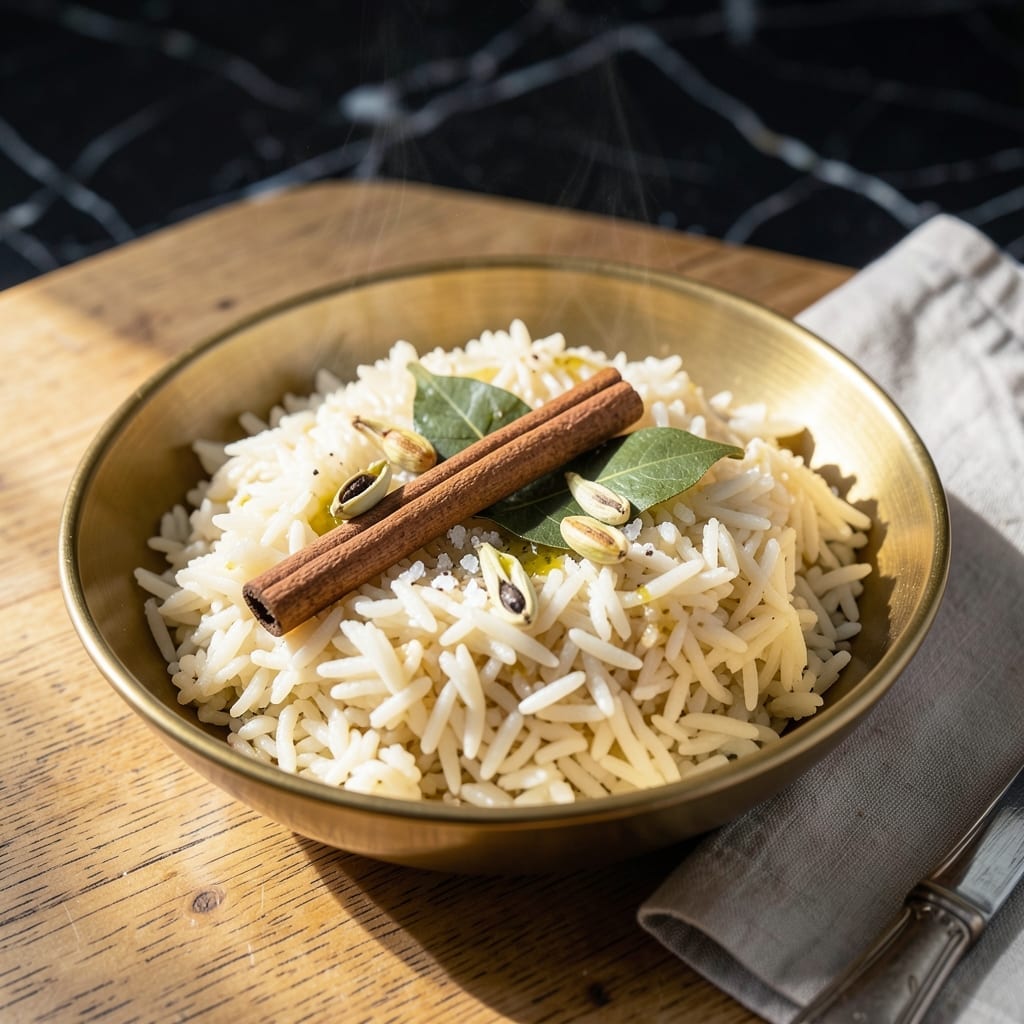
This stovetop method delivers perfectly fluffy basmati rice with distinct, separate grains every time. The key lies in proper soaking and precise water ratios.
I’ve refined this technique through years of trial, ensuring the rice absorbs just enough moisture without turning mushy. A quick rinse removes excess starch, while soaking softens the grains for even cooking.
The result is fragrant, light, and airy rice that pairs beautifully with curries, grilled meats, or simple vegetable dishes. No special equipment is needed—just patience and attention to detail.
With a 1:1.5 rice-to-water ratio and a 20-minute soak, you’ll achieve restaurant-quality results at home. This method works for both stovetop and rice cooker.
Ingredients for Long Grain Basmati Rice
These nine ingredients create aromatic, fluffy basmati rice with minimal effort and maximum flavor.
| Ingredient | Amount | Notes |
|---|---|---|
| Long Grain Basmati Rice 🌾 | 2 cups | Rinsed until water runs clear |
| Water 💧 | 3 cups | Filtered for best flavor |
| Sea Salt 🧂 | 1 tsp | Fine grain preferred |
| Bay Leaf 🍃 | 1 whole | Optional for aroma |
| Cardamom Pods 🌿 | 2 whole | Lightly crushed, optional |
| Cinnamon Stick 🌰 | 1 whole | Optional for depth |
| Cloves 🌼 | 2 whole | Optional for warmth |
| Ghee 🧈 | 1 tbsp | Use vegan ghee for plant-based |
| Lemon Juice 🍋 | 1 tsp | Freshly squeezed |
| Fresh Cilantro 🌿 | ¼ cup | Chopped, for garnish |
The rice quality is paramount here. Indian or Pakistani basmati (like Daawat or Tilda) yields the longest, most fragrant grains. Rinse thoroughly until the water runs completely clear—this removes excess starch that causes clumping. Soaking for 20 minutes is non-negotiable; it ensures even cooking and prevents broken grains. Avoid aged basmati for this method—fresh is best.
No ghee? Neutral oil or vegan butter works fine (use one-third less for subtle richness). Skip the whole spices if you prefer plain rice, but they add incredible depth. For extra fragrance, toast the spices in the ghee for 30 seconds before adding water. If using a rice cooker, maintain the 1:1.5 ratio—this method is foolproof for both stovetop and electric.
Uncooked basmati keeps in a sealed container for 1 year (check for bugs occasionally). Cooked rice stays fresh in the fridge for 4-5 days—reheat with a splash of water to restore moisture. Freeze in portions for up to 3 months (thaw overnight before reheating).
Why You’ll Love This Recipe
- One Pot Wonder: I dump everything in, let it simmer, and the rice practically cooks itself.
- Aromatic Magic: The cardamom and bay leaf infuse every grain with a warm, fragrant depth that plain rice just can’t touch.
- Meal Prep Hero: I make a big batch on Sunday and it pairs perfectly with curries, grilled meats, or even just a fried egg.
- Budget Stretch: A pound of basmati costs pennies but feels like a restaurant-quality side. Honestly, it’s my wallet’s best friend.
Step-by-Step Instructions for Long Grain Basmati Rice
Master this technique for perfectly fluffy grains with fragrant, aromatic depth every time.
Step 1: Rinse and Prepare the Rice
Place the 2 cups Long Grain Basmati Rice in a fine-mesh strainer and rinse under cold running water. Continue rinsing until the water runs completely clear—this removes excess starch that would otherwise make the grains gummy. I always give it a final swirl and drain well to remove every last bit of cloudiness.
After rinsing, soak the rice in a bowl of fresh water for 20-30 minutes. This step hydrates the grains evenly, preventing them from breaking during cooking and ensuring uniform expansion. Drain thoroughly before proceeding to the next step.
Step 2: Toast the Spices and Rice
In a heavy-bottomed pot with a tight-fitting lid, melt the 1 tbsp Ghee over medium heat. Add the 1 whole Bay Leaf, 2 whole Cardamom Pods, 1 whole Cinnamon Stick, and 2 whole Cloves. Toast the spices for 30 seconds until fragrant—you’ll notice their aromas intensify as they warm.
Add the drained rice to the pot and stir gently, coating the grains in the spiced ghee. Toast the rice for 1-2 minutes until it becomes slightly translucent at the edges. This step enhances the nutty flavor of the basmati and allows the spices to infuse directly into each grain.
Step 3: Add Water and Salt, Then Simmer
Pour in the 3 cups Water and add the 1 tsp Sea Salt. Stir once to distribute the spices and salt evenly, then bring the mixture to a rolling boil over high heat. Watch for small bubbles breaking the surface consistently—that’s your signal to proceed.
Once boiling, reduce the heat to low, cover the pot with the lid, and let it simmer undisturbed for 15 minutes. Resist the urge to lift the lid—steam is crucial for even cooking, and peeking releases it, leading to unevenly cooked rice.
Step 4: Rest and Fluff the Rice
After 15 minutes, turn off the heat and let the rice sit, covered, for an additional 10 minutes. This resting period allows residual steam to finish cooking the grains and ensures they absorb any remaining moisture. The rice should be tender but still distinct, with no hard center.
Remove the lid and discard the whole spices. Gently fluff the rice with a fork, taking care not to crush the grains. Sprinkle the 1 tsp Lemon Juice over the top and fold it in lightly—this adds a subtle brightness that complements the aromatic spices.
Step 5: Garnish and Serve
Transfer the rice to a serving dish and garnish with the 0.25 cup Fresh Cilantro. The cilantro adds a fresh, herbal note that balances the warmth of the spices. Serve immediately while the rice is hot and at its fluffiest.
Each grain should be separate, light, and infused with the delicate flavors of the spices. The texture should be tender yet firm, with no stickiness between the grains.
Pro Tips For Making Long Grain Basmati Rice
- Soak the Rice: I learned this the hard way—soaking basmati for 20-30 minutes before cooking prevents it from turning gluey and guarantees those long, separate grains.
- Use Less Water: Unlike regular rice, basmati needs about 1.5 cups water per cup of rice—any more and you’ll end up with a mushy mess.
- Toast the Spices: Lightly toasting the bay leaf and cardamom pods in the pot for 30 seconds before adding water wakes up their flavor without overpowering the rice.
- Let It Rest: After cooking, turn off the heat and let it sit covered for 10 minutes—this lets the steam finish the job and keeps the grains fluffy.
Regional Styles of These Flavors
Indian Style
In Northern India, they often cook basmati with whole spices like the cardamom pods, cinnamon stick, and cloves from our recipe. The key is toasting them in ghee first to release their oils. I love adding 1 tsp cumin seeds for extra warmth. 🌿
Persian Style
Persian chelo features rice parboiled then steamed with a crispy bottom layer called tahdig. Use 1 tbsp saffron dissolved in ¼ cup hot water for golden color. The rice is never stirred during cooking to maintain distinct grains.
Middle Eastern Style
Lebanese and Syrian versions often include vermicelli noodles toasted in butter before adding the rice. Use ½ cup broken noodles for every 2 cups rice. The noodles add a delightful crunch and nutty flavor. 🔥
Pakistani Style
They favor biryani-style preparations with layered rice and meat. For a vegetarian version, add 1 cup fried onions and ½ cup chopped mint between rice layers. The dish is sealed with dough and slow-cooked.
Western Fusion
For a modern twist, I toast the rice in olive oil with 1 tsp turmeric for color. Add 1 cup diced carrots and ½ cup peas with the water. This creates a vibrant, lightly spiced pilaf perfect for weeknight dinners.
Nutrition Facts
Frequently Asked Questions
Why is soaking the rice important?
Soaking hydrates the grains evenly, preventing breakage and ensuring uniform cooking. 20 minutes is ideal for basmati to achieve that perfect fluffy texture without mushiness.
Can I use a rice cooker for this?
Use the same 1:1.5 rice-to-water ratio. Rinse, soak, and add all ingredients to the cooker. Most machines will handle the timing automatically.
What if my rice turns out sticky?
Sticky rice usually means too much water or not enough rinsing. Always rinse until water runs clear and use 3 cups water for every 2 cups rice. Let it rest 10 minutes after cooking.
How long can I store cooked rice?
Cooked basmati stays fresh in the fridge for 4-5 days. For longer storage, freeze in portions for up to 3 months. Reheat with a splash of water to restore moisture.

- Lump Rice Recipe Sri Lanka: Traditional Island-Style Texture - November 4, 2026
- Laos Sticky Rice Recipe: Traditional Steamed Perfection - November 4, 2026
- Magic Rice Recipe: One-Pot Aromatic Wonder - November 4, 2026