
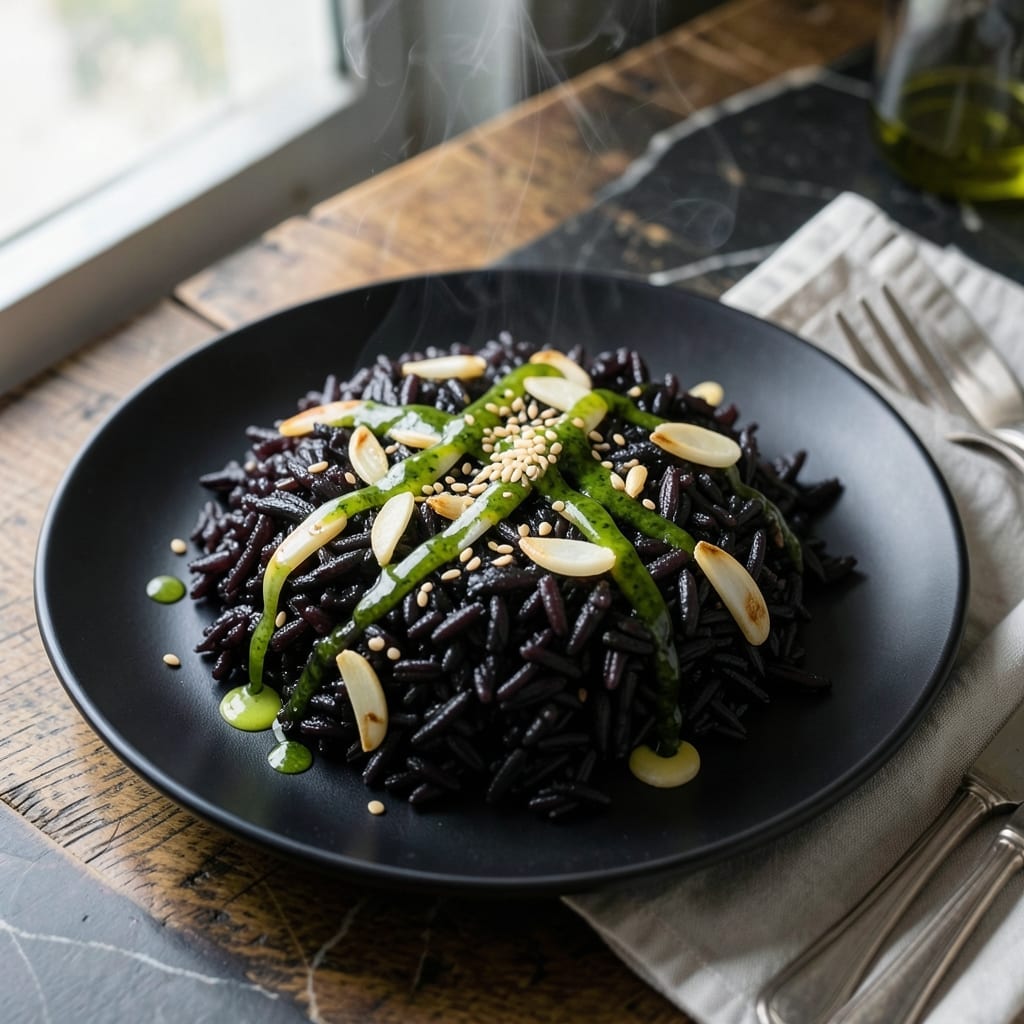
This recipe transforms the striking black rice from Lotus Foods into a side dish with deep, nutty flavor and a dramatic purple hue.
With a simple cooking method and complementary ingredients, you’ll achieve perfectly tender grains that maintain their rich color and earthy taste. The process is straightforward yet yields impressive results every time.
The final dish offers a visually stunning addition to any meal, with a texture that’s both slightly chewy and satisfyingly firm. Its unique appearance and taste elevate ordinary plates to extraordinary.
Ideal for pairing with proteins or vegetables, this creation brings elegance to your table with minimal effort.
Ingredients for Lotus Foods Forbidden Rice
Transform simple ingredients into a visually stunning side with deep, nutty flavor.
| Ingredient | Amount | Notes |
|---|---|---|
| Lotus Foods Forbidden Black Rice 🍚 | 1 ½ cups | Rinsed thoroughly before cooking |
| Water 💧 | 3 ½ cups | For cooking rice |
| Coconut Oil 🥥 | 1 tbsp | Extra-virgin for richness |
| Shallot 🧅 | 1 whole | Finely minced for aroma |
| Garlic Cloves 🧄 | 3 cloves | Minced for depth of flavor |
| Vegetable Broth 🥕 | 1 cup | Low-sodium preferred |
| Tamari or Soy Sauce 🫒 | 1 ½ tbsp | Gluten-free if needed |
| Rice Vinegar 🍚 | 1 tbsp | For bright acidity |
| Toasted Sesame Oil 🌾 | 1 tsp | For nutty finish |
| Fresh Cilantro 🌿 | ¼ cup | Chopped for garnish |
| Green Onions 🧅 | 3 whole | Thinly sliced for color |
| Sesame Seeds 🌾 | 1 tbsp | Toasted for garnish |
| Sea Salt 🧂 | ½ tsp | Adjust to taste |
The rice is the star here—Lotus Foods Forbidden Black Rice has that signature deep purple hue and earthy taste. Find it in the rice aisle at Whole Foods or Sprouts, or order online. The coconut oil adds richness without dairy (trust me, it’s worth the splurge). Rinsing the rice removes excess starch, which keeps the grains separate and vibrant.
No shallots? Red onion at half the amount works fine. Tamari is gluten-free soy sauce—San-J is a great brand. Vegetable broth can be swapped for water in a pinch, but the broth adds depth. If you’re out of rice vinegar, apple cider vinegar is a decent substitute (just use a touch less). Fresh cilantro is ideal, but dried won’t cut it here.
Cooked rice keeps in the fridge for 4-5 days in an airtight container. The flavors actually deepen overnight. Freezes well for up to 3 months—portion into bags for easy reheating. Toast sesame seeds just before serving for maximum crunch.
Why You’ll Love This Recipe
- One Pot Wonder: I toss the rice, water, and a spoon of coconut oil in a pot, add shallots and garlic, then walk away. Honestly, it’s foolproof.
- Deep, Nutty Flavor: The black rice cooks up with this rich, earthy taste that pairs perfectly with the sweetness of caramelized shallots and punchy garlic.
- Meal Prep Hero: I make a big batch on Sunday and it reheats beautifully for lunches all week—still firm, never mushy.
- Budget Stretcher: One bag of Lotus Foods Forbidden Rice feeds my family twice, and it’s cheaper than takeout. I’ll be real: that’s a win.
Step-by-Step Instructions for Forbidden Black Rice
This method ensures perfectly cooked grains with rich, nutty flavor every time.
Step 1: Rinse and Toast the Rice
Place the 1.5 cups Lotus Foods Forbidden Black Rice in a fine-mesh strainer and rinse thoroughly under cold water until the water runs clear. This removes excess starch and prevents the rice from becoming gummy. Shake the strainer gently to remove as much water as possible.
In a medium saucepan, heat the 1 tbsp Coconut Oil over medium heat. Add the drained rice and toast for 2-3 minutes, stirring constantly, until the grains become fragrant and slightly opaque. This step enhances the natural nutty flavor of the forbidden rice.
Step 2: Sauté Aromatics and Add Liquids
Add the finely minced 1 whole Shallot and 3 cloves Garlic Cloves to the saucepan with the rice. Sauté for 1-2 minutes until the shallot softens and the garlic becomes fragrant, stirring frequently to prevent burning.
Pour in the 3.5 cups Water, 1 cup Vegetable Broth, 1.5 tbsp Tamari or Soy Sauce, and 0.5 tsp Sea Salt. Stir well to combine all the ingredients and distribute the rice evenly in the liquid.
Step 3: Simmer Until Tender
Bring the mixture to a boil over high heat. Once boiling, reduce the heat to low, cover the saucepan with a tight-fitting lid, and let it simmer for 30-35 minutes. Do not lift the lid during this time, as the steam is crucial for even cooking.
After 30 minutes, check the rice. The grains should be tender but still slightly firm to the bite, with most of the liquid absorbed. If the rice is still too firm, cover and cook for another 5 minutes, then check again.
Step 4: Finish and Rest
Once the rice is tender, remove the saucepan from the heat. Stir in the 1 tbsp Rice Vinegar and 1 tsp Toasted Sesame Oil. The vinegar adds a subtle brightness, while the sesame oil delivers a rich, nutty finish. Cover the saucepan and let the rice rest for 10 minutes to allow the flavors to meld.
After resting, fluff the rice gently with a fork to separate the grains. Taste and adjust the seasoning with additional sea salt if needed.
Step 5: Garnish and Serve
Transfer the rice to a serving dish. Sprinkle the top with the 0.25 cup Fresh Cilantro, thinly sliced 3 whole Green Onions, and 1 tbsp Sesame Seeds. These garnishes add freshness, color, and a delightful crunch to the dish.
Serve immediately while warm. The forbidden rice should have a deep purple hue, tender texture, and a rich, nutty aroma that pairs beautifully with the savory and tangy notes from the seasonings.
Pro Tips For Making Lotus Foods Forbidden Rice
- Rinse the Rice: Soak Lotus Foods Forbidden Black Rice for 10 minutes before cooking, then rinse thoroughly—this removes excess starch and prevents a gummy texture. I learned this the hard way after my first batch turned into a purple-black paste.
- Toast the Aromatics: Cook minced shallot and garlic in coconut oil over medium-low heat until translucent, about 3-4 minutes. Sounds simple, but rushing this step leaves a raw, harsh flavor in the finished rice.
- Use the Right Ratio: Forbidden black rice absorbs more liquid than white rice—stick to a 1:2 rice-to-water ratio (1 cup rice to 2 cups water) to avoid undercooked or mushy grains.
- Rest Before Serving: Once cooked, let the rice sit covered for 10 minutes off the heat. This lets the grains firm up and evenly absorb any remaining moisture—my grandmother swore by this, and she was right.
Health Benefits of This Recipe
Anthocyanin Antioxidants
The deep purple hue of this rice comes from anthocyanins, powerful antioxidants that combat oxidative stress and inflammation. A ½ cup serving provides more anthocyanins than blueberries, making it a nutritional powerhouse for immune support and cellular health. 💪
Fiber-Rich Benefits
This dish offers an impressive 3 grams of fiber per serving, which supports digestive health and helps maintain steady blood sugar levels. The bran layer of forbidden rice remains intact, preserving its natural fiber content and providing long-lasting satiety.
Plant-Based Protein
With 6 grams of protein per serving, this rice is an excellent plant-based protein source. It contains all eight essential amino acids, making it a complete protein that supports muscle repair and growth, ideal for vegan and vegetarian diets.
Heart Health Support
The fiber and antioxidants in this dish work together to support cardiovascular health by reducing LDL cholesterol and improving blood vessel function. Regular consumption can contribute to lower blood pressure and reduced heart disease risk.
Mineral Powerhouse
Forbidden rice is packed with essential minerals like iron, magnesium, and zinc. A single serving provides 15% of your daily iron needs, crucial for energy production and oxygen transport in the body. 💛
Low Glycemic Impact
Despite its rich flavor, this rice has a low glycemic index, meaning it releases energy slowly. This helps prevent blood sugar spikes, making it an excellent choice for those managing diabetes or following a low-glycemic diet.
Nutrition Facts
Frequently Asked Questions
Why does the rice turn purple when cooked?
The deep color comes from natural anthocyanins in the black rice bran. These antioxidants react with water during cooking, creating the striking purple hue. No artificial dyes are used—it’s all natural!
Can I use a rice cooker instead of a saucepan?
Use the same 1:2.25 rice-to-liquid ratio and cook on the standard white rice setting. Toast the rice and aromatics separately first, then add to the cooker with liquids.
How do I store leftovers?
Keep in an airtight container in the fridge for 4-5 days. For longer storage, freeze for up to 3 months. Reheat with a splash of water to restore moisture.
What if my rice is still crunchy after cooking?
Add 2-3 tbsp water, cover, and cook for another 5-10 minutes on low. Ensure your lid fits tightly to trap steam. Undercooked rice often means insufficient liquid or heat.

- Peri Peri Rice Recipe: Spicy Portuguese One-Pot Harmony - November 6, 2026
- Mexican Flavoured Rice Recipe: Authentic Spice-Infused One-Pot Meal - November 6, 2026
- Lao Gan Ma Fried Rice Recipe: Spicy Wok-Tossed Perfection - November 6, 2026