
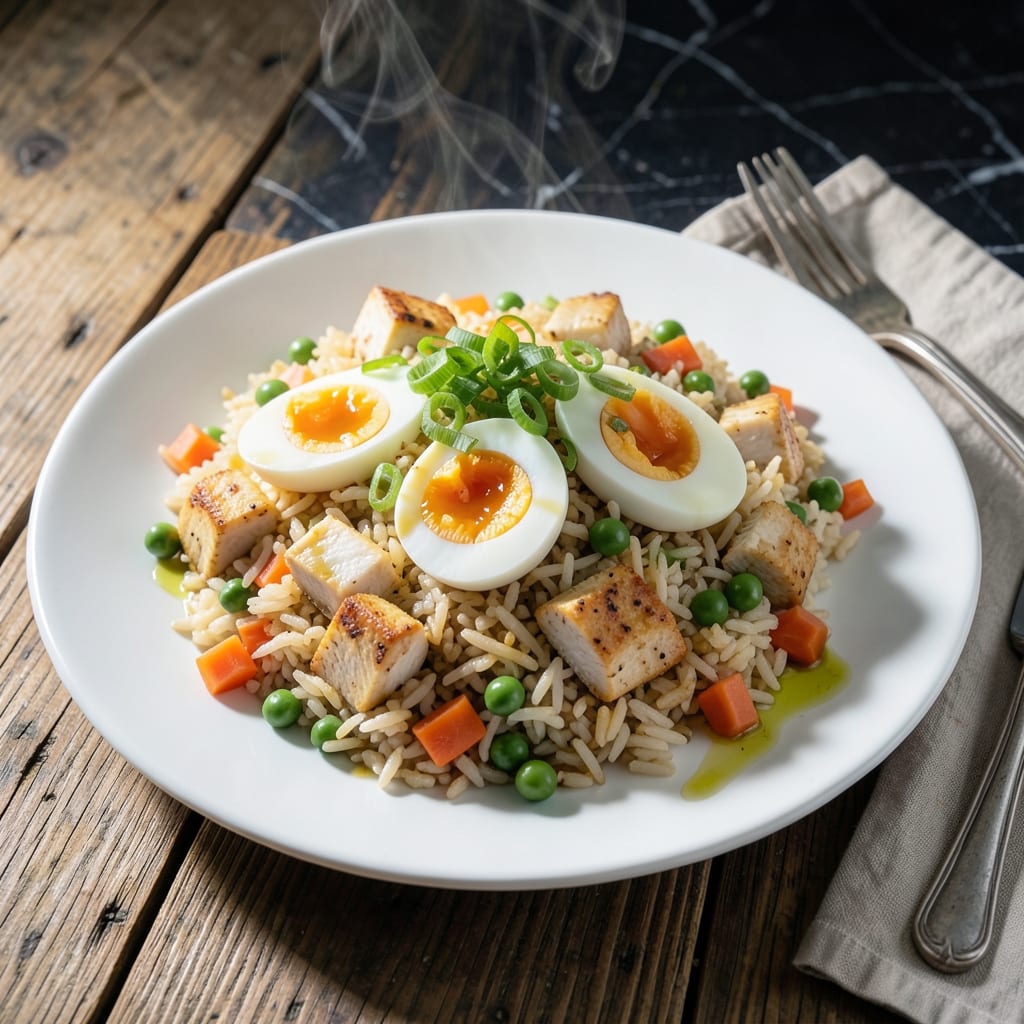
I’ve perfected a lighter take on chicken fried rice that keeps all the savory flavor without the extra fat. This version uses minimal oil and lean protein to deliver a dish that’s both satisfying and guilt-free.
The secret is high-heat cooking with a nonstick pan to achieve that classic wok-tossed texture. Every bite is packed with tender chicken, crisp vegetables, and a light soy-ginger sauce that enhances without overpowering.
What you get is a quick, one-pan meal that’s ready in under 30 minutes. The rice stays fluffy, the chicken juicy, and the vegetables retain their bright, fresh crunch.
Serve it hot for a meal that proves healthy eating doesn’t mean sacrificing taste. Here’s how to make it right.
Ingredients for Low Fat Chicken Fried Rice
Lean protein, crisp veggies, and a light sauce make this a guilt-free favorite.
| Ingredient | Amount | Notes |
|---|---|---|
| Boneless Skinless Chicken Breast 🍗 | 1 lb | Diced into small cubes |
| Cooked White Rice 🍚 | 3 cups | Day-old, chilled preferred |
| Large Eggs 🥚 | 2 whole | Lightly beaten |
| Frozen Peas and Carrots 🥕 | 1 cup | Thawed, or fresh diced |
| Green Onions 🧅 | ½ cup | Thinly sliced, whites and greens separated |
| Low-Sodium Soy Sauce 🫒 | 3 tbsp | Or tamari for gluten-free |
| Fresh Ginger 🌿 | 1 tbsp | Minced or grated |
| Garlic Cloves 🧄 | 2 cloves | Minced finely |
| Sesame Oil 🫒 | 1 tsp | Toasted, for finishing |
| Vegetable Oil 🫒 | 1 tbsp | Or cooking spray for nonstick |
| Salt 🧂 | ½ tsp | Or to taste |
| Black Pepper 🌶️ | ¼ tsp | Freshly ground preferred |
The chicken needs to be lean—boneless, skinless breasts keep this dish light. I grab mine from Costco when they’re on sale, but any grocery store will do. For the rice, day-old and chilled is key—fresh rice turns to mush in the pan. Use a good nonstick skillet (I swear by my Calphalon) to get that wok-tossed texture without extra oil.
No green onions? Substitute with diced white onion—just cook it a minute longer. Fresh ginger is ideal, but ground ginger at half the amount works in a pinch. If you’re avoiding soy, coconut aminos are a great swap. The frozen veggies can be swapped for bell peppers or broccoli (whatever’s in the freezer).
This keeps well for 3-4 days in the fridge—reheat in a skillet with a splash of water to keep it from drying out. Doesn’t freeze as well (the rice gets gummy), but leftovers taste great cold straight from the fridge.
Why You’ll Love This Recipe
- One Pan Meal: I toss everything into a single skillet—chicken, rice, veggies—and it’s done in 20 minutes flat.
- Umami Punch: The soy sauce and garlic turn simple chicken and rice into something crave-worthy, no fancy ingredients needed.
- Lunchbox Hero: I pack leftovers for work and they reheat perfectly, even the peas and carrots stay bright.
- Budget Stretcher: A pound of chicken breast and a bag of frozen veggies feed four of us for less than takeout.
Step-by-Step Instructions for Low Fat Chicken Fried Rice
This method keeps everything light and flavorful without sacrificing texture or taste.
Step 1: Cook and Season the Chicken
Heat the vegetable oil in a large nonstick skillet or wok over medium-high heat. Add the boneless skinless chicken breast and cook for 5-6 minutes, stirring occasionally, until the pieces are lightly browned and cooked through.
Season with salt and black pepper as it cooks. I like to break up any larger chunks with my spatula to ensure even cooking. The chicken should be just cooked with no pink remaining—this prevents it from drying out later when we combine everything.
Step 2: Scramble the Eggs and Aromatics
Push the chicken to one side of the pan and add the lightly beaten eggs. Scramble quickly for 1-2 minutes until just set but still slightly soft—overcooking now makes them rubbery later.
Add the minced garlic, fresh ginger, and the white parts of the green onions. Stir everything together and cook for another 30 seconds until the aromatics become fragrant. You’ll smell that unmistakable ginger-garlic scent when it’s ready.
Step 3: Combine Rice and Vegetables
Add the cooked white rice, breaking up any clumps with your spatula. Stir-fry for 2-3 minutes until the rice heats through and starts to look slightly dry—this prevents soggy fried rice.
Incorporate the frozen peas and carrots and the low-sodium soy sauce. Toss everything together and cook for another 2 minutes until the vegetables are heated through and the rice takes on a light golden color.
Step 4: Finish and Garnish
Remove from heat and drizzle with the sesame oil. Toss once more to distribute the oil evenly—it adds a nutty depth that ties everything together.
Garnish with the green parts of the green onions. The residual heat will soften them slightly while keeping their fresh bite. Serve immediately while hot—the texture is best straight from the pan.
Pro Tips For Making Low Fat Chicken Fried Rice
- Chill the Rice: Spread your cooked white rice on a tray and refrigerate for at least 30 minutes before stir-frying—this dries it out so it fries up fluffy instead of mushy. I learned this the hard way after too many soggy batches.
- Pre-Cook the Chicken: Dice the boneless skinless chicken breast into small, even pieces and cook it first in a nonstick pan with a quick spray of oil, then set aside. This prevents overcrowding and ensures it cooks through without steaming the veggies.
- Skip the Thaw: Toss the frozen peas and carrots straight into the hot wok—they’ll warm through in under a minute while keeping their texture. Thawing them first just makes them limp.
- Eggs Last: Push everything to one side of the pan, add a little more oil spray, then scramble the beaten eggs in the empty space before mixing. This keeps them tender and distinct instead of rubbery from overcooking.
Best Sauces and Condiments for low fat chicken fried rice
Classic Soy-Ginger Sauce
I always start with a light sauce of 3 tbsp low-sodium soy sauce and 1 tbsp minced ginger for that authentic flavor base. The soy sauce adds umami without extra fat, while ginger brings warmth. 💛
Sweet Chili Topping
For a touch of sweetness, I drizzle 1-2 tbsp sweet chili sauce over each serving. It pairs beautifully with the savory chicken and rice. Look for Mae Ploy brand—it’s my go-to for consistent quality.
Sesame Oil Finish
A final drizzle of 1 tsp toasted sesame oil adds rich, nutty depth. Use it sparingly—it’s potent! I always add this off-heat to preserve its delicate flavor.
Sriracha Kick
If you love heat, keep sriracha on the table for customizing. Start with ½ tsp per serving and adjust to taste. The vinegar in it cuts through the richness nicely.
Fresh Lime Squeeze
A squeeze of fresh lime juice brightens all the flavors. I add about 1 tsp per bowl right before serving. It’s my secret for making the dish taste extra fresh.
Extra Garlic Boost
For garlic lovers, I keep minced garlic on hand to sprinkle over the top. Just ½ tsp per serving adds a punch without overpowering the other flavors. 🌟
Nutrition Facts
Frequently Asked Questions
Can I use brown rice instead of white?
Yes! Brown rice works well but requires 1 extra minute of stir-frying to soften. Use day-old, chilled rice for best texture. It adds a nutty flavor and extra fiber to your dish.
How do I prevent the rice from getting mushy?
Always use chilled, day-old rice and break up clumps before cooking. High heat and constant stirring for 2-3 minutes keeps grains separate. Fresh rice releases too much starch.
What can I substitute for the chicken?
Try shrimp (cook 2-3 minutes), tofu (press and cube first), or extra veggies. For meat lovers, lean turkey works perfectly with the same cooking time.
Can I make this ahead of time?
Store in an airtight container for up to 3 days. Reheat in a skillet with 1 tbsp water to restore moisture. Avoid freezing as rice texture suffers.

- Jollof Rice Sauce Recipe: West African Tomato and Spice Infusion - September 25, 2026
- Japanese Rice Soup Recipe: Umami-Rich Comfort in a Bowl - September 25, 2026
- Homemade Cream Of Rice Recipe: Silk-Smooth Breakfast in Minutes - September 25, 2026