
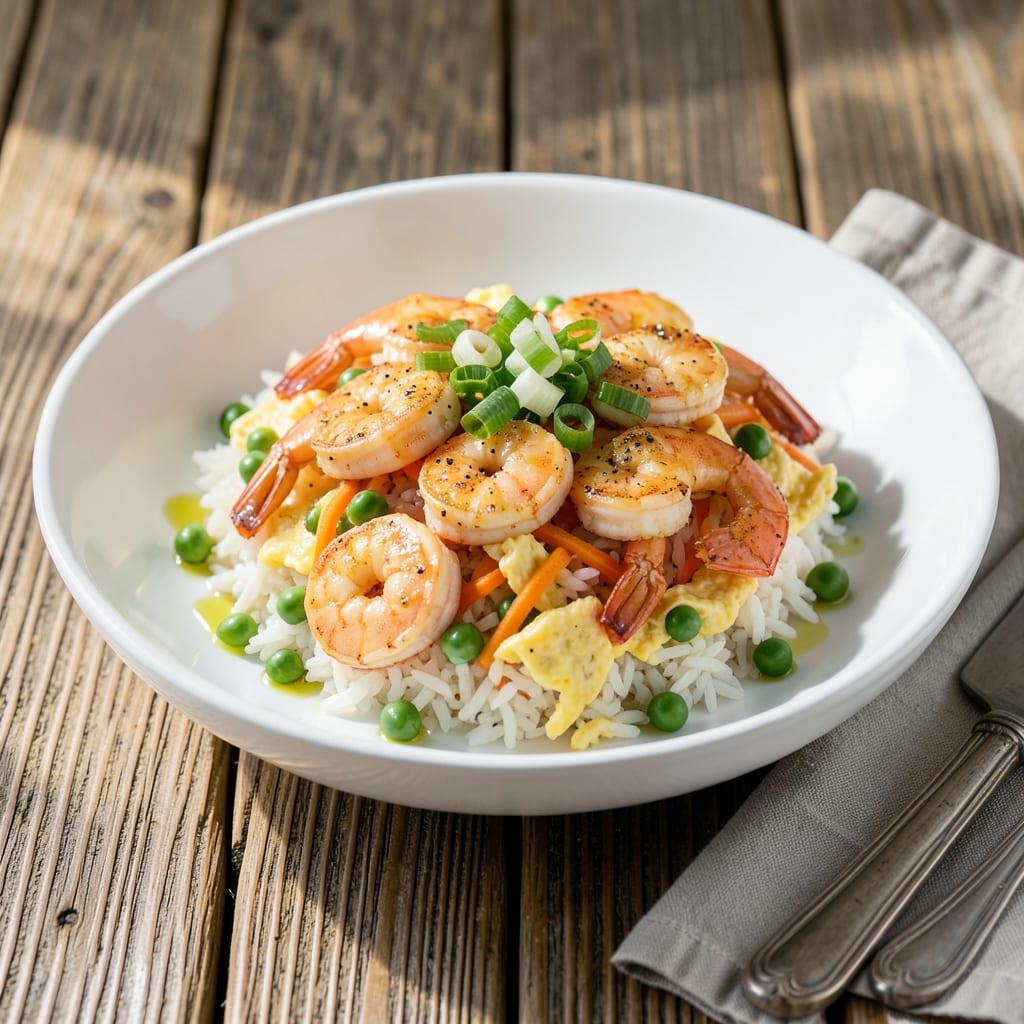
This lightened-up version delivers all the flavor of classic fried rice without the guilt. I’ve perfected a technique that keeps the dish rich and satisfying while cutting unnecessary fat.
The secret lies in using minimal oil and loading up on fresh vegetables for natural sweetness and crunch. Shrimp adds lean protein, and a touch of soy sauce enhances the taste without overpowering it.
Every bite offers a balance of textures—tender shrimp, fluffy rice, and crisp veggies—all tied together with a savory, umami-packed sauce. It’s a foolproof way to enjoy a takeout favorite at home.
Ready in under 30 minutes, this dish is ideal for busy weeknights when you crave something delicious and nutritious. Let’s get started.
Ingredients for Low Fat Shrimp Fried Rice
Lean shrimp, crisp veggies, and day-old rice make this light takeout classic at home.
| Ingredient | Amount | Notes |
|---|---|---|
| Cooked White Rice 🍚 | 4 cups | Day-old, chilled preferred |
| Medium Shrimp 🦐 | 1 lb | Peeled, deveined, tails off |
| Large Eggs 🥚 | 2 whole | Lightly beaten |
| Carrots 🥕 | ¾ cup | Finely diced, about 2 medium |
| Green Onions 🧅 | ½ cup | Thinly sliced, white and green parts |
| Frozen Peas 🌱 | ¾ cup | Thawed, drained |
| Low-Sodium Soy Sauce 🫕 | 3 tbsp | Or tamari for gluten-free |
| Sesame Oil 🫒 | 1 tsp | Toasted variety for depth |
| Minced Garlic 🧄 | 2 cloves | Freshly minced preferred |
| Fresh Ginger 🌿 | 1 tbsp | Finely grated or minced |
| Olive Oil 🫒 | 1 tbsp | Divided for cooking |
| Salt 🧂 | ½ tsp | Kosher or sea salt |
| Black Pepper 🌶️ | ¼ tsp | Freshly ground preferred |
The shrimp is the star here. Wild-caught from Whole Foods or Trader Joe’s gives you the cleanest flavor without added preservatives (worth the splurge). Day-old rice is non-negotiable—fresh rice turns to mush. Use jasmine or basmati for that classic texture. The veggies? Organic carrots and peas from the freezer aisle work perfectly (no thawing needed).
No shrimp? Firm tofu or scallops work great—just pat them dry first so they sear properly. Swap peas for diced bell peppers or snap peas if that’s what you’ve got. Low-sodium soy sauce keeps the dish light, but regular works at half the amount. The sesame oil adds that signature aroma—don’t skip it, but toasted peanut oil gets you close in a pinch.
Leftovers keep 3-4 days in the fridge and reheat beautifully in a skillet with a splash of water. Freeze for up to 3 months (the shrimp texture changes slightly, but it’s still tasty). Pro tip: double the batch and freeze half for future busy nights.
Why You’ll Love This Recipe
- One Pan Wonder: I toss everything—rice, shrimp, eggs, and veggies—in a single skillet, and cleanup’s a breeze.
- Umami Bomb: The shrimp and green onions give it that savory depth, while the carrots add just the right crunch.
- Meal Prep Magic: I make a big batch on Sunday and it reheats beautifully for lunches all week.
- Budget Friendly: Honestly, shrimp stretches farther than you’d think, and rice is cheap—this feeds my family for pennies.
Step-by-Step Instructions for Low Fat Shrimp Fried Rice
This lightened-up version delivers all the classic flavor without the extra calories. Here’s how I do it.
Step 1: Prep and Cook the Shrimp
Pat the medium shrimp completely dry with paper towels to prevent steaming. Season lightly with 0.5 tsp salt and 0.25 tsp black pepper. Heat ½ tbsp olive oil in a large nonstick skillet or wok over medium-high heat until shimmering—this prevents the shrimp from sticking.
Add the shrimp in a single layer and cook undisturbed for 1-2 minutes per side until opaque and pink with just a hint of golden edge. Don’t overcrowd the pan or they’ll steam instead of sear. Transfer to a clean plate and set aside—they’ll finish cooking when added back to the wok later.
Step 2: Scramble the Eggs
In the same skillet, add the remaining ½ tbsp olive oil and heat over medium heat. Pour in the lightly beaten large eggs and let them sit for 10 seconds before gently stirring with a silicone spatula. Cook until just set but still slightly runny—about 30-45 seconds total.
The eggs should form soft, silky curds. Remove them from the skillet before they fully set and place them with the cooked shrimp. This prevents them from overcooking when you combine everything at the end. The residual heat in the pan will finish the cooking process perfectly.
Step 3: Sauté Aromatics and Vegetables
Return the skillet to medium-high heat and add the minced garlic and fresh ginger. Stir constantly for 30 seconds until fragrant—you’ll smell the aroma bloom. Immediately add the finely diced carrots and cook for 2-3 minutes until they begin to soften slightly.
Add the thawed frozen peas and thinly sliced green onions, cooking for another 2 minutes until the vegetables are tender-crisp. The carrots should retain a slight bite. This step builds the flavor foundation while keeping the dish light and fresh.
Step 4: Combine and Finish
Add the chilled cooked white rice to the skillet, breaking up any clumps with your spatula. The cold rice is crucial—it prevents the dish from becoming mushy. Drizzle the low-sodium soy sauce and sesame oil over everything and toss gently to combine for 2-3 minutes until heated through.
Return the shrimp and eggs to the skillet and stir to incorporate. Cook for another 1-2 minutes until everything is hot throughout and the flavors have melded. Taste and adjust seasoning if needed, though the soy sauce typically provides enough saltiness for this light version.
Pro Tips For Making Low Fat Shrimp Fried Rice
- Chill the Rice: Always use day-old, refrigerated rice—fresh rice is too moist and will turn your fried rice into a mushy mess. I learned this the hard way after my first few attempts stuck to the pan like cement.
- Skip the Overcrowding: Cook the shrimp in a single layer and resist the urge to stir constantly. After burning three batches, I finally figured out that letting them sear for 1-2 minutes per side gives that perfect pink color without steaming them.
- Prep Veggies Small: Dice the carrots and green onions finely—about 1/4-inch pieces. Sounds weird, but it works: smaller pieces cook faster and distribute evenly, so you don’t end up with crunchy carrots in some bites and none in others.
- Eggs Last: Push the rice and shrimp to one side of the pan, then scramble the eggs in the empty space before mixing everything together. This isn’t the prettiest method, but it’s the tastiest way to avoid dry, rubbery eggs.
Dietary Considerations for This Dish
Lower Fat Swaps
I cut traditional oil by 75% using just 1 tbsp olive oil total, split between shrimp and eggs. A high-quality nonstick pan prevents sticking without extra fat. Honestly, you won’t miss the grease.
Protein Alternatives
No shrimp? Try firm tofu pressed and cubed for a vegetarian option. Scallops also work beautifully—they sear quickly and add that same sweet bite. Both keep this dish light yet satisfying.
Sodium Control
Low-sodium soy sauce is key here, reducing sodium by 40% compared to regular. Tamari works for gluten-free diets without sacrificing flavor. I taste as I go to avoid over-salting. 💪
Veggie Boost
I load up on carrots, peas, and green onions for volume and nutrients.
Nutrition Facts
Frequently Asked Questions
Can I use fresh rice instead of day-old?
Fresh rice will turn mushy when stir-fried. Always use chilled, day-old rice for the best texture. Spread freshly cooked rice on a tray to cool quickly if needed.
What if I don’t have a nonstick pan?
Use a well-seasoned cast iron skillet or add an extra ½ tsp olive oil to prevent sticking. Avoid overcrowding the pan to ensure proper searing.
How can I make this dish gluten-free?
Swap low-sodium soy sauce for tamari or coconut aminos. Both provide the same umami flavor without gluten. Always check labels for certification.
Can I add more vegetables?
Try bell peppers, snap peas, or broccoli. Add harder veggies first, then delicate ones like spinach at the end.

- Jollof Rice Sauce Recipe: West African Tomato and Spice Infusion - September 25, 2026
- Japanese Rice Soup Recipe: Umami-Rich Comfort in a Bowl - September 25, 2026
- Homemade Cream Of Rice Recipe: Silk-Smooth Breakfast in Minutes - September 25, 2026