
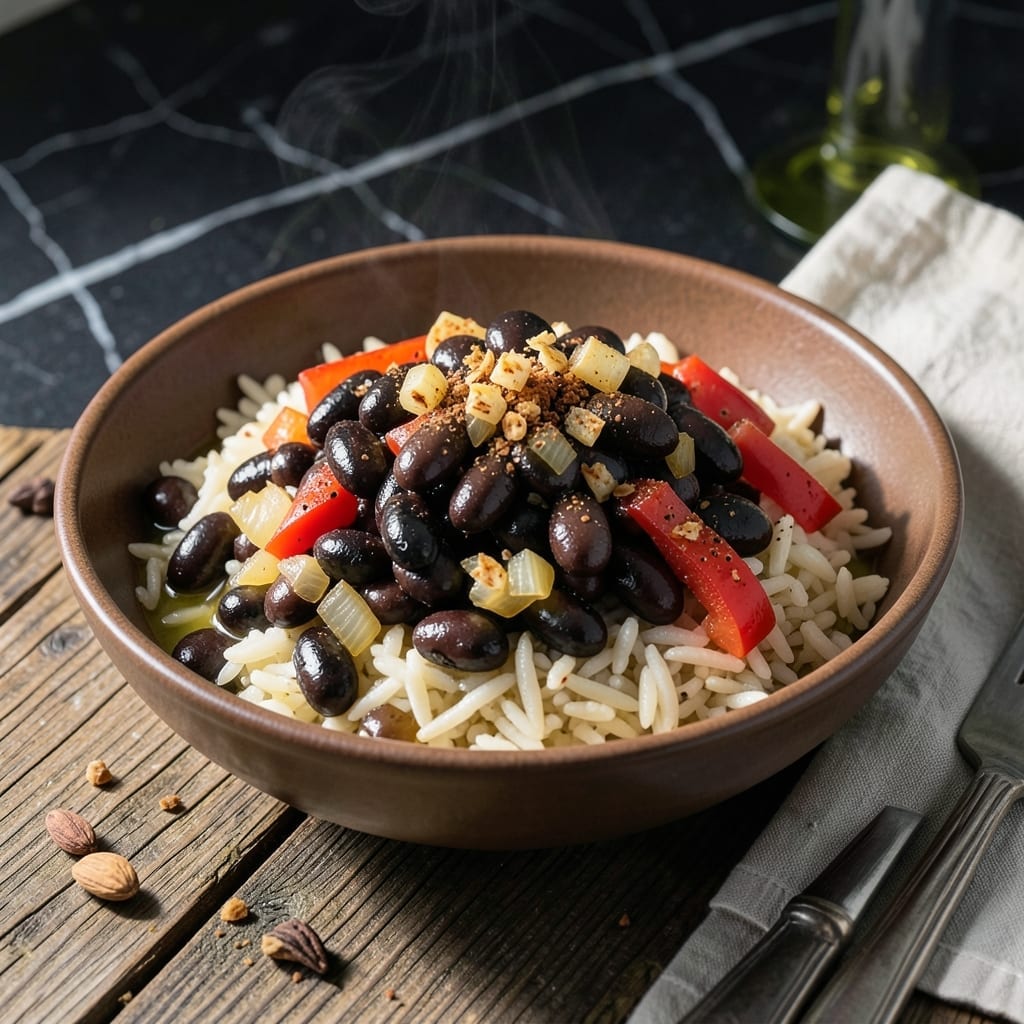
This low-sodium take on a classic side proves you don’t need salt to pack in bold flavor. I developed this method to keep seasoning rich while cutting unnecessary sodium by over half.
The key is building layers with garlic, onions, and fresh herbs instead of salt. A splash of acid from lime or vinegar brightens the dish naturally. Cooking the rice in bean broth deepens the taste without adding sodium.
You’ll get tender beans, fluffy rice, and a dish that’s as satisfying as it is healthy. Every bite delivers hearty texture and vibrant flavor, proving low-sodium doesn’t mean low on taste.
Ready in 30 minutes, this pairs perfectly with grilled chicken or fish. Here’s how to make it.
Ingredients for Low Sodium Beans and Rice
Bold flavors come from fresh ingredients, not salt. Simple, wholesome, and satisfying.
| Ingredient | Amount | Notes |
|---|---|---|
| Dried Black Beans 🫘 | 1 cup | Rinsed and picked over |
| Long-Grain White Rice 🍚 | 1 cup | Rinsed until water runs clear |
| Low-Sodium Vegetable Broth 🥣 | 3 cups | For cooking rice and beans |
| Yellow Onion 🧅 | 1 whole | Finely diced for base flavor |
| Garlic Cloves 🧄 | 4 cloves | Minced for depth of flavor |
| Red Bell Pepper 🌶️ | 1 whole | Diced for color and sweetness |
| Fresh Cilantro 🌿 | ½ cup | Chopped for garnish and aroma |
| Lime 🍋 | 1 whole | Juiced for acidity and brightness |
| Ground Cumin 🌿 | 1 tsp | Toasted for warmth and earthiness |
| Smoked Paprika 🌶️ | 1 tsp | For subtle smoky depth |
| Olive Oil 🫒 | 2 tbsp | Extra-virgin for sautéing |
| Bay Leaf 🍃 | 1 whole | Dried, for aromatic infusion |
| Apple Cider Vinegar 💧 | 1 tbsp | For tangy brightness |
The beans and rice are the foundation, so source high-quality dried beans—look for brands like Goya or Rancho Gordo with no added salt. Fresh cilantro and lime are non-negotiable (the grocery store ones work fine). For the broth, Imagine or Pacific Foods have reliable low-sodium options. I always grab extra cilantro—half goes in the dish, half gets sprinkled on top at the end.
No fresh cilantro? Flat-leaf parsley works in a pinch (though the flavor’s different). Swap red bell pepper for green or yellow if that’s what’s on hand. Out of apple cider vinegar? White vinegar or extra lime juice keeps the acidity. For heat, a pinch of cayenne or red pepper flakes adds a kick without sodium. The cumin and smoked paprika are key—don’t skip them.
Leftovers keep well, honestly tasting better after a night in the fridge. Store in an airtight container for up to 5 days, or freeze for 3 months. Reheat with a splash of water or broth to keep it moist.
Why You’ll Love This Recipe
- Set It and Forget It: Honestly, I just dump the beans, rice, and broth in a pot and let it simmer while I do something else.
- Garlic-Infused Comfort: The garlic and onion cook into the rice so every bite tastes rich without needing extra salt.
- Meal Prep Hero: I make a big batch on Sunday and eat it all week—tastes even better the next day.
- Pocketbook Friendly: Dried beans and rice stretch a dollar further than any takeout I’ve tried.
Step-by-Step Instructions for Low Sodium Beans and Rice
Here’s how to build bold flavors without relying on excess salt—simple, satisfying, and ready quickly.
Step 1: Sauté the Aromatic Base
Heat the 2 tbsp olive oil in a large pot over medium heat. Add the finely diced yellow onion and cook for 4-5 minutes until it turns translucent and soft, stirring occasionally to prevent browning.
Stir in the diced red bell pepper and minced 4 cloves garlic cloves, then cook for another 2-3 minutes until the garlic is fragrant and the pepper begins to soften. This base builds depth, so don’t rush—let the flavors meld.
Step 2: Toast the Spices and Add Beans
Add the 1 tsp ground cumin and 1 tsp smoked paprika to the pot and stir for 30 seconds until toasted and aromatic. Toasting the spices wakes up their oils and enhances their warmth.
Immediately add the rinsed 1 cup dried black beans, the 1 whole bay leaf, and the 3 cups low-sodium vegetable broth. Bring to a boil, then reduce heat to low and let it simmer for 15 minutes until the beans are just tender.
Step 3: Cook the Rice and Combine
In a separate saucepan, bring the remaining 1.5 cups low-sodium vegetable broth (from the 3 cups total) to a boil. Stir in the rinsed 1 cup long-grain white rice, cover, and reduce heat to low. Cook for 15-18 minutes until the rice is tender and the liquid is absorbed.
While the rice finishes, stir the 1 tbsp apple cider vinegar into the beans. This adds a bright tang that balances the earthy spices. Once the rice is done, fluff it with a fork and fold it into the bean mixture, combining everything gently.
Step 4: Finish and Garnish
Remove the pot from heat and discard the bay leaf. Squeeze the juice from the lime over the dish and stir to distribute the citrus evenly. Taste and adjust seasoning if needed—though the vinegar and lime should provide enough brightness.
Finally, stir in the chopped 0.5 cup fresh cilantro, reserving a small handful for garnish. The cilantro adds a fresh, herbal note that ties everything together. Serve warm, topped with the remaining cilantro for a pop of color and aroma.
Pro Tips For Making Low Sodium Beans And Rice
- Soak the Beans: I learned this the hard way—dried black beans need at least 4 hours in cold water to soften properly, or they’ll stay tough no matter how long you cook them.
- Sauté Aromatics First: Cook the diced yellow onion and minced garlic in a little oil until soft before adding broth—it builds a real depth of flavor without extra salt.
- Skip the Salt: Resist the urge to season the broth early; low-sodium vegetable broth already has enough, and you can always adjust at the end with a pinch of salt if needed.
- Use a 2:1 Ratio: For perfectly cooked rice, use 2 parts low-sodium broth to 1 part long-grain white rice—measured by volume—and let it simmer covered for 18 minutes, no peeking.
Storing and Reheating This Dish
Refrigerator Storage
Let this dish cool for no more than 2 hours before transferring to airtight containers. I use glass Pyrex with snap-on lids. Store at 40°F or below for up to 5 days. The flavors actually deepen as the spices meld overnight. ❄️
Freezer Storage
Portion into freezer-safe containers or heavy-duty quart-size bags. Squeeze out excess air to prevent freezer burn. Label with the date—it keeps well for up to 3 months. I prefer flat bags for efficient stacking.
Stovetop Reheating
Transfer to a saucepan with ¼ cup water or low-sodium broth to prevent sticking. Heat over medium-low for 8-10 minutes, stirring occasionally. Add a splash more liquid if it looks dry. This method restores the best texture. 🔥
Microwave Reheating
Place a single portion in a microwave-safe dish, cover with a damp paper towel, and heat on 70% power for 2-3 minutes. Stir, then continue in 30-second intervals until reaching 165°F.
Make-Ahead Tip
This dish tastes even better the next day. Prepare the full recipe, let it cool, and refrigerate. The rice absorbs the bean broth beautifully, making leftovers a treat. I always make a double batch for easy lunches.
Nutrition Facts
Frequently Asked Questions
Can I use canned beans instead of dried?
Yes, but choose no-salt-added or low-sodium canned beans. Rinse them thoroughly to remove excess sodium. They’ll cook faster—just add them after the spices toast, then simmer for 5-10 minutes to blend flavors.
What if my dish tastes bland without salt?
Boost flavor with a pinch of black pepper or a dash of hot sauce. The lime juice and vinegar in the recipe already add brightness, so taste before adjusting. Fresh herbs like cilantro also enhance the dish.
Can I make this in a rice cooker?
Sauté the aromatics and spices in a pan first, then transfer everything to the rice cooker. Use the same liquid ratio, and cook on the standard setting. It’s a hands-off way to get perfect results.
How do I know when the beans are done?
Taste a bean—it should be tender but not mushy. If they’re still firm, simmer for another 5 minutes and check again. Avoid overcooking, as they’ll soften more when mixed with the rice.

- Lump Rice Recipe Sri Lanka: Traditional Island-Style Texture - November 4, 2026
- Laos Sticky Rice Recipe: Traditional Steamed Perfection - November 4, 2026
- Magic Rice Recipe: One-Pot Aromatic Wonder - November 4, 2026