
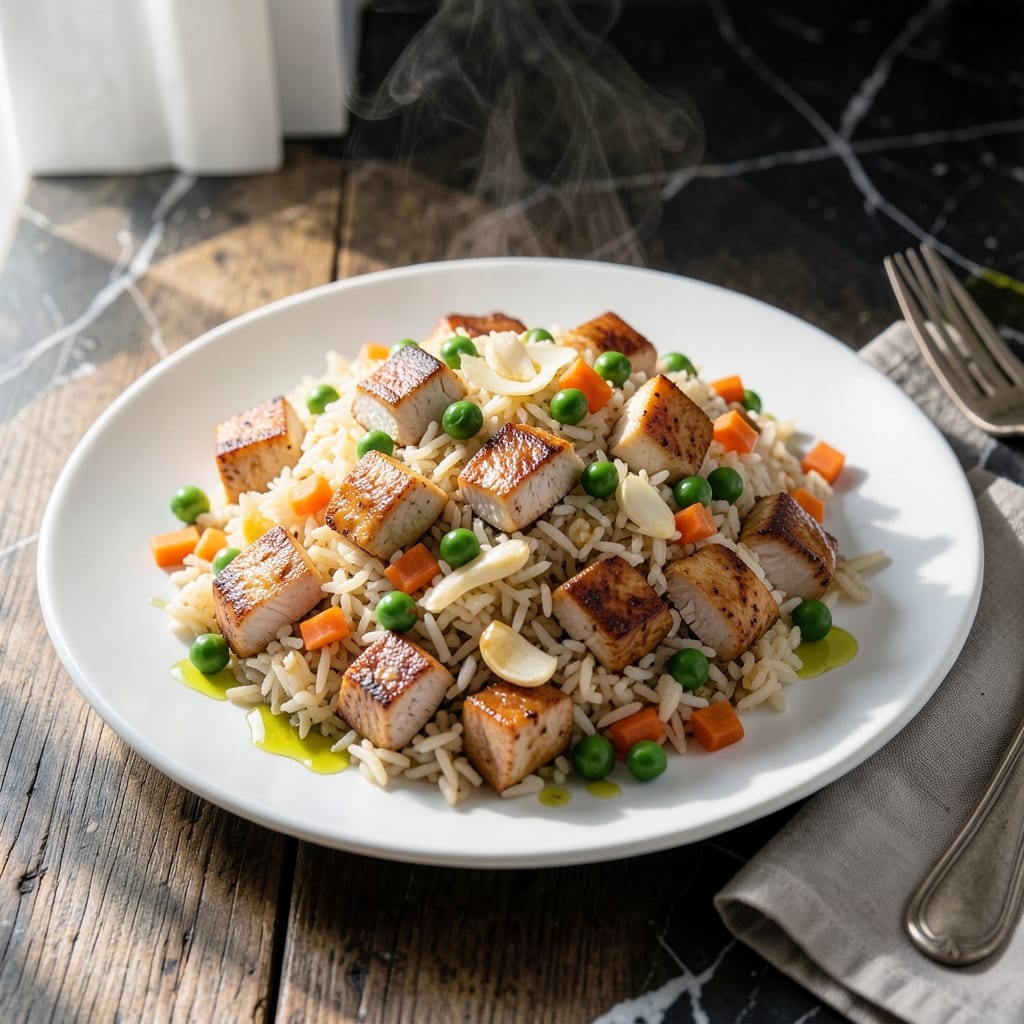
As a pitmaster who values bold flavors, I’ve refined this fried rice to deliver savory depth without excess salt. The secret lies in using low-sodium soy sauce and boosting umami with fresh ginger and garlic.
This dish comes together in 20 minutes with simple ingredients, making it a practical weeknight solution. High heat and quick cooking preserve the texture of each component, from tender chicken to crisp vegetables.
What emerges is a vibrant plate where every bite bursts with natural flavor—not sodium. The rice stays light and fluffy, while the chicken retains its juiciness, proving that low-sodium doesn’t mean low on taste.
Perfect for those monitoring their intake or anyone who loves restaurant-quality fried rice at home. Here’s how to make it right.
Ingredients for Low Sodium Chicken Fried Rice
Restaurant-quality fried rice starts with these carefully selected low-sodium ingredients for bold, savory flavor.
| Ingredient | Amount | Notes |
|---|---|---|
| Boneless Skinless Chicken Breast 🍗 | 1 lb | Diced into 1/2-inch pieces |
| Cooked White Rice 🍚 | 4 cups | Day-old, chilled preferred |
| Low-Sodium Soy Sauce 🫒 | 2 tbsp | Tamari for gluten-free option |
| Fresh Ginger Root 🌿 | 1 tbsp | Finely grated or minced |
| Garlic Cloves 🧄 | 3 cloves | Minced for maximum flavor |
| Frozen Peas and Carrots Mix 🥕 | 1 cup | Thawed before cooking |
| Large Eggs 🥚 | 2 whole | Lightly beaten for scrambling |
| Green Onions 🧅 | ½ cup | Thinly sliced, green parts only |
| Sesame Oil 🫒 | 1 tsp | Toasted variety for aroma |
| Neutral Cooking Oil 🫒 | 2 tbsp | Avocado or vegetable oil |
| White Pepper 🌶️ | ½ tsp | Freshly ground preferred |
| Granulated Garlic 🧄 | ¼ tsp | Optional for extra depth |
The soy sauce is critical here. Kikkoman Low-Sodium is widely available and consistent, but San-J Tamari offers a gluten-free alternative with excellent umami. For the chicken, air-chilled breasts from Whole Foods or Trader Joe’s have superior texture and flavor. Fresh ginger and garlic are non-negotiable—pre-minced versions lack the vibrant punch needed to compensate for reduced sodium. Day-old rice (the good stuff, not the pre-shredded kind) absorbs flavors better without turning mushy.
Need a swap? Tofu at 1:1 weight replaces chicken beautifully—press and cube it first. No fresh ginger? Ground ginger at one-third the amount works, but fresh is noticeably brighter. For extra umami without salt, add 1 tsp mushroom powder (find it at Asian markets). Frozen vegetables can be any mix—just avoid watery ones like zucchini. The sesame oil can be skipped, but it adds that final aromatic touch worth the extra minute.
Cooked rice keeps in the fridge for 4-5 days—perfect for meal prep. The dish itself reheats well for 3-4 days but loses texture after freezing. Store leftovers in an airtight container. For best results, undercook the rice slightly if making it fresh—it’ll finish perfectly during the high-heat stir-fry.
Why You’ll Love This Recipe
- 20-Minute Meal: I can get this from fridge to table faster than takeout arrives—just chop, stir-fry, and serve.
- Ginger-Garlic Punch: The fresh ginger and garlic hit different with low-sodium soy sauce, making every bite ridiculously good without the salt overload.
- Meal Prep MVP: Honestly, it reheats like a dream and stays tasty for days, so I batch-cook it every Sunday.
Step-by-Step Instructions for Low Sodium Chicken Fried Rice
Master the wok technique for perfectly textured rice with bold, balanced flavors.
Step 1: Prepare and Cook the Chicken
Heat 1 tablespoon neutral cooking oil in a large wok or skillet over medium-high heat. Add the diced 1 lb boneless skinless chicken breast and cook for 4-5 minutes, stirring occasionally, until the pieces are opaque and lightly browned.
Season the chicken with 0.25 tsp granulated garlic and half the 0.5 tsp white pepper as it cooks. Transfer the cooked chicken to a plate and set aside. This initial cooking ensures the chicken stays tender and absorbs the subsequent flavors without overcooking.
Step 2: Scramble the Eggs and Sauté the Aromatics
In the same wok, add the remaining 1 tablespoon neutral cooking oil. Pour in the 2 whole large eggs and scramble quickly with a spatula until just set but still slightly runny. Remove the eggs and combine with the chicken.
Add the minced 3 cloves garlic cloves and grated 1 tbsp fresh ginger root to the wok. Sauté for 30-45 seconds until fragrant but not browned. These aromatics form the flavor base, so avoid burning them by keeping the heat moderate and stirring constantly.
Step 3: Combine Rice and Vegetables
Increase the heat to high and add the 4 cups cooked white rice, breaking up any clumps with your spatula. Stir-fry for 2-3 minutes until the rice is hot and slightly toasted.
Add the thawed 1 cup frozen peas and carrots mix and cook for an additional 2 minutes, stirring continuously. The vegetables should be tender-crisp and evenly distributed throughout the rice. Using day-old rice prevents the dish from becoming mushy, as fresh rice contains excess moisture.
Step 4: Finish with Sauce and Garnish
Return the chicken and eggs to the wok. Drizzle the 2 tbsp low-sodium soy sauce and 1 tsp sesame oil evenly over the mixture. Stir-fry for 1-2 minutes until everything is well coated and heated through.
Remove from heat and stir in the remaining 0.5 tsp white pepper and 0.5 cup green onions. The green onions should retain their vibrant color and slight crunch, adding freshness to each bite. Serve immediately while hot for the best texture and flavor.
Pro Tips For Making Low Sodium Chicken Fried Rice
- Chill the Rice: Use day-old, refrigerated white rice—fresh rice turns mushy. I learned this the hard way after ending up with a sticky, sad pan of fried rice.
- Prep Chicken Small: Cut boneless chicken breast into ½-inch pieces so it cooks through in 2-3 minutes. Any larger and you’ll either undercook or over-brown the edges.
- Skip the Overcrowding: Cook chicken in batches if needed; too much in the pan steams instead of searing. After burning three batches, I finally figured out the magic of space.
- Bloom Aromatics First: Sauté minced ginger and garlic in oil for 30 seconds until fragrant before adding anything else—this builds flavor without extra sodium. Sounds weird, but it works.
Storing and Reheating This Recipe
Refrigerator Storage
Let this dish cool for no more than 2 hours before transferring to airtight containers. Store in the fridge at 40°F or below for up to 3-4 days. The flavors will meld beautifully overnight. ❄️
Freezer Storage
For longer storage, portion into quart-size freezer bags, squeeze out excess air, and freeze flat for up to 2 months. I recommend labeling with the date—it’s easy to forget! Thaw overnight in the fridge before reheating.
Stovetop Reheating
This is my preferred method for maintaining texture. Heat 1 tablespoon neutral cooking oil in a wok or skillet over medium heat. Add the fried rice and stir-fry for 3-4 minutes, adding 1-2 tablespoons water if needed to prevent drying.
Microwave Reheating
For quick meals, spread the rice in a microwave-safe dish and cover with a damp paper towel. Heat on 50% power for 1-2 minutes, stir, then continue in 30-second intervals until reaching 165°F. 🔥
Texture Revival Tip
If the rice seems dry after storage, sprinkle 1 teaspoon water over each portion before reheating. The steam will help restore the grains’ fluffiness. I also like to garnish with fresh green onions after reheating for a pop of color.
Nutrition Facts
Frequently Asked Questions
Can I use fresh rice instead of day-old?
Fresh rice works but may turn mushy. Spread it on a tray to cool and dry slightly before using. Day-old is ideal for that perfect separate grain texture.
What’s the best oil for high-heat cooking?
Use avocado oil or refined coconut oil with a high smoke point. Avoid olive oil—it burns at stir-fry temperatures.
How can I add more flavor without salt?
Boost umami with 1 tsp mushroom powder or extra fresh ginger. A splash of rice vinegar adds brightness too.
Can I make this gluten-free?
Swap the soy sauce for tamari or coconut aminos. Verify all other ingredients are certified gluten-free.

- Jollof Rice Sauce Recipe: West African Tomato and Spice Infusion - September 25, 2026
- Japanese Rice Soup Recipe: Umami-Rich Comfort in a Bowl - September 25, 2026
- Homemade Cream Of Rice Recipe: Silk-Smooth Breakfast in Minutes - September 25, 2026