
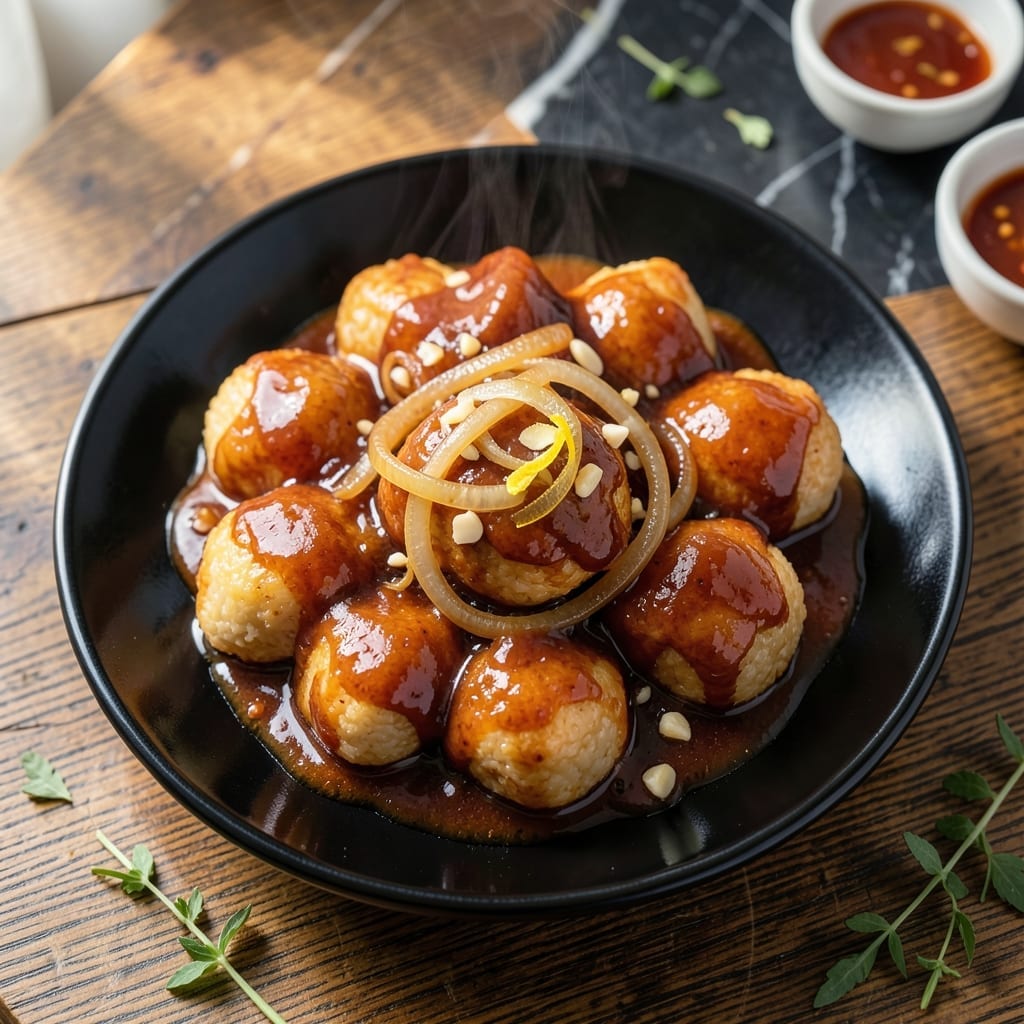
There’s a reason Korean rice cakes have captured hearts worldwide—this dish delivers a perfect balance of chewy texture and bold flavors. I’ve refined this method to match the authenticity you’d find in Seoul’s street markets.
The secret lies in the sauce, where sweet, spicy, and savory elements come together in just 20 minutes. Each bite offers a satisfying bounce, while the glossy glaze clings beautifully to the rice cakes.
What makes this version special is its simplicity. No complicated techniques—just fresh ingredients and a straightforward process that guarantees restaurant-quality results every time.
Serve it as a main or alongside your favorite proteins. This is Korean comfort food at its finest.
Ingredients for Maangchi Rice Cake
Pantry staples meet a few Korean essentials for restaurant-quality comfort food at home.
| Ingredient | Amount | Notes |
|---|---|---|
| Korean Rice Cakes 🍙 | 1 lb | Cylindrical tteok preferred |
| Gochujang 🌶️ | 3 tbsp | Korean red pepper paste |
| Soy Sauce 🫒 | 2 tbsp | Low-sodium preferred |
| Brown Sugar 🍯 | 2 tbsp | Packed, for sweetness |
| Garlic Cloves 🧄 | 4 cloves | Minced for maximum flavor |
| Onion 🧅 | ½ whole | Thinly sliced for texture |
| Green Onions 🌱 | 3 whole | Cut into 2-inch pieces |
| Sesame Oil 🫒 | 1 tbsp | Toasted for aroma |
| Vegetable Stock 💧 | 1 cup | Low-sodium for balance |
| Sesame Seeds 🌾 | 1 tbsp | Toasted, for garnish |
| fish cakes 🐟 | 4 pieces | Optional, sliced thin |
| hard-boiled eggs 🥚 | 2 whole | Optional, halved for garnish |
The rice cakes are everything. H Mart or Korean markets carry the cylindrical kind—look for vacuum-sealed packages in the refrigerated section. Sempio or CJ are reliable brands. If they’re rock-hard, soak in warm water for 10 minutes before cooking. The gochujang is non-negotiable (that spicy-sweet base)—Maangchi’s own brand is fantastic, but any Korean-made version works. Fresh garlic and onions make a huge difference here.
No gochujang? Sriracha plus a little miso paste gets you in the ballpark, but it won’t be the same. Vegetarian? Swap the fish cakes for pan-fried tofu. For extra heat, add a pinch of gochugaru (Korean chili flakes). The brown sugar can be honey or maple syrup, but brown sugar’s molasses notes balance the spice best. If your rice cakes are pre-cooked, reduce the stock slightly.
Leftovers keep 3-4 days in the fridge. Reheat gently with a splash of water to restore the chew. The sauce thickens as it cools—perfect for 6 months frozen. I always double the sauce recipe; it’s that good.
Why You’ll Love This Recipe
- One Pot Meal: I toss everything in a pan—rice cakes, gochujang, soy sauce, and garlic—and let it work its magic.
- Sweet Spicy Kick: The brown sugar and gochujang create that addictive balance of heat and caramelized goodness.
- Feeds a Crowd: I make a big batch for potlucks, and it’s always the first thing gone.
- Leftovers Rock: Honestly, the flavors deepen overnight, so I sometimes make extra just for that.
Step-by-Step Instructions for Chewy Korean Tteokbokki-Style Delight
Here’s the method. Straightforward, tested, works every time.
Step 1: Soak and Prepare the Korean Rice Cakes
Place the 1 lb Korean Rice Cakes in a large bowl and cover them with warm water. Let them soak for 15-20 minutes until they become soft and pliable. This step is crucial—unsoaked rice cakes will remain hard and chewy in the center instead of tender throughout.
Drain the rice cakes completely and set aside. While they soak, thinly slice the 0.5 whole Onion and cut the 3 whole Green Onions into 2-inch pieces. Mince the 4 cloves Garlic Cloves finely to release their full flavor.
Step 2: Create the Spicy-Sweet Sauce Base
In a large skillet or pot, heat the 1 tbsp Sesame Oil over medium heat. Add the sliced onion and cook for 3-4 minutes until it softens and becomes translucent. Then add the minced garlic and cook for another 30 seconds until fragrant—don’t let it brown.
Stir in the 3 tbsp Gochujang, 2 tbsp Soy Sauce, and 2 tbsp Brown Sugar. Cook this mixture for 1-2 minutes, stirring constantly, until the sugar dissolves and the sauce becomes glossy. You’ll notice the color deepen slightly as the flavors meld together.
Step 3: Simmer the Rice Cakes in the Sauce
Pour in the 1 cup Vegetable Stock and bring the mixture to a gentle simmer. Add the drained rice cakes and stir to coat them evenly in the sauce. If using, add the sliced 4 pieces fish cakes at this point for extra flavor and texture.
Reduce the heat to medium-low and let everything simmer for 8-10 minutes, stirring occasionally. The rice cakes will plump up significantly and absorb the spicy-sweet sauce. You’ll know it’s ready when the sauce thickens slightly and clings beautifully to the rice cakes.
Step 4: Finish and Garnish for Serving
Remove the skillet from heat and let the dish sit for 2 minutes. This allows the rice cakes to absorb any remaining liquid and the flavors to fully develop. Stir one final time to ensure everything is evenly coated.
Transfer to serving bowls and garnish with the 1 tbsp Sesame Seeds and the 2 whole hard-boiled eggs, halved if desired. The contrast of the warm, spicy rice cakes with the cool, creamy egg is a signature touch that takes this dish to the next level.
Pro Tips For Making Maangchi Rice Cake
- Soak the Rice Cakes: I learned this the hard way—dry rice cakes turn rock-hard when cooked. Soak them in warm water for 10-15 minutes before adding to the sauce, or they’ll never soften properly.
- Bloom the Gochujang: Cook the gochujang, garlic, and brown sugar together for 2-3 minutes first. It deepens the flavor and removes that raw paste taste.
- Skip the Overcrowding: Sounds weird, but it works: cook the rice cakes in a single layer if possible. Piling them up leads to uneven cooking and sticky clumps.
- Add Water Gradually: After burning three batches, I finally figured out the sauce thickens fast. Keep a cup of water nearby and add a splash at a time to control the consistency.
Regional Styles of This maangchi rice cake
Seoul Street Style
This is the classic version you’ll find sizzling in Seoul’s Gwangjang Market. Vendors use extra gochujang and a touch of gochugaru for deeper heat. I add 1 tsp toasted sesame seeds to the sauce for nuttiness. The rice cakes are often served with odon (fish cake) slices and boiled eggs. 🔥
Busan Spicy Seafood
In coastal Busan, they amp up the seafood flavor with dried anchovies and kelp in the stock. I use 1 cup seafood stock instead of vegetable, plus 4 pieces of fish cake for authenticity. The sauce is thicker, almost syrupy, clinging to each chewy bite.
Jeonju Royal Court
Jeonju’s version is milder and sweeter, fit for royalty. I reduce gochujang to 2 tbsp and add 1 tbsp honey for a refined balance. The rice cakes are often round and smaller, with a delicate texture. Garnish with julienned carrots for color.
Modern Fusion
For a contemporary twist, I stir in 1 tbsp cream cheese at the end for a creamy, tangy finish. Top with avocado slices and a sprinkle of feta. This version pairs surprisingly well with a cold beer. 💛
Nutrition Facts
Frequently Asked Questions
Can I use frozen rice cakes?
Yes, but thaw them first in warm water for 10-15 minutes before cooking. Frozen rice cakes can be rock-hard and may not soften properly if added directly to the sauce.
How do I make it less spicy?
Reduce the gochujang to 1-2 tbsp and add 1 tbsp honey or more brown sugar. You can also stir in 1-2 tbsp plain yogurt at the end to balance the heat.
Why are my rice cakes still hard?
They likely weren’t soaked long enough. Try soaking for 20-30 minutes in warm water next time. If using pre-cooked rice cakes, reduce the simmering time to 5-6 minutes.
Can I make this ahead of time?
Prepare the dish and store it in an airtight container for up to 3-4 days. Reheat gently with a splash of water to restore the chewy texture.

- Mandhi Rice Recipe: Yemeni Spiced Lamb and Rice Feast - September 25, 2026
- Chuy’s Green Chili Rice Copycat Recipe: Spicy Southwest Flavor in Every Bite - September 25, 2026
- Beaten Rice Recipe: Fluffy Grains With Nutty Depth - September 25, 2026