
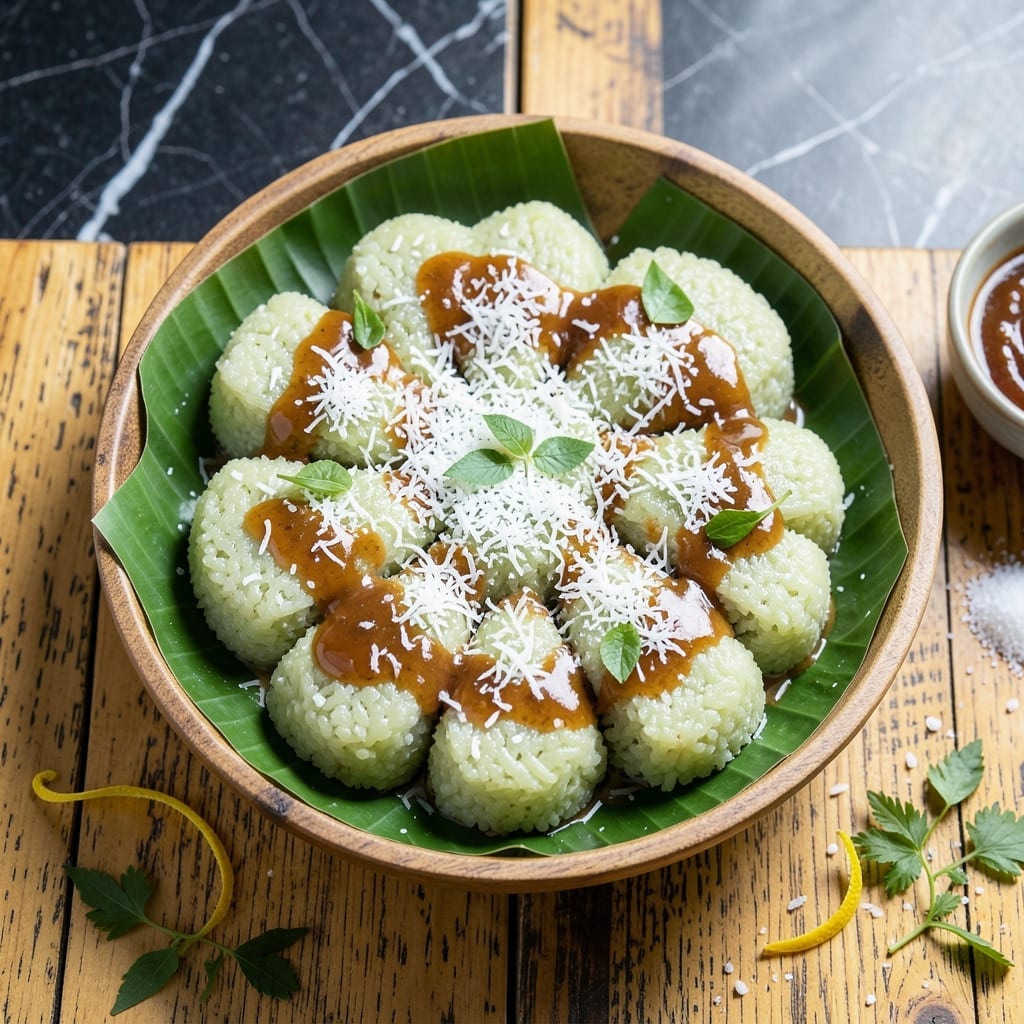
This traditional Malaysian treat combines the delicate sweetness of coconut with the satisfying chew of rice flour. I developed this version after studying authentic techniques from regional cooks, focusing on achieving the perfect texture balance.
The secret lies in the slow cooking process that allows the coconut milk to fully infuse the rice batter. This creates a moist, slightly sticky interior with a subtle crust on top that’s characteristic of the best versions I’ve tasted.
What results is a cake that’s tender yet springy, with rich coconut flavor in every bite. The aroma while baking is intoxicating, promising the comforting sweetness that makes this a beloved dessert across Malaysia.
Serve warm or at room temperature for a treat that’s as delightful as it is authentic.
Ingredients for Malaysian Rice Cake
Simple ingredients create this authentic Malaysian coconut-infused rice cake with perfect texture and flavor.
| Ingredient | Amount | Notes |
|---|---|---|
| Glutinous Rice Flour 🌾 | 2 cups | Also called sweet rice flour |
| Granulated Sugar 🍚 | 1 cup | Fine white sugar preferred |
| Coconut Milk 🥥 | 2 cups | Full-fat canned for richness |
| Water 💧 | ½ cup | For adjusting batter consistency |
| Shredded Coconut 🥥 | ½ cup | Unsweetened, for topping |
| Pandan Leaves 🌿 | 2 whole | Optional, for aromatic flavor |
| Salt 🧂 | ¼ tsp | Fine sea salt preferred |
| Vegetable Oil 🫒 | 2 tbsp | For greasing the pan |
| Vanilla Extract 🌿 | 1 tsp | Pure extract for best flavor |
| Baking Powder 🧂 | 1 tsp | For slight lift in texture |
The rice flour is non-negotiable here—glutinous rice flour (also called sweet rice flour) gives that signature chewy texture. Bob’s Red Mill is widely available and reliable, but any Asian market will have it too. The coconut milk needs to be full-fat canned (like Thai Kitchen or Aroy-D) for the rich flavor that defines this dish. Skip the light versions—they just won’t work the same way.
No pandan leaves? Vanilla extract adds a nice depth, but the classic flavor comes from pandan—find it frozen at Asian grocers. For a quicker version, coconut cream powder (mixed with water) can replace coconut milk in a pinch. The shredded coconut topping is optional but highly recommended (the toasted kind from Trader Joe’s is great). Sugar can be reduced slightly, but don’t skip it entirely.
This keeps beautifully at room temperature for 2-3 days in an airtight container. For longer storage, refrigerate for up to 1 week or freeze for 3 months. Reheat briefly in the microwave or steam to restore that fresh-baked texture and aroma.
Why You’ll Love This Recipe
- One Bowl Wonder: I just mix the glutinous rice flour, sugar, and coconut milk in a single bowl—no fancy equipment needed.
- Coconut Dream: The combo of creamy coconut milk and toasted shredded coconut gives it that rich, tropical sweetness I crave.
- Feeds a Crowd: I make a big batch for potlucks, and it’s always the first thing to disappear.
- Budget Friendly: A bag of rice flour and a can of coconut milk stretch further than I expected, with leftovers tasting even better the next day.
Step-by-Step Instructions for Malaysian Rice Cake
Here’s the method I use to achieve that perfect chewy texture with rich coconut flavor.
Step 1: Prepare the Batter Base
In a large mixing bowl, whisk together the 2 cups Glutinous Rice Flour, 1 cup Granulated Sugar, 1 tsp Baking Powder, and 0.25 tsp Salt until fully combined. I like to sift these dry ingredients first to prevent any lumps in the final batter.
This step ensures even distribution of the leavening agent and sweetness throughout the cake. The glutinous rice flour is what gives this dessert its signature chewy texture, so don’t substitute regular rice flour here.
Step 2: Infuse and Combine Wet Ingredients
In a saucepan, gently heat the 2 cups Coconut Milk with the 2 whole Pandan Leaves over medium-low heat until warm but not boiling. Let it steep for 5 minutes to infuse the aromatic pandan flavor into the coconut milk.
Remove the pandan leaves, then stir in the 1 tsp Vanilla Extract and 0.5 cup Water. Gradually pour this warm liquid mixture into the dry ingredients while whisking constantly to create a smooth, lump-free batter. The batter should be thick but pourable—like heavy cream.
Step 3: Steam to Perfection
Generously grease a heatproof dish with the 2 tbsp Vegetable Oil, making sure to coat all sides and the bottom. Pour the batter into the prepared dish and smooth the top with a spatula.
Place the dish in a steamer with 2-3 inches of boiling water. Cover and steam over medium heat for 45-50 minutes. You’ll know it’s done when the top looks set and a toothpick inserted comes out clean. The cake should have a slightly springy texture when gently pressed.
Step 4: Add the Finishing Touch
Once the cake is fully steamed, remove it from the steamer and let it cool slightly. While still warm, sprinkle the 0.5 cup Shredded Coconut evenly over the top, pressing lightly so it adheres to the surface.
Allow the cake to cool completely in the pan before slicing. This cooling period helps the texture set properly—cutting too soon might result in a gummy rather than chewy consistency. The shredded coconut adds both visual appeal and an extra layer of coconut flavor that complements the cake perfectly.
Pro Tips For Making Malaysian Rice Cake
- Steam Evenly: Use a clean cloth to line your steamer—this keeps the batter from sticking and guarantees an even rise. I learned this the hard way after scraping ruined cakes off my bamboo steamer.
- Warm the Coconut Milk: Always take coconut milk out of the fridge 30 minutes before mixing, or warm it slightly in the microwave for 20 seconds. Cold milk seizes up the glutinous rice flour and makes the batter lumpy.
- Skip the Lumps: Strain the batter through a fine-mesh sieve before steaming—this catches any stubborn bits of flour and gives you that smooth, velvety texture.
- Toast the Coconut: Lightly toast the shredded coconut in a dry pan for 2-3 minutes until fragrant before mixing it into the batter. Sounds weird, but it works: the flavor deepens and the texture stays perfect.
Storing and Reheating Leftovers
Room Temperature Storage
This cake stays fresh at room temperature for 2-3 days in an airtight container. I use glass containers with snap-on lids to maintain moisture. The flavors actually deepen as it sits, making it taste even better the next day. ❄️
Refrigerator Storage
For longer storage, refrigerate in a sealed container for up to 1 week. The texture will firm up, but it returns to its perfect chewiness when warmed. Place parchment paper between layers if stacking to prevent sticking.
Freezing Method
Wrap individual slices tightly in plastic wrap, then place in a freezer bag. It freezes well for up to 3 months without losing texture. I recommend slicing before freezing for easy single-serving portions.
Steam Reheating
The best way to restore that fresh-steamed texture is to reheat over boiling water for 5-7 minutes. Use a bamboo steamer or heatproof dish with a lid. This method keeps the cake moist and prevents it from drying out. 🔥
Microwave Option
For quick reheating, microwave a slice on 50% power for 30-45 seconds. Cover with a damp paper towel to add moisture. Check and repeat in 15-second intervals until warmed through.
Serving Tip
Let reheated slices rest for 2-3 minutes before serving. This allows the texture to stabilize. Serve warm or at room temperature—both are delicious, but warm brings out the coconut aroma beautifully.
Nutrition Facts
Frequently Asked Questions
Can I use regular rice flour instead?
No, glutinous rice flour is essential for the chewy texture. Regular rice flour will produce a crumbly result. Look for “sweet rice flour” if glutinous isn’t available.
Why does my cake turn out gummy?
This usually happens if it’s sliced too soon. Let it cool completely in the pan first. Also, steam for the full 45-50 minutes to ensure proper setting.
What can I use instead of pandan leaves?
Vanilla extract works well, though the flavor will be different. For a closer match, try a drop of pandan extract, available at Asian markets.
Can I bake this in the oven instead?
Steaming is traditional, but baking at 350°F for 40-45 minutes works. Use a water bath to maintain moisture.

- Jollof Rice Sauce Recipe: West African Tomato and Spice Infusion - September 25, 2026
- Japanese Rice Soup Recipe: Umami-Rich Comfort in a Bowl - September 25, 2026
- Homemade Cream Of Rice Recipe: Silk-Smooth Breakfast in Minutes - September 25, 2026