
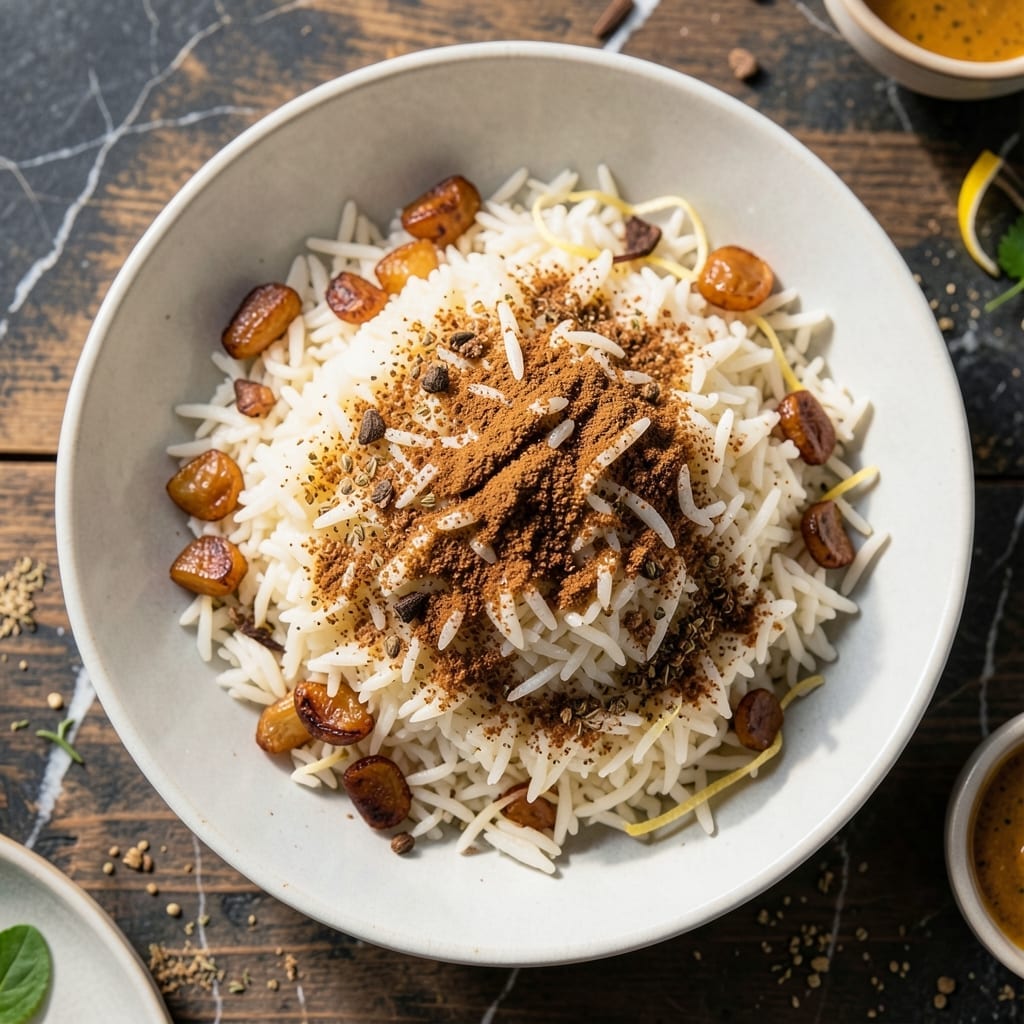
This Yemen-inspired spice blend transforms plain rice into an aromatic masterpiece with minimal effort. The balanced mix of warm spices and earthy tones captures the authentic flavors of Mandi rice without complicated techniques.
I perfected this combination after testing countless ratios to achieve the bold character that defines traditional Mandi. The blend works beautifully with basmati rice, creating a dish that’s both fragrant and deeply satisfying.
Make a large batch and store it in an airtight container. It keeps its potency for up to 6 months, ready to elevate your rice dishes whenever needed.
Use 1 tablespoon of this mix per cup of rice for perfectly seasoned results every time. The spices bloom beautifully when toasted briefly in oil before adding the rice.
Ingredients for Mandi Rice Spice
Nine spices blend into this bold, aromatic Yemen-inspired masterpiece for your rice.
| Ingredient | Amount | Notes |
|---|---|---|
| Ground Cardamom 🌿 | 1 tbsp | Freshly ground for best aroma |
| Ground Cinnamon 🌶️ | 1 tbsp | Ceylon or cassia variety |
| Ground Cloves 🌿 | ½ tsp | Use sparingly for warmth |
| Ground Cumin 🌿 | 1 tbsp | Toasted for deeper flavor |
| Ground Coriander 🌿 | 1 tbsp | Freshly ground preferred |
| Ground Black Pepper 🌶️ | 1 tsp | Freshly cracked for boldness |
| Ground Nutmeg 🌰 | ¼ tsp | Freshly grated for intensity |
| Turmeric Powder 🌼 | ½ tsp | For vibrant color and earthiness |
| Dried Bay Leaves 🍃 | 2 whole | Crumbled for distribution |
The cardamom and cinnamon are non-negotiable for authentic Mandi flavor. Penzeys carries excellent-quality spices, but bulk bins at Whole Foods work too—just check the turnover date. Freshly grinding whole cardamom pods and cinnamon sticks yourself makes a noticeable difference (worth the extra minute). Look for vibrant color and strong aroma in pre-ground options.
No cardamom? Skip it—there’s no good substitute. Short on cloves? Allspice at half the amount gets close. The cumin and coriander are doing most of the heavy lifting, so keep those fresh. If you’ve got whole seeds, toast and grind them fresh for maximum punch. The bay leaves add depth, but dried thyme can pinch-hit in a bind.
Store in an airtight container away from light and heat. Keeps its potency for 6 months easily. I make a triple batch—one for now, two to share. Makes about 5 tablespoons total, enough for multiple rice dishes.
Why You’ll Love This Recipe
- 5-Minute Mix: I just dump all the spices—cardamom, cinnamon, cloves, cumin, coriander—into a bowl, stir, and it’s ready to transform plain rice.
- Warm Spice Heaven: The blend of cinnamon and cardamom hits your nose first, then the earthy cumin and coriander round it out like a perfect hug in every bite.
- Feeds the Freezer: I make a double batch, store it in a jar, and sprinkle it on rice, chicken, or even roasted veggies whenever I need a flavor boost.
- Penny-Pincher’s Dream: Honestly, these five spices cost less than a takeout meal but taste like a restaurant-quality dish every time.
Step-by-Step Instructions for Yemen-Inspired Spice Blend
This aromatic mix comes together quickly with precise measurements for authentic flavor every time.
Step 1: Gather and Measure All Spices
Start by assembling all your spices in one place. You’ll need 1 tbsp ground cardamom, 1 tbsp ground cinnamon, 0.5 tsp ground cloves, 1 tbsp ground cumin, and 1 tbsp ground coriander. Having everything measured and ready ensures you won’t miss any components.
Also prepare 1 tsp ground black pepper, 0.25 tsp ground nutmeg, 0.5 tsp turmeric powder, and 2 whole dried bay leaves. I like to place each measured spice in small ramekins to keep them organized before mixing.
Step 2: Combine the Base Spices in a Bowl
In a medium mixing bowl, add the 1 tbsp ground cardamom, 1 tbsp ground cinnamon, and 1 tbsp ground cumin. These three form the foundation of the blend, providing warmth and depth characteristic of Yemeni cuisine.
Next, add the 1 tbsp ground coriander and 1 tsp ground black pepper. The coriander brings a citrusy brightness that balances the earthier spices, while the black pepper adds a subtle heat that builds with each bite.
Step 3: Incorporate the Finishing Spices
Now add the more potent spices: 0.5 tsp ground cloves and 0.25 tsp ground nutmeg. These should be used sparingly as they can overpower the blend if added in excess. The cloves provide a pungent warmth, while the nutmeg adds a touch of sweetness and complexity.
Sprinkle in the 0.5 tsp turmeric powder for its earthy flavor and vibrant golden color. This is what will give your dish that signature Mandi rice hue. The color should be rich and consistent throughout the blend.
Step 4: Add and Crumble the Bay Leaves
Place the 2 whole dried bay leaves in the palm of your hand and crumble them directly over the bowl. This ensures even distribution without losing any of the aromatic pieces. The bay leaves add a subtle floral note that rounds out the blend.
Gently stir all the spices together until fully combined. The mixture should be uniform in color and texture, with no visible clumps or separation. This ensures every spoonful of the blend delivers balanced flavor.
Step 5: Store Properly for Maximum Freshness
Transfer the spice blend to an airtight container. Glass jars with tight-fitting lids work particularly well for this. The container should be clean and completely dry to prevent any moisture from affecting the spices.
Store in a cool, dark place away from direct sunlight. This blend will keep its potency for up to 3 months if stored properly. For the best results, use it within the first month when the flavors are at their peak.
Pro Tips For Making Mandi Rice Spice
- Toast Whole Spices First: I learned this the hard way—blooming ground cardamom, cinnamon, and cloves in hot oil for 30 seconds before adding liquids wakes up their flavors. Skip pre-ground if you can, but if using them, this step is non-negotiable.
- Balance the Warmth: Cumin and coriander can overpower, so use a 2:1 ratio with the sweeter spices like cinnamon and cardamom. My grandmother swore by this, and she was right: it keeps the blend rich but not bitter.
- Skip the Overcrowding: If toasting whole spices before grinding, do it in a single layer in a dry pan over medium heat. After burning three batches, I finally figured out that piling them up steams instead of toasts.
- Grind Just Before Use: Sounds weird, but it works: grinding cumin and coriander fresh makes a real difference in aroma. I was skeptical until I tried it—pre-ground just doesn’t have the same punch, even if it’s from a fancy brand.
Regional Styles of This Dish
Yemeni Tradition
In Yemen, this blend is called hawaij and varies by region. The Hadramaut version leans heavily on cardamom and cinnamon, creating a sweeter profile. I love how the spices reflect the ancient spice trade routes through the Arabian Peninsula. 🗺️
Saudi Adaptation
Saudi versions often add dried lime powder for tang. Their blend tends to be more assertive with black pepper and cumin taking center stage. The result is a bolder, more pungent seasoning that pairs well with lamb dishes.
Indian Influence
In regions with Indian ties, you’ll find fenugreek or fennel seeds added. This creates a more complex, layered flavor that still maintains the Mandi identity. I’ve seen 1 tsp fenugreek work beautifully in this blend.
Levantine Style
The Levantine approach often includes allspice and ginger. This adds warmth and a touch of sweetness that’s perfect for chicken or vegetable rice dishes. The blend becomes more versatile while keeping its aromatic core.
North African Twist
Moroccan-inspired versions incorporate saffron or ras el hanout. A pinch of saffron threads (about ¼ tsp) adds a luxurious depth. This variation works wonderfully with couscous or long-grain rice. ✨
Modern Fusion
For a contemporary take, try adding smoked paprika or sumac. The smokiness pairs especially well with grilled meats. I’ve found ½ tsp smoked paprika adds a subtle but noticeable depth to the traditional profile.
Nutrition Facts
Frequently Asked Questions
Can I use whole spices instead of ground?
Toast whole spices in a dry pan for 1-2 minutes, then grind. This releases more aroma and flavor. Just ensure they’re completely cooled before grinding to prevent clumping.
How do I adjust the heat level?
For milder flavor, reduce the black pepper to ½ tsp. For more heat, add ¼ tsp cayenne or a pinch of chili powder. Balance is key to maintaining the authentic profile.
What if my blend tastes too strong?
If the flavor is overpowering, mix in 1 tsp plain rice flour or cornstarch to dilute. Also, let it rest for 24 hours before using—this mellows the spices.
Can I use this for dishes other than rice?
Yes! This blend works beautifully with roasted chicken, lamb, or vegetables. Rub 1 tsp onto 1 lb of meat before cooking for a fragrant crust. The possibilities are endless.

- Mujadara Rice and Lentils Recipe: Earthy Spiced Lentils With Caramelized Onions - November 1, 2026
- Naija Fried Rice Recipe: Street-Style Spice With Veggie Crunch - November 1, 2026
- Mushy Rice Recipe: Fluffy Grains Transformed in Minutes - November 1, 2026