
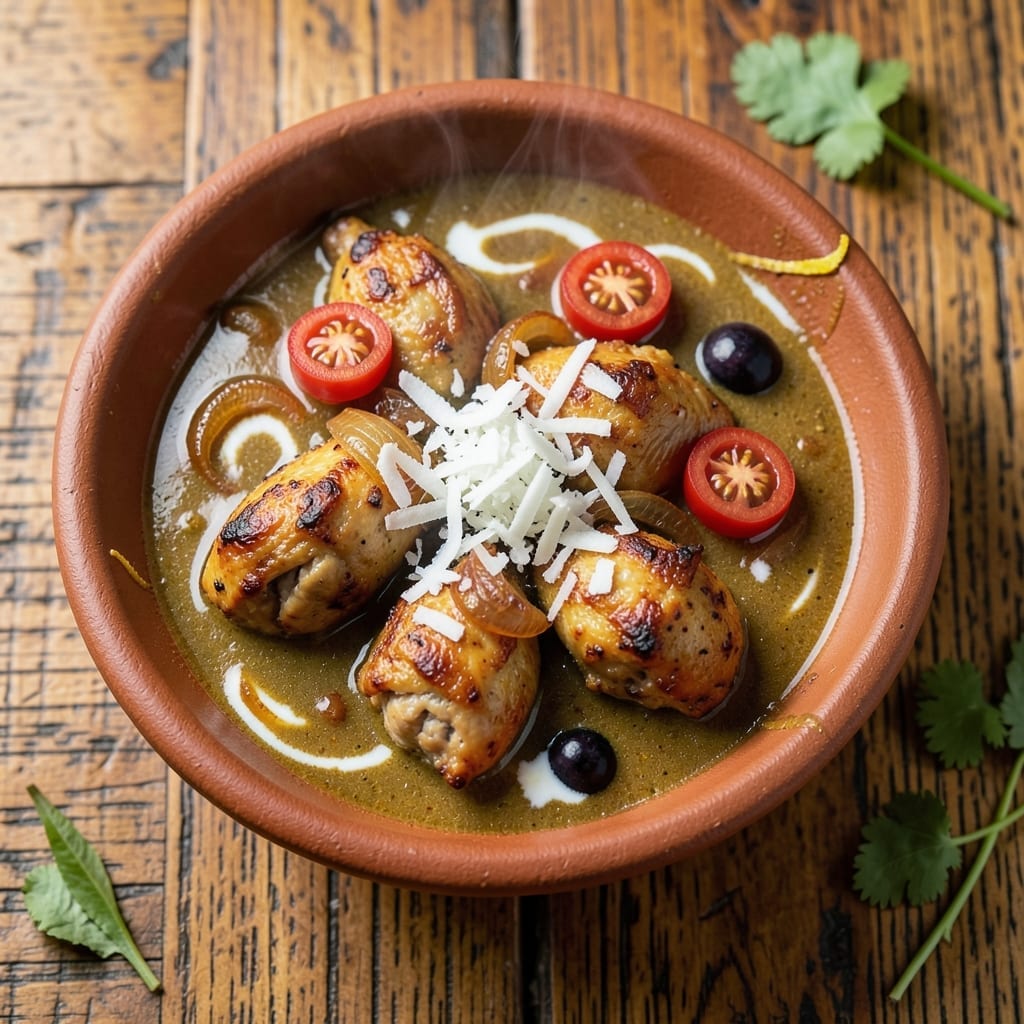
This Mangalorean chicken curry captures the essence of coastal Indian cooking with its rich coconut gravy and aromatic spices. I developed this version after studying traditional methods from the region.
The dish combines tender chicken with a velvety sauce built from fresh coconut, roasted spices, and tangy kokum. Each bite delivers layers of flavor that balance heat, sweetness, and acidity perfectly.
What makes this special is the careful toasting of whole spices before grinding, which releases their full potential. The coconut milk creates a luxurious base that mellows the bold spices.
Serve with steamed rice or appam to soak up every drop of the fragrant sauce. The flavors deepen overnight, making leftovers even more delicious.
Ingredients for Mangalorean Chicken Curry
Rich coconut, bold spices, and tender chicken come together for this coastal favorite.
| Ingredient | Amount | Notes |
|---|---|---|
| Chicken Thighs 🍗 | 1 ½ lb | Boneless, skinless, cut into pieces |
| Fresh Coconut 🥥 | 1 whole | Grated or finely chopped |
| Coconut Milk 🥛 | 1 can | Full-fat for creaminess |
| Kokum 🍈 | 4 pieces | Soaked in warm water |
| Onion 🧅 | 1 whole | Medium, finely chopped |
| Tomatoes 🍅 | 2 whole | Medium, pureed or finely chopped |
| Garlic Cloves 🧄 | 6 cloves | Minced or crushed |
| Ginger 🌿 | 1 tbsp | Freshly grated or minced |
| Green Chilies 🌶️ | 3 whole | Slit lengthwise, adjust to taste |
| Coriander Seeds 🌿 | 2 tbsp | Whole, for roasting and grinding |
| Cumin Seeds 🌿 | 1 tsp | Whole, for roasting and grinding |
| Black Peppercorns 🌶️ | 1 tsp | Whole, for roasting and grinding |
| Turmeric Powder 🌿 | ½ tsp | Ground, for color and earthiness |
| Red Chili Powder 🌶️ | 1 tsp | Adjust to heat preference |
| Garam Masala 🌿 | 1 tsp | Freshly ground if possible |
| Curry Leaves 🍃 | 10 pieces | Fresh or dried |
| Vegetable Oil 🫒 | ¼ cup | For sautéing |
| Salt 🧂 | 1 tsp | Adjust to taste |
The spices are everything here. Whole coriander, cumin, and peppercorns toasted and ground fresh make a huge difference—skip the pre-ground stuff. For the coconut, fresh is ideal (look for it in the freezer section at Indian grocery stores), but frozen works in a pinch. Chicken thighs stay juicier than breasts in the long cooking process. If you can’t find kokum, tamarind paste will do the trick (use about 1 tbsp soaked in warm water).
No kokum? Tamarind paste or dried kokum (available at Patel Brothers or online) works. Fresh coconut not an option? Unsweetened desiccated coconut rehydrated in warm water is your backup. For heat control, reduce the green chilies or remove the seeds. The garam masala can be store-bought, but homemade blends (toast and grind your own) will take this to another level. Want extra depth? Add a pinch of fennel seeds to the spice mix.
The curry tastes even better the next day once the flavors meld. Keeps for 3-4 days in the fridge, freezes for up to 3 months. Reheat gently (that coconut milk can separate if boiled too hard). Leftovers make an amazing filling for dosas or wraps.
Why You’ll Love This Recipe
- One Pot Wonder: I love that everything simmers together—chicken, coconut, kokum—in one pan, no fuss.
- Tangy & Rich: The kokum gives that signature Mangalorean sour kick, balanced by the creamy coconut milk.
- Freezer Friendly: I double the batch and freeze portions for those nights I just can’t cook.
- Budget Keeper: Chicken thighs and pantry staples like coconut and kokum make this dish kind to my wallet.
Step-by-Step Instructions for Mangalorean Chicken Curry
Here’s the method I use to build layers of coastal flavor in this comforting curry.
Step 1: Toast and Grind the Whole Spices
Heat a dry skillet over medium heat and add the 2 tbsp coriander seeds, 1 tsp cumin seeds, and 1 tsp black peppercorns. Toast for 2-3 minutes, stirring constantly, until the spices turn fragrant and slightly darker.
Immediately transfer to a plate to cool, then grind into a fine powder using a spice grinder or mortar and pestle. This fresh grinding releases oils that pre-ground spices can’t match. Set aside until ready to use—this forms the aromatic backbone of your curry.
Step 2: Build the Aromatic Base
Heat the 0.25 cup vegetable oil in a heavy pot over medium heat. Add the 10 pieces curry leaves and let them sizzle for 10 seconds until aromatic. Then add the 1 whole onion (finely chopped) and sauté for 5-6 minutes until soft and golden brown.
Stir in the 6 cloves garlic cloves (minced), 1 tbsp ginger (grated), and 3 whole green chilies (slit). Cook for 1-2 minutes until the raw smell disappears. This trio of aromatics deepens the flavor base before adding the other ingredients.
Step 3: Develop the Spiced Tomato Base
Add the 2 whole tomatoes (pureed or finely chopped) to the pot. Cook for 6-7 minutes, stirring frequently, until the mixture thickens and the oil starts to separate at the edges. This visual cue means the tomatoes are fully broken down.
Sprinkle in the 0.5 tsp turmeric powder, 1 tsp red chili powder, and the ground spice mixture from Step 1. Stir well and cook for 2 minutes to bloom the spices. The color will deepen to a rich red-brown, signaling the base is ready for the next layer.
Step 4: Cook the Chicken and Coconut
Add the 1.5 lb chicken thighs (cut into pieces) to the pot and coat evenly with the spiced tomato mixture. Cook for 5 minutes, stirring occasionally, until the chicken turns opaque on the outside.
Pour in the 1 can coconut milk and add the 1 whole fresh coconut (grated). Stir in the 1 tsp salt and 4 pieces kokum (soaked and drained). Bring to a gentle simmer, then reduce heat to low.
Step 5: Simmer to Perfection
Cover the pot and let the curry simmer gently for 25-30 minutes, stirring occasionally. The chicken is done when it’s tender and pulls apart easily with a fork. The kokum will soften and infuse the gravy with its signature tang.
Stir in the 1 tsp garam masala and adjust the salt if needed. Turn off the heat and let the curry rest for 5 minutes before serving. This allows the flavors to meld, and the coconut oil will rise to the top, adding a beautiful sheen to the dish.
Pro Tips For Making Mangalorean Chicken Curry
- Toast the Coconut: Dry-toast the fresh coconut until golden brown before grinding—this takes 5-6 minutes on medium heat. I learned this the hard way after my first few curries tasted raw and flat.
- Soak the Kokum: Soak kokum in warm water for 15 minutes before using. Sounds weird, but it softens the rind and extracts that tangy depth without overpowering the dish.
- Skip the Boneless: Use bone-in chicken thighs—it actually changes the outcome. The bones release gelatin during slow cooking, giving the curry its signature rich, velvety texture.
- Bloom the Onions: Cook the onions until deep brown, not just translucent. After burning three batches, I finally figured out this builds the base flavor that balances the coconut and kokum perfectly.
Dietary Considerations for This Recipe
Gluten-Free Naturally
This dish is inherently gluten-free since it relies on rice-based accompaniments like appam or steamed rice. All spices and natural ingredients (coconut, kokum, chicken) contain no gluten. Just verify your garam masala blend—some store-bought versions may contain wheat as an anti-caking agent. 💪
Dairy-Free Delight
No dairy products are used in this traditional recipe, making it perfect for lactose-intolerant diners. The coconut milk provides all the creaminess you need. Be cautious with store-bought spice blends, as some may contain milk powder.
Keto Adaptations
To make this keto-friendly, reduce the onion to ½ of a medium onion and skip the tomatoes entirely. Replace with ¼ cup diced bell peppers for texture. The coconut base is naturally low-carb, and chicken thighs provide healthy fats.
Nut Allergy Note
While coconut isn’t a tree nut, those with severe nut allergies should exercise caution. Coconut is classified as a fruit, but cross-contamination can occur in processing facilities. Always check your coconut milk and grated coconut labels for allergy warnings.
Lower Sodium Option
Cut the added salt in half and use low-sodium chicken broth instead of water if thinning the curry. The kokum and spices provide plenty of flavor without excessive salt. Taste as you go and adjust seasoning gradually.
Vegetarian Swap
Replace chicken with 1.5 lb firm tofu or mushrooms. Press tofu well and cube before adding. The cooking time reduces to 15 minutes once the base is prepared. This maintains the dish’s rich, spiced character. 🌱
Nutrition Facts
Frequently Asked Questions
Can I use chicken breast instead of thighs?
Thighs stay juicier, but breasts work if cooked carefully. Reduce simmering time to 20 minutes to prevent dryness. For best results, brine breasts in salted water for 30 minutes first.
What can I substitute for kokum?
Use 1 tbsp tamarind paste soaked in ¼ cup warm water for similar tang. Dried kokum (available online) also works—soak 2 pieces in warm water. Avoid lime juice as it lacks depth.
Why did my curry turn out bitter?
Over-toasted spices or burnt coconut can cause bitterness. Toast spices on medium-low heat only until fragrant, not dark. Stir constantly and remove from heat immediately after toasting.
How do I adjust the heat level?
Reduce green chilies to 1-2 for mild heat, or remove seeds. For more spice, add ½ tsp cayenne with the chili powder. Balance heat with extra coconut milk.

- Jollof Rice Sauce Recipe: West African Tomato and Spice Infusion - September 25, 2026
- Japanese Rice Soup Recipe: Umami-Rich Comfort in a Bowl - September 25, 2026
- Homemade Cream Of Rice Recipe: Silk-Smooth Breakfast in Minutes - September 25, 2026