
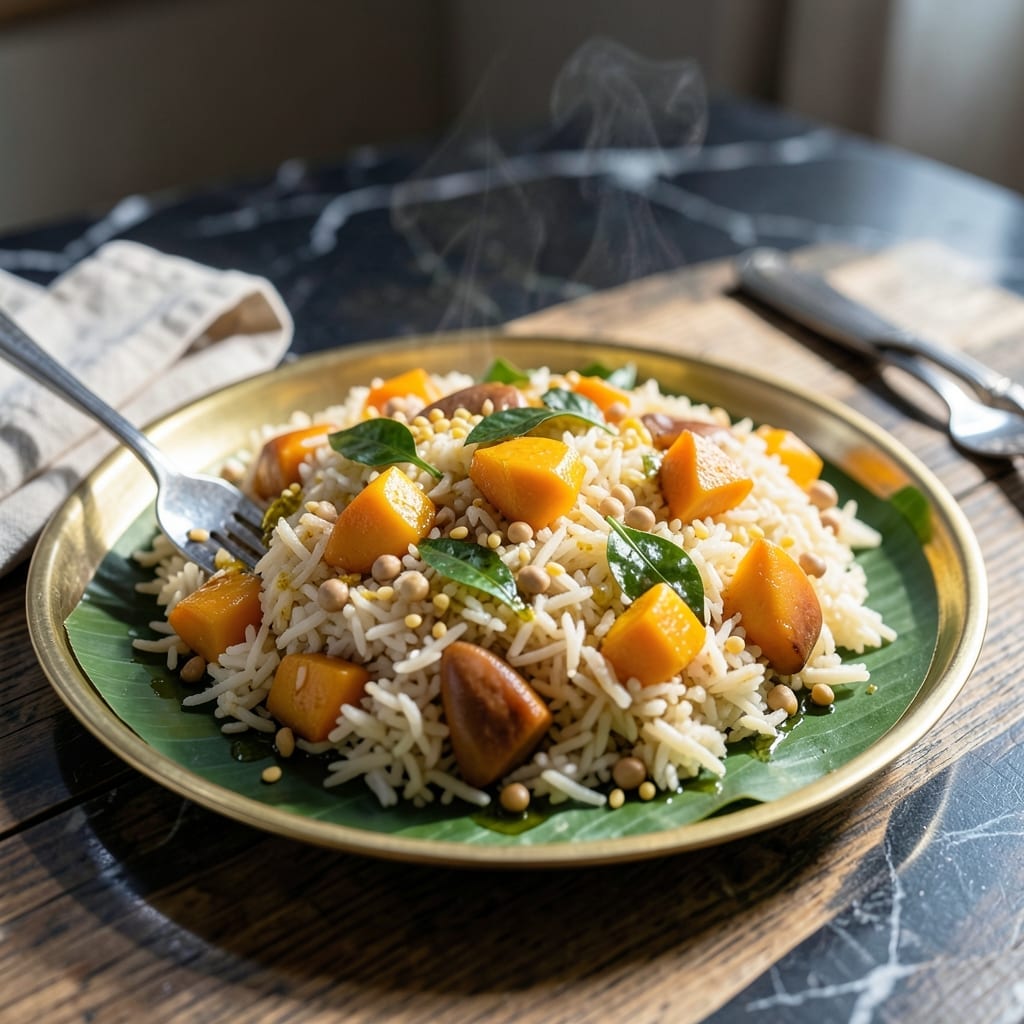
This South Indian specialty brings the perfect balance of sweet and tangy to your table. The Iyengar style transforms simple rice into a vibrant, flavorful dish that’s both comforting and unique.
What sets this creation apart is its use of ripe mangoes and a tempering of mustard seeds, curry leaves, and turmeric. The result is a dish that’s as aromatic as it is delicious, with layers of flavor in every bite.
It’s surprisingly easy to make, requiring just a handful of ingredients and 20 minutes of your time. The rice absorbs the mango’s natural sweetness while the tempering adds a savory depth.
Serve it as a side or a light main—it’s versatile, satisfying, and always a crowd-pleaser.
Ingredients for Mango Rice Recipe Iyengar Style
Bright mango, fragrant spices, and fluffy rice create this South Indian classic. Nothing complicated, just delicious.
| Ingredient | Amount | Notes |
|---|---|---|
| Basmati Rice 🍚 | 1 ½ cups | Rinsed until water runs clear |
| Ripe Mango 🥭 | 2 whole | Peeled and finely grated |
| Mustard Seeds 🌿 | 1 tsp | Black or yellow variety |
| Curry Leaves 🍃 | 10 pieces | Fresh preferred for aroma |
| Turmeric Powder 🌶️ | ½ tsp | Ground, for vibrant color |
| Chana Dal 🌾 | 1 tbsp | Split chickpeas, optional |
| Urad Dal 🌾 | 1 tbsp | Split black gram, optional |
| Dried Red Chilies 🌶️ | 2 whole | Broken for heat adjustment |
| Asafoetida 🌿 | ¼ tsp | Hing, for umami depth |
| Salt 🧂 | 1 tsp | Adjust to taste preference |
| Sugar 🧈 | 1 tsp | Optional for balancing sweetness |
| Vegetable Oil 🫒 | 3 tbsp | Neutral flavor, for tempering |
| Fresh Cilantro 🌿 | ¼ cup | Chopped, for garnish |
| Cashew Halves 🥜 | 2 tbsp | Lightly toasted for crunch |
The mango is non-negotiable here—ripe but firm Aamras variety (or any sweet Indian mango) gives the best sweet-tangy balance. Most Indian grocery stores like Patel Brothers or Bharat Bazaar carry these in season. Fresh curry leaves are ideal (find them in the freezer section if not fresh), but dried in a pinch works too. Turmeric should be vibrant orange—if it looks dull, it’s old and won’t deliver that signature color.
No fresh curry leaves? Dried curry leaf powder at half the amount gets you close. Skip the dals if you must, but they add that authentic texture. Asafoetida (hing) is key for depth—pure powder (not the compounded version) from Indian spice brands like MDH or Everest works best. For the rice, jasmine can substitute basmati, but rinse it well to avoid mush.
Tempered spices lose potency fast, so make this fresh. Leftovers keep 2-3 days in the fridge (the mango softens over time). Store rice and mango separately if prepping ahead. Reheat gently with a splash of water to revive the flavors.
Why You’ll Love This Recipe
- One Pot Wonder: I toss everything in a single pot—basmati, mango, and those fragrant curry leaves—and it’s done in a flash.
- Sweet-Tangy Magic: The ripe mango and turmeric create this bright, sunny flavor that’s honestly hard to resist.
- Crowd Pleaser: Between us, even the pickiest eaters in my family clean their plates when this is on the table.
- Budget Friendly: A handful of pantry staples and a seasonal mango—this dish costs pennies but tastes like a million bucks.
Step-by-Step Instructions for Mango Rice Iyengar Style
This traditional method ensures perfect balance of sweet and tangy flavors in every bite.
Step 1: Prepare the Rice and Mango
Rinse the 1.5 cups Basmati Rice thoroughly until the water runs clear. This removes excess starch and prevents the grains from clumping together during cooking. Drain well in a fine-mesh strainer.
Peel the 2 whole Ripe Mango and finely grate the flesh. You should have about 1 cup of grated mango pulp. Set this aside – the natural sweetness and slight tang are essential to this dish’s authentic flavor.
Step 2: Temper the Spices
Heat the 3 tbsp Vegetable Oil in a heavy-bottomed pot over medium heat. Add the 1 tsp Mustard Seeds and let them pop for 10-15 seconds until they begin to splutter.
Immediately add the 1 tbsp Chana Dal, 1 tbsp Urad Dal, 2 whole Dried Red Chilies, 10 pieces Curry Leaves, and 0.25 tsp Asafoetida. Sauté for 1-2 minutes until the dals turn light golden brown and the curry leaves become crisp. Be careful not to burn the asafoetida – it should infuse the oil with its unique aroma without turning bitter.
Step 3: Cook the Rice with Mango
Add the drained Basmati Rice to the pot and stir gently for 1 minute to coat the grains with the tempered spices. Pour in 3 cups of water, then add the 0.5 tsp Turmeric Powder, 1 tsp Salt, and 1 tsp Sugar. Stir well to combine.
Add the grated mango and bring to a boil. Reduce heat to low, cover, and cook for 15-18 minutes until the rice is tender and the water is absorbed. The mango will soften and integrate beautifully with the rice. Avoid stirring during cooking to prevent breaking the grains.
Step 4: Add Final Touches and Rest
Once the rice is cooked, turn off the heat and let it sit covered for 5 minutes. This allows the flavors to meld together and the rice to steam to perfect tenderness.
Gently fluff the rice with a fork, then fold in the 2 tbsp Cashew Halves, reserving a few for garnish. Transfer to a serving dish and top with the remaining cashews and 0.25 cup Fresh Cilantro. The bright green cilantro adds a fresh contrast to the golden rice.
Pro Tips For Making Mango Rice Recipe Iyengar Style
- Toast the Mustard Seeds: Heat the oil on medium and add mustard seeds only after it’s hot—when they sizzle and pop within 10-15 seconds, they’re ready. I learned this the hard way after ending up with bitter, burnt seeds more than once.
- Pick Firm-Ripe Mangoes: Use mangoes that yield slightly to pressure but aren’t mushy—overripe ones turn the rice into a paste. My grandmother swore by this, and she was right: the texture matters as much as the taste.
- Skip Wet Rice: Make sure the cooked basmati rice is completely cooled and dry before mixing—soggy rice ruins the light, separate grains this dish is known for. Sounds weird, but spreading it on a tray for 10 minutes actually changes the outcome.
- Temper Curry Leaves Last: Add curry leaves to the tempering oil only after the mustard seeds finish popping, or they’ll burn and turn bitter. After burning three batches, I finally figured out this timing non-negotiable.
Dietary Considerations for This Recipe
Vegetarian Friendly
This dish is naturally 100% vegetarian, making it perfect for meat-free diets. It relies entirely on plant-based ingredients, with rice and mango as the stars. The tempering spices add depth without any animal products. 🌱
Gluten-Free Options
All ingredients in this creation are inherently gluten-free, from the basmati rice to the fresh mango. Just ensure your asafoetida is pure (some blends contain wheat). I use MDH brand for guaranteed gluten-free hing.
Vegan Adaptations
The recipe is already vegan as written. For strict vegans, verify your sugar isn’t processed with bone char. I recommend organic cane sugar to be absolutely certain.
Nut Allergy Note
The only potential allergen is the cashew halves. Simply omit them or substitute with toasted pumpkin seeds for crunch. The dish loses nothing without nuts.
Low Sodium Version
Reduce the salt to ½ tsp or eliminate entirely. The mango’s natural sweetness and turmeric’s earthiness provide plenty of flavor. I often skip salt when using particularly ripe mangoes. 💡
Sugar-Free Option
Omit the sugar completely if preferred. The ripe mango provides ample sweetness on its own. For extra tang, add ½ tsp tamarind paste to balance the flavors.
Nutrition Facts
Frequently Asked Questions
Can I use unripe mangoes for this dish?
No, the recipe requires ripe mangoes for their natural sweetness. Unripe ones will make the rice too sour and lack the signature balance.
What if I don’t have curry leaves?
Use ½ tsp curry leaf powder as a substitute. While fresh leaves offer the best aroma, the powder still provides authentic flavor.
Can I make this ahead of time?
Yes, but store the rice and mango separately if prepping early. Combine and reheat gently with a splash of water before serving.
Why does my rice turn mushy?
Avoid over-stirring during cooking and use the exact 1:2 rice-to-water ratio. Rinsing the rice well first prevents clumping.

- Mujadara Rice and Lentils Recipe: Earthy Spiced Lentils With Caramelized Onions - November 1, 2026
- Naija Fried Rice Recipe: Street-Style Spice With Veggie Crunch - November 1, 2026
- Mushy Rice Recipe: Fluffy Grains Transformed in Minutes - November 1, 2026