
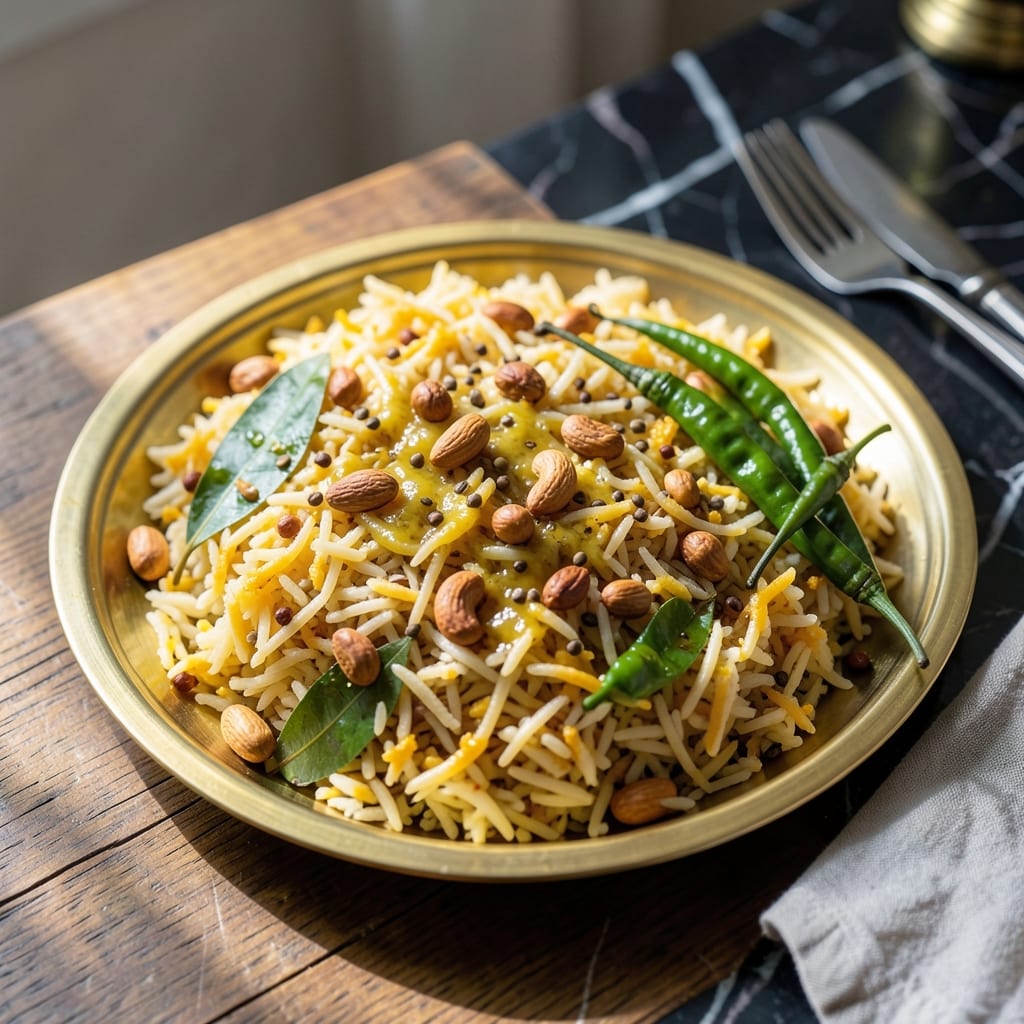
This Gujarati masala rice brings the vibrant flavors of western India to your kitchen with a simple yet aromatic blend of spices. The dish transforms plain rice into something extraordinary with just a few everyday ingredients.
Peanuts add a satisfying crunch while mustard seeds, cumin, and curry leaves create layers of complex flavor. The technique is straightforward, but the result is anything but ordinary—each grain carries the warmth of the spices.
What makes this recipe special is its balance of textures and tastes: nutty peanuts, fragrant spices, and fluffy rice. It’s a complete vegetarian side that pairs beautifully with yogurt or curries.
Ready in under 30 minutes, this dish proves that authentic regional cuisine can be simple to prepare at home.
Ingredients for Masala Rice Gujarati
Basmati rice meets aromatic spices and crunchy peanuts for authentic Gujarati flavors at home.
| Ingredient | Amount | Notes |
|---|---|---|
| Basmati Rice 🌾 | 1 ½ cups | Rinsed until water runs clear |
| Raw Peanuts 🥜 | ½ cup | Skin-on or skinless, unsalted |
| Mustard Seeds 🌿 | 1 tsp | Brown or black variety |
| Cumin Seeds 🌿 | 1 tsp | Whole seeds, not ground |
| Curry Leaves 🍃 | 12 pieces | Fresh preferred, dried if unavailable |
| Green Chilies 🌶️ | 2 whole | Slit lengthwise, seeds removed |
| Fresh Ginger 🌿 | 1 tbsp | Finely grated or minced |
| Turmeric Powder 🌶️ | ½ tsp | Ground, for color and aroma |
| Asafoetida 🌿 | ¼ tsp | Hing, optional for authenticity |
| Salt 🧂 | 1 tsp | Adjust to taste |
| Sugar 🍚 | ½ tsp | Balances spice heat |
| Lemon Juice 🍋 | 1 tbsp | Freshly squeezed for brightness |
| Fresh Cilantro 🌿 | ¼ cup | Chopped, for garnish |
| Vegetable Oil 🫒 | 2 tbsp | Neutral flavor for tempering |
| Water 💧 | 3 cups | For cooking rice |
The spices are non-negotiable for authenticity. Indian grocery stores carry fresh curry leaves and asafoetida (hing)—look for Patel Brothers or your local South Asian market. Mustard and cumin seeds should be whole, not pre-ground. For peanuts, raw and unsalted is essential (roasted loses the right texture). If your cumin seeds smell dusty, they’re too old—replace them.
No curry leaves? Dried curry leaf powder works at half the amount. Skip asafoetida if you can’t find it—the dish remains delicious. Green chilies can be serrano or Thai; reduce to one for milder heat. For ginger, fresh is mandatory (powder lacks the bright zing). Basmati rice is ideal, but jasmine rice works in a pinch—just rinse well to remove excess starch.
Store curry leaves in the freezer for up to 3 months. Peanuts keep in an airtight container for 1 month. Cooked rice stays fresh for 2 days in the fridge—reheat with a splash of water to restore moisture. The spices? 6-12 months in a cool, dark place, but whole seeds last longer than ground.
Why You’ll Love This Recipe
- One Pot Wonder: I toss everything in a single pan—mustard seeds popping, cumin sizzling, peanuts browning—while the rice steams right on top.
- Spice Magic: The curry leaves and peanuts give it that warm, nutty crunch that makes every bite feel like a hug from Gujarat.
- Lunchbox Hero: Packs beautifully for work or school, and honestly, it tastes even better the next day when the flavors meld.
- Budget Friendly: A handful of peanuts and spices stretch plain basmati into a meal that feeds my family for pennies.
Step-by-Step Instructions for Spiced Aromatic Grains With Peanuts
Master the tempering process and layer flavors systematically for optimal results.
Step 1: Prepare and Rinse the Basmati Rice
Begin by placing the 1.5 cups Basmati Rice in a fine-mesh strainer and rinsing under cold running water until the water runs completely clear. This removes excess starch, preventing the grains from clumping together during cooking. I find that 3-4 rinses are typically sufficient.
After rinsing, let the rice soak in fresh water for 15-20 minutes. This hydration step ensures even cooking and fluffier grains. Drain thoroughly before using—the rice should be damp but not dripping when you add it to the pot later.
Step 2: Temper the Whole Spices and Aromatics
Heat the 2 tbsp Vegetable Oil in a heavy-bottomed pot over medium heat. Once the oil shimmers, add the 1 tsp Mustard Seeds and 1 tsp Cumin Seeds. Cover immediately, as the mustard seeds will pop vigorously. Let them sizzle for 30-45 seconds until they stop popping and become fragrant.
Add the 0.5 cup Raw Peanuts, 12 pieces Curry Leaves, 2 whole Green Chilies, and 1 tbsp Fresh Ginger. Sauté for 2-3 minutes until the peanuts turn light golden brown and the curry leaves release their aroma. Stir frequently to prevent burning. The ginger should soften slightly but not brown.
Sprinkle in the 0.25 tsp Asafoetida and 0.5 tsp Turmeric Powder, stirring immediately to bloom the spices in the hot oil for 15-20 seconds. This step develops the depth of flavor that defines this dish.
Step 3: Toast the Rice and Add Liquids
Add the drained 1.5 cups Basmati Rice to the pot and stir gently to coat the grains in the spiced oil. Toast the rice for 1-2 minutes, stirring constantly, until the grains appear slightly translucent at the edges and emit a nutty aroma.
Pour in the 3 cups Water, then add the 1 tsp Salt and 0.5 tsp Sugar. Stir well to distribute the spices and rice evenly. The water should appear slightly yellow from the turmeric and have small oil bubbles rising to the surface.
Step 4: Cook and Rest the Rice
Increase the heat to medium-high and bring the mixture to a rolling boil. Once boiling, reduce the heat to low, cover the pot with a tight-fitting lid, and simmer undisturbed for 12-15 minutes. You’ll know it’s done when all the water is absorbed and small steam vents appear on the surface.
Turn off the heat and let the rice rest, covered, for 10 minutes. This crucial step allows the grains to steam and become evenly tender. Do not peek during this time—releasing the steam prematurely can result in uneven cooking.
Step 5: Finish and Garnish
After resting, fluff the rice gently with a fork to separate the grains. Drizzle the 1 tbsp Lemon Juice evenly over the top and fold it in gently. The acidity brightens the earthy spices and balances the dish.
Transfer to a serving dish and garnish with the 0.25 cup Fresh Cilantro. The cilantro adds a fresh, herbal contrast to the warm spices. Serve immediately while the rice is hot and the aromas are at their peak.
Pro Tips For Making Masala Rice Gujarati
- Toast the Peanuts First: Dry-roast the raw peanuts in the same pan before adding oil, until they turn light golden—this deepens their flavor and prevents oil absorption later. I learned this the hard way after my peanuts stayed chewy in too many batches.
- Temper the Seeds Right: Heat the oil until it shimmers, then add mustard seeds first—they should pop within 10 seconds. If they don’t, your oil isn’t hot enough, and the cumin and curry leaves won’t release their aroma properly.
- Rinse the Rice Well: Soak basmati rice for 15 minutes, then rinse until the water runs clear—this removes excess starch so your grains stay separate and fluffy, not mushy. Sounds tedious, but it’s the thing that matters most for texture.
- Use Fresh Curry Leaves: Skip the dried or old leaves—they lose their citrusy punch fast. Fresh curry leaves, added just after the cumin, make a real difference in the final aroma. My grandmother swore by this, and she was right.
Essential Equipment for Great masala rice gujarati
Heavy-Bottomed Pot
A 3-4 quart heavy-bottomed pot with a tight-fitting lid is essential for even heat distribution. I recommend enamel-coated cast iron or stainless steel—both prevent hot spots that can burn your spices. The lid must seal tightly to trap steam during cooking.
Fine-Mesh Strainer
Use a fine-mesh strainer for rinsing the rice until the water runs clear. A colander with large holes won’t catch the starch effectively. I keep a OXO Good Grips strainer in my kitchen for this exact purpose. It’s a small investment that makes a big difference. 💪
Wooden Spoon
A wooden spoon is ideal for stirring the tempering spices and rice without scratching your pot. It also helps prevent the mustard seeds from sticking to the bottom. Avoid metal utensils if using non-stick cookware.
Sharp Chef’s Knife
For mincing the ginger and prepping the green chilies, a sharp 8-inch chef’s knife gives you precision and control. I’ve used my Wüsthof for years—it makes quick work of the prep. Keep it honed for safety and efficiency.
Measuring Cups and Spoons
Accurate measurements are key for balancing the spices. Use standard measuring cups and spoons for the rice, peanuts, and seasonings. A 1 tbsp of ginger or ½ tsp of turmeric can make or break the dish. 🌟
Citrus Juicer
A small handheld citrus juicer helps extract every drop of lemon juice without seeds. Fresh juice brightens the dish, so don’t skip it. If you don’t have a juicer, roll the lemon on the counter first to soften it.
Nutrition Facts
Frequently Asked Questions
Can I use other rice varieties?
Basmati is ideal, but jasmine works in a pinch. Rinse well to remove excess starch for fluffier grains. Avoid sticky varieties like short-grain rice.
How do I adjust the spice level?
Reduce green chilies to 1 for milder heat or remove seeds entirely. Add ½ tsp more sugar to balance spice. Taste as you cook and adjust.
Why soak the rice first?
Soaking for 15-20 minutes ensures even cooking and prevents dry, uneven grains. Skipping this step may result in undercooked or mushy rice.
How long can I store leftovers?
Store in an airtight container in the fridge for up to 2 days. Reheat with a splash of water to restore moisture.

- Mujadara Rice and Lentils Recipe: Earthy Spiced Lentils With Caramelized Onions - November 1, 2026
- Naija Fried Rice Recipe: Street-Style Spice With Veggie Crunch - November 1, 2026
- Mushy Rice Recipe: Fluffy Grains Transformed in Minutes - November 1, 2026