
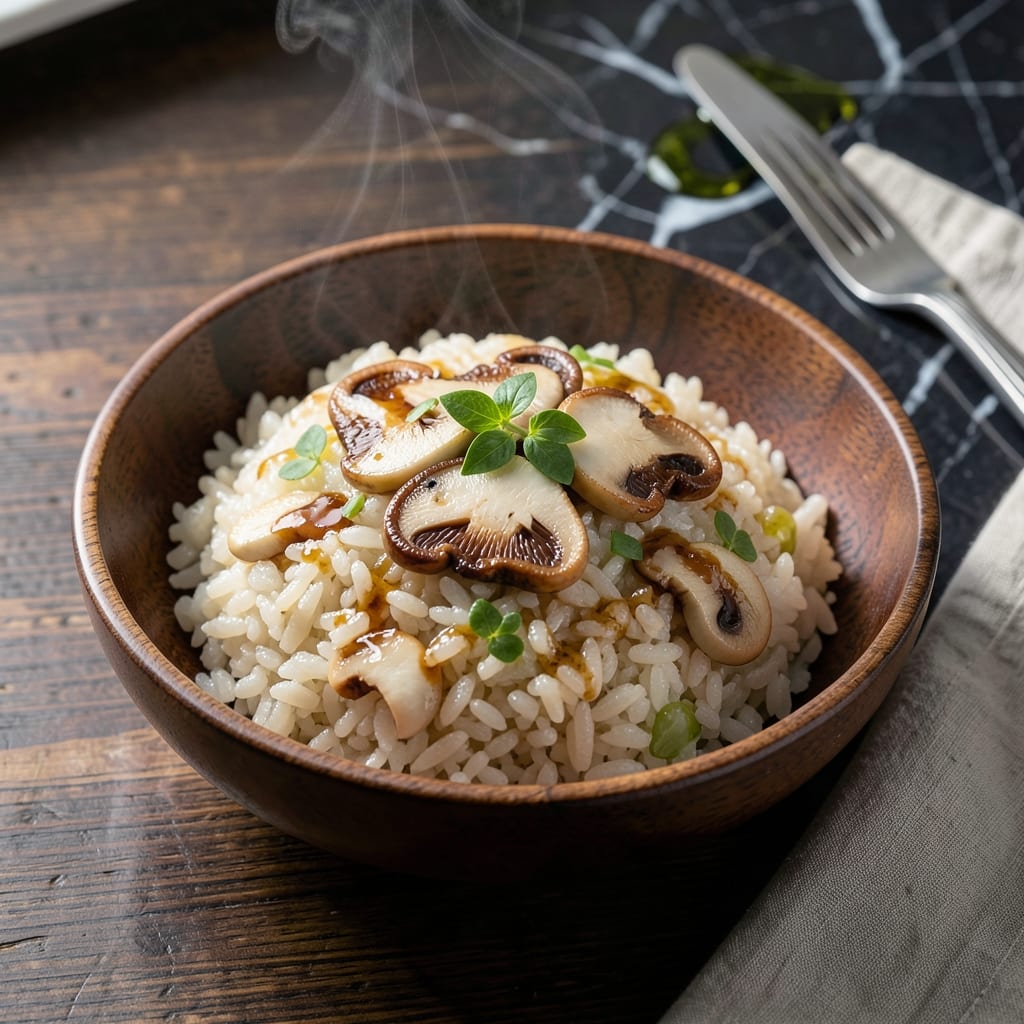
The first time I encountered matsutake mushrooms, their piney aroma immediately transported me to mountain forests. This dish captures that essence in every fragrant bite.
Traditional Japanese technique meets simple preparation here. The mushrooms infuse the rice with an earthy, almost spicy depth that’s uniquely matsutake. A pinch of salt enhances without overwhelming.
What emerges is a bowl of rice that’s both comforting and extraordinary. The grains absorb the mushroom’s essence while maintaining their individual texture, creating a dish that’s greater than the sum of its parts.
Serve this as a side or light main course. The aroma alone will have everyone gathering around the table.
Ingredients for Matsutake Rice
A handful of authentic Japanese ingredients transforms simple rice into an aromatic masterpiece.
| Ingredient | Amount | Notes |
|---|---|---|
| Matsutake Mushrooms 🍄 | 8 oz | Fresh, cleaned, thinly sliced |
| Japanese Short-Grain Rice 🍚 | 2 cups | Rinsed until water runs clear |
| Dashi Stock 🍲 | 2 ½ cups | Traditional kombu-based preferred |
| Sake 🍶 | 2 tbsp | Dry variety for cooking |
| Mirrorin 🍶 | 1 tbsp | Sweet cooking rice wine |
| Light Soy Sauce 🫙 | 1 tbsp | Japanese usukuchi shoyu |
| Sea Salt 🧂 | ½ tsp | Adjust to taste |
| Neutral Oil 🫒 | 1 tbsp | For sautéing mushrooms |
| Fresh Ginger 🌿 | 1 piece | 1-inch knob, grated |
| Scallions 🧅 | 2 whole | Thinly sliced, for garnish |
| Toasted Sesame Seeds 🌰 | 1 tsp | For finishing |
| Nori Seaweed 🌊 | 1 sheet | Cut into thin strips |
The matsutake mushrooms are non-negotiable for authentic flavor. Japanese markets or specialty grocers like Mitsua are your best bet for fresh specimens. Look for firm caps with a bright, pine-like aroma—avoid any with slimy spots or dull scent. Dashi stock quality matters; instant dashi granules work in a pinch but lack depth compared to homemade kombu-based. The rice must be short-grain for proper texture absorption.
No matsutake? Shiitake or oyster mushrooms offer a different but still earthy profile (use half the quantity as their flavor is more intense). Dry sherry can stand in for sake, though the flavor will be slightly fruitier. For dashi, vegetable broth with a piece of kombu simmered for 10 minutes creates a passable substitute. The ginger is flexible—powdered works at one-quarter the amount if fresh isn’t available.
Prepared rice keeps 3-4 days refrigerated in an airtight container. The mushrooms are best used immediately but can be stored in a paper bag in the fridge for 2-3 days. Reheat gently with a splash of water to restore moisture and aroma.
Why You’ll Love This Recipe
- One-Pot Wonder: I just toss everything in my rice cooker and let the dashi and sake do their magic—no stirring, no fuss.
- Umami Bomb: The matsutake soak into the rice with this deep, earthy richness that’s honestly next-level.
- Feeds a Crowd: I’ve served this at potlucks and weeknight dinners alike—it’s always the first thing to disappear.
- Better the Next Day: Leftovers taste even richer, and the rice stays perfectly sticky. I’ll be real: I sometimes make extra just for this.
Step-by-Step Instructions for Matsutake Rice
Master this technique to unlock the earthy, pine-like aroma of matsutake in every fluffy grain.
Step 1: Prepare and Sauté the Matsutake Mushrooms
Clean the 8 oz Matsutake Mushrooms by gently brushing off debris with a damp cloth. Slice them thinly, about ¼-inch thick, to ensure even cooking and maximum flavor release. Their delicate texture bruises easily, so handle with care.
Heat a heavy pot over medium heat and add the 1 tbsp Neutral Oil. When the oil shimmers, add the sliced matsutake. Sauté for 4-5 minutes until they soften and release their fragrant aroma. Avoid overcrowding the pot to prevent steaming instead of browning.
Step 2: Toast the Rice and Add Aromatics
Add the 2 cups Japanese Short-Grain Rice to the pot with the mushrooms. Stir constantly for 2 minutes to lightly toast the grains, which enhances their nutty flavor and prevents sticking. The rice should appear slightly translucent at the edges when ready.
Push the rice to one side and add the grated 1 piece Fresh Ginger to the cleared space. Cook for 30 seconds until fragrant, then stir to combine. This brief toasting deepens the ginger’s warmth and integrates it seamlessly into the dish.
Step 3: Combine Liquids and Simmer
Pour in the 2.5 cups Dashi Stock, 2 tbsp Sake, 1 tbsp Mirrorin, 1 tbsp Light Soy Sauce, and 0.5 tsp Sea Salt. Stir gently to distribute the rice evenly and dissolve any browned bits from the bottom of the pot.
Bring the mixture to a boil over high heat, then immediately reduce to low heat. Cover with a tight-fitting lid and simmer for 15 minutes. Resist the urge to peek—steam is essential for perfect texture.
Step 4: Rest and Garnish
After 15 minutes, remove the pot from heat and let it rest, covered, for 10 minutes. This allows the rice to absorb any remaining liquid and steam to even out the texture. The grains should be tender but retain a slight bite.
Fluff the rice gently with a fork, then transfer to serving bowls. Garnish with the thinly sliced 2 whole Scallions, 1 tsp Toasted Sesame Seeds, and strips of 1 sheet Nori Seaweed. The contrast of fresh, nutty, and umami elements elevates the dish beautifully.
Pro Tips For Making Matsutake Rice
- Soak the Mushrooms: I learned this the hard way—dry matsutake need 30 minutes in warm water to soften before slicing, or they’ll stay tough and chewy in the finished rice.
- Rinse the Rice: Give the short-grain rice a quick rinse until the water runs clear, but don’t overdo it or you’ll wash away the starch that makes it sticky.
- Skip the Overcooking: Matsutake release a lot of liquid, so reduce the dashi by 10% or your rice will turn mushy instead of perfectly tender.
- Add Mirin Late: Stir in the mirin during the last 5 minutes of cooking to preserve its sweetness—adding it earlier lets the alcohol cook off too much.
Common Mistakes When Making This Recipe
Overcrowding the Pot
Matsutake release moisture as they cook, so resist adding all 8 oz at once. Sauté in batches to ensure proper browning instead of steaming. I learned this the hard way with soggy mushrooms my first attempt. 🌡️
Skipping the Rice Toast
Those 2 minutes of toasting the 2 cups rice seem small but make a big difference. Skipping this step results in bland grains that don’t absorb the mushroom’s piney essence as well.
Lifting the Lid
Every time you peek during the 15-minute simmer, you lose precious steam. That steam is what transforms the rice from good to extraordinary. Trust the process and keep it covered.
Over-seasoning Early
The matsutake’s natural aroma is delicate. I use just ½ tsp sea salt initially, then adjust after cooking. The dashi and soy sauce already contribute significant flavor.
Rushing the Rest
That 10-minute rest isn’t optional. It lets the rice finish absorbing liquid and the flavors meld. I’ve tried cutting it short, and the texture suffered every time.
Neglecting Garnishes
The scallions, sesame seeds, and nori aren’t just pretty—they add essential freshness and crunch. Don’t skip this final touch that makes the dish sing.
Nutrition Facts
Frequently Asked Questions
Can I use dried matsutake mushrooms?
Yes, but rehydrate them first in warm dashi stock for 20 minutes. Use the soaking liquid as part of your cooking liquid for extra flavor.
What rice works best?
Japanese short-grain like Koshihikari is ideal for its sticky texture. Avoid long-grain varieties as they won’t absorb the flavors as well.
How do I store leftovers?
Keep in an airtight container in the fridge for up to 3 days. Reheat gently with a splash of water to restore moisture.
Why is my rice mushy?
Likely from lifting the lid during cooking or using too much liquid. Stick to 2.5 cups dashi and keep it covered for perfect texture.

- Mujadara Rice and Lentils Recipe: Earthy Spiced Lentils With Caramelized Onions - November 1, 2026
- Naija Fried Rice Recipe: Street-Style Spice With Veggie Crunch - November 1, 2026
- Mushy Rice Recipe: Fluffy Grains Transformed in Minutes - November 1, 2026