
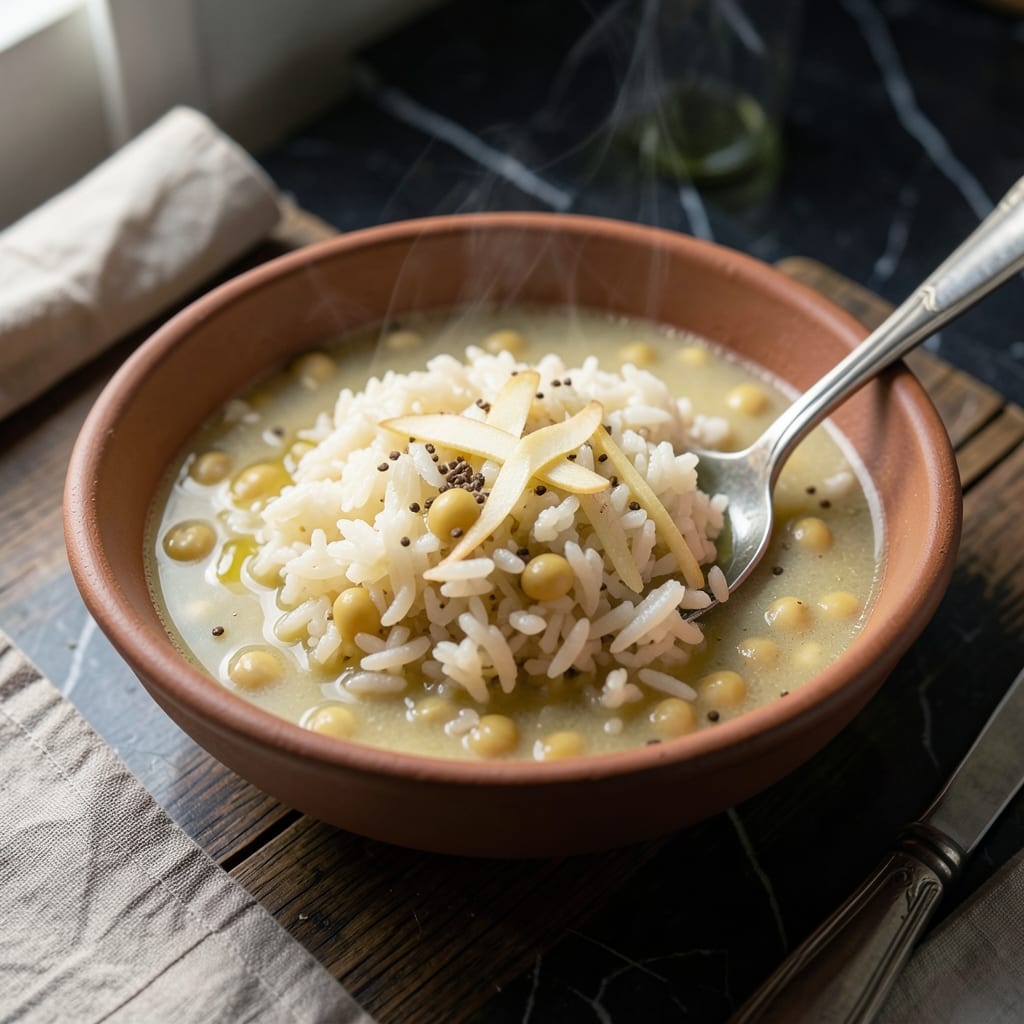
There’s something deeply nourishing about a well-made rice kanji that feels like a warm embrace. This traditional South Indian dish transforms humble ingredients into a comforting, porridge-like meal that’s both simple and deeply satisfying.
Mappillai samba rice, with its unique texture and nutty flavor, is the star here, simmered slowly with just the right amount of water to achieve that perfect, creamy consistency. The process is straightforward, yet the result is anything but ordinary.
What you’ll love is how this dish balances softness and heartiness, making it ideal for cozy meals or when you need something gentle on the stomach. It’s comfort food at its most authentic, with a cultural richness that shines through every spoonful.
Serve it warm, perhaps with a side of spicy pickle or crispy papadum for contrast. This is a recipe worth savoring.
Ingredients for Mappillai Samba Rice Kanji
Humble ingredients create authentic South Indian comfort in a bowl with this dish.
| Ingredient | Amount | Notes |
|---|---|---|
| Mappillai Samba Rice 🌾 | 1 cup | Rinsed until water runs clear |
| Water 💧 | 6 cups | Adjust for desired consistency |
| Yellow Moong Dal 🟡 | ¼ cup | Rinsed, adds creaminess |
| Ghee 🧈 | 1 tbsp | Clarified butter for richness |
| Cumin Seeds 🌿 | ½ tsp | Toasted for aroma |
| Fresh Ginger 🌱 | 1 piece | 1-inch, grated or minced |
| Green Chili 🌶️ | 1 whole | Slit lengthwise, adjust to taste |
| Curry Leaves 🍃 | 8 pieces | Fresh for authentic flavor |
| Asafoetida 🧂 | ¼ tsp | Pinch for tempering |
| Turmeric Powder 🟠 | ¼ tsp | For color and earthiness |
| Salt 🧂 | ½ tsp | Adjust to taste |
| Fresh Cilantro 🌿 | 2 tbsp | Chopped, for garnish |
| Lemon Juice 🍋 | 1 tsp | Freshly squeezed for brightness |
The rice is non-negotiable here. Mappillai samba gives that signature texture—regular rice just won’t cut it. Look for it at Indian grocery stores or online on Amazon. The moong dal adds body, but it’s optional if you’re in a pinch (the ghee and cumin are doing most of the flavor heavy lifting). I grab mine from Patel Brothers since their turnover is fast, so nothing’s sitting old on the shelf.
No ghee? Vegetable oil or coconut oil works, but you’ll miss that buttery depth. Skip the asafoetida if you don’t have it—just add a little extra cumin. Fresh ginger is ideal, but ground ginger at half the amount gets you close. The green chili can be swapped for black pepper if you’re avoiding heat. Curry leaves are the secret weapon though—don’t skip them if you can find them.
Kanji thickens as it sits. Add warm water to loosen it up if needed. Keeps in the fridge for 2-3 days—reheat gently with a splash of water. Honestly, it’s even better the next day once the flavors meld (worth the extra minute to temper fresh spices).
Why You’ll Love This Recipe
- One Pot Meal: I just dump rice, moong dal, and water in a pot, let it simmer, and the cumin seeds in ghee do all the flavor work.
- Comfort in a Bowl: The ghee-toasted cumin blooms into this warm, nutty aroma that makes the simplest kanji taste like a hug.
- Breakfast or Dinner: I make a big batch on Sunday and it’s just as good for a quick breakfast as it is for a light dinner.
- Pennywise Feast: A cup of mappillai samba rice and a handful of dal stretch into meals for days without breaking the bank.
Step-by-Step Instructions for Mappillai Samba Rice Kanji
This comforting porridge comes together with simple steps and a few key techniques.
Step 1: Rinse and Prepare the Base Ingredients
Start by rinsing the 1 cup Mappillai Samba Rice and 0.25 cup Yellow Moong Dal separately under cold water until the water runs clear. This removes excess starch and prevents the kanji from becoming gummy. I like to soak them together in fresh water for 15-20 minutes to soften slightly.
Drain the soaked rice and dal completely. This step ensures even cooking and a smooth, creamy texture in the final dish. The moong dal adds a subtle nuttiness and helps thicken the porridge naturally.
Step 2: Temper the Spices for Maximum Flavor
Heat the 1 tbsp Ghee in a heavy-bottomed pot over medium heat. Once melted, add the 0.5 tsp Cumin Seeds and let them sizzle for 10-15 seconds until fragrant. The seeds should turn a shade darker but not burn.
Add the 0.25 tsp Asafoetida, then immediately toss in the 1 piece Fresh Ginger (grated), 1 whole Green Chili (slit lengthwise), and 8 pieces Curry Leaves. Stir for 30 seconds until the curry leaves become crisp and the ginger releases its aroma. This tempering step builds the foundation of flavor.
Step 3: Cook the Rice and Dal to Perfection
Add the drained rice, dal, 0.25 tsp Turmeric Powder, and 0.5 tsp Salt to the pot. Stir well to coat everything in the spiced ghee. Pour in the 6 cups Water and bring to a boil over high heat.
Once boiling, reduce the heat to low, cover the pot, and let it simmer for 30-35 minutes. Stir occasionally to prevent sticking and check that the mixture thickens to a porridge-like consistency. The rice and dal should be completely soft and the kanji should have a velvety texture.
Step 4: Finish and Serve Warm
Turn off the heat and let the kanji sit covered for 5 minutes. This resting time allows the flavors to meld together. Stir in the 1 tsp Lemon Juice—this adds a bright, tangy note that balances the richness of the dish.
Ladle the kanji into bowls and garnish with 2 tbsp Fresh Cilantro for a pop of freshness. Serve warm for the ultimate comforting experience. The kanji should be smooth, lightly spiced, and heartwarming with every spoonful. Adjust the consistency with a splash of water if needed before serving.
Pro Tips For Making Mappillai Samba Rice Kanji
- Soak the Rice: I learned this the hard way—soak the mappillai samba rice for at least 20 minutes before cooking. It cuts the cooking time in half and gives the kanji a creamier texture.
- Toast the Dal: Dry-roast the yellow moong dal in a pan until lightly golden before adding water. Sounds weird, but it works: it removes the raw taste and adds a nutty depth.
- Skip the Rush: Resist the urge to crank up the heat—simmer the kanji on low-medium after the initial boil. High heat makes it thicken too fast and stick to the bottom.
- Ghee Last: Stir in the ghee with the cumin seeds only after the kanji is cooked. Adding it too early can make the dish greasy instead of rich and fragrant.
Regional Styles of This mappillai samba rice kanji
Tamil Nadu Tradition
In Tamil Nadu, this creation is a staple breakfast or light dinner, often served with coconut chutney or gothsu. The rice is cooked slightly thicker here, almost like a soft congee, and often includes a tempering of mustard seeds and urad dal for extra crunch. 🌾
Kerala Style
Kerala adds a touch of coconut milk to the kanji, giving it a richer, creamier texture. The tempering usually includes shallots and dried red chilies for a bolder flavor. I love how this version feels extra indulgent.
Karnataka Approach
In Karnataka, the dish often includes toor dal instead of moong dal, making it heartier. The tempering is simpler, with just cumin and curry leaves, letting the rice shine. It’s a more rustic, earthy take on the classic.
Andhra Telangana Twist
This region prefers a spicier version, with extra green chilies and red chili powder in the tempering. Sometimes, tamarind pulp is added for a tangy kick. The result is a fiery, bold kanji that wakes up your taste buds. 🔥
Sri Lankan Influence
In Sri Lanka, this dish often includes pandaan leaves and lemongrass for a fragrant twist. The rice is cooked in coconut water for a subtle sweetness. It’s a lighter, more aromatic variation.
Hyderabad Special
Hyderabadi kanji is richer, with yogurt or buttermilk stirred in at the end. The tempering includes garlic and fenugreek seeds, adding depth. It’s a luxurious, cooling version perfect for hot days.
Nutrition Facts
Frequently Asked Questions
What makes mappillai samba rice special for kanji?
This rice variety has a unique nutty flavor and soft texture that absorbs water well. It creates a creamy consistency perfect for kanji without turning mushy.
Can I use regular rice instead?
Not recommended. Regular rice lacks the distinct texture and flavor profile. If necessary, short-grain rice works better than basmati, but the result won’t be authentic.
How do I adjust the consistency?
Add warm water gradually if it’s too thick. For thinner kanji, use 1 extra cup of water initially. Stir well after adding liquid.
What’s the best way to store leftovers?
Keep in an airtight container in the fridge for 2-3 days. Reheat gently with a splash of water, as kanji thickens when cold.

- Mujadara Rice and Lentils Recipe: Earthy Spiced Lentils With Caramelized Onions - November 1, 2026
- Naija Fried Rice Recipe: Street-Style Spice With Veggie Crunch - November 1, 2026
- Mushy Rice Recipe: Fluffy Grains Transformed in Minutes - November 1, 2026