
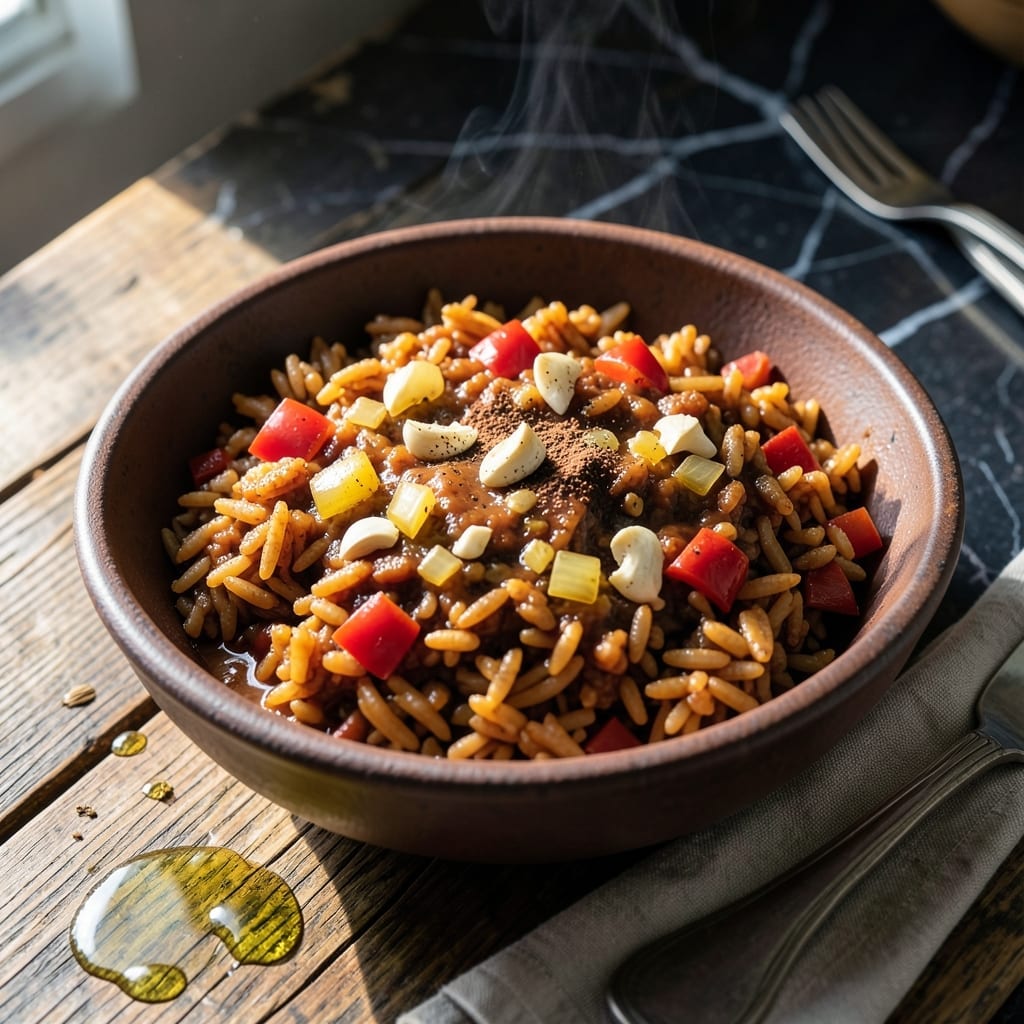
This dish carries the warmth of West African tradition in every grain, a testament to the rich culinary heritage that inspired Maya Angelou’s table.
Cooked in a single pot, this recipe transforms simple ingredients into a vibrant, one-pot masterpiece with deep, earthy flavors.
The slow simmering process allows the rice to absorb the savory blend of tomatoes, onions, and spices, creating a dish that’s both hearty and deeply aromatic.
Perfect for gatherings or a comforting family meal, this creation honors history while delivering bold, satisfying results with minimal effort.
Ingredients for Maya Angelou Red Rice
These vibrant ingredients honor tradition while building deep, earthy layers in one pot.
| Ingredient | Amount | Notes |
|---|---|---|
| Long-Grain White Rice 🍚 | 2 cups | Rinsed thoroughly before cooking |
| Canned Tomato Puree 🍅 | 2 cups | San Marzano preferred for depth |
| Yellow Onion 🧅 | 1 whole | Finely diced for even distribution |
| Red Bell Pepper 🌶️ | 1 whole | Diced into small uniform pieces |
| Garlic Cloves 🧄 | 4 cloves | Minced finely for maximum flavor |
| Fresh Ginger Root 🌿 | 1 tbsp | Peeled and grated freshly |
| Vegetable Stock 💧 | 3 cups | Low-sodium for controlled seasoning |
| Tomato Paste 🍅 | 2 tbsp | Concentrated for rich color |
| Smoked Paprika 🌶️ | 1 tsp | Essential for earthy depth |
| Ground Cumin 🌿 | 1 tsp | Toasted briefly for warmth |
| Dried Thyme 🍃 | 1 tsp | Crushed between fingers to release oils |
| Cayenne Pepper 🔥 | ¼ tsp | Adjust for heat preference |
| Bay Leaves 🍃 | 2 whole | Removed before serving |
| Kosher Salt 🧂 | 1 ½ tsp | Diamond Crystal preferred for texture |
| Extra-Virgin Olive Oil 🫒 | 3 tbsp | Divided for sautéing and finishing |
The rice selection is critical for authentic texture—long-grain white rice absorbs the tomato-onion broth perfectly. San Marzano tomato puree from Whole Foods or Eataly delivers the sweetness and depth this dish demands (avoid acidic canned varieties). For the vegetable stock, Imagine or Pacific Foods brands offer consistent quality without overpowering artificial flavors. Fresh ginger and garlic should be firm and fragrant—wilted or soft cloves indicate age and reduced potency.
No red bell pepper? Green bell pepper at half the quantity works, though it lacks the visual pop. Fresh tomatoes can replace puree—use 6-8 ripe Roma tomatoes, peeled and blended. Missing smoked paprika? A pinch of liquid smoke plus sweet paprika mimics the depth (use sparingly). For heat-adverse palates, omit cayenne entirely—the dish remains rich and aromatic. Vegetable stock can be substituted with water in a pinch, but expect a less nuanced base.
This keeps beautifully for 4-5 days refrigerated, as the rice continues absorbing flavors. Freeze portions for up to 3 months—reheat from frozen on the stovetop with a splash of water. The dish is even better the next day once the spices fully meld with the rice (worth the wait).
Why You’ll Love This Recipe
- One Pot Wonder: I toss everything in together—the rice, tomato puree, peppers—then let it simmer while I set the table.
- Rich and Savory: The garlic and tomato puree create this deep, comforting flavor that’s way more than the sum of its parts.
- Feeds a Crowd: I make a big batch on Sunday and we eat it all week, hot or cold, with just about anything.
- Pantry Friendly: Between us, I always have these ingredients on hand, so it’s my go-to when the fridge looks sad.
Step-by-Step Instructions for Maya Angelou Red Rice
This one-pot method builds deep, layered flavors while maintaining the dish’s cultural authenticity and simplicity.
Step 1: Sauté Aromatics to Build the Flavor Foundation
Heat 2 tablespoons of the extra-virgin olive oil in a heavy-bottomed pot over medium heat. Add the finely diced yellow onion and diced red bell pepper, cooking for 5-6 minutes until softened and just beginning to caramelize at the edges.
Stir in the minced garlic cloves and grated fresh ginger root, cooking for an additional 1-2 minutes until fragrant. This aromatic base is crucial—it creates the complex flavor profile characteristic of West African cooking. Watch for the onions to turn translucent, signaling they’re ready for the next step.
Step 2: Toast Spices and Incorporate Tomato Elements
Add the tomato paste, smoked paprika, ground cumin, dried thyme, and cayenne pepper to the pot. Cook for 2-3 minutes, stirring constantly, until the tomato paste darkens slightly and the spices become fragrant. This toasting step intensifies their flavors.
Pour in the 2 cups canned tomato puree and stir to combine. Simmer for 5 minutes to meld the flavors, allowing the mixture to reduce slightly. The color will deepen to a rich, brick-red hue, indicating the base is properly developed.
Step 3: Add Rice and Liquid for One-Pot Cooking
Stir in the 2 cups long-grain white rice, ensuring each grain is coated with the tomato-spice mixture. This step prevents clumping and ensures even flavor distribution. Add the 3 cups vegetable stock, 1.5 teaspoon kosher salt, and 2 whole bay leaves, stirring to combine.
Bring the mixture to a boil, then immediately reduce heat to low. Cover the pot and let it simmer undisturbed for 20-25 minutes. The rice should absorb all the liquid, and the surface will appear slightly domed when done.
Step 4: Rest and Finish for Perfect Texture
Once the rice is tender and the liquid is absorbed, remove the pot from heat. Let it rest, covered, for 10 minutes. This resting period allows the rice to steam and achieve the ideal texture—fluffy yet slightly sticky, with each grain distinct.
Discard the bay leaves and fluff the rice gently with a fork. Drizzle with the remaining 1 tablespoon extra-virgin olive oil for a luxurious finish. The final dish should have a vibrant red-orange color and a rich, aromatic scent that fills the kitchen.
Pro Tips For Making Maya Angelou Red Rice
- Toast the Rice: Cook the rice in the pot for 2-3 minutes before adding liquids—this deepens the nutty flavor and prevents a mushy texture. I learned this the hard way after making gummy rice more times than I’d like to admit.
- Sauté the Veggies: Dice the onion and bell pepper finely and cook them until soft, about 5 minutes, so their sweetness fully develops. After burning a few batches, I finally figured out that raw veggies leave the rice tasting harsh.
- Use Full-Fat Tomato Puree: Skip the low-fat or watered-down versions; the richness of full-fat canned tomato puree balances the acidity and gives the rice its signature depth.
- Simmer Covered: Once everything’s in the pot, resist the urge to peek—keep it covered and on low heat for 20 minutes. My grandmother swore by this, and she was right: lifting the lid lets the steam escape, and the rice won’t cook evenly.
Perfect Pairings for These Flavors
Side Dish Pairings
This dish shines alongside sautéed collard greens with garlic and apple cider vinegar—the slight bitterness balances the rice’s richness. I also love serving it with black-eyed peas cooked with smoked turkey for added protein. 💛
Protein Additions
For meat lovers, grilled chicken thighs or spicy shrimp complement the earthy flavors beautifully. The chicken should be marinated in lemon juice and garlic for 30 minutes before grilling. Shrimp can be quickly sautéed with Cajun seasoning.
Fresh Elements
A simple cucumber and tomato salad with red onion and lime dressing cuts through the heartiness. I toss 2 cups diced cucumber with 1 cup cherry tomatoes and ¼ cup thinly sliced red onion. The acidity refreshes your palate.
Beverage Pairings
Hibiscus iced tea (also called bissap) is a traditional West African choice that echoes the dish’s cultural roots. For alcohol, a crisp Sauvignon Blanc or light lager beer works well. The tea’s tartness especially enhances the rice’s savory depth. 🍷
Nutrition Facts
Frequently Asked Questions
Can I use brown rice instead of white?
Yes, but adjust the liquid to 4 cups and simmer for 40-45 minutes. The texture will be chewier, and the dish may lose some of its vibrant red color.
Why is the resting time important?
Letting it sit for 10 minutes allows the rice to steam evenly, preventing a gummy texture. Skipping this step can result in unevenly cooked grains.
Can I make this in a rice cooker?
Yes! Sauté aromatics first, then transfer to the rice cooker with all ingredients. Use the standard setting, but check at 20 minutes in case adjustments are needed.
How do I fix undercooked rice?
Add ¼ cup hot water or stock, cover, and cook for another 5-10 minutes on low heat. Avoid stirring to prevent mushiness.

- Peri Peri Rice Recipe: Spicy Portuguese One-Pot Harmony - November 6, 2026
- Mexican Flavoured Rice Recipe: Authentic Spice-Infused One-Pot Meal - November 6, 2026
- Lao Gan Ma Fried Rice Recipe: Spicy Wok-Tossed Perfection - November 6, 2026