
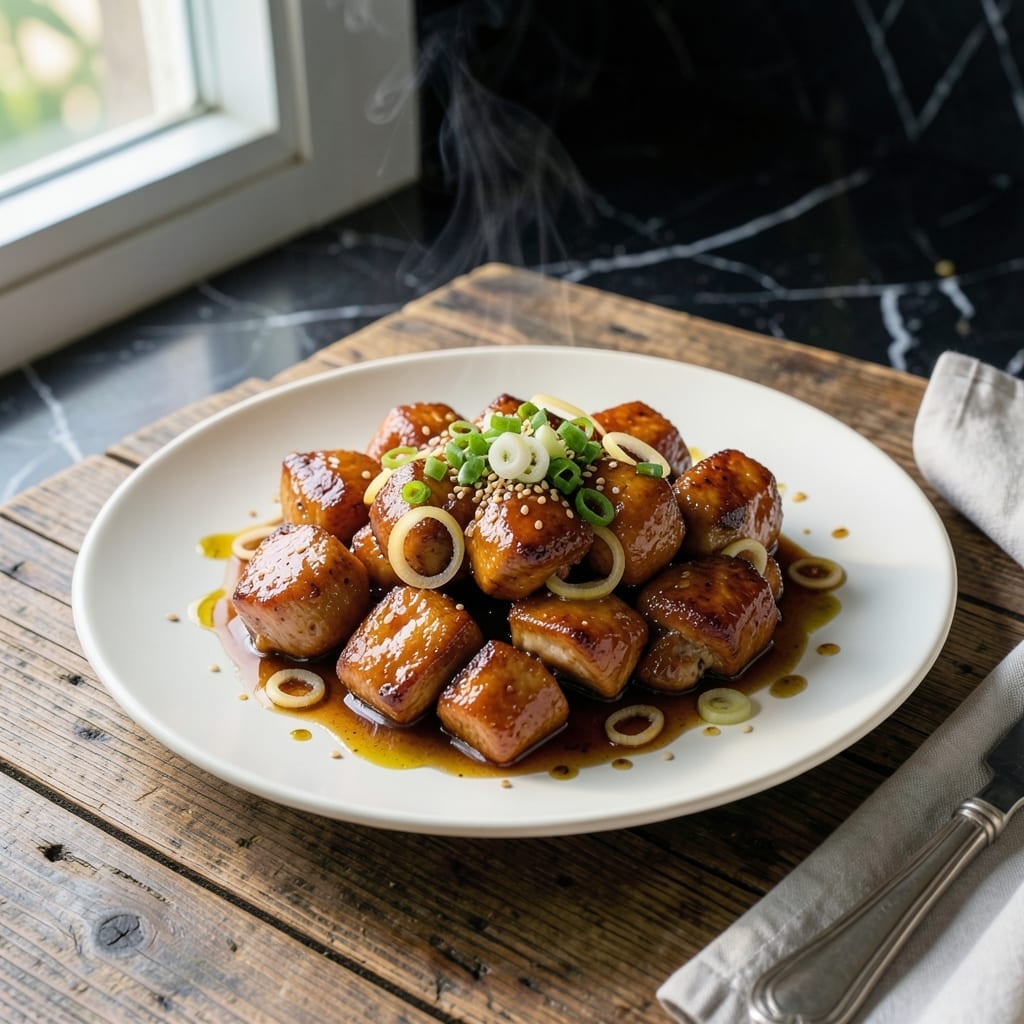
This recipe delivers perfectly balanced sweet and savory flavors with minimal effort. Mirin creates a glossy glaze that transforms simple chicken into a restaurant-worthy dish.
The key is reducing the mirin-based sauce until it thickens into a sticky, caramelized coating. This ensures every bite bursts with depth and brilliance.
You’ll end up with tender, juicy chicken pieces glazed in a rich, aromatic sauce. The sweetness of mirin complements the savory notes beautifully.
Serve over steamed rice to soak up every drop of the incredible sauce. This dish proves that simple ingredients can create extraordinary results.
Ingredients for Mirin Chicken
Transform everyday chicken with a glossy, caramelized mirin glaze and pantry staples.
| Ingredient | Amount | Notes |
|---|---|---|
| Boneless, Skinless Chicken Thighs 🍗 | 1 ½ lb | Cut into bite-sized pieces |
| Mirin 🍶 | ½ cup | Sweet rice wine for glaze |
| Soy Sauce 🫙 | ⅓ cup | Low-sodium preferred |
| Brown Sugar 🍚 | 2 tbsp | Light or dark works |
| Fresh Garlic Cloves 🧄 | 4 cloves | Minced finely |
| Fresh Ginger Root 🌿 | 1 tbsp | Peeled and grated |
| Rice Vinegar 🍯 | 2 tbsp | For acidity balance |
| Sesame Oil 🫒 | 1 tsp | Toasted variety preferred |
| Cornstarch 🌾 | 1 tbsp | For sauce thickening |
| Steamed White Rice 🍚 | 2 cups | Cooked, for serving |
| Green Onions 🧅 | 3 whole | Thinly sliced for garnish |
| Sesame Seeds 🌰 | 1 tsp | Toasted, for garnish |
| Vegetable Oil 🫒 | 1 tbsp | For cooking chicken |
The chicken thighs are non-negotiable here—bone-in works but requires longer cooking. Whole Foods or Costco carry high-quality options with good marbling. For mirin, Kikkoman Aji-Mirin is widely available and delivers consistent sweetness. Fresh ginger and garlic are essential; pre-minced versions lack depth and can taste bitter.
No mirin? Substitute 1/4 cup sake plus 1 tbsp sugar. Short on soy sauce? Tamari at a 1:1 ratio works, but reduce sodium elsewhere. Brown sugar can be swapped for honey (though not traditional). For gluten-free, tamari plus cornstarch keeps the sauce thick and rich. The rice vinegar adds brightness—don’t skip it.
The sauce thickens as it cools. Store leftovers in an airtight container for up to 4 days. Reheat gently on the stovetop with a splash of water. The chicken freezes well for 3 months, though the texture softens slightly.
Why You’ll Love This Recipe
- One Pan Wonder: I just toss the chicken thighs with mirin, soy sauce, and brown sugar, then let the oven do the work.
- Sweet-Savory Magic: The caramelized edges from the brown sugar and mirin make every bite ridiculously good.
- Weeknight Hero: Honestly, it’s my go-to for busy Tuesdays—ready before the kids finish their homework.
- Budget Stretcher: A pound of thighs feeds four, and the leftovers taste even better the next day.
Step-by-Step Instructions for Sweet and Savory Glazed Chicken
Master the technique for restaurant-quality results with minimal effort and maximum flavor.
Step 1: Prepare the Chicken and Aromatics
Cut the 1.5 lb boneless, skinless chicken thighs into bite-sized pieces for even cooking and maximum surface area to absorb the glaze. I prefer keeping the pieces uniform—about 1-inch cubes—so they cook through simultaneously without over-browning.
Mince the 4 cloves fresh garlic cloves finely and peel and grate the 1 tbsp fresh ginger root. The ginger should be freshly grated for optimal pungency and to release its aromatic oils, which are essential for balancing the sweetness of the mirin.
Step 2: Sear the Chicken to Develop Flavor
Heat the 1 tbsp vegetable oil in a large skillet over medium-high heat until it shimmers. Add the chicken pieces in a single layer, working in batches if necessary to avoid overcrowding. Sear undisturbed for 4-5 minutes until the undersides develop a deep golden-brown crust.
Flip the chicken and cook for another 3-4 minutes until just cooked through. The internal temperature should reach 165°F. Transfer the chicken to a plate and set aside. The fond left in the pan will serve as the flavor base for the glaze.
Step 3: Create the Mirin Glaze
In the same skillet, reduce heat to medium. Add the minced garlic and grated ginger, stirring constantly for 30 seconds until fragrant but not browned. Immediately pour in the 0.5 cup mirin, 0.33 cup soy sauce, 2 tbsp brown sugar, and 2 tbsp rice vinegar.
Stir to dissolve the brown sugar and scrape up any browned bits from the pan. Bring the mixture to a gentle simmer and cook for 3-4 minutes until it reduces slightly and takes on a glossy sheen. The glaze should coat the back of a spoon but remain pourable.
Step 4: Thicken and Finish the Dish
In a small bowl, mix the 1 tbsp cornstarch with 2 tablespoons of cold water to create a slurry. Slowly pour the slurry into the simmering glaze while stirring constantly. Cook for 1-2 minutes until the sauce thickens to a syrupy consistency that clings to the chicken.
Return the chicken to the skillet and toss to coat evenly in the glaze. Drizzle with the 1 tsp sesame oil and stir to incorporate. The sesame oil adds a nutty depth that complements the sweet and savory profile perfectly.
Step 5: Serve with Garnishes and Rice
Divide the 2 cups steamed white rice among four plates. Arrange the glazed chicken over the rice, spooning any remaining sauce from the pan on top. The rice should be hot to soak up the excess glaze.
Garnish with the 3 whole green onions, thinly sliced, and sprinkle with the 1 tsp sesame seeds. The green onions add a fresh, crisp contrast, while the sesame seeds provide a subtle crunch and visual appeal. Serve immediately while the glaze is still glossy and the chicken is at its peak tenderness.
Pro Tips For Making Mirin Chicken
- Sear First, Simmer Later: Brown the chicken thighs hard in a hot pan for 3-4 minutes per side before adding liquids—I learned this the hard way when my first few batches tasted bland because I skipped this step.
- Grate the Garlic: Use a microplane for the fresh garlic cloves instead of mincing; it distributes evenly and melts into the mirin sauce instead of sinking to the bottom.
- Reduce the Sauce: After cooking, boil the remaining sauce for 2-3 minutes until it thickens slightly—skip this and you’ll end up with watery, sad chicken.
- Trim the Fat: Trim excess fat from the chicken thighs before cooking; it prevents greasy pooling in the pan and lets the mirin glaze cling better to the meat.
Regional Styles of These Flavors
Japanese Classic
In Japan, this dish is called Tebasaki and often uses chicken wings instead of thighs. The glaze typically includes white miso paste for umami depth, creating a more complex flavor profile than the standard version.
Korean Twist
Korean variations swap mirin for gochujang (Korean chili paste) and add 1 tbsp honey plus 1 tbsp gochugaru (chili flakes) for heat. The result is a spicy-sweet glaze that’s become a global favorite. 🌶️
Chinese Adaptation
Chinese versions often use Shaoxing wine instead of mirin and include hoisin sauce for a deeper, saltier profile. Star anise or five-spice powder sometimes appears in the marinade for aromatic complexity.
Thai Variation
Thai cooks replace mirin with palm sugar and add fish sauce plus lime juice for a tangy-sweet balance. Lemongrass and kaffir lime leaves infuse the glaze with fragrant citrus notes.
Hawaiian Fusion
In Hawaii, you’ll find this dish made with pineapple juice substituted for half the mirin, plus teriyaki sauce. The tropical sweetness pairs perfectly with grilled chicken skewers. 💛
American Style
Stateside versions often add 1/4 cup ketchup to the glaze for a familiar sweet-tangy flavor. Some home cooks also include 1 tsp smoked paprika for a subtle barbecue-like depth.
Nutrition Facts
Frequently Asked Questions
Can I use chicken breast instead of thighs?
Yes, but thighs stay juicier. If using breast, reduce cooking time to 3-4 minutes per side to prevent dryness. The glaze still works beautifully with either cut.
How do I make the glaze thicker?
Simmer the sauce longer after adding cornstarch slurry. For extra thickness, use 1.5 tbsp cornstarch instead. The glaze should coat the back of a spoon.
What if I don’t have mirin?
Substitute 1/4 cup sake plus 1 tbsp sugar. This mimics mirin’s sweetness and acidity. Avoid dry sherry—it lacks the necessary sugar content.
How long will leftovers keep?
Store in an airtight container for up to 4 days in the fridge. Reheat gently on the stove with a splash of water to restore glossiness.

- Jollof Rice Sauce Recipe: West African Tomato and Spice Infusion - September 25, 2026
- Japanese Rice Soup Recipe: Umami-Rich Comfort in a Bowl - September 25, 2026
- Homemade Cream Of Rice Recipe: Silk-Smooth Breakfast in Minutes - September 25, 2026