
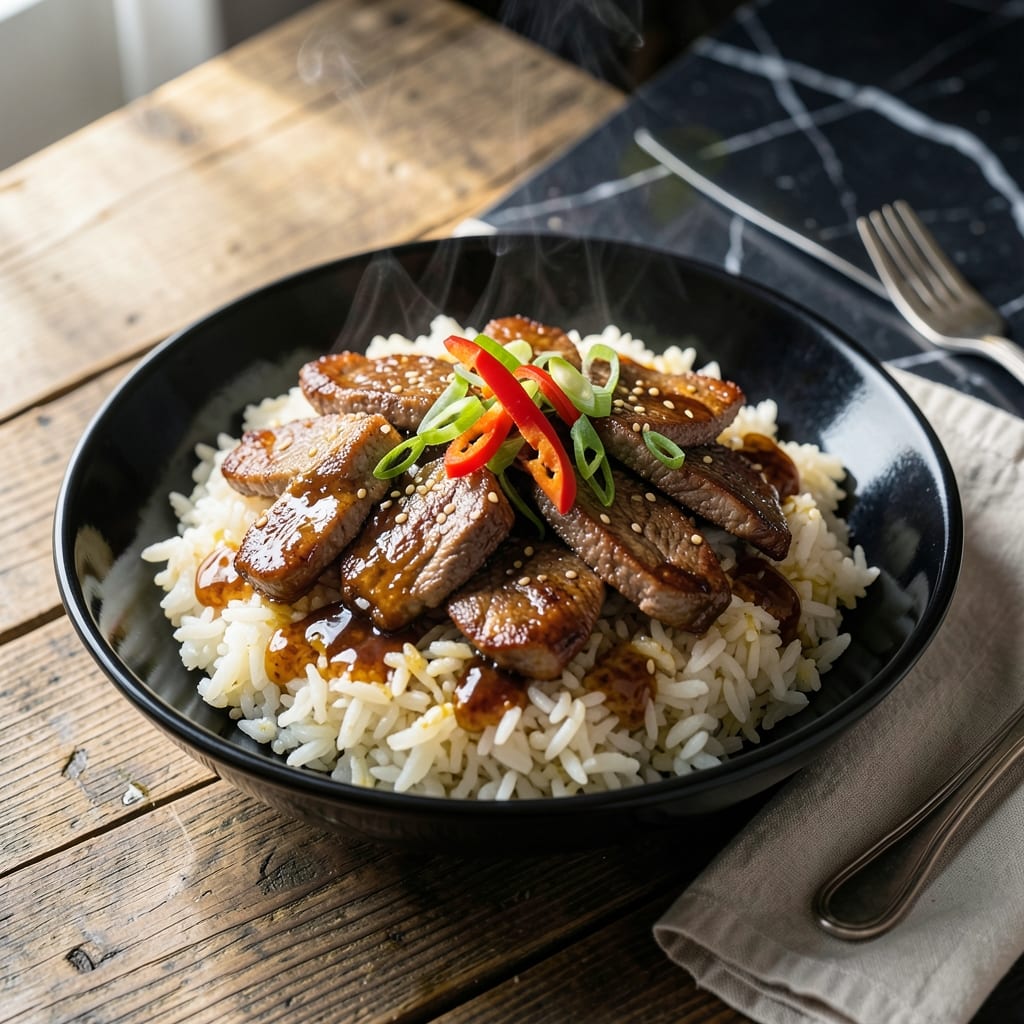
This dish brings bold Asian flavors to your home kitchen with a restaurant-quality finish.
The secret lies in quick cooking over high heat, allowing the beef to stay tender while vegetables keep their crisp texture. A savory sauce ties everything together without making the rice soggy.
You’ll achieve perfectly seared beef strips, fluffy rice, and a balance of sweet and umami notes in every bite. The wok-tossed method ensures even distribution of flavors throughout.
Serve this as a complete meal or alongside your favorite Asian-inspired dishes. Here’s how to make it right.
Ingredients for Mongolian Beef Fried Rice
A few fresh ingredients and pantry staples create this bold, restaurant-style dish with ease.
| Ingredient | Amount | Notes |
|---|---|---|
| Flank Steak 🥩 | 1 ¼ lb | Thinly sliced against the grain |
| Long-Grain White Rice 🍚 | 3 cups | Cooked and cooled completely |
| Soy Sauce 🫒 | ⅓ cup | Low-sodium preferred for balance |
| Dark Brown Sugar 🍚 | ⅓ cup | Packed, for caramelized depth |
| Sesame Oil 🫒 | 1 tbsp | Toasted variety for nutty aroma |
| Vegetable Oil 🫒 | 3 tbsp | High smoke point for wok frying |
| Garlic Cloves 🧄 | 4 cloves | Minced fine for even flavor |
| Fresh Ginger 🌿 | 1 tbsp | Grated, for zesty kick |
| Carrots 🥕 | 2 whole | Julienned for crisp texture |
| Green Onions 🧅 | 4 whole | Thinly sliced, whites and greens separated |
| Frozen Peas 🌱 | 1 cup | Thawed, for sweet contrast |
| Cornstarch 🌾 | 2 tbsp | For velvety sauce thickening |
| Rice Vinegar 🍋 | 1 tbsp | Adds bright acidity |
| Red Pepper Flakes 🌶️ | ½ tsp | Adjust to spice preference |
| Large Eggs 🥚 | 2 whole | Lightly beaten for binding |
The flank steak is non-negotiable here. Look for well-marbled pieces at Whole Foods or your local butcher—it stays tender even with quick cooking. Slice it thin against the grain (freeze for 20 minutes first to make it easier). For the rice, day-old cooked rice works best (fresh rice turns mushy), and jasmine or basmati are my go-tos from Trader Joe’s.
No flank steak? Skirt steak or sirloin work in a pinch, but avoid tougher cuts like chuck. Swap dark brown sugar for honey or maple syrup if needed. The soy sauce can be tamari for gluten-free, but reduce by half—it’s saltier. Fresh ginger is ideal, but ground ginger at half the amount gets you close. Out of rice vinegar? Apple cider vinegar works too.
Cooked rice keeps in the fridge for 3 days or freezes for 1 month. The sliced steak? Use within 2 days or freeze for 3 months. Leftovers reheat beautifully—just splash a little water in the pan to revive the texture (trust me on this).
Why You’ll Love This Recipe
- One Pan Magic: I toss everything in a single wok—steak, rice, sauce—and it’s done in 20 minutes flat.
- Sweet-Savory Fix: The dark brown sugar caramelizes with the soy sauce, coating every grain of rice in that sticky, umami-packed glaze.
- Weeknight Hero: Honestly, it’s my Tuesday lifesaver—filling enough for dinner, then tastes even better as leftovers.
- Budget Stretcher: Flank steak goes further here, and a little sesame oil makes the whole dish feel fancy without the cost.
Step-by-Step Instructions for Mongolian Beef Fried Rice
Master the wok technique and you’ll have restaurant-quality fried rice with tender beef in no time.
Step 1: Velvet the Flank Steak for Tenderness
Thinly slice the 1.25 lb Flank Steak against the grain into ¼-inch strips. This shortens the muscle fibers for maximum tenderness. Toss the strips with 2 tbsp Cornstarch until evenly coated—this creates a velvety texture that locks in juices during high-heat cooking.
Heat 1 tbsp Vegetable Oil in a wok over high heat until shimmering. Add half the beef in a single layer (don’t overcrowd or it’ll steam instead of sear) and cook for 1-2 minutes until just browned but still slightly pink inside. Remove and repeat with remaining beef. Set aside.
Step 2: Create the Mongolian Sauce Foundation
In the same wok, add 1 tbsp Vegetable Oil and swirl to coat. Add the 4 cloves Garlic Cloves and 1 tbsp Fresh Ginger, stirring constantly for 30 seconds until fragrant but not browned. The aroma should be sharp and fresh—this builds the flavor base.
Immediately add 0.33 cup Soy Sauce, 0.33 cup Dark Brown Sugar, 1 tbsp Rice Vinegar, and 0.5 tsp Red Pepper Flakes. Stir until the sugar dissolves and the mixture comes to a gentle simmer, about 2 minutes. The sauce should look glossy and slightly thickened.
Step 3: Scramble Eggs and Combine All Elements
Push the sauce to one side of the wok and add the remaining 1 tbsp Vegetable Oil to the empty space. Pour in the 2 whole Large Eggs and scramble quickly with a spatula until just set but still soft, about 30 seconds. The eggs should form soft curds, not dry out.
Add the 3 cups Long-Grain White Rice (it must be completely cooled to prevent mushiness), 2 whole Carrots, 1 cup Frozen Peas, and the cooked beef. Drizzle with 1 tbsp Sesame Oil. Toss everything together with a spatula, pressing the rice against the hot wok surface to achieve some crispy bits.
Step 4: Finish with Green Onions and Final Toss
Cook for an additional 2-3 minutes until everything is heated through and the rice takes on a light golden color. The beef should be fully cooked and the vegetables tender-crisp. Taste and adjust seasoning if needed—though the soy sauce should provide enough saltiness.
Remove from heat and stir in the 4 whole Green Onions (both whites and greens). The residual heat will slightly wilt the greens while keeping their bright color and fresh flavor. Serve immediately while hot, with the green onion tops as a vibrant garnish on top.
Pro Tips For Making Mongolian Beef Fried Rice
- Slice Against the Grain: Cut the flank steak into thin strips against the grain for maximum tenderness—I learned this the hard way after chewing through tough bites in my first few attempts.
- Use Day-Old Rice: Fresh rice turns mushy; spread leftover long-grain rice on a tray and refrigerate overnight to guarantee dry, separate grains that fry up perfectly.
- Skip the Overcrowding: Cook the beef in batches to avoid steaming it in the pan—after ruining a batch with soggy meat, I now swear by this step.
- Bloom the Sauce: Heat the soy sauce, brown sugar, and sesame oil together for 1-2 minutes before adding to the rice; it deepens the flavor and prevents a raw, thin sauce.
Best Sauces and Condiments for These Flavors
Classic Mongolian Sauce
For an extra boost of flavor, I love drizzling an additional 2 tbsp of the leftover Mongolian sauce over the finished dish. The combination of soy sauce, brown sugar, and rice vinegar creates that signature sweet-savory balance. 🔥
Sriracha for Heat
If you enjoy spice, Sriracha is my go-to condiment for this dish. Start with 1 tsp per serving and adjust to taste. The garlic and vinegar notes complement the Mongolian flavors beautifully without overpowering them.
Sweet Chili Drizzle
A Maesri brand sweet chili sauce adds a fruity, slightly tangy contrast to the rich beef and rice. I drizzle about 1 tbsp per plate in a zigzag pattern. It pairs especially well with the carrots and peas in the dish.
Sesame Seeds Garnish
Toasted sesame seeds add nutty crunch and visual appeal. I sprinkle about 1 tsp per serving over the top just before serving. Toast them in a dry pan for 30 seconds until golden and fragrant.
Lime Wedges
A squeeze of fresh lime juice brightens all the flavors. I serve each portion with 1 lime wedge on the side. The acidity cuts through the richness and enhances the freshness of the vegetables. 💛
Extra Green Onions
For garnish and crunch, I always keep extra thinly sliced green onions on hand. A small handful per serving adds freshness and color. They’re also great for adjusting the onion flavor to individual preferences.
Nutrition Facts
Frequently Asked Questions
Can I use a different cut of beef?
Yes, but choose tender cuts like skirt steak or sirloin. Avoid tougher options like chuck, as they won’t stay tender with quick cooking. Slice thinly against the grain for best results.
Why must the rice be cold?
Cold rice prevents mushiness when stir-frying. Freshly cooked rice has too much moisture and will turn pasty in the wok. Day-old or chilled rice works perfectly.
Can I make this gluten-free?
Swap soy sauce for tamari or coconut aminos. Use cornstarch (already gluten-free) and ensure all other ingredients are certified gluten-free.
What if my sauce is too thin?
Mix 1 tsp cornstarch with 1 tbsp water and stir into the sauce. Cook for 1-2 minutes until thickened. Avoid adding dry cornstarch directly, as it can clump.

- Mujadara Rice and Lentils Recipe: Earthy Spiced Lentils With Caramelized Onions - November 1, 2026
- Naija Fried Rice Recipe: Street-Style Spice With Veggie Crunch - November 1, 2026
- Mushy Rice Recipe: Fluffy Grains Transformed in Minutes - November 1, 2026