
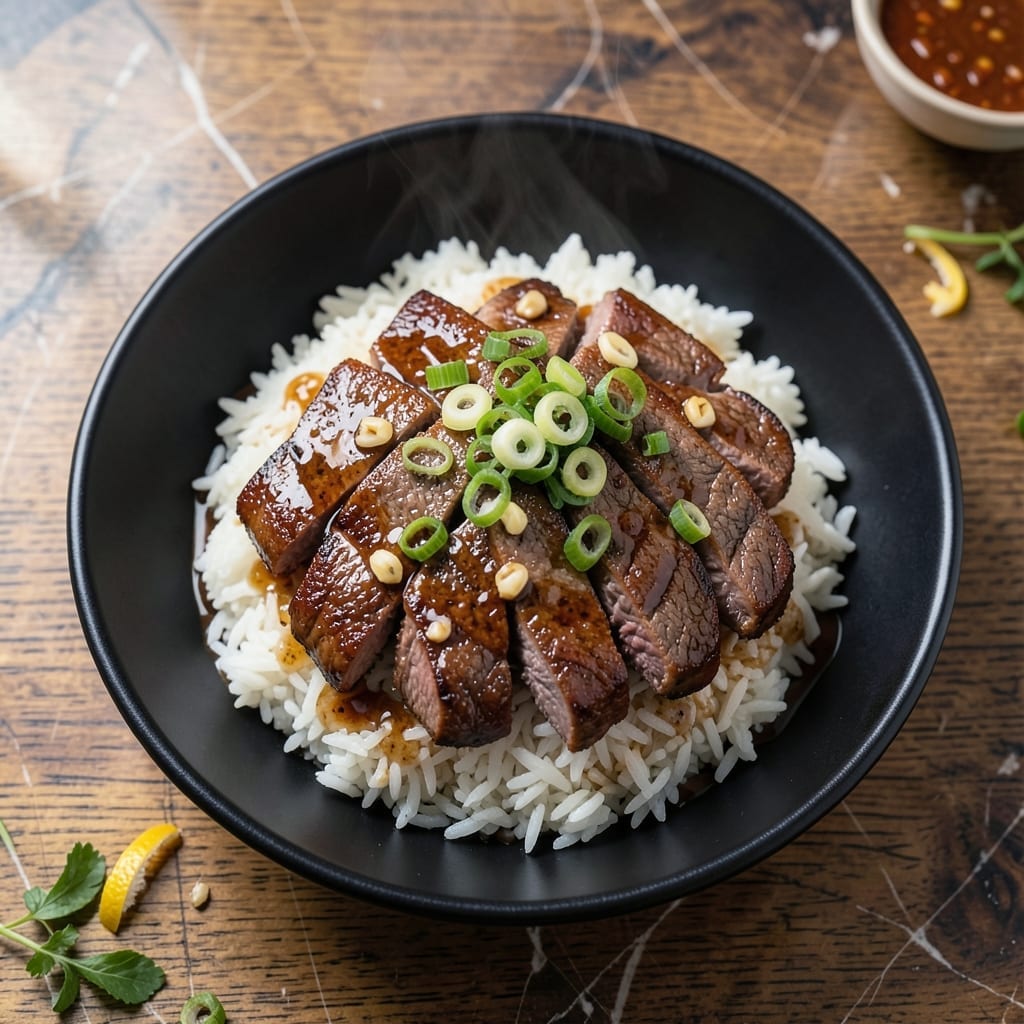
This dish brings traditional Asian flavors to your dinner table with a perfect balance of savory and sweet. The garlic-soy glaze transforms simple beef into something extraordinary.
I developed this method to ensure the beef stays tender while absorbing maximum flavor. Jasmine rice serves as the ideal canvas, soaking up every drop of the rich sauce.
What you get is a restaurant-quality meal with minimal effort. The aroma alone will have everyone gathering in the kitchen.
The recipe comes together in about 30 minutes, making it perfect for busy weeknights. Each bite delivers complex layers of umami and garlic.
Ingredients for Asian Beef and Rice
Pantry staples and fresh aromatics create this flavor-packed dish with minimal effort required.
| Ingredient | Amount | Notes |
|---|---|---|
| Flank Steak 🥩 | 1 ½ lb | Thinly sliced against grain |
| Jasmine Rice 🍚 | 1 ½ cups | Uncooked, rinsed until clear |
| Soy Sauce 🥢 | ½ cup | Low-sodium preferred for balance |
| Garlic Cloves 🧄 | 6 cloves | Minced for maximum flavor |
| Brown Sugar 🍚 | 3 tbsp | Light or dark works |
| Rice Vinegar 🍶 | 2 tbsp | For acid balance in glaze |
| Fresh Ginger 🌿 | 1 tbsp | Finely grated for smooth texture |
| Sesame Oil 🫒 | 1 tbsp | Toasted variety for depth |
| Cornstarch 🌾 | 1 tbsp | For velvety sauce thickness |
| Green Onions 🧅 | 3 whole | Thinly sliced for garnish |
| Water 💧 | 3 cups | For cooking rice |
| Vegetable Oil 🫒 | 2 tbsp | High smoke point for searing |
| Red Pepper Flakes 🌶️ | ½ tsp | Optional for heat |
| Sesame Seeds 🌰 | 1 tbsp | Toasted for garnish |
The beef quality is paramount. Flank steak offers ideal texture when sliced thin against the grain—Costco and Whole Foods carry excellent options. Look for vibrant red color and good marbling. For the jasmine rice, Lundberg Family Farms produces consistently excellent results. The soy sauce should be Kikkoman low-sodium to control salt levels without sacrificing depth.
Need to swap the flank steak? Skirt steak works equally well. No brown sugar? Honey or coconut sugar at one-to-one ratio. Missing rice vinegar? Apple cider vinegar in a pinch. The ginger must be fresh—powdered lacks the bright, zesty quality. For gluten-free versions, tamari instead of soy sauce maintains the umami profile.
The cooked dish reheats beautifully for 3-4 days in the fridge. Store rice and beef separately to maintain texture. Freezes well for 2 months—thaw overnight before reheating. Toast sesame seeds just before serving for maximum aroma.
Why You’ll Love This Recipe
- One Pan Meal: I just toss the flank steak, soy sauce, and brown sugar together while the rice cooks—minimal cleanup, maximum flavor.
- Sweet-Savory Magic: The brown sugar caramelizes with the garlic and soy sauce, giving that sticky, umami-rich glaze that coats every bite.
- Weeknight Hero: Honestly, it’s my go-to for busy evenings—ready before the kids start asking what’s for dinner.
- Budget Stretcher: Flank steak goes a long way here, and leftovers taste even better the next day for lunch.
Step-by-Step Instructions for Asian Beef and Rice
Master the technique for perfect glaze and fluffy rice with these precise steps.
Step 1: Prepare the Jasmine Rice
Rinse the 1.5 cups Jasmine Rice under cold water until the water runs clear—this removes excess starch and prevents gummy texture. I find that 3-4 rinses are usually sufficient for optimal results.
Combine the rinsed rice with the 3 cups Water in a medium saucepan. Bring to a boil, then reduce heat to low, cover, and simmer for 15 minutes. Remove from heat and let it rest, covered, for an additional 10 minutes—this steam period ensures every grain is perfectly tender and separate.
Step 2: Create the Garlic-Soy Glaze
In a small bowl, whisk together the 0.5 cup Soy Sauce, 3 tbsp Brown Sugar, 2 tbsp Rice Vinegar, minced 6 cloves Garlic Cloves, 1 tbsp Fresh Ginger, 1 tbsp Sesame Oil, and 0.5 tsp Red Pepper Flakes. The sugar should dissolve completely into the liquid.
In a separate small bowl, mix the 1 tbsp Cornstarch with 2 tablespoons of water to create a smooth slurry. Slowly whisk this slurry into the soy sauce mixture until fully incorporated. This cornstarch addition will transform your glaze from thin to luxuriously velvety.
Step 3: Sear and Glaze the Flank Steak
Heat the 2 tbsp Vegetable Oil in a large skillet over medium-high heat until it shimmers. Add the thinly sliced 1.5 lb Flank Steak in a single layer, working in batches if necessary to avoid overcrowding. Sear for 2-3 minutes per side until the meat develops a deep brown crust and reaches your desired doneness.
Pour the prepared glaze over the seared steak. Reduce heat to medium and simmer for 3-4 minutes, stirring constantly, until the sauce thickens enough to coat the back of a spoon and the steak is fully glazed. The sauce should transform from a thin liquid to a glossy, syrupy consistency that clings beautifully to each slice.
Step 4: Assemble and Garnish
Fluff the cooked jasmine rice with a fork to separate the grains. Divide the rice evenly among serving plates, creating a bed for the beef. Arrange the glazed flank steak slices over the rice, spooning any remaining sauce from the pan over the top.
Garnish with thinly sliced 3 whole Green Onions and the 1 tbsp Sesame Seeds for a final touch of color and texture. The green onions should provide a fresh contrast to the rich, savory beef, while the sesame seeds add a subtle nutty crunch. Serve immediately while the sauce is still glossy and the rice is steaming hot.
Pro Tips For Making Asian Beef And Rice
- Slice Against the Grain: Cut the flank steak into thin strips against the grain—about 1/4-inch thick—to guarantee tender bites that melt in your mouth.
- Toast the Rice First: I learned this the hard way—rinsing jasmine rice is fine, but toasting it in the pot with a little oil for 2 minutes before adding water deepens the nutty flavor.
- Balance the Sauce Early: Mix the soy sauce and brown sugar first, then taste before adding to the beef; I was skeptical until I tried it, but adjusting the sweet-salty ratio upfront saves the dish from being one-note.
- Rest the Beef: After searing the steak strips, let them rest for 5 minutes on a plate before tossing with the sauce—this keeps the juices in the meat, not all over your cutting board.
Dietary Considerations for These Flavors
Gluten-Free Option
For a gluten-free version, simply swap the soy sauce with tamari—it delivers the same deep umami flavor without wheat. I recommend San-J tamari for its rich, balanced taste. Always verify the label to ensure it’s certified gluten-free.
Lower Sodium Choice
To reduce sodium, use low-sodium soy sauce or coconut aminos, which has about 65% less sodium than regular soy sauce. The Kikkoman low-sodium version works perfectly here. You can also cut the soy sauce by 25% and boost flavor with extra garlic and ginger.
Dairy-Free and Nut-Free
This dish is naturally dairy-free and nut-free, making it safe for most allergies. Just ensure your soy sauce doesn’t contain traces of nuts—stick to major brands like Kikkoman or La Choy for guaranteed safety. 💪
Higher Protein Boost
For more protein, increase the beef to 2 lbs while keeping the sauce ratios the same. Alternatively, add 1 cup edamame or tofu cubes when cooking the rice. Both options blend seamlessly with the existing flavors.
Vegetarian Adaptation
Replace the beef with extra-firm tofu or portobello mushrooms. Press and drain the tofu first, then slice and sear the same way. For mushrooms, slice into ¼-inch strips and cook until tender. The glaze works beautifully with both.
Sugar Alternatives
If avoiding refined sugar, swap the brown sugar for coconut sugar or honey—both add depth without overpowering. Use the same 3 tbsp measurement. The caramel notes from coconut sugar pair especially well with the soy sauce. ✨
Nutrition Facts
Frequently Asked Questions
Can I use a different cut of beef?
Yes! Skirt steak works equally well. For more tenderness, try sirloin or ribeye. Always slice thinly against the grain for best texture.
How do I make the sauce thicker?
Simmer the glaze for an extra 1-2 minutes or add a cornstarch slurry (1 tsp cornstarch + 1 tbsp water). Stir constantly to prevent burning.
Can I prepare this ahead of time?
Cook and store rice and beef separately. Reheat gently in a pan with a splash of water to restore moisture. Keeps well for 3-4 days.
What if my rice turns out sticky?
Rinse the rice more thoroughly before cooking to remove excess starch. Use the correct water ratio (1:2 rice to water) and avoid stirring while cooking.

- Jollof Rice Sauce Recipe: West African Tomato and Spice Infusion - September 25, 2026
- Japanese Rice Soup Recipe: Umami-Rich Comfort in a Bowl - September 25, 2026
- Homemade Cream Of Rice Recipe: Silk-Smooth Breakfast in Minutes - September 25, 2026