
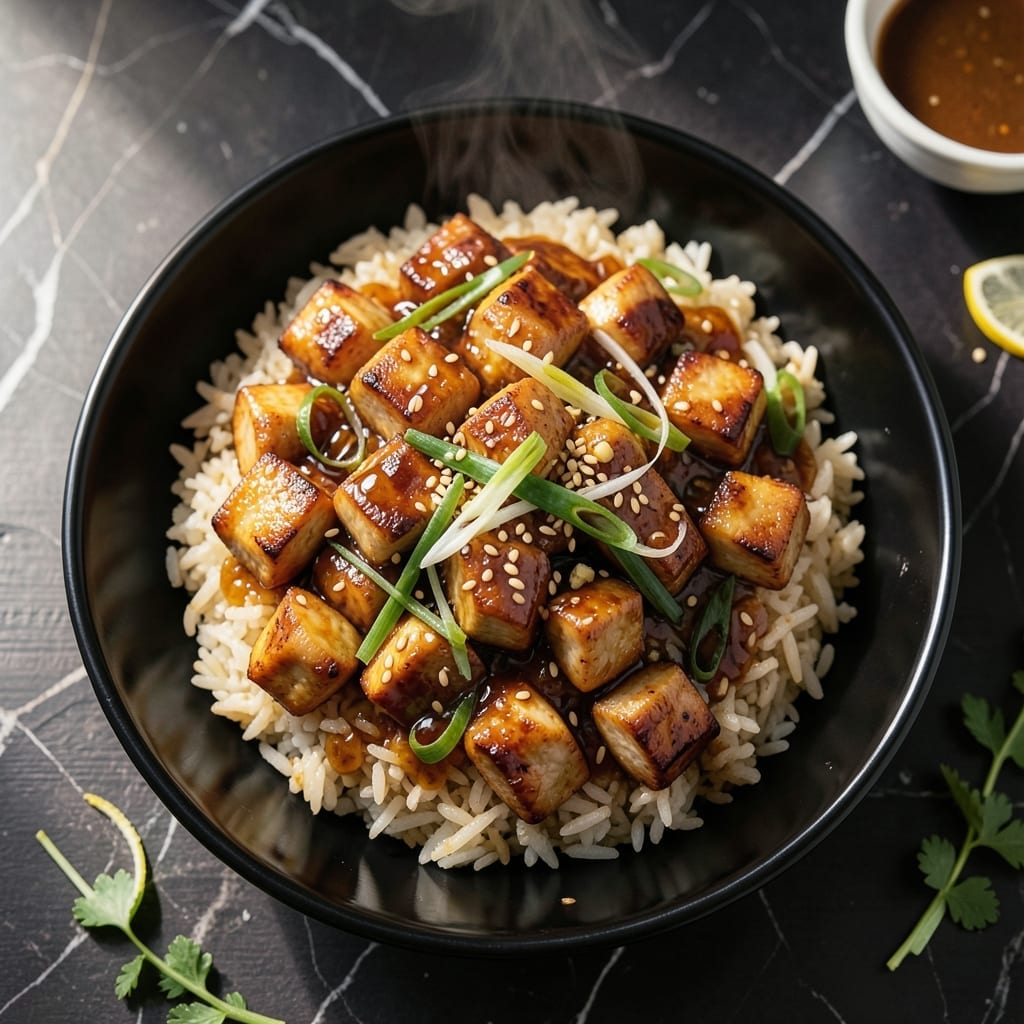
This Mongolian-style dish transforms leftover rice into a wok-tossed masterpiece with bold flavors and satisfying textures. The combination of tender chicken, crisp vegetables, and savory sauce creates a complete meal in one pan.
The secret lies in high-heat cooking that develops complex flavors quickly. Day-old rice works best, absorbing the savory sauce without turning mushy. Each ingredient plays a crucial role in building layers of umami and texture.
What emerges is a vibrant plate of fried rice with perfectly cooked chicken, charred bits of vegetable, and that signature wok hei aroma. The sauce coats every grain without making the dish soggy, delivering authentic takeout quality at home.
This recipe proves that restaurant favorites can be easily replicated in your own kitchen. The process is straightforward, with each step building on the last to create a dish that’s greater than the sum of its parts.
Ingredients for Mongolian Chicken Fried Rice
Transform leftover rice with these bold, umami-packed ingredients for authentic wok-tossed excellence.
| Ingredient | Amount | Notes |
|---|---|---|
| Day-Old Cooked Rice 🍚 | 4 cups | Chilled, preferably overnight |
| Boneless Chicken Breast 🍗 | 1 lb | Cut into small, even cubes |
| Soy Sauce 🫒 | 3 tbsp | Low-sodium preferred for balance |
| Oyster Sauce 🐚 | 2 tbsp | Essential for umami depth |
| Sesame Oil 🫒 | 1 tbsp | Toasted, for finishing aroma |
| Vegetable Oil 🫒 | 2 tbsp | High smoke point for wok cooking |
| Frozen Peas and Carrots 🥕 | 1 cup | Thawed, or fresh diced vegetables |
| Green Onions 🧅 | ½ cup | Thinly sliced for garnish |
| Garlic Cloves 🧄 | 3 cloves | Minced for optimal flavor distribution |
| Fresh Ginger 🌿 | 1 tbsp | Finely grated or minced |
| Large Eggs 🥚 | 2 whole | Lightly beaten for scrambling |
| Cornstarch 🌾 | 1 tbsp | For velveting the chicken |
| Shaoxing Wine 🍾 | 1 tbsp | Or dry sherry as substitute |
| White Pepper 🧂 | ¼ tsp | For authentic Mongolian flavor |
The chicken quality directly impacts texture—opt for boneless, skinless breasts cut into uniform cubes for even cooking. Day-old rice from a Chinese takeout works brilliantly if you’re short on time. For the oyster sauce, Lee Kum Kee offers consistent quality, but any reputable Asian brand delivers. Shaoxing wine is non-negotiable for authenticity, though dry sherry (found at Total Wine) works in a pinch.
No Shaoxing wine? Dry sherry at 1:1 ratio works. Vegetable substitutions are flexible—swap peas and carrots for bell peppers or snap peas (fresh or frozen). For gluten-free, use tamari instead of soy sauce and verify oyster sauce is GF. Cornstarch velveting is key for tender chicken, but you can skip it if pressed for time (texture will differ).
Cooked rice keeps in the fridge for 3-4 days before using. The finished dish stores well for 3 days refrigerated, though best fresh. Reheat in a wok or skillet with a splash of water to revive the texture. Freezing is possible but not ideal—the rice loses its signature bounce.
Why You’ll Love This Recipe
- One Pan Wonder: I toss everything in a single wok—chicken, rice, sauces—and it’s done in 15 minutes flat.
- Umami Bomb: That oyster sauce and sesame oil combo? Ridiculously good, with a depth that keeps me coming back for seconds.
- Meal Prep Hero: I make a big batch on Sunday, and it reheats perfectly for lunches all week.
- Leftovers Upgrade: Day-old rice actually works better here, so I’m using what I already have instead of wasting it.
Step-by-Step Instructions for Mongolian Chicken Fried Rice
Master the wok technique for perfectly textured rice with bold, umami-rich flavors every time.
Step 1: Velvet the Chicken for Tender Bites
In a bowl, toss the 1 lb boneless chicken breast cubes with 1 tbsp cornstarch and 1 tbsp Shaoxing wine until evenly coated. This velveting process ensures the chicken stays juicy and tender during high-heat cooking. Let it marinate for 10 minutes while you prep the remaining ingredients.
Meanwhile, mince the 3 cloves garlic cloves and finely grate the 1 tbsp fresh ginger. Thinly slice the 0.5 cup green onions, keeping the white and green parts separate for layering flavors. Thaw the 1 cup frozen peas and carrots if using frozen.
Step 2: Scramble the Eggs and Cook the Chicken
Heat 1 tbsp vegetable oil in a wok or large skillet over high heat until shimmering. Pour in the 2 whole large eggs and scramble quickly with a spatula until just set but still slightly runny. Remove the eggs and set aside—they’ll finish cooking when combined with the rice.
Add the remaining 1 tbsp vegetable oil to the wok. When hot, add the marinated chicken in a single layer. Cook undisturbed for 2-3 minutes until the bottoms turn golden brown. Stir-fry for another 2 minutes until the chicken is cooked through and no longer pink inside.
Step 3: Combine Aromatics and Rice
Push the chicken to one side of the wok and add the minced garlic, grated ginger, and the white parts of the green onions to the empty space. Stir-fry for 30 seconds until fragrant—don’t let the garlic burn. Add the 1 cup frozen peas and carrots and cook for 1 minute to heat through.
Increase the heat to maximum and add all 4 cups day-old cooked rice, breaking up any clumps with your spatula. The cold rice should sizzle on contact. Drizzle the 3 tbsp soy sauce and 2 tbsp oyster sauce evenly over the rice. Stir-fry for 3-4 minutes until the rice is heated through and starting to crisp slightly.
Step 4: Finish with Eggs and Final Touches
Return the scrambled eggs to the wok and add the 0.25 tsp white pepper. Toss everything together for 1-2 minutes until the eggs are fully incorporated and the rice has a uniform, slightly glossy appearance. The grains should be separate and coated evenly with sauce.
Remove from heat and drizzle with 1 tbsp sesame oil. Garnish with the reserved green onion tops. The finished dish should have a balanced savory-sweet flavor with visible flecks of egg, chicken, and vegetables throughout. Serve immediately while hot.
Pro Tips For Making Mongolian Chicken Fried Rice
- Chill the Rice: Use day-old rice straight from the fridge—it’s drier and fries up better than fresh. I learned this the hard way after multiple mushy batches.
- Velvet the Chicken: Marinate the chicken breast in 1 tsp soy sauce and 1 tsp cornstarch for 15 minutes before cooking. It stays tender and juicy, even when stir-fried over high heat.
- Skip the Overcrowding: Cook the chicken in batches so it browns instead of steams. After burning three batches, I finally figured out this was the issue.
- Finish with Sesame Oil: Drizzle the sesame oil at the very end, off the heat, to preserve its nutty aroma. Sounds weird, but it works.
Creative Variations of This mongolian chicken fried rice
Vegetable Swap
Swap the frozen peas and carrots for 1 cup diced bell peppers and 1 cup snap peas for a crunchier texture. Add them at the same time as the original vegetables. I love the extra color and freshness this brings to the dish. 🌟
Spicy Kick
Add 1-2 tsp sriracha or 1 tbsp chili garlic sauce to the sauce mixture for heat lovers. For a milder spice, sprinkle ½ tsp red pepper flakes when cooking the chicken. The heat balances beautifully with the savory flavors.
Seafood Twist
Replace the chicken with 1 lb peeled shrimp or scallops for a seafood version. Velvet the shrimp with cornstarch as you would the chicken, then cook for just 1-2 minutes per side to avoid overcooking. The shrimp absorb the Mongolian flavors wonderfully.
Extra Protein
Add ½ cup diced char siu (Chinese BBQ pork) along with the chicken for added depth. This is a classic addition in many Chinese-American restaurants. Alternatively, crispy bacon bits add a smoky note that pairs well with the umami sauce.
Vegetarian Option
Omit the chicken and add 1 cup cubed tofu (pressed and dried) or 1 cup chopped mushrooms for a meat-free version. Marinate the tofu in soy sauce and cornstarch for 15 minutes before cooking to infuse flavor. 💡
Sauce Boost
For extra richness, stir in 1 tbsp hoisin sauce along with the soy and oyster sauces. This adds a deeper, sweeter layer to the dish. A splash of 1 tsp fish sauce enhances the umami profile without overpowering the original flavors.
Nutrition Facts
Frequently Asked Questions
Do I need a wok to make this?
A wok is ideal for high-heat stir-frying, but a large skillet works too. Just ensure it’s wide enough to spread the rice in a single layer for even cooking.
Can I use fresh rice?
Day-old rice works best since it’s drier and fries better. If using fresh, spread it on a tray to cool and dry for 30 minutes before cooking.
How do I prevent soggy rice?
Cook over high heat and avoid overcrowding the pan. Add sauce gradually and stir-fry quickly to maintain texture.
What can I substitute for Shaoxing wine?
Dry sherry is the closest substitute at a 1:1 ratio. In a pinch, use 1 tbsp water with ½ tsp vinegar for acidity.

- Jollof Rice Sauce Recipe: West African Tomato and Spice Infusion - September 25, 2026
- Japanese Rice Soup Recipe: Umami-Rich Comfort in a Bowl - September 25, 2026
- Homemade Cream Of Rice Recipe: Silk-Smooth Breakfast in Minutes - September 25, 2026