
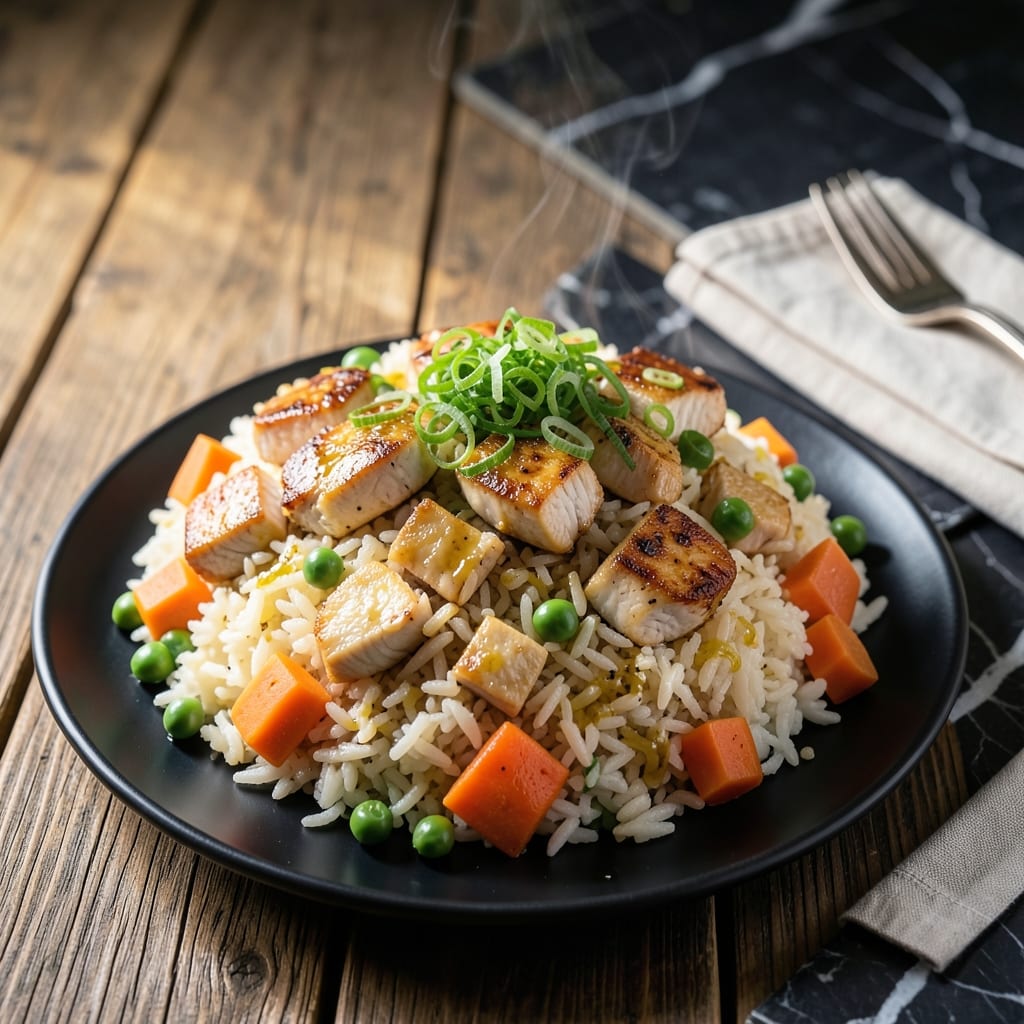
This Japanese-inspired fried rice captures the essence of umami with every bite. I developed this recipe to bring restaurant-quality flavors to your home kitchen, using simple techniques that anyone can master.
The dish combines day-old rice with a medley of vegetables, protein, and a savory sauce that creates layers of taste. Wok-tossing at high heat ensures each grain gets coated evenly, delivering that signature texture.
What emerges is a perfectly balanced plate with tender morsels, crisp vegetables, and rice that’s never mushy. The presentation mimics Mt. Fuji’s elegance, making it as beautiful as it is delicious.
Serve as a side or main dish for a meal that satisfies completely. Here’s how to create this flavorful experience at home.
Ingredients for Mt Fuji Fried Rice
Restaurant-quality Japanese fried rice starts with day-old rice and a handful of fresh ingredients.
| Ingredient | Amount | Notes |
|---|---|---|
| Day-Old Cooked White Rice 🍚 | 4 cups | Fully cooled, preferably overnight |
| Large Eggs 🥚 | 3 whole | Beaten for scrambling |
| Boneless Chicken Thighs 🍗 | ¾ lb | Diced into small pieces |
| Carrots 🥕 | 2 whole | Peeled and finely diced |
| Green Onions 🧅 | 4 whole | Thinly sliced, whites and greens separated |
| Frozen Green Peas 🌱 | ¾ cup | Thawed under cold water |
| Garlic Cloves 🧄 | 3 cloves | Minced finely for even flavor |
| Fresh Ginger 🌿 | 1 tbsp | Grated, peel on or off |
| Soy Sauce 🫒 | 3 tbsp | Low-sodium preferred for control |
| Oyster Sauce 🍶 | 1 tbsp | Vegan oyster sauce for dietary needs |
| Sesame Oil 🫒 | 1 ½ tsp | Toasted for depth of flavor |
| Neutral Oil 🫒 | 2 tbsp | Vegetable or canola for high heat |
| Nori Sheets 🍣 | 1 sheet | Shredded for Mt Fuji garnish |
| Toasted Sesame Seeds 🌰 | 1 tsp | For finishing and crunch |
The rice is non-negotiable—day-old, fully cooled grains fry up separate and firm. Jasmine or short-grain works best here (avoid instant). For the chicken, thighs stay juicier than breasts. I grab mine from Whole Foods or Trader Joe’s—their organic options taste cleaner. The nori for that Mt Fuji garnish? Any Asian market sells full sheets for a fraction of grocery store prices.
No chicken? Shrimp or tofu swaps in perfectly (press tofu first to avoid soggy rice). Out of oyster sauce? Hoisin or extra soy works in a pinch, though the flavor shifts slightly. Fresh ginger is ideal, but ground ginger at half the amount saves time. The sesame oil is key—don’t skip it. And yes, frozen peas are fine (no thawing shame).
Cooked rice keeps 3-4 days in the fridge, so plan ahead. The finished dish tastes even better the next day as flavors meld. Store leftovers airtight for up to 3 days—reheat in a skillet with a splash of water to revive.
Why You’ll Love This Recipe
- One Pan Wonder: I love tossing everything—the chicken, veggies, and rice—into one wok and being done in 20 minutes.
- Umami Bomb: The chicken thighs soak up all the soy and garlic, and that first bite? Ridiculously good.
- Weeknight Hero: Honestly, it’s my go-to for busy Tuesdays when I need dinner fast but still crave restaurant-quality flavor.
- Leftovers Winner: The rice actually tastes better the next day, and it reheats like a dream for lunch.
Step-by-Step Instructions for Mt Fuji Fried Rice
Master the wok technique and you’ll create perfect Japanese-inspired fried rice with smoky depth and vibrant color.
Step 1: Prepare and Cook the Protein and Aromatics
Heat 1 tablespoon neutral oil in a wok over high heat until shimmering. Add the diced 0.75 lb boneless chicken thighs and cook for 4-5 minutes, stirring occasionally, until the pieces are golden brown and cooked through. The chicken should release easily from the wok when properly seared.
Push the chicken to one side and add the minced 3 cloves garlic cloves and 1 tbsp fresh ginger to the center. Stir-fry for 30 seconds until fragrant—don’t let them burn. Transfer everything to a bowl and set aside. Real talk: this step builds the flavor foundation, so don’t rush it.
Step 2: Scramble the Eggs and Vegetables
Return the wok to high heat and add the remaining 1 tablespoon neutral oil. Pour in the 3 whole large eggs and scramble quickly with a spatula until just set but still slightly runny. This creates those beautiful egg ribbons characteristic of authentic fried rice.
Add the finely diced 2 whole carrots and cook for 2 minutes until they begin to soften. Stir in the thinly sliced whites from 4 whole green onions, 0.75 cup frozen green peas, and cook for another 1 minute. The peas should be bright green and the carrots slightly tender but still with a bit of bite.
Step 3: Combine Rice and Sauces for Maximum Flavor
Add the 4 cups day-old cooked white rice to the wok, breaking up any clumps with your spatula. The rice should be completely dry and cold—this prevents it from turning mushy during cooking. Drizzle the 3 tbsp soy sauce, 1 tbsp oyster sauce, and 1.5 tsp sesame oil evenly over the rice.
Return the chicken mixture to the wok and stir-fry everything together for 3-4 minutes until the rice is heated through and begins to take on a light golden color. Taste and adjust seasoning if needed. Here’s the thing—this is where the magic happens as all the flavors meld together.
Step 4: Finish and Garnish for Visual Appeal
Stir in the thinly sliced greens from 4 whole green onions and cook for 30 seconds just until wilted. Remove from heat and let sit for 1 minute to allow the flavors to settle. The greens should remain vibrant and fresh-looking, not overcooked.
Transfer to serving plates and garnish with the shredded 1 sheet nori sheets arranged to resemble Mt. Fuji’s silhouette, and sprinkle with 1 tsp toasted sesame seeds. The nori adds a subtle oceanic note that elevates the dish authentically. Serve immediately while hot for the best texture and flavor.
Pro Tips For Making Mt Fuji Fried Rice
- Chill the Rice: Use day-old rice straight from the fridge—it’s drier and fries up fluffier. I learned this the hard way after making mushy fried rice with fresh rice once too often.
- Velvet the Chicken: Toss the boneless chicken thighs with 1 teaspoon cornstarch before cooking. Sounds weird, but it keeps them tender and prevents that rubbery chew.
- Skip the Crowding: Cook the eggs and chicken separately, then combine at the end. After burning three batches, I finally figured out overcrowding steams instead of sears.
- Carrot Prep Hack: Grate the carrots instead of dicing—they cook faster and distribute evenly. My grandmother swore by this, and she was right.
Essential Equipment for This Dish
Wok Selection
A carbon steel wok is your best friend for this dish—it heats up fast and distributes heat evenly. I swear by my 14-inch Joyce Chen wok for home cooking. Look for one with a flat bottom if using an electric stove. 🔥
High Heat Source
You need serious heat to get that signature wok hei (breath of the wok) flavor. A gas stove with at least 15,000 BTU output works best. For electric, use the highest setting and preheat your wok for 5 minutes before cooking.
Essential Utensils
A wok spatula (or chan) is designed for the rounded shape of your wok. I also keep a long-handled metal ladle nearby for sauces. Wooden utensils work too but won’t last as long with high heat.
Rice Prep Tools
Day-old rice requires spreading on a baking sheet to cool completely. I use my half-sheet pan from Nordic Ware for this. A rice paddle helps break up clumps without mashing the grains before they hit the wok.
Small but Mighty
Keep small prep bowls ready for your garlic, ginger, and sauces. I love the 5-piece stainless set from OXO. Having everything pre-measured means you won’t burn anything while scrambling to add ingredients. 💡
Garnish Helpers
For that Mt. Fuji presentation, use kitchen shears to cut nori into strips. A fine-mesh sieve helps dust sesame seeds evenly. These small tools make a big difference in the final appearance.
Nutrition Facts
Frequently Asked Questions
Why use day-old rice?
Day-old rice has less moisture, preventing a mushy texture. Fresh rice can turn to paste in the wok. Spread cooked rice on a tray and refrigerate overnight for best results.
Can I use a regular frying pan?
A wok is ideal, but a large skillet works in a pinch. Use high heat and cook in batches to avoid steaming. A nonstick pan may struggle with the high temperatures needed.
What can I substitute for oyster sauce?
Use hoisin sauce or an extra 1 tbsp soy sauce mixed with 1 tsp sugar. Vegan oyster sauce is another great alternative. Each option adds a slightly different depth of flavor.
How do I prevent the eggs from overcooking?
Scramble them briefly until just set, then push to the side. They’ll finish cooking when combined with the hot rice and veggies. This keeps them tender and ribbon-like.

- Mujadara Rice and Lentils Recipe: Earthy Spiced Lentils With Caramelized Onions - November 1, 2026
- Naija Fried Rice Recipe: Street-Style Spice With Veggie Crunch - November 1, 2026
- Mushy Rice Recipe: Fluffy Grains Transformed in Minutes - November 1, 2026