
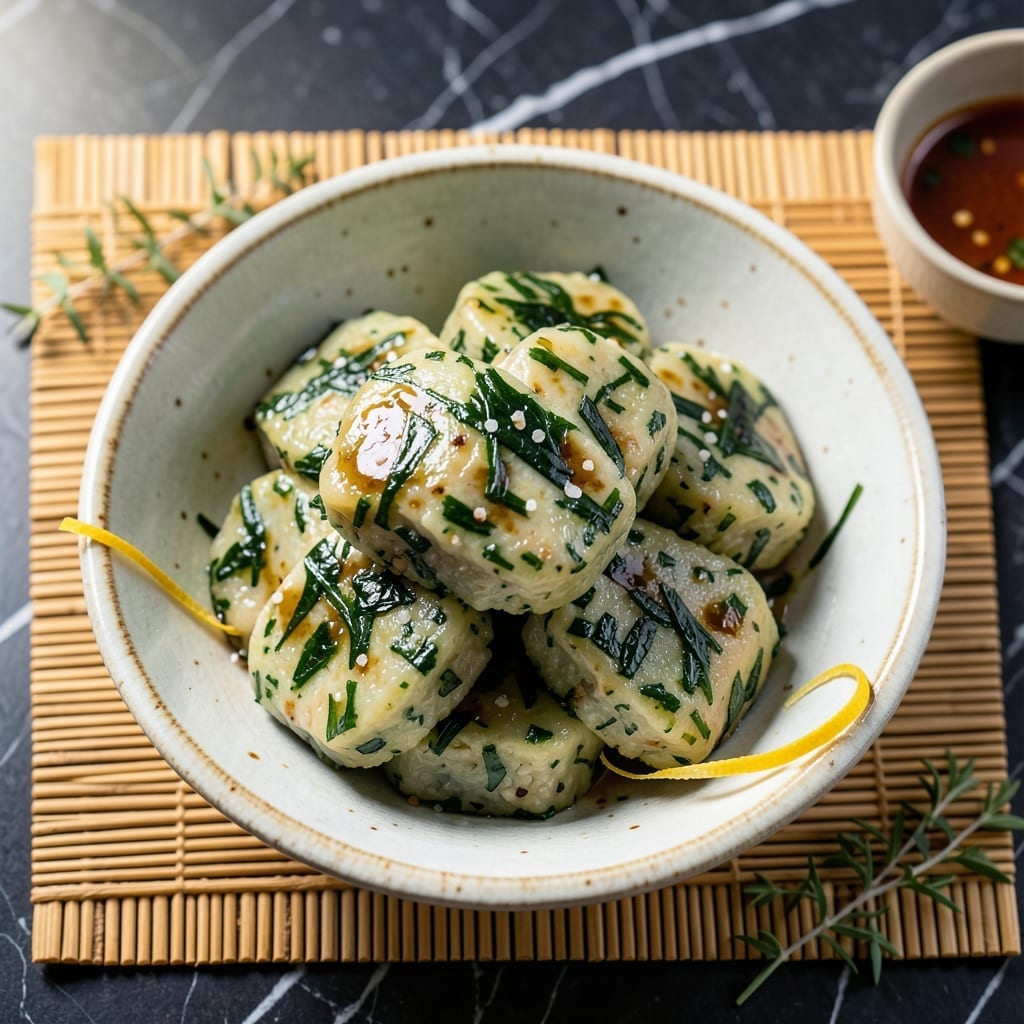
This recipe brings a taste of Korean tradition to your kitchen with its unique earthy flavor and soft, chewy texture.
I’ve refined this method to capture the authentic essence of ssuk tteok, using fresh mugwort for its distinctive aroma and vibrant green hue. The preparation involves steaming, which ensures a tender yet slightly resilient bite every time.
With just a few simple ingredients and traditional techniques, you’ll create a dish that’s both comforting and culturally rich. The process is straightforward, and the results are well worth the effort.
Serve warm for the best experience, and enjoy the subtle, herbal notes that make this rice cake truly special.
Ingredients for Mugwort Rice Cake
Fresh mugwort and glutinous rice flour create this earthy, chewy Korean traditional dish with vibrant green color.
| Ingredient | Amount | Notes |
|---|---|---|
| Glutinous Rice Flour 🌾 | 2 cups | Also called sweet rice flour |
| Fresh Mugwort Leaves 🌿 | 1 cup | Packed, stems removed |
| Hot Water 💧 | 1 ¼ cups | For dough consistency |
| Salt 🧂 | ½ tsp | Fine sea salt preferred |
| Sugar 🍚 | 1 tbsp | Optional, for subtle sweetness |
| Neutral Oil 🫒 | 1 tsp | For steaming setup |
| Sesame Oil 🫒 | 1 tsp | For brushing finished cakes |
| Toasted Sesame Seeds 🌾 | 1 tbsp | For garnish |
| Soy Sauce 🥄 | 2 tbsp | For dipping (optional) |
| Rice Vinegar 🍶 | 1 tsp | For dipping (optional) |
| Red Pepper Flakes 🌶️ | ½ tsp | For dipping (optional) |
| Green Onions 🧅 | 2 whole | Thinly sliced for garnish |
The mugwort is non-negotiable for authenticity—Korean markets or Asian specialty stores are your best bet for fresh, vibrant leaves (dried works in a pinch but lacks the color). Look for bright green, unblemished leaves with a strong herbal aroma. Glutinous rice flour is essential—Bob’s Red Mill or Koda Farms brands are widely available and reliable. Avoid regular rice flour; the texture won’t be the same.
No fresh mugwort? Spinach or matcha powder can substitute for color, but the flavor won’t match (use 2 tbsp matcha or 1/2 cup spinach puree). For a gluten-free version, sweet rice flour is naturally gluten-free—just confirm no cross-contamination. The dipping sauce can be adjusted: tamari instead of soy for gluten-free, or add minced garlic for extra kick.
Finished rice cakes keep 3-4 days in an airtight container at room temperature. For longer storage, freeze for up to 1 month—re-steam to refresh. The mugwort leaves can be blanched and frozen for 3 months if you find a good source.
Why You’ll Love This Recipe
- One Bowl Wonder: I mix the glutinous rice flour, hot water, and chopped mugwort leaves right in the same bowl—no fancy equipment, just a spoon and five minutes of stirring.
- Earthy Sweetness: The fresh mugwort gives it this herbal, slightly bitter note that balances the sugar perfectly. Honestly, it’s like a cozy hug in cake form.
- Gift or Snack: I’ve served these at tea parties and packed them in lunchboxes—they’re just as good cold the next day.
Step-by-Step Instructions for Mugwort Rice Cake
Master this traditional technique and achieve perfectly chewy rice cakes with vibrant herbal notes.
Step 1: Prepare the Mugwort Infusion
Begin by blanching the 1 cup Fresh Mugwort Leaves in boiling water for 30 seconds, then immediately shock them in ice water to preserve their vibrant green color. Drain thoroughly and finely chop the leaves—this prevents bitter notes in the final dish.
Combine the chopped mugwort with the 1.25 cups Hot Water in a blender and process until completely smooth. Strain the mixture through a fine-mesh sieve, pressing to extract all liquid. You should have approximately 1.25 cups of vivid green mugwort water for the dough.
Step 2: Create the Rice Cake Dough
In a large mixing bowl, whisk together the 2 cups Glutinous Rice Flour, 0.5 tsp Salt, and 1 tbsp Sugar until fully incorporated. Gradually add the mugwort water while stirring with a wooden spoon until a shaggy dough forms.
Knead the dough in the bowl for 5-7 minutes until it becomes smooth, elastic, and slightly tacky. The dough should feel like soft Play-Doh—if it’s too dry, add 1 teaspoon of water at a time. Cover with a damp towel and rest for 20 minutes to allow the flour to fully hydrate.
Step 3: Steam the Rice Cakes
Lightly grease a steamer basket with the 1 tsp Neutral Oil to prevent sticking. Divide the rested dough into 12 equal portions and roll each into a smooth ball, then gently flatten into discs about ½-inch thick.
Arrange the cakes in the prepared steamer, leaving 1 inch between each to allow for expansion. Bring water to a rolling boil in the steamer base, then add the basket. Cover and steam over medium-high heat for 15-18 minutes until the cakes are translucent and bounce back when pressed.
Step 4: Finish and Garnish
Transfer the steamed cakes to a plate and brush the tops immediately with the 1 tsp Sesame Oil. This adds a nutty aroma and prevents sticking. Sprinkle evenly with the 1 tbsp Toasted Sesame Seeds while still warm so they adhere properly.
Thinly slice the 2 whole Green Onions and scatter them over the cakes. For serving, mix the 2 tbsp Soy Sauce, 1 tsp Rice Vinegar, and 0.5 tsp Red Pepper Flakes in a small dish. Serve the warm cakes with this dipping sauce on the side.
Pro Tips For Making Mugwort Rice Cake
- Blanch the Mugwort: Plunge fresh mugwort leaves into boiling water for 30 seconds to mellow their bitterness—this is the only way to get that clean, herbal flavor without overpowering the rice cake.
- Use Scalding Water: Mix the glutinous rice flour with water just off the boil (not cold or lukewarm) to activate the starch properly and avoid a gummy, uneven texture.
- Rest the Batter: Let the mugwort-infused batter sit for 10-15 minutes before steaming—this gives the flour time to fully hydrate and the flavors to meld.
- Steam Evenly: Spread the batter in a thin, even layer in the steamer and cover with a cloth to catch condensation drips, otherwise you’ll end up with waterlogged spots on top.
Regional Styles of This Dish
Korean Tradition
In Korea, ssuk tteok is a beloved spring delicacy, often prepared for Dano (the fifth day of the fifth lunar month) celebrations. The earthy mugwort symbolizes purification and warding off evil spirits, making it especially meaningful during this seasonal festival. 🌿
Jeju Island Style
On Jeju Island, locals use wild mugwort grown on the volcanic slopes, which has a more intense aroma. The rice cakes are often shaped into small half-moon forms and steamed in layers of pine needles, imparting a subtle woody note to the dish.
Modern Seoul
Urban bakeries in Seoul have transformed this traditional dish into mugwort mochi variations, blending Korean and Japanese techniques. These versions often include sweet fillings like red bean paste and are dusted with kinako (roasted soybean flour) for a contemporary twist.
Northern Regions
In colder northern provinces, ssuk tteok is commonly made thicker and heartier, sometimes incorporating black beans or mung beans into the dough. These variations are steamed longer, up to 25 minutes, to achieve a denser texture perfect for winter meals.
Royal Court Version
Historically, the royal court enjoyed a refined version called gungjung tteok. The mugwort was finely sifted, and the cakes were pressed into intricate molds, creating elegant shapes fit for royalty. This version was often served with a light honey-ginger dipping sauce.
Nutrition Facts
Frequently Asked Questions
Can I use dried mugwort instead of fresh?
Yes, but reduce to 2 tablespoons of dried and rehydrate in hot water first. The color won’t be as vibrant, and the flavor may be more concentrated and slightly bitter.
Why did my rice cakes turn out hard?
Over-kneading or insufficient steaming time (15-18 minutes) are common causes. Ensure the dough rests for 20 minutes before shaping, and maintain a rolling boil in your steamer.
What can I use if I don’t have glutinous rice flour?
There’s no perfect substitute, but tapioca starch mixed with regular rice flour in a 1:1 ratio can work in a pinch. The texture will differ, as glutinous rice flour is essential for the chewy consistency.

- Chuy’s Green Chili Rice Copycat Recipe: Spicy Southwest Flavor in Every Bite - September 25, 2026
- Beaten Rice Recipe: Fluffy Grains With Nutty Depth - September 25, 2026
- Machboos Rice Recipe: Bahraini Spiced One-Pot Tradition - September 25, 2026